


Something happened to me last week that has never happened before. It shook me to my very core and made me realise I’d been living my life all wrong. I very, very nearly cried in the middle of an entire movie theatre.
Just to be clear, I didn’t actually start crying, but I might as well have. The emotional gut punch at the end of Inside Out had reduced me to a blubbering, psychologically helpless mess. If I hadn’t been in a room full of people, I absolutely would have balled my eyes out.
As I write this, I realise I’m essentially risking excommunication from the Secret Society of Stoic British Men for saying it. Where I come from, crying is frowned upon. It makes people uncomfortable. At best, they give you funny looks and keep their distance; at worst they tell you to pull yourself together.
And that goes doubly so for something that’s actually made up. I mean, after all it’s just a movie. Isn’t it?
As a teenager, I don’t remember crying much in general. It amounted to social suicide at school. Everywhere else it was looked down upon as ‘making a scene’. I’m not a psychologist, but from living here for twenty five years, I’d say Britain is one of the most emotionally constipated places on earth.
Which might be why whenever my dad sees a modern American movie he laments it as being ‘too sentimental’. Guardians of the Galaxy? Too mawkish. Inside Out? Good, but a severe lack of British stiff upper lip. Give him Clint Eastwood any day.
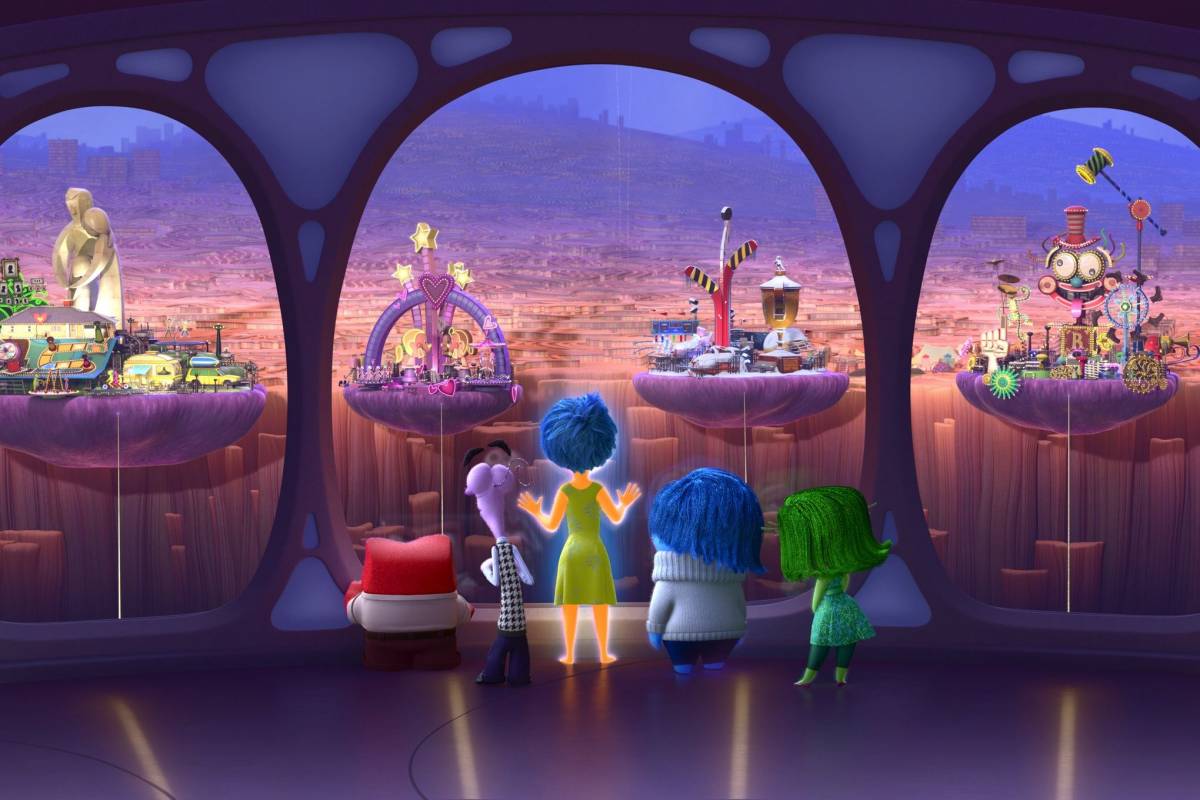
But calling for movies to be more stoic and less mushy misses the point. Inside Out is a masterpiece exactly because it connects with us in an emotionally charged way. Whether or not our brains are actually operated by tiny manifestations of our feelings fighting over a control panel, most of us can relate to being not as together as we’d like people to think. And that’s one of the main points of the movie: sometimes the healthiest thing to be is sad.
In the case of Riley, inside of whose head the story takes place, that means not pretending to be happy all the time. In the case of a lot of us – not just the British and not just men – that means not hiding behind the idea that showing emotions is a sign of weakness.
Because a lot of the time it’s actually a strength. A lot of the most memorable movies are memorable exactly because of the emotional punch they deliver. Henry Fonda’s decision to humanise the accused murderer in 12 Angry Men is what elevates the film to an all time classic. What’s the one scene from Toy Story 3 that you’ll NEVER forget? Exactly.
As a teenager, I was a big fan of the Lethal Weapon film series (don’t ask). Up until this year I was even a firm believer that Lethal Weapon 4 had the best car chase in movie history. The first scene I remember whenever I think of those movies isn’t a car chase or a fight. It’s a scene at the end of Lethal Weapon 4, where Mel Gibson’s Riggs visits the grave of his dead wife. Then Joe Pesci’s character appears, whose spent three movies being a sad sack blabbermouth, but suddenly tells one of the most tragic stories I’ve ever seen in an action movie: the life and death of Froggy the frog.
I know it’s stupid. I know it’s pretend and I shouldn’t care about what happened to some dumb made-up frog, but I think we’re designed to care about this stuff, and for some reason we’ve decided we shouldn’t. That’s why we need art that makes us cry.
After all, you can have as many action scenes as you like or as many badass quips as you want. You’re welcomed to the scene where Clint Eastwood aims the gun at the bad guy and says: “Do you feel lucky?”. None of that matters unless we’re emotionally invested in the characters and the story.
At this point, it is probably also time I admitted that the Inside Out debacle wasn’t an isolated incident. Maybe it’s that I’m in my twenties now and I’m no longer a chemical reaction of shame and repressed hormones, but the idea of crying at film and television doesn’t bother me like it used to because sometimes that’s the point. Sometimes there’s a moment in a film that’s designed to make you tear up and if it’s something that resonates with you in that way, who cares if some people get embarrassed about it?
MORE: TOP 10 MOST TEARJERKING FILMS FOR GUYS
Of course, I’d never actually say any of this out loud. A quarter century of British social engineering has left some doors that will take longer to unlock. I’m pretty mixed on the idea of people I know reading this at all when it comes down to it. I might have to talk about crying with them. Verbally.
But at this point I’m going to have to stand by my point: crying at films shouldn’t be that big a deal. Emotional investment is what separates a great film from an average one. It’s why The Avengers was awesome and Transformers 2 was pants. And I’m pretty sure if I keep repressing the tears, I’m going to send myself to an early grave.
Some of the coverage you find on Cultured Vultures contains affiliate links, which provide us with small commissions based on purchases made from visiting our site.