

The 6th generation is typically seen as the dawning of the 3D open world game, a generation in which you could walk into a car, get the Michael Jackson blaring, then take on eight different part-time jobs. But the PS1 also had its fair share of trailblazing open world games, and you’d be a fool to Mizz them.
Mizzurna Falls
David Lynch multiplied by the PS1 is a concoction so strong that it could probably turn Joseph Merrick into Joseph Gordon Levitt.
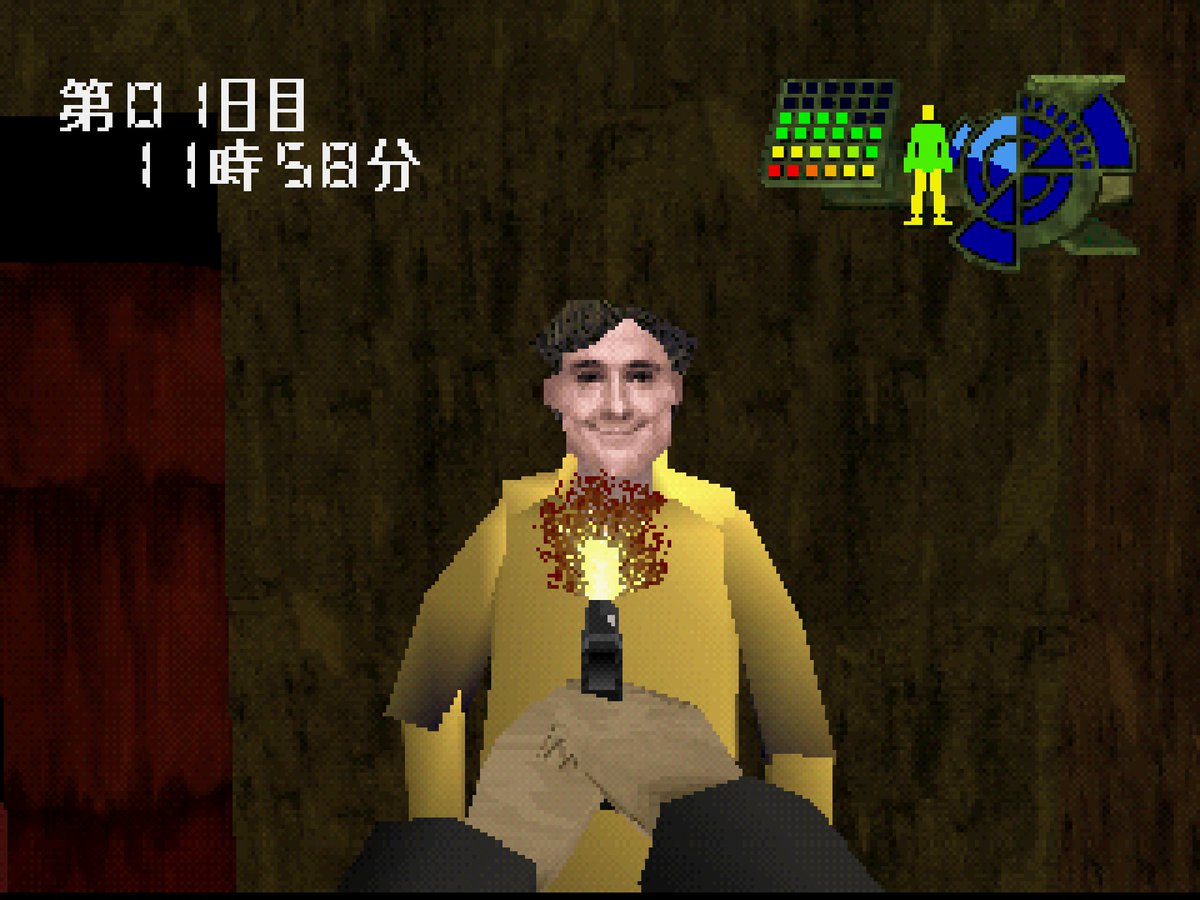
Set in a fully explorable mountain town in the Rockies during Christmas in 1995, the Japan exclusive Mizzurna Falls gives you total freedom almost immediately. You can drive anywhere, wander on foot, ignore the main investigation for hours, or accidentally miss key events entirely. As you look for your lost classmate, the game runs on a real-time clock, as NPCs keep schedules, shops open and close, and story beats trigger based on when and where you choose to be.
What makes it genuinely ahead of its time isn’t just the size of the town — it’s the simulation of daily life which predates so many games that are often lauded as standardbearers. Characters have routines, relationships, and optional storylines that disappear if you’re not paying attention. Structurally, it’s doing things that wouldn’t feel out of place in Deadly Premonition or Shenmue, except this shipped on a PS1 in 1998 from the same mentalists behind Clock Tower 2.
For years, Human Entertainment’s Mizzurna Falls was locked behind a language barrier, but now, thanks to a complete English fan translation from a few years back, it’s finally playable and it holds up surprisingly well, as long as you aren’t expecting GTA 6. Or maybe even GTA 3.
Fun fact: its creator, Taichi Ishizuka, left the industry after becoming jaded in the early 2000s and was last seen as a tour guide in the rockies themselves.
I wonder if he knows just how much love his weird little game eventually ended up getting. I hope he does.
Urban Chaos
Urban Chaos is a mightily ambitious game that saw what Tomb Raider was doing and wanted to just do way too much on top of it. Publishers Eidos clearly just wanted to keep on with “give woman gun, make money?” trend.
It was developed by Mucky Foot Productions, a late-90s British studio who were not around for long. They prioritised systems first, polish later, or maybe never. They were actually intended to be the developers behind Volition’s The Punisher and even an adaptation of Bulletproof Monk before they closed their doors.
Their first game, Urban Chaos drops you as a rookie cop into a grimy, pretty open city made up of large districts you can freely navigate on foot or by car, with missions triggered inside a space you’re already inhabiting, rather than loading you into isolated levels. It’s all pretty nuts stuff for a PS1 game really, though it did also come to Dreamcast and PC.
What’s striking is how much freedom it gives you moment-to-moment. You’re rarely pushed down a single route, you can approach objectives from multiple angles, and the city itself feels nicely alive despite the obvious limitations. You probably don’t want to play this on PS1 these days, though. Its performance is quite rough.
There was no direct sequel on PS1 thanks to Mucky Foot’s closure. However, its name lived on with Urban Chaos: Riot Response in 2006 — developed by Rocksteady Studios, long after Mucky Foot had shut down. That’s the team behind Batman: Arkham by the way, or at least some of the guys who were still around when they were good.
Urban Chaos is pretty rough-edged, forward-thinking, and very much a product of its time, but a grand old time for its, uh, time.
GTA 1 and 2
Basically, GTA 1 and 2 are the foundation stones for an empire with the same GDP as a grand duchy. Not bad for something made by less than 10 Scottish blokes, right?
Both were developed by DMA Design, a Dundee studio best known at the time for Lemmings. GTA started life as a cops-and-robbers game called Race’n’Chase, but the moment the team realised players preferred being the problem, everything clicked. What shipped was a fully open city where missions were optional, daftness was encouraged, and the fun came from systems colliding rather than scripted set pieces.
GTA 1 gives you three cities, total freedom from the outset, and almost no guidance beyond a phone ringing somewhere on the map. Critics praised the scale and freedom, even if they weren’t always sold on the top-down presentation or clumsy combat. What really pushed GTA into the spotlight, though, was controversy. Tabloid outrage over violence and criminality turned it into a cultural talking point, especially in the UK. And they did it on purpose. Suddenly, this weird, overhead crime game about hating traffic was a hit.
By the time GTA 2 arrived, the tone was sharper and just generally tighter, with denser cities, faction reputations, and more deliberate mission design, while still letting you ignore most of it and just do silly, violent stuff. They’re crude, aggressive, and pretty simple compared to the GTAs of the next gen, but they do still have their charm.
Even before GTA III changed everything, GTA 1 and 2 had already nailed the hardest part — giving players a city and trusting them not to behave. Also shout out to London 1969, that weird add-on pack. You see guys, we don’t need a GTA set anywhere but the same three places in America, we already got a GTA in the UK! This next game has something we never see here.
Tail of the Sun
Tail of the Sun is open world in the most literal, least accommodating sense possible. Developed by Artdink, it drops you into a single, massive continuous landscape and explains almost nothing. There are no clear objectives, and no safety net. You are an unga, and you must bunga.
You play as a prehistoric human, surviving through hunting, scavenging, and slow, deliberate exploration in order to build a big mammoth tusk tower to reach the sun. Also, you need to sleep quite a bit. The world is always there, fully open from the start. You can wander in any direction, get lost immediately, and spend hours travelling only to realise you haven’t “progressed” in any obvious way. That’s the point.
Artdink were already known in Japan for cerebral games like A-Train and Neo Atlas, and that kinda feel is here too. Tail of the Sun isn’t trying to keep you hooked with constant spectacle. It’s happy to let time pass and wait for it to click with you, if it does at all.
At the time, reception was mostly bafflement. Some critics admired the ambition; plenty of players bounced off it entirely. It’s not the most thrilling game to play today, but it does feel like a strange experimental indie that somehow slipped out in 1996. Imagine Penn & Teller’s Smoke and Mirrors minus the bus and you aren’t a million miles away.
The developers were more interested in testing ideas than making sure you were having a good time in the traditional sense, but director Kazutoshi Iida did go on to make Doshin the Giant, which ended up Robin a lot of my time on the GameCube.
Batman and Robin
Oh yeah, keep your Final Fantasy, chuck your Halo in the bin, set fire to Clair Obscur. The real games are finally here.
Batman and Robin is infamous today and is rightfully recognised as a big old mess, but what often gets lost is just how hard it was reaching for something genuinely new.
Developed by Clockwork Tortoise, who you will note are not developing GTA 6, the game sets out to create a fully explorable Gotham City. On the PS1. As a licensed game. Over a year after the nipples first dawned at cinemas.
Set across Batman’s stomping grounds, you have multiple days to traverse Gotham and complete missions against the clock to complete an investigation. A game like Arkham City with a bit more stress involved isn’t the worst idea ever.
The problem is execution. Controls are absolutely bloody awful, combat is awkward, and the Batmobile sections are punishing in ways that make it hard to stay cool, birdboy. At launch, reception was pretty bad. Reviews criticised the difficulty, lack of clarity, and general jank, with many players bouncing off before it even got remotely good. I remember just being absolutely baffled by this as a kid.
But viewed now, it’s like a failed prototype for open-world superhero games. Batman and Robin fell over and shit its own pants so that Rocksteady could run later on with the Arkham series.
It’s not fun in the conventional sense, but it is fascinating — a PS1 game trying to build a living city years before the genre had worked out how to make that feel good. Bless you.
Germs
You’re welcome.
Guys, your mum might have told you to avoid germs, but you need to spread these germs everywhere.
Developed by KAJ for a Japan only release in 1999, Germs Nerawareta Machi drops you into a small Japanese city during a spreading mutation/outbreak situation, and then basically says “go on then” and lets you loose in first-person. You go around town and investigate: walking the streets, driving, using public transport, entering buildings, talking to people, reading emails on computers, and picking up bits of information that point you to the next problem area. Oh, and then you shoot mutants.
Progress is tied to clearing out invaded locations as the situation worsens, with more of the map becoming affected over time, and once you finish the main story you can still wander the city afterwards. And if you lose to a mutant you don’t just game over — you can end up infected and then need to go to the hospital to cure it, or you can just travel about as a mutant. Yep, it does indeed sound a bit like Resident Evil Outbreak.
Of course it isn’t quite as polished as a Capcom game, as the first-person aiming is about as painful as you’d expect for a late 90s open world FPS, but shooting isn’t really the focus here. It’s looking at the horrifying GoldenEye faces as everything collapses around you. If you don’t know Japanese, the game has been translated into English over the past couple of years. And hey if you don’t like horror, it’s not that scary.
World’s Scariest Police Chases
The game you might have seen eighteen times in a charity shop was indeed one of the scariest games on PS1. But only if you were a criminal, I guess.
Developed by Unique Development Studios, who you might know from that Futurama PS2 game that’s so scarily expensive in America for some reason, the game lets you drive freely through an urban environment while responding to pursuits and objectives.
Streets, junctions, and routes stay the same from one mission to the next, as you ram perps off the road and your partner lights them up with a shotgun. You can’t get out of the car though, as everyone knows police offer cardio isn’t the greatest.
The game also includes a free roam mode that removes objectives altogether and simply lets you drive around the city. It’s there so you can explore, learn the layout, and see how the open map fits together without any pressure.
When it released, most attention went to the licence and the repetition of the missions. It’s kinda nuts that Activision and Fox published a game based on a reality TV show. Imagine modern Activision publishing a Love Island game. The game didn’t get much credit, and arriving so late in the PS1’s lifespan in 2001 didn’t help its chances of standing out.
It is not a great game, but it fits neatly into that late-era group of PS1 games where developers were clearly interested in persistent urban spaces, even if the surrounding game struggled to make the most of them. Not a jester, not quite the king.
King’s Field
All together now: “King’s Field is technically actually King’s Field 2 as it’s the sequel to a game that’s still exclusive to Japan.”
A classic.
Developed by FromSoftware, this was the studio’s earliest game to come to the west and it already shows the design instincts they’d later become known for. Elden Ring wasn’t their first open world game. Somehow they were doing this stuff back in 1995. There’s no world map, no quest log, and very little direction. In first-person, you move slowly through dungeons, fight carefully, and learn the environment by moving through it repeatedly. Areas loop back on themselves, shortcuts open over time, and progress comes from understanding the space rather than ticking objectives off a list.
The world itself is open in a literal sense. Large sections are accessible early, and you’re free to wander into places you’re not ready for, with the game offering no warning beyond how quickly things go wrong. Death is frequent, but it’s also how you learn where you shouldn’t be yet. Perhaps it’s closer to a sandbox than an open world in the strictest sense, but this ambition for 1995 should always be highlighted.
At release, King’s Field was divisive, but largely positive. Some praised its atmosphere and scale, others bounced off the speed and opacity. It wasn’t a mainstream hit, but it was successful enough to spawn multiple sequels on PS1, each expanding the same ideas, and we even got King’s Field IV on PS2.
Looking back, it’s easy to see why it matters. King’s Field treats exploration as the main mechanic and the world as something you slowly decode. It’s awkward and uncompromising,and very clearly the starting point for FromSoftware’s long-term obsession with getting you out of your comfort zone.
Driver 2
Driver 2 is clunky, runs badly in a few ways, and regularly feels like it’s one sharp turn away from falling apart — which only makes it more impressive that it exists at all.
Driver 2: You, Yes You, Are The Wheelman landed just one year after the original Driver, and that turnaround shows in both directions. Performance dips constantly, loading is intrusive, and the new mechanics creak under the strain. But the ambition jump is huge. You’re no longer confined to a car. You can get out, walk around, steal other vehicles, and move through parts of the city on foot. It’s stiff and awkward, but it’s a fundamental leap in western game design that’d become much more commonplace in the next generation.
It’s worth saying the first Driver already let you freely drive around its cities. “Take a Ride” mode was there from day one, and plenty of people spent hours doing nothing but learning the map. What Driver 2 adds is context and also theft. Being able to leave the car, even briefly, makes the cities feel more like places than racetracks, and you can also steal a bus.
The scale is still wild for PS1 hardware: Chicago, Havana, Las Vegas, Rio — all dense, all explorable, all pushing the system far past comfort, and all bigger than anything in the original. Reviews at the time were split, with some outlets even giving it as low as a 2/10. Some critics would even go as low to be paid off flor the next game!
Driver 2 feels like a game shipped slightly too early because it had to, as GTA 3 was just around the corner. It was undeniably ahead of its time, even if you might not have a great time with it today.
Lego Island 2: The Brickster’s Revenge
An island designed for kids with absolutely zero British royalty lurking about, Lego Island 2 is easy to dismiss, but structurally it earns its place as a PS1 open world game here. Just, you know, don’t expect Sleeping Dogs.
Developed by Silicon Dreams Studio, it drops you into a connected overworld made up of LEGO Island itself and a set of themed regions branching off from it. You can move around freely on foot, chat to citizens, collect bits and bobs, and tackle objectives in a loose order rather than being pushed through strict levels.
You’re running errands, solving light puzzles, beating mini-games, collecting items, and unlocking new areas as the Brickster’s mess spreads across the world. There’s platforming and combat, but neither is especially demanding. The real appeal is just wandering around, poking into side areas, and slowly opening the map up as you do stuff like ride dinosaurs and deliver pizza.
On PS1 especially, this kind of structure was rare, as you can probably tell from this video. It isn’t compromised by it though, as the game looks pretty decent for a 2000 PS1 game and has some pretty clean animations too.
At release it was received as harmless and slight, which is fair. I’m not here to tell you this is some Shenmue killer or anything like that, but it’s definitely a game that shaped a few childhoods in better ways than most famous islands.
READ NEXT: Gizmondo: A Tale of Mafias & Millionaires
Some of the coverage you find on Cultured Vultures contains affiliate links, which provide us with small commissions based on purchases made from visiting our site.