

There are plenty of games featuring everyone’s favourite Pokémon that didn’t exactly shape childhoods. Well, maybe some did, but not for all the right reasons.
Pokémon Dash
Barring the odd minigame here and there, the only racing game in the franchise is Pokémon Dash. It’s no F-Zero, is it?
Developed by Ambrella, who we’ll be seeing quite a bit today, this game was a launch title for the DS in Japan and Europe, and released in the system’s early months in the U.S. Naturally, this also meant that the game heavily incorporated the DS’s touch screen and stylus to showcase it to the world.
Pokémon Dash is a top-down racing game based around finding and hitting a series of checkpoints in a specified order. Controlling Pikachu — who is the only playable character but they presumably didn’t call it Pikachu Dash so they didn’t have to pay him royalties — involves repeatedly swiping the bottom screen in the direction you want it to move. There are a few factors at play, like terrains that slow you down, power-ups to negate that penalty, and the use of balloons to take to the skies and find a landing point to continue your run.
Apart from the standard courses, Pokémon Dash features a few extras, like an Expert mode that makes races non-linear, a Time Attack mode, and special hidden courses unlocked by inserting a Generation III cartridge into the GBA slot.
Unfortunately, Pokémon Dash failed to ignite any passion among players and critics alike, with GameSpot even going as far as to call it “one of the laziest uses of the DS’s touch screen technology to date.”
Don’t worry, Gamespot! They’d get way lazier!
Pokémon Dash may be the only racing game in the series, but it’s certainly not Ambrella’s only game as a whole. Let’s hop back in time just before Dash, but don’t change the channel.
Pokémon Channel
A bit of a genre-buster, this one. Released in 2003 on the GameCube, this Ambrella-developed title can best be described as a simulation game where you watch TV with Pikachu, and you don’t have to give him bits or superchats to get him to acknowledge you or anything!
There are just over a dozen channels to flip through, including a shopping channel to buy things for your room, and a quiz show hosted by Wobbuffet. There’s also a day and night cycle, linked to real-world time via the GameCube clock, and you can also explore the areas of Mintale Town, the game’s setting. There’s also wild Pokémon and collectibles to find.
Your overarching goal is to be the test audience for a new TV network, which means reporting to Professor Oak on how Pikachu feels about each of the TV channels you watch. Given that the core premise is literally watching TV, there’s not really much interactivity to be had — unless you boot up the Pokémon Mini console under your bed, which features minigames all taken from the real-life Pokémon Mini system.
As you’d expect from something that borders on being a mindless time waster instead of a real game, Pokémon Channel didn’t impress its audience. Its only real selling point is the inclusion of an exclusive anime episode, Pichu Bros. in Party Panic. Given that Ambrella Dashed into other genres after Pokémon Channel, this TV-watching simulator never got a chance to establish a proper legacy. Because how far can this concept go? Babestation with Pikachu?
This isn’t the first — or last — simulation-esque game by Ambrella, however. But let’s browse forgotten corners of the web for now.
Pokémon the Movie 2000 Adventure
Remember when they still made browser games to promote various brands, and movies? I vividly recall playing the hell out of this Dawn of the Dead browser game to promote that 2004 remake during IT class. Pokémon was also no exception to a browser game or 20.
To promote Pokémon the Movie 2000, Nintendo and The Pokémon Company took a unique approach, handing the keys to the series to Warner Bros. and developer Cyberworld International.
When this game was released, however, it became clear that Nintendo got way more than what they had bargained for, and rather than make the most of it, they… shut it down in classic Nintendo fashion, citing a breach of contract.
Made on a budget of $2 million, this game not only used its own dedicated browser, it was a 3D adventure that featured mechanics like multiple difficulty settings, teams of Pokémon to choose from, and even the ability for some of them to evolve. From there, you’re sent to explore three islands in any order you wish.
Within the islands are Pokémon to observe, trivia questions to answer, obstacles that require your Pokémon teams’ abilities to overcome, and even random events that can potentially lead to your Pokémon being stolen by Team Rocket. The overarching goal is to reach Articuno, Zapdos, and Moltres, and answer their trivia questions to obtain the ancient spheres they’re guarding.
Despite Nintendo’s efforts to quash a perceived threat, Pokémon the Movie 2000 Adventure was already a success during its short life, with over a million downloads. The developers had also been paid for their work, got to see the movie before release, and Warner Bros. still had a successful marketing campaign.
The movie itself was a box office hit, and while the game was seemingly lost to time, thanks to the help of Did You Know Gaming and some of the game’s ex-devs, it was brought back from the graves of Lavender Town — a win for game preservation, and the final nail in the coffin of Nintendo’s hostility here having been mostly pointless.
Next up, Wii’ve got something for all you cowboys.
My Pokémon Ranch
For the hardest of the hardcore — those who will enthusiastically accumulate to completion and then come up with some kind of weird Dune-esque headcanon for their 12 different Pidgeys — some extra storage space comes in handy.
To cater to those needs, Nintendo has published a number of storage apps over the years — with the most current one being the subscription-based Pokémon HOME. It was far from the first.
In 2008, developer Ambrella were the ones to take a stab at giving players that extra storage, and the solution they came up with was the WiiWare’s My Pokémon Ranch.
While all of Pokémon’s other storage software simply expands upon the box interfaces from the actual games, My Pokémon Ranch actually puts your Pokémon into a ranch where you can watch them meander around, take photos, or shake the Wiimote to cause some chaos.
There’s a few other niceties here, including milestone goals for depositing certain amounts of Pokémon, requests for specific creatures, and even trades with Hayley, the ranch’s owner. Japanese players were also treated to an update that added compatibility with Pokémon Platinum.
Unfortunately, My Pokémon Ranch — beyond the fact that it’s now unavailable due to the Wii Shop Channel shutdown — is held back by one deal-breaker.
The Pokémon you deposit can only be returned to the specific game and save file that it came from, which means that unlike all other Pokémon storage apps, you can’t just deposit your Pokémon and start a new game on a main series title. If you deposit a Pokémon and then erase the save file of the game it came from, it’s trapped on the ranch forever.
It’s a shame, because despite the negative reviews, My Pokémon Ranch at least had more charm than its predecessor and eventual successors. But if the slow pace of a life on a ranch doesn’t suit you, perhaps Wii can interest you in this next game. Oh we already did that joke, ummm park yourself down for this one?
PokéPark Wii
For a series as expansive as it is, there are shockingly few action-based games where you take direct control of the Pokémon themselves. There’s Pokkén, which is a fighting game, and there’s Rumble, which is simplistic in gameplay and uses a super-deformed, low-poly art style. I hate looking at it, and I hate whoever brought it into this world.
And then there’s the PokéPark duology for the Wii.
Released in the early 2010s, these games are a strange mix between action-adventure and minigame compilation. As the name suggests, these games all take place in the titular PokéPark, a large, multi-zone theme park inhabited by Pokémon. Rather than being multiplayer party games, these are single-player, story driven games where you take control of Pikachu. The first game has Pikachu embark on a search across the park for pieces of the Sky Prism that once protected the park, while its sequel explores a new threat called the Wish Park.
In both games, this means befriending Pokémon and calling on their abilities proceed in the story. Doing so involves one of a few simplistic minigames: hide and seek, chase, Obstacle Hop, or quizzes. On occasion, you’ll also be challenged to battle, in which case Pikachu (or Snivy, Tepig, and Oshawott in the sequel) is tasked with beating down their opponent with limited time and health.
Even if you’re aware of the games targeting a younger demographic, those looking for depth (or even just more of the combat) may still be disappointed. As the Metacritic scores and fan testimonies can suggest though, these games still found a small audience of fans who yearn for their return like Pikachu yearns for that quick buck.
Pokémon Pinball
This 1999 Game Boy Color game was a bit special, as it came equipped with a rumble pak and a battery slot to power it. The game itself, developed by Jupiter, takes a few of the series conventions and pinballs it. Hey, it makes more sense than Akira Pinball.
Pokémon Pinball features two tables — Red and Blue — where your goal is to rack up a high score Beyond the tables being designed to match the Pokémon aesthetic, each has a series of locations attached. While locations don’t change the tables themselves, they do influence what wild Pokémon can be captured.
And that’s really the big gimmick of Pokémon Pinball: if you manage to enter Catch ‘em Mode and unveil the selected Pokémon, you’ll be given a chance to capture it if you hit it enough times. Evolving them works slightly differently, with the goal being to hit specific objects based on how the Pokémon you’ve selected would evolve in the mainline games.
There’s also a few bonus stages you can access, each of which functions like boss fights, with Pokémon like Gengar, Meowth, and Mewtwo being among your opponents.
A few years later, Jupiter returned to make a sequel. Pokémon Pinball: Ruby & Sapphire does what you’d expect. Aside from fundamental improvements like adding proper screen scrolling, the roster was refreshed to focus on Hoenn Pokémon, new modes and stages were added, and existing modes were tweaked.
Pinball: Ruby & Sapphire did unfortunately ditch the rumble feature of the original, but if the reviews are any indication, the subseries managed to make the pinball concept work out brilliantly. Despite this, while the franchise continues to evolve, the Pinball games have fallen by the wayside. Let’s Trozei to the next game.
Pokémon Trozei!
For those with an inclination towards puzzle games instead of the arcade, Pokémon Trozei might be for you. Man, I still love the look of this one.
This 2006 DS spin-off — known as Pokémon Link in Europe — features an unusual art style reminiscent of western cartoons, but more importantly, it’s a puzzle game focused around matching blocks — or Pokémon, in this case.
Pokémon Trozei is all about creating Pokémon matches, all while taking care not to let the board get completely filled up. But rather than rotate pieces like you would in something like Tetris, you instead manipulate the rows and columns in Trozei.
Once a match of four is made, Trozei Chance begins, which lowers the minimum amount of Pokémon needed per match down to three, and then two. This bonus period also opens up an opportunity to match Pokémon without them necessarily being arranged in a straight line. It’s a simple game on paper, and it ultimately is, but you can have some real brainwaves while playing it.
Although a sequel would appear on the 3DS eShop 8 years later, Pokémon Battle Trozei completely changed the playing field. The core gameplay was overhauled to focus on battling wild Pokémon, with basic piece manipulation simply revolving around grabbing a Pokémon on the board and swapping it with another one to form matches.
Sadly, the last we’ve seen of this style of Pokémon puzzle games was Pokémon Shuffle, a free-to-play title brought down by microtransactions. The Pokemon Company? Needing more money? That’s puzzling.
Pokémon Puzzle League
This Nintendo 64 cult classic is also a puzzle game revolving around, oh yeah, block stuff. In keeping with its Pokémon League theming and the gameplay of its predecessor Tetris Attack, Puzzle League is all about competing against an opponent.
In addition to managing your own board, which is slowly rising with new pieces coming in from the bottom, pulling off combos will fill your opponent’s board with garbage that they’ll have to quickly clear out before they get completely clogged up and lose the match.
Beyond the multiplayer mode, there’s also a single-player story that puts you in the shoes of none other than Ash Ketchum, one of the participants allowed to challenge the Puzzle League tournament. In gameplay, this means playing against several major characters from the anime, including Gym Leaders, Elite Four members, and his iconic rival Gary.
As a game from the beginning of the 3D era, Pokémon Puzzle League also features its own 3D mode, which turns your boards into rotatable cylinders, effectively tripling your play space horizontally. Hell yeah.
At a Metacritic score of 81, Pokémon Puzzle League is one of the series’s best puzzle spinoffs, with only its GBC counterpart, Pokémon Puzzle Challenge, exceeding its critical reception.But in the years since these games were released, the franchise tried to innovate, but most follow-ups unfortunately failed to reach the heights of Puzzle League. Pokémon puzzle fans can now basically just play free-to-play games like Café ReMix, or shell out for the NSO expansion tier to experience a forgotten classic.
Pokémon Battle Revolution
Remember Pokémon Stadium? Even if you weren’t around to play them when they were released, you’ve likely at least heard of them: the Stadium duology on Nintendo 64 are beloved battle sims that allow you to upload your Pokémon from the mainline Game Boy games so they can take part in glorious 3D battles. Beyond the obvious multiplayer utility, these games had a surprising amount of single-player content, with a variety of challenging tournaments to participate in, and minigames for when you want a breather.
While the GameCube got Colosseum and XD, traditional story-first RPGs, the battle sim concept would eventually return in 2007, with Pokémon Battle Revolution for the Wii. The idea behind it is much the same; you can upload your Pokémon from the main series (Diamond and Pearl in this case) to do battle with friends or in single-player tournaments. As a first for the home console side of the series, there was also online play.
Though lacking in overall content and difficulty compared to its predecessors, Battle Revolution stands out for just how good it still looks. Despite being nearly two decades old, its detailed Pokémon models and lavish animation work still outshine that of the main series games to this day. Not hard.
Even without a full world to explore, the fact that this forgotten spin-off still looks better than new mainline games is a sign that Nintendo, The Pokémon Company, and Game Freak need to step up their game. Giving Game Freak more than 100 yen and 4 weeks to smash eight textures together should probably be their first quest.
Pokémon Quest
Though the voxel-based art style will immediately grab your attention, this Switch and mobile spin-off — one of the only ones developed by Game Freak themselves — isn’t anything like you’d expect it to be. Make no mistake, it’s not as interesting as it looks.
Pokémon Quest is all about exploring Tumblecube Island by befriending Pokémon, setting them into a team, and throwing them into the game’s many stages. The actual gameplay is quite simple: your Pokémon will seek out wild Pokémon and attack them completely autonomously. There is no actual exploration, and player input is limited to using Pokémon moves (which operate on a cooldown timer), ordering your team to briefly scatter to avoid AoE attacks, or activating an auto mode to automate most of the process.
The usual mobile game suspects are here, including a stamina system, a leveling system that involves sacrificing unwanted units, and of course, microtransactions. Though Pokémon Quest can be played without spending a dollar, a variety of junk can be bought in the eShop to speed up your progression. Yay!
In the west and Japan alike, Pokémon Quest fizzled out soon after launch, as beyond the awkward controls for the Switch version, the simplistic gameplay, and the contentious mobile game elements, the game never received any major post-launch updates.
Chinese players, on the other hand, were treated to a much longer-lasting game, with updates adding in Pokémon from regions other than Kanto, as well as a host of exclusive features. Sadly, this enhanced version of the game would eventually shut down in 2025.
Learn with Pokémon: Typing Adventure
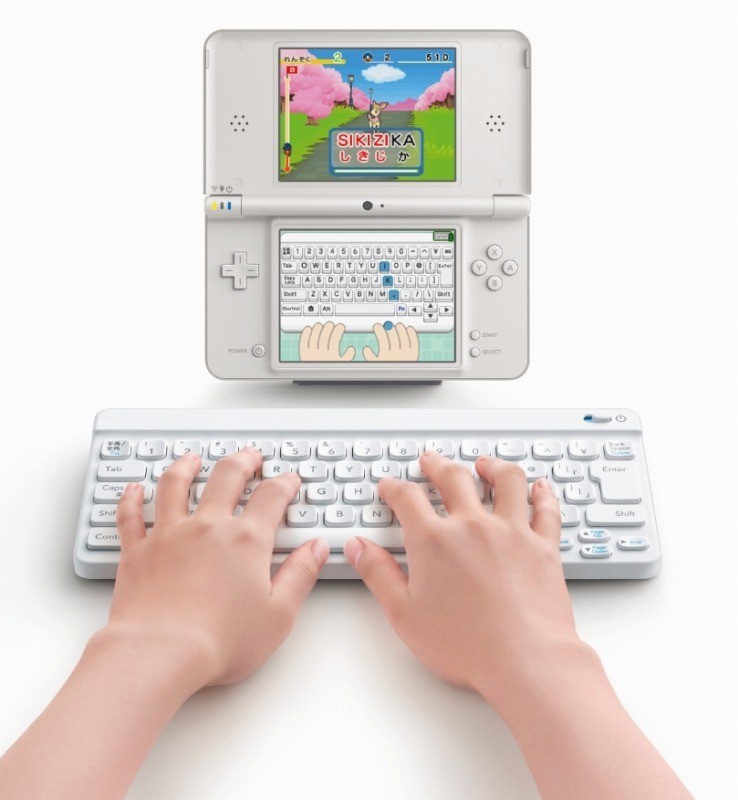
Despite what the title might suggest, this edutainment game did not, in fact, release for the PC. Instead, this Genius Sonority-developed title was released for the DS in the early 2010s — though North Americans never officially got their hands on it. And, of course, to facilitate any typing at all, the game was bundled with a Bluetooth keyboard.
Typing Adventure’s lessons are given a simple framework to draw you in. You’re part of a research club, working with characters like Professor Quentin Werty and Paige Down (real subtle there) to catch and research Pokémon, and that means lots and lots of typing.
Though useful as a learning aid on paper, Typing Adventure does have one major drawback: Pokémon names are often eclectic, eccentric, and hard to grasp sometimes. So those who don’t already have strong foundational knowledge of Pokémon names, appearances, cries and everyone’s favourite streamer game in COVID times can find themselves at a disadvantage.
Whether it was because of this or for other reasons, Typing Adventure never received any sort of follow-up, with the next Pokémon edutainment game being Art Academy on the 3DS. Hey, you, what are you gonna do.
Hey You, Pikachu!
Our final Pokémon game from Ambrella, and the final game for the day overall is one that also happens to be their first, and possibly most iconic. Released in 1998 in Japan and 2000 in the U.S, with Europe “sadly” missing out, Hey You, Pikachu is a virtual pet game built around the Nintendo 64’s Voice Recognition Unit and a microphone.
As with some of the other games from Ambrella that we’ve covered, Hey You, Pikachu is simple in nature and lacking in interactivity. Gameplay involves speaking into a microphone to communicate with a Pikachu, and that’s about it. While there’s a variety of objectives and missions, everything boils down to telling Pikachu to do something and hoping it understood what you said, made complicated by the game’s poor voice recognition.
While Ambrella went to make games for just over two more decades, Hey You, Pikachu (and its successor, Pokémon Channel) would eventually be forgotten by history. They presumably never made a sequel despite the advances in tech due to Pikachu’s royalty payments.
Its only legacy? YouTuber fodder. Let’s be honest. Hey You, Pikachu may have been forgotten by the general public at the time, but for as long as YouTube is around, countless people will be able to enjoy the concept of shouting as a yellow rat without it being “weird” or “please get out from my basement”.
READ NEXT: Dark PS2 Games Not For Kids
Some of the coverage you find on Cultured Vultures contains affiliate links, which provide us with small commissions based on purchases made from visiting our site.