

While the PS1 was when gaming started to embrace its dark, gritty side, the PlayStation 2 began an era where developers decided to get really grim with it. If you’ve been playing a lot of Battle For Bikini Bottom and need the complete opposite of a palate cleanser, these dark PS2 games could be just what you need. Let’s open with a game that has the potential to be the darkest PS2 game of all time and also quite the moreish snack if you’re Galactus.
Soul Nomad & The World Eaters
Developed by Nippon Ichi Software, who are best known for their tactical strategy RPG games like Disgaea, Soul Nomad & The World Eaters follows Reyva, a young hero who is forced to call upon the demonic power of Gig in order to defeat the reawakened World Eaters that threaten the entire planet. That doesn’t sound very dark, but the actual game itself deals with a lot of heavy subject matter, such as murder, slavery and more not lovely stuff. The cost of life in the Soul Nomad world is pretty cheap at the best of times, but that’s without getting into the infamous Demon Path, which you can unlock at the very start of the game when your mentor asks if you know what your mission/purpose is.
Choosing the options that are marked with a skull and crossbones will lock players into the Demon Path, which is orders of magnitude darker than the rest of the game. It was dark anyway, but all of those atrocities and evil things are perpetrated by the villains you’re trying to stop, but in the Demon Path, you’re leading the group that’s killing everyone.
You’re the one responsible for the destruction of the entire world, and we do mean the entire world. Follow the path all the way to the end, and literally the game’s heroes and villains join together in one last ditch to stop you, and if you win, you receive the “bad” ending.
It doesn’t get darker than the destruction of everything that exists, folks, so we might have peaked too early. I guess we’re suffering for our art.
The Suffering
This’ll be shocking information to absolutely no-one, but if you make an action-horror game set in a prison starring death row inmates, the subject matter is probably going to be pretty dark. The Suffering definitely didn’t disappoint in that regard. Main character Torque’s battle against demons leads to one of the goriest and depraved adventures on the PS2. It’s called The Suffering for a reason. It’s not The Successing.
An action horror game rather than a straight-laced survival horror experience, The Suffering follows Torque as he serves time on death row for the murder of his wife and two children. Torque doesn’t actually have any memory of the event in question, and as the player, you actually get to control the fate of Torque’s family through the in-game morality system, but we’re getting ahead of ourselves.
While waiting to be executed at the Abbott State Penitentiary on Carnate Island, the prison is hit by an earthquake and subsequently besieged by demonic creatures called Malefactors, leaving Torque and the poor prisoners forced to fight in order to survive this nightmare.
Demons vs humans isn’t the darkest of tales ever made, but the Malefactors themselves help kick things up a notch. Rather than just being generic monster fodder, each type of Malefactor is inspired by a type of death that occurred throughout the history of Carnate Island. It’s a prison, so a lot of them make simple sense, but then there’s Festers, reincarnations of slave traders who left their slaves tied up in the hold of a marooned ship to be eaten by rats.
Fun times, fun times. Wish Punchline had some fun times back the day.
Rule Of Rose
If you were to believe the outrage that emerged from the pre-release of Rule of Rose in Europe, you’d think this one game was responsible for all of the evils in the world, or at least pizza crust stuffed with tomato. If you like that…please explain why down below.
Ahead of the game’s launch, EU Justice Commissioner Franco Frattini was screaming until he was blue in the face that Rule of Rose contained the likes of “children buried alive underground, in-game sadomasochism and underage eroticism”. Classic moral panic bollocks, and it kind of worked unfortunately.
Despite Rule of Rose being given ratings of 15+, 17+ and 16+ by CERO, ESRB and PEGI respectively, Franco’s moral panic and the subsequent misguided haranguing by the British press led to publisher 505 Games pulling Rule Of Rose from sale in the UK. That limited release explains why physical copies of Rule of Rose have become so expensive here, but did the game feature any of the dark content that Franco Frattini wailed over? No, of course not. Though that doesn’t mean Rule of Rose is a walk in the park.
Set in the 1930s, Rule of Rose follows 19 year old Jennifer as she’s kidnapped and forced onto an airship by some savage children known as the Red Rose Aristocracy. The story from here is told over the course of months, and as the game goes on, the events of the present and the events of Jennifer’s past begin to merge.
Spoiler alert, but a lot of kids and one unlucky dog end up getting murdered, and there’s a little bit of suicide thrown in on top. It makes the moral panic so weird though. Focus on the truth, not this made up crap. Fabricating evidence is something a crooked cop would do.
NARC
A game that’s either darker in theory or unintentionally, depending on how you want to look at it, NARC was a PS2 reboot of an old school side scrolling beat ‘em up. Cops in that game operated with about as much prejudice and violence as I do when someone says something negative about C12: Final Resistance. Shoot first, shoot later, maybe inscribe the questions on your bullets. You get the point.
The old Williams Electronics game might have faded into obscurity with no hope of a follow-up, but VIS Entertainment and Midway decided that they’d try and have another go at giving NARC its time to shine. The result was the 2005 PS2 and original Xbox game of the same name.
Players control either disgraced narcotics officer Jack Forzenski, or DEA agent Marcus Hill, as the two are forced to co-operate to stop the advance of a new designer drug called Liquid Soul. No, not quite.
Considering the two’s first encounter with Liquid Soul sees a nearly dead drug dealer basically resurrecting themselves and gunning down eight cops, clearly LS is a dangerous drug. Would be a shame if you could get high on that supply.
Yes, NARC’s key gimmick was that, despite playing as an officer of the law, players could sell and use the drugs they confiscate from the criminals, with using the drugs conveying certain temporary stat buffs as you play. The downside comes with the chance of addiction, with more serious drugs having more serious addiction chances.
That’s pretty dark on its own, but you can also operate with relative impunity as a policeman, battering or shooting everyone on the street and only suffering a mere slap on the wrist. That’s twinsane. No, I’m not talking about Twinsanity again.
Evil Twin: Cyprien’s Chronicles
One of the great things about the PS2 is that the library is so vast, you’ll often rediscover video games you saw one time at your local Blockbuster, and then never again. Take Evil Twin: Cyprien’s Chronicles for instance. A dark, broody platformer, you’d think this would’ve appealed to some teen angst during childhood, but for whatever reason, Evil Twin ended up fading into obscurity. Shame really, because the game is both dark and imaginative.
Also released for Dreamcast, Evil Twin follows Cyprien, if you can believe it, who was raised in an orphanage for much of his young life. You see, both of his parents died on his birthday. No amount of Jak 2 copies could fix that one.
That’s already quite the dark origin story for a child, but Evil Twin opens with a bit of darkly comical miscommunication: his orphanage friends chuck him a surprise birthday party, which is probably the worst thing you can do for someone who lost mum and dad on that day. Naturally, he storms off to his bedroom to be comforted by his teddy bear and imaginary friend Lenny, but Cyprien lashes out, so he and his friends are all then kidnapped by dark tentacles and dragged to Undabed. Clever.
While the rest of the game from there isn’t all that dark for an adult, Evil Twin: Cyprien’s Chronicles works because it explores dark-ish themes through the eyes of a child. Dealing with depression and grief as a kid would cause you to push people away, as shown by the titular Evil Twins of everyone in Cyp’s life ruling different areas of Undabed. As for the game itself, it’s a fairly standard platformer with an admittedly wonky camera, but the overall core is solid and the story is well-meaning in its use of dark themes.
It’s probably last on the list of games for Nightdive Studios to remaster, but it’s definitely not going to be Haunting your PS2 collection.
Haunting Ground
I don’t think there’s a way to cover the darkness in Haunting Ground without it getting a bit too yellow symbol of doom, because this one is more than a little bit on the messed up side. What starts out as a seemingly ordinary PS2 survival horror game, featuring an underpowered girl and her new dog best friend working together to try and defeat the different people trying to kill her, takes some turns that are uncomfortable.
Haunting Ground starts out innocently enough, or as innocent as you can really get for a horror game. Lead character Fiona visits her parents. Nice! They die in a car crash. Not nice. Fiona awakens inside a cage within a castle, where she befriends a dog called Hewie. Good boy.
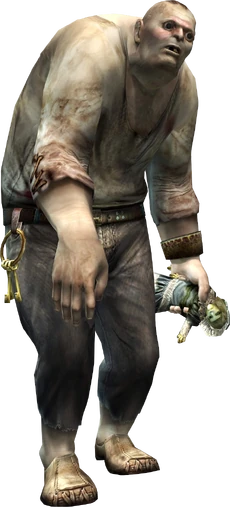
As she explores the castle, she finds its denizens are uniquely obsessed with her, but less in a “stan” way, and more in a “stab” way. There isn’t a good way to be obsessed with someone or a particular pop group from South Korea, but Fiona’s obsessors are nasty nasty. The starting boss isn’t great, with this big lad thinking Fiona is one of his “dolls”, but worse is waiting.
From maid Daniella, jealous of Fiona’s ability to experience pleasure and create life, to Riccardo, a clone of Fiona’s dad who plans on some rather uhh “unconventional means” in order to create an immortal clone of himself, playing as Fiona in Haunting Ground is terrifying.
Anyway, back to more fun stuff, like putting a plastic bag over a man’s face and suffocating them until they turn purple and die. Yay!
Manhunt 1 and 2
You probably knew either Manhunt or Manhunt 2 was going to be on here in some capacity. You’re hunting mans. Not hugging mans!
Perhaps the grimmest and darkest game on PS2 not named Barbie’s Horse Adventure, Rockstar’s original Manhunt was pretty bleak in its own right. As James Earl Cash, you’ve been kidnapped and forced to take part in a snuff film by a sadistic director, meaning you have to use both wiles and brutality in order to survive. The game would then keep score of your performance and kills throughout the level, which makes sense as a snuff film would want the most depraved stuff possible, right? It’s this contextual distinction that let Manhunt be sold in most countries, even if there was still plenty of banning and controversy surrounding the game.
Manhunt 2 is another story entirely. The game’s plot revolves around governmental conspiracies, mind control and sleeper agents, so why is Daniel Lamb still carving people up like he’s in a snuff film? It’s this perceived casual sadism that led to the BBFC banning Manhunt 2 initially, because it was so dark. The ESRB also gave it an Adults Only rating, meaning everyone refused to sell the game, effectively making it banned. The removal of the score system helped get Manhunt 2 actually classified. The rest of the game was very normal and chill.
Right, let’s not coo on about this one for any longer.
Kuon
A recurring theme in the work of FromSoftware has been the cycle of death and rebirth. Practically every single Soulsborne game has some kind of plot or subtext about how the endless pursuit of immortality is corruptive to either the world, the soul or both. Kuon isn’t their first game to explore similar stuff, but it is their most forgotten.
A survival horror game set during the Heian period of Japan’s history, Kuon is split between three phases with their own playable characters. The game is set in and around Fujiwara Castle, which is special because of two magical Mulberry trees that produce silkworms, with these silkworms then reviving the dead nearby. Sounds like a good deal, right? Of course not, as the resurrected dead come back as flesh-hungry monsters who need to absorb other living creatures in order to sustain the resurrection. It’s gross and it’s devastating to the regular people who just want to live a normal life, as everyone else becomes the victim of power-hungry psychopaths hoping to defy the cycle of death. Sure, the villain is doing it for someone other than themselves, but they’re still screwing everyone over in the process.
Players control multiple characters as they explore the Castle and try to deal with the carnage that the Mulberries have caused, using magical spells to dispel the monsters roaming the now haunting corridors. The monster designs are suitably disgusting, as you’d expect from a FromSoft developed joint, while the atmosphere and tone are among the most oppressive and disturbing among the PS2’s offerings. Sure, the actual gameplay has aged about as well as your dad’s NFT portfolio, but between the dark story and horrific monsters you encounter, Kuon is worth checking out after a few Google searches.
Twisted Metal: Black
The Twisted Metal TV show might play up the idea of a post apocalyptic automotive blood sport for laughs, but make no mistake: people explicitly killing each other for money and/or our entertainment is pretty dark. Twisted Metal: Black understood this, which was considered to be a reboot for the series after four installments on the PS1 in five years.
The core of Twisted Metal: Black is the same as it ever was. Chronic ne’er-do-well and all round bad egg Calypso has given a bunch of violent psychopaths and hopelessly desperate loners the chance to achieve their one true wish. All they need to do is survive a game of people in cars firing heat seeking missiles at each other. Sounds simple enough, right? Well, the issue is that Calypso is about as trustworthy as a snake selling snake oil. Anyone who entered the contest with bad intentions is liable to get what they want out of Calypso, while the few that had somewhat good intentions, like John Doe, the amnesiac who just wanted to figure out his past, get royally screwed over.
Most of the stories concern someone either trying to get revenge, or become a more efficient killer, with the entire story playing out like a descent into a bloodbath.
But one of the darkest stories concerns Preacher. As the name would imply, Preacher was going about his duties with a baptism one day, only for him to become possessed by a demon and murder everyone in attendance. Calypso offers Preacher a chance to learn “the truth”, which Preacher takes to mean that he’ll find the demon responsible and be declared innocent, but the truth is that Preacher is a violent schizophrenic. All those murders were just him losing the plot. What fun.
For that added bit of darkness, there’s an unlockable character, Minion, who doesn’t have a typical story. However, his loading screen quotes are coded messages that players have deciphered, suggesting that the entire events of the game all take place in Sweet Tooth’s serial killer brain. Well done to whoever clocked that one.
Clock Tower 3
Say what you want about the trope, but a lot of horror/survival horror games have been built off the idea of a woman having to outwit or outmanoeuvre a bigger, more intimidating and overwhelming foe. We’ve already seen that in this video with Haunting Ground, but the Clock Tower series had been doing that already long before Fiona played One Woman and Her Dog in a gothic castle.
While pretty interesting, the PS2’s Clock Tower 3 isn’t really considered to be the best that the genre has to offer, in part due to the fact that the game replaced the usual point and click gameplay style for direct control over the protagonist. Turns out survival horror is a tad less stressful when you can properly move a character, instead of just clicking intensely on a piece of furniture and waiting for your character to go there. Still, Clock Tower 3 did give players another great instalment of the “girl being chased by serial killers” series, with Clock Tower 3 arguably being the darkest of the bunch. Part of that is because there’s no longer one Scissorman; it’s the Scissor Twins. At least they aren’t sisters.
Clock Tower 3 follows a 14 year old girl, Alyssa Hamilton, who you find out is the latest in the family’s long line of Rooders. Far from being huge fans of the Glorious One, Rooders are young girls with supernatural powers, and the enemies of “Entities”. These entities are powerful creatures that possess mortal men to make them commit mass murder, making the human a Subordinate. Alyssa travels through time protecting people from Entity and Subordinate activity, only to find the call coming from inside the house.
Turns out her grandfather, Dick by name and dick by nature, has transformed into the Dark Gentlemen and plans to rip Alyssa’s heart out and drink her blood in order to become an Entity himself.
READ NEXT: 50 Best PSP Games of All Time
Some of the coverage you find on Cultured Vultures contains affiliate links, which provide us with small commissions based on purchases made from visiting our site.