

Led by the PS1, the fifth generation of consoles was when developers really started leaning into darker, more unsettling stuff. Everyone knows more polygons = more adult. Today, let’s talk about just some of the PS1’s darkest games, while making sure we avoid some of the obvious suspects like Resident Evil, Silent Hill, Parasite Eve etc. How? It’s a mystery.
R?MJ: The Mystery Hospital
Alright, this one’s disturbing in a different way.
There was something about FMV horror games back in the day that just attracted the…sickos. The amount of gore in Phantasmagoria alone was enough to cause an uptick in the sales of pearl necklaces due to the amount of clutching that was going on. The PS1 had plenty of FMV horror games of its own, some of which we’ve covered on this channel already like D, the game, but R?MJ: The Mystery Hospital is a beast of its own.
Released exclusively in Japan for the PS1 and SEGA Saturn, Mystery Hospital launched in 1997 and saw five characters brought together by an explosion that rocked a massive state hospital. Love that song, by the way. Frightened Rabbit forever. That’d be terrifying enough under the best of circumstances, but then there’s the added global pandemic taking place, meaning everyone has to avoid contracting a deadly airborne plague. Throw in a potential conspiracy about what’s lurking underneath the hospital and some absolutely insane writing and voice acting, and you’ve got the makings of one of the more unhinged yet still dark games on PS1.
As for the game itself, R?MJ: The Mystery Hospital is a point and click adventure game, where you collect items and use the five senses to solve puzzles. It’s admittedly a bit of a rollercoaster ride rather than one where you have much agency or choice, but as rollercoasters go, R?MJ: The Mystery Hospital is one of the most bizarre and dark on the PS1. It’s so bad it’s good, too. Have NO FEAR, If you want to give it a go, but you’re put off by the fact that it’s a Japan-only release, an English fan translation did drop a few years back, meaning everyone can enjoy this slice of nonsense. Let’s creepy crawly to the next game.
Spider
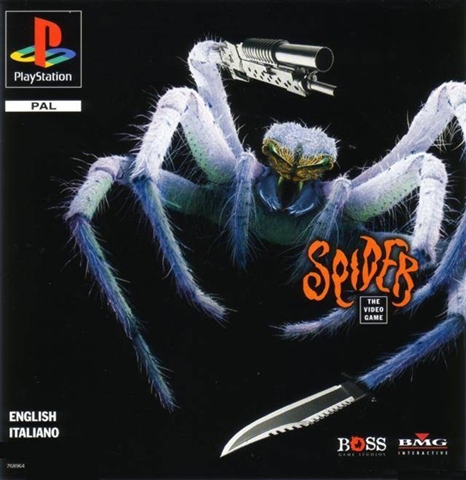
Regardless of whether or not you’re an arachnophobe, we think pretty much everyone can agree that having your consciousness transferred into a spider would be pretty unchill Basically, you’d be doomed to get squashed by some human with a tissue, or trapped in some long-armed spider catcher, fated to be tossed outside. Also, you can’t wear any nice pants. Pass!
Fortunately for protagonist Dr Michael Kelly in the game Spider, life as an eight legged freak is a little bit better than it would be for the average house spider, considering Kelly is controlling a cybernetic spider complete with leg attachments like guns and blades. The bad news for Mr Kelly however is that his consciousness is trapped inside the robot spider, his body has been kidnapped by ne’er-do-wells led by a literal brain in a jar, and if you don’t manage to defeat these evil cretins, he’ll be stuck as a spider forever. Time to get crawling Michael, your body isn’t going to save itself.
The gameplay of Spider sees Kelly exploring 3D levels on a 2D plane, using all the abilities you’d expect of a spider like climbing walls and spinning silk to solve platforming challenges and overcome hostile obstacles. There’s also ten weapons to be found throughout the game, which can be attached to your front legs to deal more damage to enemies in your way, including other cybernetic animals that have broken free.
Spider might not be as horrifying or jump scare heavy as horror games on the PS1, but the existentialism of your mind inside of a spider is enough to keep some people up at night. I will also never be over the box art for this. Still sick.
Overblood
Far from being a game about the dangers of too many people donating blood all at once, Overblood ranks among the many survival horror games that would call the PS1 their home. Fortunately for Overblood, developers Riverhillsoft had a way to distinguish itself from the rest of the pack, as it’s considered the first horror game with fully 3D environments. Other survival horror games, like Resident Evil or even the first 3D horror game, Alone In The Dark, used pre-rendered backgrounds to simulate a 3D environment, but Overblood decided “we’ll do it live”.
Of course, how a game renders its environment has no real bearing on how dark or disturbing a game’s story can be, so it’s a good job that Overblood’s story features a nice blend of dark and creepy sc i-fi lunacy. Players control Raz, who’s just emerged from a cryogenic pod that’s malfunctioning to find the Arctic research facility is falling apart. Soon enough, he finds both a robot friend and a scientist who wants to help, but they’ll have to deal with an army of green, scaly monsters that are intent on killing everything in sight. Still, why does Raz have no memory? And what’s with this note about cloning?
The gameplay itself isn’t going to compete with Resident Hill, Silent Hill and others, as critics found the game to be a little too much wandering around, and not enough fighting big scaly monsters. Still, there was enough interest in Overblood to warrant a sequel that curiously didn’t launch in the US.
Overblood 2 is set 100 years in the future, and sees a man named Acarno uncovering a conspiracy for the global elite to flee an Earth depleted of resources, leaving the rest of us to die. If that’s actually what’s going to happen in a few years, we can just say they got the idea from Riverhillsoft. At least they kept it dark, though. Can’t get much darker than global annihilation.
Shadow Tower
To say that FromSoftware likes making games about incredibly dark worlds and subjects is like saying “we love F-Zero”. Of course they do, almost as much as poison swamps. While Dark Souls, Bloodborne, Adventures of Cookie and Cream, and Elden Ring are perhaps FromSoft’s most notable “dark” games, they’ve been meddling in the macabre for decades now. King’s Field is no walk in the park in the dark stakes, but if you want that extra bit of gloom, tragedy and horror, you want to try Shadow Tower.
Similar in a lot of ways to King’s Field, Shadow Tower is a first person RPG where you descend into a dungeon filled with monsters. The atmosphere is oppressive, the monsters are terrifying and the gameplay is brutally hard, but the story tying it all together is also pretty dark.
Set on the continent of Eclipse, specifically in the Holy Land Of Zeptar, you control a mercenary by the name of Ruus Hardy, who’s travelled back home to find Zeptar destroyed, its citizenry killed and their souls harvested for the demons. Worse still, the central tower now goes down into the underworld, so when an old man gives him the “Dark One’s Sword”, the only weapon capable of harming the demons, it’s time to go demon hunting.
Unlike other RPGs that give players a set amount of EXP for killing enemies and performing actions, upgrading your stats in Shadow Tower means killing specific types of enemies. All enemies in the game are non-respawning too, so you can’t just keep farming the same type of enemy to have a ridiculous amount of HP. There’s secrets to find, hidden lore and an ending that could be seen as pretty dour, making Shadow Tower a dark one for the ages. Next up, let’s stick to the shadows.
Shadow Man
Of course this game is dark, look at the name. Shadow is literally created through the obscuring of light, so a Shadow Man? A shadow made of man? Pretty dark.
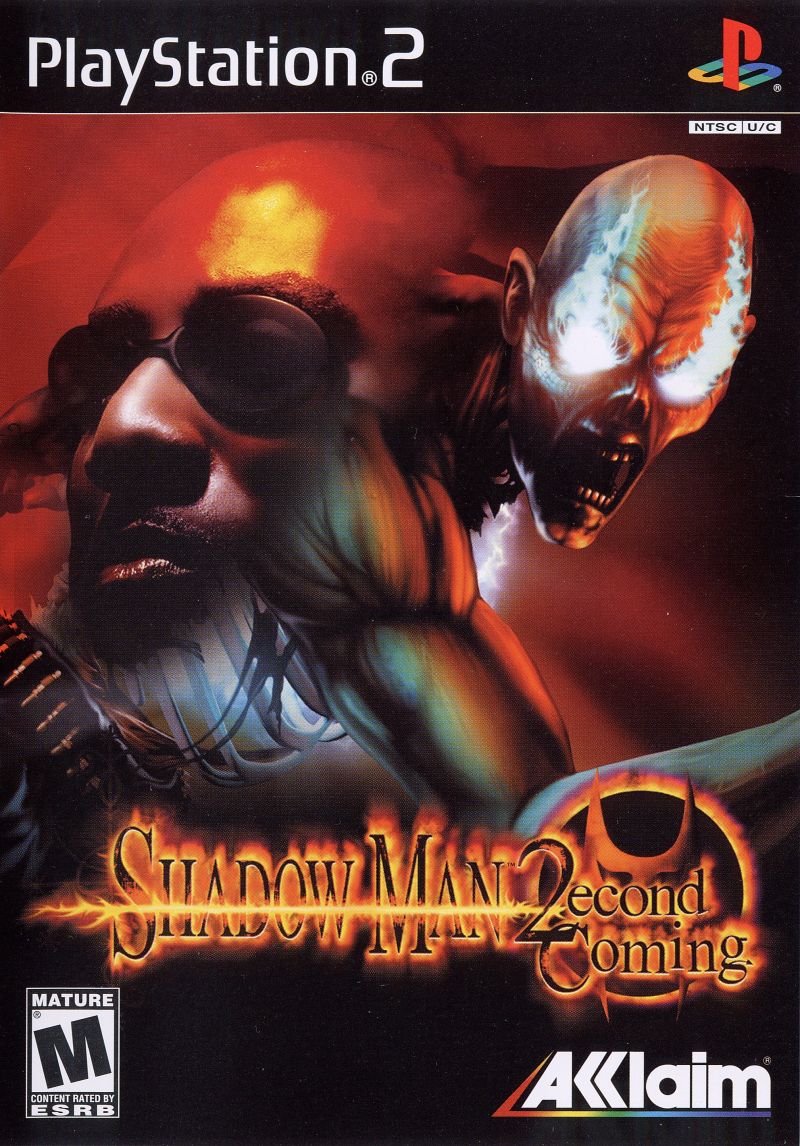
Joking aside, many might have been introduced to Shadow Man through the Acclaim developed action adventure games, but Shadow Man as a character had existed before Acclaim got the rights to it. Not much before, as Shadow Man started in 1992 and Acclaim Comics got the rights in 1994.
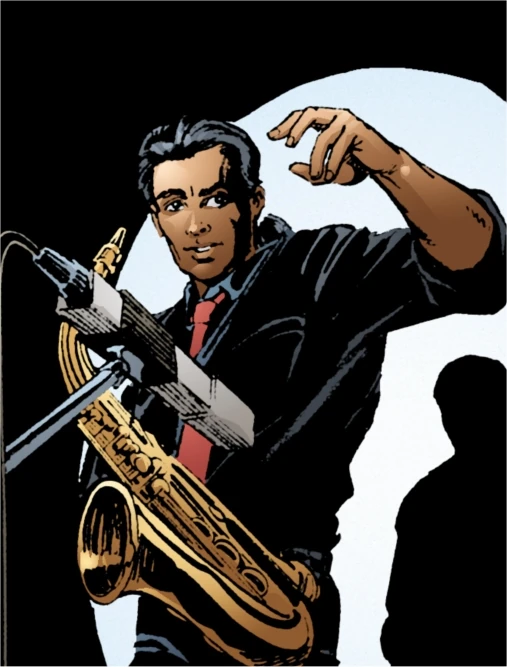
While the original Shadow Man was a man named Jack Boniface, the Shadow Man game is based on the second run of comics, debuting in 1997 and created by writer Garth Ennis (of The Boys fame) and artist Ashley Wood, who’s worked on Metal Gear Solid digital comics. This new take on Shadow Man follows Michael LeRoi, a college dropout turned Voodoo powered antihero who has to stop threats from the world of the dead, known as Deadside, messing things up for the land of the living, or Liveside. For the game specifically, that includes a monstrous entity named Legion, and Jack The Ripper himself, who’s built an asylum for serial killers within Deadside at Legion’s behest.
Best described as a 3D Metroidvania, Shadow Man sees Mike LeRoi travelling across both Liveside and Deadside in his quest to stop Jack and Legion, unlocking new powers and weapons as he goes that can unlock new areas and even more goodies. It’s a trial and error experience, admittedly, as Shadow Man refuses to hold your hand as you try to play it, but it’s a journey worth sticking with. Regrettably, the PS1 version of Shadow Man has been considered the weakest one, but Nightdive developed and published a solid remaster, upgrading the controls and including cut content to create the ultimate Shadow Man experience. Reckon they’ll do the PS2 game as well? Must be a nightmare to figure out.
Nightmare Creatures
Say what you want about Nightmare Creatures, but you know precisely what you’re getting from the name alone. This isn’t a “walking along, having a great day at the park with your girlfriend” simulator. This is Nightmare Creatures. There are monsters here, and they’re both scary and looking to murder the life out of you. That sounds a bit dark already, but it’s how Nightmare Creatures weaves real-life history that’s both dark and fun.
Starting out in the year 1666, the most devilish of all the years, Nightmare Crearures sees a cult called the Brotherhood of Hecate trying to create an elixir to cultivate a race of super humans. Naturally, they get nightmare creatures instead, but when the cult remain undeterred in their plans for world conquest, one of them betrays the group and inadvertently causes the Great Fire Of London. Smash cut to two centuries later, and Adam Crowley, based on real-life occultist Alisteir Crowley, is using the Brotherhood’s findings to create another army of nightmare creatures. Stopping Crowley is left to Ignatius Blackward, a priest and occult expert, and Nadia Franciscus, the daughter of an immunologist who was killed by– yep, you guessed it, nightmare creatures.
Looking like a spiritual predecessor to Bloodborne and playing out like a hack and slash game, you control either Ignatius or Nadia as they use a variety of weapons at their disposal to defeat the creatures plaguing London. Something that makes Nightmare Creatures a bit more unique compared to other hack and slash games is the quite polarising adrenaline bar, which forces players to seek out combat in order to avoid losing health.
It’s all action, all the time, against some of the most disgusting creatures ever seen on the PS1. I don’t know, it’s almost enough to give someone nightmares. Creatures.
Martian Gothic: Unification
PS1 horror games are typically either spent in some kind of creepy gothic buildings, like hospitals, mansions and asylums, a collapsing city like Resident Evil 2, or some kind of abandoned research facility in the middle of nowhere. As you can tell by the name, Martian Gothic: Unification takes the third option, though their version of “middle of nowhere” is another planet entirely. Gonna be a nightmare for your dad to “pop out and get milk” at least.
Developed by Creative Reality, Martian Gothic: Unification takes place in the far-flung future of 2019, ohhhh I hate that. Humanity has managed to colonize Mars itself. The Vita-01 research station on Mars has been quiet for 10 months, leading to Martin Karne, Diane Matlock and Kenzo Uji travelling to the big red planet in order to get to the bottom of this radio silence. Here’s the rub though; the last message sent by Vita-01 warned everyone who thought about investigating the base that they needed to “stay alone, stay alive”. That plays into the gameplay, as if one of the three playable characters comes into contact with another, the game immediately ends.
Having two characters in the same room might seem like a weird game over condition, until you encounter the Trimorph enemies, which are exactly what they sound like. Considering the upcoming horror film Together seemingly has a similar premise of people just fusing together, clearly Martian Gothic was ahead of its time.
The rest of the gameplay encourages players to avoid conflict and solve puzzles to progress, as the enemies can only be incapacitated. It’s a tense and horrifying affair and premise, and while there are obvious flaws in the map design and focus on backtracking, there’s some interesting ideas here. There’s some interesting ideas here.
Echo Night
Another FromSoft developed trip into the world of the grim, the grisly and the grotesque (they bloody love it, they do), the Echo Night series is another property that arose from FromSoftware’s work on the King’s Field series, specifically King’s Field 3. The story goes that FromSoft were messing around with the King’s Field 3 engine and wanted to create a game that pushed the boundaries even further. If KF3’s graphics were realistic, Echo Night’s were going to be that little bit better.
Echo Night stars Richard Osmond, who has absolutely no relation to Donnie, but he is looking for more information about his father, Henry. Left to his own devices at Henry’s house, Richard starts to uncover the mystery surrounding the disappearance of the ship Orpheus, which vanished without a trace with dozens of souls on board. Richard even experiences that first hand, as he actually ends up on the Orpheus, interacting with the ghosts and trying to resolve their unfinished business. Of course, some ghosts are a bit more hostile than others, making the job harder for Richard, and there’s the small matter of a potentially possessed serial killer too. Still, it can’t be worse than a few crazy horses, eh?
Unlike other horror games on the PS1, Echo Night is a more low stakes affair. There’s no big guns or violent boss fights to deal with, as light is your best defense against any ghastly ghouls. But the subject matter, eerie atmosphere and the acknowledgement of the darkness that can exist within human nature makes Echo Night one of the darker PS1 games you can play. Again, it’s also literally dark if you don’t turn those lights on. Echo Night would even spawn a couple of sequels on PS1, PS2 and PSP, all with lead characters inexplicably named Richard Osmond. We don’t know why FromSoft really liked that name, but they did.
Juggernaut
Another victim of being released in two out of three regions, Juggernaut never saw a release in the EU, which is a real shame as it’s perhaps the most bonkers point and click adventure game ever made, and we’re pretty weird here too. Imagine Myst, but it’s one of those sci-fi sitcom episodes where the main characters are shrunk down and enter someone’s body, and the reason why they’ve done it is because someone is the victim of a demonic possession. Yeah, there’s a lot going on with this one.
Playing as an unnamed dude, you’ve approached a priest to help your girlfriend Sarah who’s fallen victim to demonic possession. Instead of just throwing out a few hail marys and a classic “the power of Christ compels”, the Priest offers an unconventional solution: shed your mortal form and enter Sarah’s mind. Inside, you find a large mansion not unlike those found in games like Resident Evil, but it’s what’s inside the mansion that makes Juggernaut a really peculiar game. There’s items and puzzles to solve, but there are also microcosms; eight self-contained stories set in one of four different areas (a prison island, a jungle, a forest and cyberspace) that you need to complete in order to cleanse Sarah’s soul.
Because Juggernaut is a point and click adventure game first and foremost, the majority of the game is about solving riddles and puzzles rather than combat encounters, and any fights that do occur take place in the form of quick time events. Reviews for Juggernaut would end up middling at best, with many praising the story and puzzles, but ultimately finding it to be just another entry into a genre that was fit to bursting already.
The Note
You don’t realise how many first person horror games there are on the PS1 until you lay out a bunch of them, so here’s one last one to close out with: The Note. Any Americans who don’t know what this is shouldn’t be surprised considering this is yet another victim of bizarre local lockouts, as The Note only launched in Japan and the EU, meaning you missed out on another example of an incredibly dark PS1 game.
Set in a remote European village, you control Akira, a freelance occult journalist sent by a distraught mother to investigate the disappearance of her daughter, Linda, and friends, Toshi and Dave. What is it with people disappearing in these dark horror games? All Akira has to go on is the last thing sent to Linda’s mother, a photograph of a mysterious mansion that seemingly captures some unearthly spirits within. Once Akira arrives with his assistant Angela, he finds the mansion filled with creatures and monsters, including werewolves, bats, rats and zombies. Hopefully they don’t run into a mean demon lady called Necromeda that has nefarious plans for them all, that would be a real shame.
The gameplay is much like you’d expect from most survival horror games, as you’re exploring the mansion dealing with monsters using a variety of items and weapons. The key gimmick with The Note is that you can bind various actions and weapons to the four shoulder buttons, which in theory is supposed to stop players from farting around in menus for half of the game. Considering there’s only four buttons and over a dozen equippable items… It was a good idea in theory. It’s flawed, and the gameplay isn’t much to write home about, but The Note is dark and interesting enough to warrant a quick look at least.
READ NEXT: Bizarre & Brilliant Games Stuck On Old Consoles
Some of the coverage you find on Cultured Vultures contains affiliate links, which provide us with small commissions based on purchases made from visiting our site.