

The march of progress is a cool yet cruel one. While it does mean that you can press two buttons and get a pizza at your door in 15 minutes, it also results in us no longer having enough time to look back anymore. That’s absolutely the case with many classic games stranded on old hardware. Officially.
Eggs of Steel: Charlie’s Eggcellent Adventure – PS1
Eggs of Steel is a truly odd omelette, a platformer with shifting perspectives, gambling, doughnuts, and a soundtrack that feels like the dreams of a slowly melting clown. You play as an egg who revolts against automation by collecting a bunch of clocks and beating up bosses, one deeply unconvincing level at a time.
In truth, Eggs of Steel only hits one part of the “bizarre and brilliant” part of today’s episode. It’s not great. The controls are flimsy, the puzzles are annoying, and you will lose the will to live the 8th time a bird shits on you from above, but what’s fascinating about this one is the minds behind it.
You see, its developer, Rhythm & Hues, is mostly known as a special effects studio, winning awards for their work on Game of Thrones’ Battle of the Bastards, and Babe. Eggs and bacon? But in 1998, they also developed this, their one and only game. Not enough weird for you? Well, Enix, they of Dragon Quest and later Square Enix fame, published the game in Japan, but Atlus, later of Persona fame, published it in the USA. Oh, and it was a Blockbuser rental exclusive for a time. Can you see why this will never come out again?
Vagrant Story – PS1
Now, I know what you’re thinking, but it has been at least 7 months since Vagrant Story last found its way onto this channel, and as sure as Square Enix farts out a completely forgotten mobile game every fortnight, we must return to dust. And by “dust” I mean probably the best RPG Square’s ever published that’s kinda been left to become, well…dust.
Vagrant Story is a late era PS1 dungeon crawling RPG that isn’t afraid to experiment. It follows a Riskbreaker called Ashley Riot after he’s framed for murder, and so you descend into a murky world of intrigue and very thin boys to clear his name.
There really aren’t many PS1 games or even games in general that look, sound, or even play like Vagrant Story. Not only would some of its cutscene framing make Hideo Kojima tremble at his nearest Criterion Blu-ray, but it also rather uniquely has platforming and puzzle sections, and combat kinda like Parasite Eve, except with the ability to target individual body parts. Then there’s the RISK system, which means you gain more RISK the more you attack, which means you take more damage while dealing less, but your crit rate increases.
There’s way more going on in this brilliant game than a single section of this episode could possibly cover, so be sure to head on over to I Finished A Video Game’s amazing video if you want no stone left unturned and then inspected with a Large Hadron Collider.
Elite Beat Agents – Nintendo DS
A westernized take on the Japanese-exclusive Osu! Tatake! Oendan!, Elite Beat Agents stars a group of government agents whose primary function is to help those in need by motivating them to overcome their problems with the power of dance. Imagine the music video for Men In Black but with no Will Smith and a lot more brilliantly Japanese nonsense and you kinda have the right idea.
Elite Beat Agents doesn’t take itself too seriously, with each of its episodes being presented with campy comic book style scenes that set up the scenario. You’ll be doing stuff like listening to Earth Wind and Fire while teaming up with monkeys and gorillas to keep a large fire going.
However, it does also have a couple of surprisingly heartfelt moments, like the one where you try to help a young girl connect with the ghost of her dead father. If you fail, you will consign the girl to a lifetime of depression. She could just skip the whole dad thing and support Everton, to be honest.
But how is it to actually play? As a DS game, Elite Beat Agents makes full use of the touch screen and stylus for its gameplay; where other rhythm games usually have you pressing buttons with the right timing, Elite Beat Agents instead has you tap circles on the touch screen. It’s a pretty haptic, chunky feeling, with many claiming it’s the best rhythm game on the handheld, and one of the best ever. Yes, even more so than Britney’s Dance Beat.
Though acclaimed, Elite Beat Agents has yet to see any sort of re-release or sequel in the west — with its low sales figures and use of covers of licensed music likely not helping matters. It feels like a bit of an alien in today’s industry, but we still love it.
Alien vs. Predator – Arcade/Capcom Home Arcade
So, this game is kinda another asterisk inclusion. Technically, the 1994 AVP arcade game has been ported, but only in 2019 as part of the Capcom Home Arcade, a $260 dedicated console that compiled some of their old arcade games. That’s a lot of money, kinda like paying all that money for a Google Stadia back in the day just to play:
Now, I’m not saying Alien vs Predator is worth all that money, but it’s at least worth a good chunk of change: this is a whipper of a beat ’em up, a super peculiar blend of Japanese stylings, vibrant colours, and the AVP license that even brings Dutch back into the fold, though obviously without Arnie. He only turns up for really good games. https://i.ytimg.com/vi/_U_4J_e6tQM/maxresdefault.jpg Never mind actually.
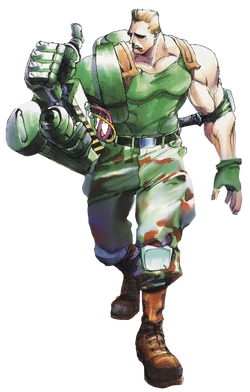
It does make sense that Arnie isn’t here, as this is actually more in keeping with the Dark Horse comics run. Well, that’s actually a whole thing: it was supposed to be based on an early script for an 90s AVP movie that followed Machiko from the comics, but when that all fell apart, Machiko was renamed to Linn Kurosawa, and she, Dutch, and two predators teamed up to take on aliens, predators, and uh normal dudes. Doesn’t seem fair.
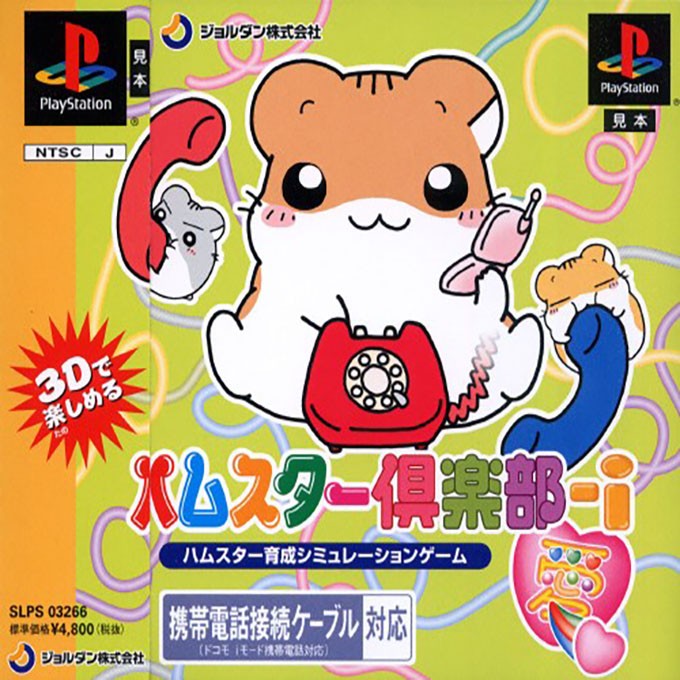
Oh, this is also not to be confused with the Alien vs Predator game on the SNES, which was also a beat em up that released eight months later but was developed by Jorudan of later, erm, Hamster Club i fame. That’s not great.
But how is it to actually play? Well, genuinely quite superb. It does feel a little like a kitschy kitchen sink game, but that’s why I love it. Animations are amazing, the sprites are super detailed and have a lovely range of colours, and there’s a surprising array of moves and tools for you to use too. It’s only a couple of hours long at most, but it’s easy to see how this thing could steal all of your doubloons in the arcade back in the day. It’s available quite easily from unofficial sources too, but it’d be nice to see Capcom give it some official love too.
MICHIGAN: Report From Hell – PS2
Just like I will never be able to ride most of the attractions at Alton Towers, there’s probably a net zero chance of this absolute little freak of a PS2 first-person horror game ever coming out again. One of the main stumbling blocks? It’s not very good.
But for me, as mentioned, I sometimes find intrinsically flawed games being stuck on old consoles almost as tragic as all-time classics. They’re still parts of gaming history, as rough as their edges may be, and you can often find them doing things that had never been done before, or done since.
MICHIGAN: Report From Hell, for instance, is almost like a predecessor to something like Outlast, kinda, but with the added camera scoring system of Dead Rising, which came out two years later. You can even get points for being saucy that goes towards one of the slightly different special endings, which are all based on how you’ve behaved morally behind the camera.
When you’re not busy looking at some pixellated kneecaps, you play as a cameraman in a television crew who are investigating a strange fog that’s blanketed Chicago and turned everyone into monsters. You don’t have many ways of defending yourself, as you’ll mostly be solving some puzzles and pointing your camera at things while people get turned into angry mushrooms. Oh, and if the reporter you’re working with happens to die, you can swap them out with another distinct reporter.
It sounds like a neat premise, and it kinda was way ahead of its time, but reviewers at the time said MICHIGAN can be uniquely dull despite its insane nature, and the story is all over the place. Despite being a cult favourite, no doubt helped by it being an early Grasshopper Manufacture and SUDA51 game, Michigan hasn’t had a critical reappraisal since, as even the most devoted of MICHISTANS can’t overlook its issues. It also doesn’t help that it has writing and voice acting which can only be described as “of all time”.
Billy Hatcher & The Giant Egg – GameCube
Oh yeah, it’s eggs time. I’ve made eggs punses before, so I’m going to give this eggything I’ve got.
The result of one of the few times per decade Sonic Team are allowed out of the content mines that supply the Rule 34 factory, 2003’s Billy Hatcher & The Giant Egg is one of those “one and done” platformers that I’m a bit gutted never went further than a single GameCube entry.
To me, Billy Hatcher is the GameCube: bright, playful, and with an absolute bopper of a soundtrack. I’d even say that that main theme is probably one of the better main themes of the 6th generation, and I’d buy it on an egg-coloured vinyl any day of the week.
It also doesn’t hurt that Billy Hatcher plays pretty great too, and it kinda feels a bit sorta like a mix of Katamari and Mario. So, you get egg, then egg become big egg, then giant egg, egg hatch when you shout at it, and then something cool come out of egg, whether that’s a friend to help you out or an item that you need to progress.
What’s especially clever is that you’re usually not entirely sure what’s in an egg, so you’re rolling an egg around the level, filling up the egg gauge as you go, and then waiting expectantly to see what you hatch, so you’re basically fully locked in and constantly getting rewarded. You can even hatch characters from Sonic the Hedgehog, including the man himself, who can be chucked at enemies to commit violent crimes.
This is an interactive Saturday morning cartoon in video game form, and while yes that camera is not great, and you kinda have to tune out some of the repetitive sound effects so you don’t go a bit How to Basic by the second hour, Billy Hatcher & The Giant Egg being stranded on the GameCube feels like an easy win for Sega at some point, as those who know about it tend to love it. Yes, it was ported to PC in like 2006, but I wish they’d be brave and get it on modern consoles.
Brave Fencer Musashi – PS1
Experimental games are becoming increasingly rare outside of the indie space, or apparently France, and so it’s all the more problematic or even negligent when the quirkier games from the big studios are left behind in history in favour of the extraction shooter flavour of the month or a Splatoon rip-off.
One such game is Square’s Brave Fencer Musashi, a PS1 action RPG that tried to do way more than most people realised. With unique gameplay mechanics like the ability to absorb enemy abilities via Musashi’s sword, a striking art style courtesy of the man of 1000 twists Tetsuya Nomura, and an impressive amount of voice acting for 1998, especially for the PS1, Brave Fencer Musashi is beloved and remembered among those who were lucky enough to play it.
The story begins with the titular Musashi, a young boy whose past incarnation defended the Kingdom from a monster known as the Wizard of Darkness 150 years ago, being summoned by Princess Fillet to stop the invasion of the Thirstquencher Empire. Coca-Cola?
Between Musashi’s attitude, the punny names of the setting, and the absurd scenarios Musashi finds himself in, it’s a far more whimsical experience compared to the darker RPGs like Final Fantasy VII and Xenogears that dominated Square’s output in this era. This and Threads of Fate deserved a bit better for not being such big goths.
While Brave Fencer Musashi did see a release on Japanese and Korean PSN stores, western territories have yet to receive the same treatment, and the game has basically been left abandoned on the PS1 alongside hits such as Power Shovel. A sequel did materialize for the PS2, though without anywhere near the same level of acclaim as this PS1 classic. Boy, I really hope somebody got fired for that blunder.
Fire Emblem: Path of Radiance – GameCube
Among Fire Emblem fans, the GameCube’s Path of Radiance is beloved for its storytelling, worldbuilding, and for the fact that it marks the debut of fan favorite protagonist Ike. Set on the continent of Tellius, Path of Radiance stars a band of mercenaries who find themselves involved in a war to drive out the forces of Daein from Crimea.
Compared to later entries in the series (barring perhaps Three Houses), Path of Radiance features a darker story that explores topics like racism and prejudice. It’s also got some solid worldbuilding, something that later entries like Fates were a bit lacking in. And while Path of Radiance doesn’t rewrite the book on the series’s trademark strategy gameplay, it did feature its own nice quality of life features, like a bonus EXP system that could help weaker units catch up, or allow players to hyper invest in their strongest character.
While Path of Radiance and its sequel are beloved within the fanbase, lackluster sales for the franchise overall nearly made Awakening on the 3DS the final entry. Awakening would revitalize the franchise and cement its place in Nintendo canon, and with Fire Emblem’s future being relatively secure, now would be a great time for Nintendo to revisit the Tellius duology in some form.
Unlike Sony and Microsoft, Nintendo still lacks a dedicated avenue for rereleasing GameCube games digitally for you to own, or at least download, and so used physical copy prices of Path of Radiance and its sequel are what industry insiders would call “God almighty”. Gotta hand it to you if you managed to snag them for those clearance prices back in the day.
God Hand – PS2
We’ve mined God Hand pretty deep before, but when you talk about bizarre and brilliant games, you can’t really avoid God Hand. Also, if Freebird still absolutely scientifically whips after the 300th time you listen to it, so can God Hand.
Capcom’s Clover Studio may be known for the likes of Viewtiful Joe and Ōkami, but their final game was unlike anything before it. Created by none other than Shinji Mikami, who directed Resident Evil 4, but more importantly PN 03, this 3D beat ‘em up stars Gene, a fighter grafted with an arm that holds the power of God within. Tasked with stopping the resurrection of the Demon King Angra, Gene now has to fight his way through a colorful variety of enemies — including ninjas, luchador gorillas, and even robots.
Initial reviews for God Hand were a tad lukewarm, with some infamously being a bit brutal, but the game has since gone on to become a cult classic with the price tag to match. Narratively, God Hand may be a surreal experience with over-the-top humor that doesn’t take itself too seriously, but its gameplay pulls no punches. Already known for being “ball-bustingly hard”, the game features a dynamic difficulty system that adjusts depending on how well you perform in combat, as well as surprisingly in-depth and robust mechanics for the genre.
Sadly, Clover Studios was shut down in late 2006, and unlike their magnum opus Ōkami, Capcom have forgotten about God Hand, aside from a digital re-release on PSN for PS3 consoles that seems kinda doomed, and so prices are what analysts call “dumb as hell”.
Super Mario Galaxy 2 – Wii
New 3D Mario games tend to only come once per console generation. Direct sequels are even rarer, with only Galaxy 2 and 3D World holding that distinction. Super Mario Galaxy 2 began life as an expansion of sorts to its direct predecessor, only for new ideas to push the game’s scope towards a full sequel.
In contrast to the first game’s hub world system, Super Mario Galaxy 2 streamlined things by returning to a format reminiscent of Super Mario Bros. 3 and Super Mario World, with a world map housing the game’s 49 different galaxies. Galaxy 2 also introduces its own new power-ups, such as Rock Mario and Cloud Mario, as well as the ability to ride around on Yoshi.
Though seen as a bit of a step back narratively, Super Mario Galaxy 2 is still a polished and stunning sequel that features a grand orchestral soundtrack like its predecessor. As time has gone on, the love for Galaxy 2 has only really grown.
It’s all the stranger, then, that this game hasn’t received nearly as much love from Nintendo in the years since its release. Though both Super Mario Galaxy titles received digital releases on the Wii U eShop, the Wii U itself wasn’t exactly a best-seller, and the eShop has since been shut down.
While the original Super Mario Galaxy made its way onto Switch as part of a limited-time collection with Super Mario 64 and Super Mario Sunshine, Galaxy 2 was nowhere to be seen. And with the port of 3D World, that leaves only Galaxy 2 (and 3D Land) as one of the missing pieces of the puzzle, as every other 3D Mario game is playable on Switch.
Perhaps Nintendo might be holding out on releasing a remaster or port for the Switch 2. Knowing Nintendo, they’ve probably had a remaster sitting waiting since about 2018 for when they need a quick profits bump. Right, outro time.
READ NEXT: Hugely Ambitious PS1 Games Everyone Ignored
Some of the coverage you find on Cultured Vultures contains affiliate links, which provide us with small commissions based on purchases made from visiting our site.