


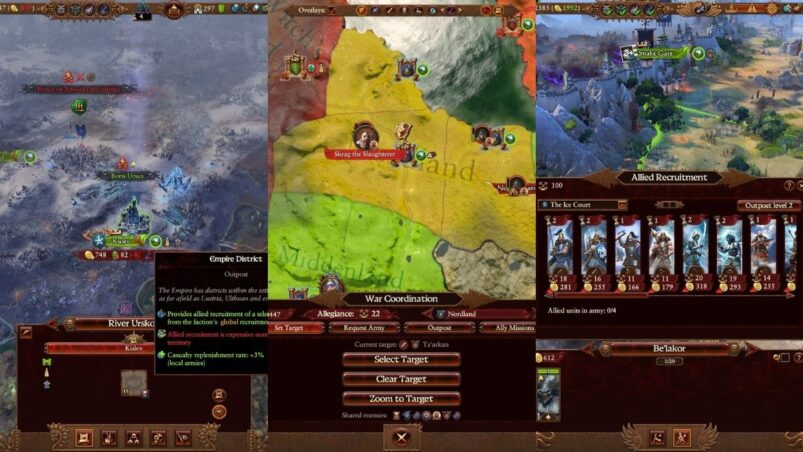
One of the most interesting and overlooked reworks in Total War: Warhammer 3 is the diplomacy system, and more notably the expanded alliance diplomacy system. Now players have a greater range of diplomatic options they can leverage in their alliances, opening avenues of strategic opportunities.
Here are the four main components of Total War: Warhammer 3’s alliance diplomacy system:
– War Coordination
– Outposts
– Allegiance
– Ally Missions
And here’s everything you need to know about alliances in Warhammer 3.
War Coordination
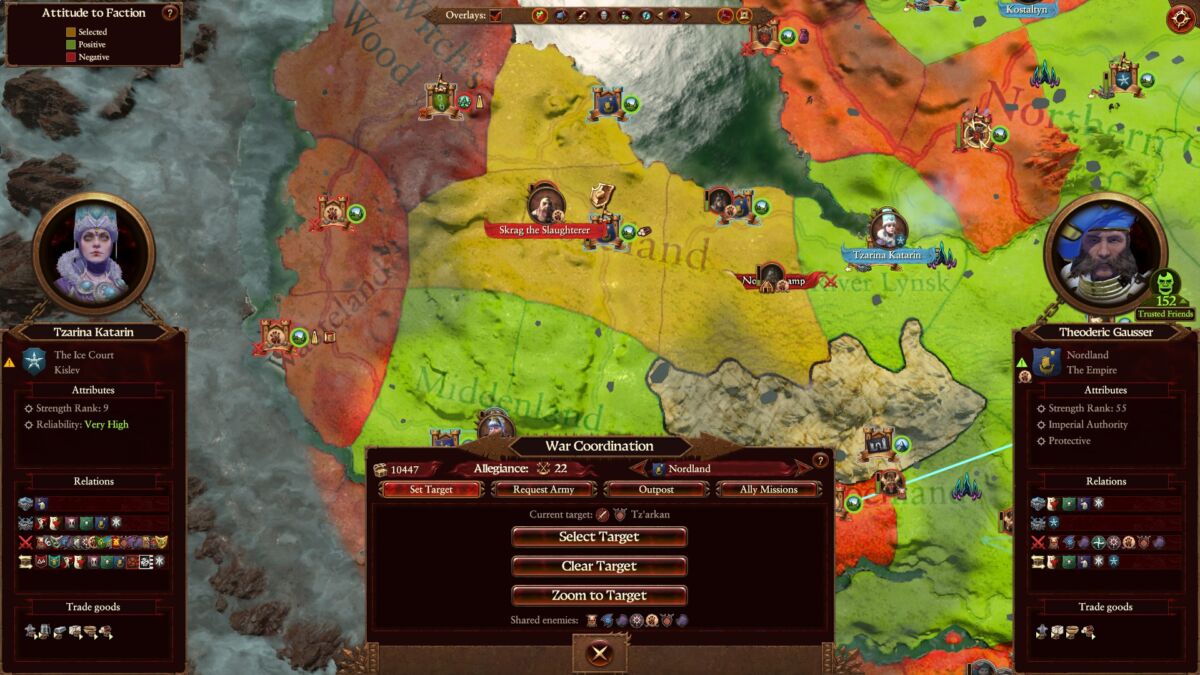
This element of the diplomacy system is reminiscent of previous installments where players can give allied factions specific targets they can pursue.
Though previously the option was almost solely limited at targeting singular enemy settlements or armies for takeover or destruction, respectively, now there is an additional defensive behavior added. Players can now set their own settlements as targets, which will signal to the AI that they need to defend the selected settlement from enemies.
Setting war coordination targets can be done either through the diplomacy menu, when the allied faction is selected or by selecting an allied army and then setting a target for that army.
Outposts

When players form a defensive or a military alliance with a faction, they gain the option of constructing an outpost in a valid settlement of that faction, usually an available province capital that doesn’t already have an outpost. Allies will also gain the option of constructing their outpost in one of your own settlements. Only one outpost can be built per ally, but it can be upgraded up to level three, each higher level unlocking additional benefits.
The main benefits of an outpost is that they provide a small garrison to that settlement, but, more importantly, the ability to recruit units from an allies roster. Higher level outposts will let you recruit higher level units from that specific ally’s roster. However, you can only ever maintain a total of four allied units across all your allies, so choose which units you want carefully.
Allegiance

To recruit units from allies, players will have to utilize the new diplomacy resource – Allegiance. It’s earned on a per ally basis through a passive gain. You can only ever store up to 100 of this resource per ally, so be sure to spend it at a steady pace so as not to waste it.
Allegiance can also let the player request direct control of an available army for a set amount of turns. This is usually quite expensive in Allegiance cost, but can be situationally useful if the AI isn’t pursuing the war-coordination goals you’ve set.
Ally Missions
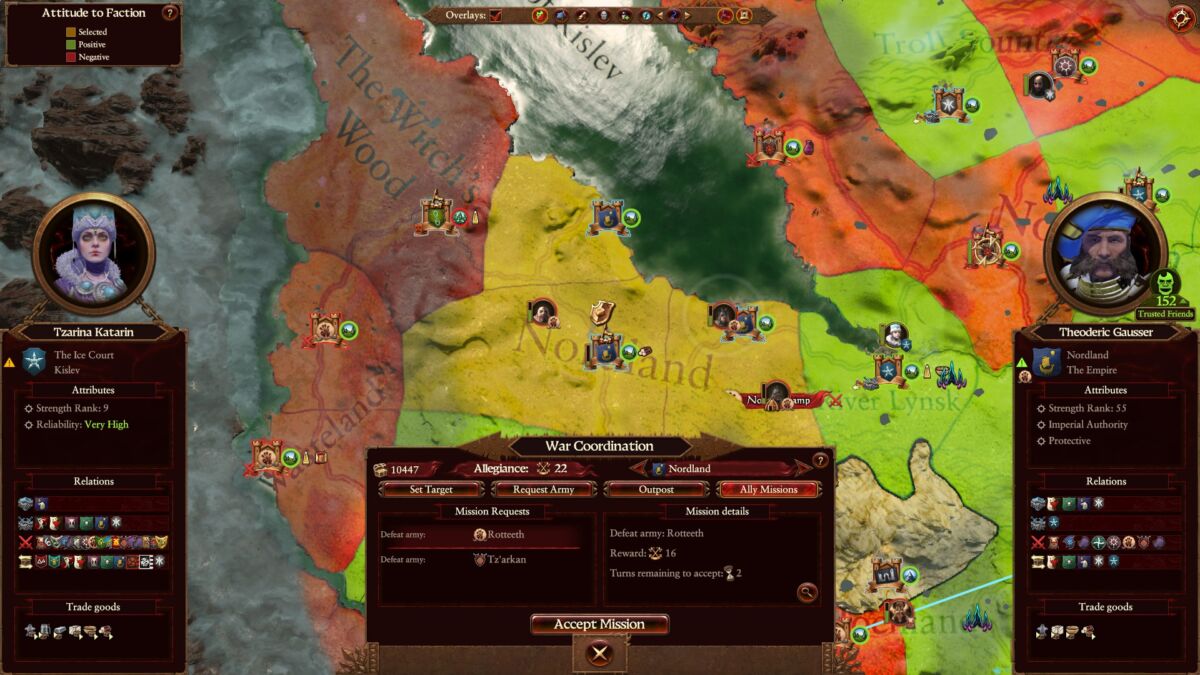
Aside from the passive Allegiance income, players can accept ally missions to earn extra allegiance. These missions usually involve defeating a rampaging army or troublesome foe. In a way, Ally Missions are essentially allies setting war coordination targets for the player in the form of an Allegiance contract.
While Warhammer 3’s expanded alliance diplomacy options aren’t exhaustive or revolutionary by any means, it’s certainly a welcome addition that gives players more opportunities to invest and utilize their alliances. This can open up paths for new army builds and greater coordination with friendly armies. Time to go out and see what you can do with your alliances.
READ NEXT: Ranking the Total War Games From Worst To Best
Some of the coverage you find on Cultured Vultures contains affiliate links, which provide us with small commissions based on purchases made from visiting our site.