

Where would horror be without Resident Evil? And not just in terms of games. The STARS gang’s no good rotten night out in the Spencer Mansion changed horror media forever in 1996. And so, just like Lance Reddick in that Netflix show, there have been no shortage of Resident Evil clones that have been eager to put their own spin on things.
Galerians
As mentioned, the gaming industry certainly isn’t a stranger to clones, copycats and clout chasing. Just like how today’s gaming industry is obsessed with finding the next extraction shooter, the industry in the mid to late 90s wanted the next big 3D survival horror game. Many tried to fill the boots of Resident Evil, though only one or two succeeded.
Galerians might be one of the games that didn’t quite match up to RE’s success, but the game boasts plenty of its own original ideas to make it more than just another clone. You’ve got tank controls, pre-rendered backgrounds and the need to find clues and keys in order to unlock new areas and items, but Galerians’ combat takes things in a completely different direction.
Instead of using guns and knives to do damage, main character Rion is able to use psychic powers in order to fight his foes, as well as find clues, solve puzzles and do all the usual survival horror stuff. Like your local “hardnut” after time spent in the nightclub toilets, Rion’s attack powers are only enabled through the use of drugs however, and there’s only a finite amount you can find, so a lot of Galerians is about optimising the best route through the game to conserve as much ammo as possible. There’s also an AP meter to manage that, if full, will trigger Rion to go into an overdrive like state, dealing massive damage to all enemies continuously, but can kill Rion if left unchecked too long.
Again, Galerians didn’t quite match up to Resident Evil’s juggernaut-like success, but it did get a PS2 sequel, Galerians: Ash. It’s… well it exists at least. Right, time to make like Kevin Bacon and go a bit hollow. No, not because of selling his soul to EE. Cos Hollow Man? What a movie.
Hollowbody
A lot of today’s games are flawed or have some kind of issues, but they took the established Resident Evil formula and did something interesting with it.
Hollowbody is a prime example of that, with last year’s survival horror release from Headware Games perfectly capturing the atmosphere and tone of those old PS1 and PS2 horror games, while adding a new cyberpunk twist to keep things unique and engaging. Sure, Hollowbody might pull more inspiration from Silent Hill, as you try to find a lost companion in an abandoned town, but where did Silent Hill get its original inspiration from? All horror game roads lead to Resident Evil, basically.
For what Hollowbody gets wrong, which is largely the lack of enemy variety, the underbaked combat and weak puzzles probably due to it being made by a solo dev, the game’s environment, atmosphere and tone are second-to-none. Is that bias because Hollowbody is set in a cyberpunk version of the UK? Maybe, and while the housing estates and underground stations of the British certainly didn’t need any more help looking dystopic, Hollowbody manages to give somewhere familiar (at least for us) a more terrifying yet realistic coat of paint.
If you want an RE clone that isn’t just exploring a mansion and killing zombies, and is impressively just made by one lone developer, give Hollowbody a shout. Next up: I always ship this game when I get the chance.
Cold Fear
A survival horror game set on a boat probably doesn’t immediately ping on the impressive radar. As media like Ghost Ship, Deep Blue Sea and It’s Always Sunny prove, it’s pretty easy to be horrified on a boat.
Because of this, and because it made the unfortunate mistake of being an over the shoulder action horror game that was released just two months after the original GameCube launch of Resident Evil 4, people were quick to dismiss Cold Fear as derivative and not worth your attention. As far as gameplay goes, Cold Fear isn’t matching Leon’s roundhouse royale in Spain, but Cold Fear was made by some genuinely ambitious developers who also made Alone in the Dark: The New Nightmare.
Set on a Russian whaler ship overrun with a parasite that turns people into zombie-esque mutants, Cold Fear casts players as former soldier/current Coast Guard Tom Hansen as he tries to uncover the mystery and ensure the parasites never make landfall. It’s a basic premise, and the gunplay on offer here is serviceable at best, but what makes Cold Fear genuinely remarkable is the Darkwave editor. A new program developed by, uh, developers Darkworks, Darkwave was used to control the pitch and roll of the ship’s movements, making them more realistic and reactive to the storms in-game. The ship movements would then affect physics objects in-game, along with Tom’s stance and aiming, leading to Tom’s character model requiring around nine times the amount of animation compared to normal third person shooters. Oh, and they had to develop another system to stop the camera clipping through walls because of the ship.
Tormented Souls
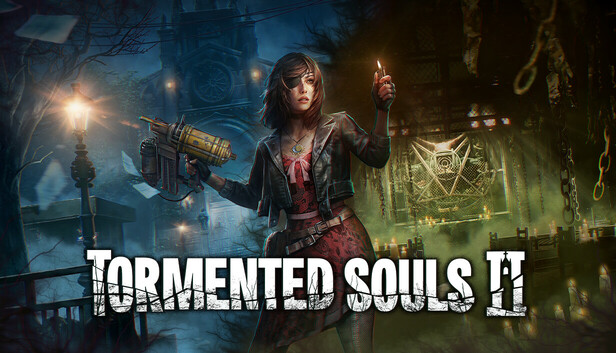
If you compared Tormented Souls and Resident Evil side by side, you’d be forgiven for thinking that they were actually part of the same franchise, as Tormented Souls contains a lot of the same puzzle pieces that the Resident Evil formula thrives on. You control someone stuck exploring a mansion-like structure filled with scary monsters, there’s plenty of puzzles to solve that require you to use more than just one brain cell and it’s also very bloody spooky. There’s key differences, such as improvised weapons instead of just limited ammo, and it’s a hospital instead of a mansion, but it’s close enough either way.
Players control Caroline Walker, maybe a nod to Elza, who receives a letter containing a photograph of two twin girls, Anna and Emma. Compelled to find out what’s happening to the girls, Caroline manages to track them down to the Wildberger Hospital. That’s about where the good news ends for poor Caroline, because as soon as she arrives, she’s knocked out, imprisoned and has one eye surgically removed. Who saw that coming? Not her!
Caroline then finds out that she’s able to travel through time using VHS tapes, meaning she needs to use her newfound powers to solve the mystery of the twins before the horrors of the hospital take her life. Tormented Souls managed to achieve some decent if not spectacular reviews, though the good news for anyone who does love this game is that there’s a sequel on the way too.
Now, you know we can’t resist a good transition.
The X-Files: Resist or Serve
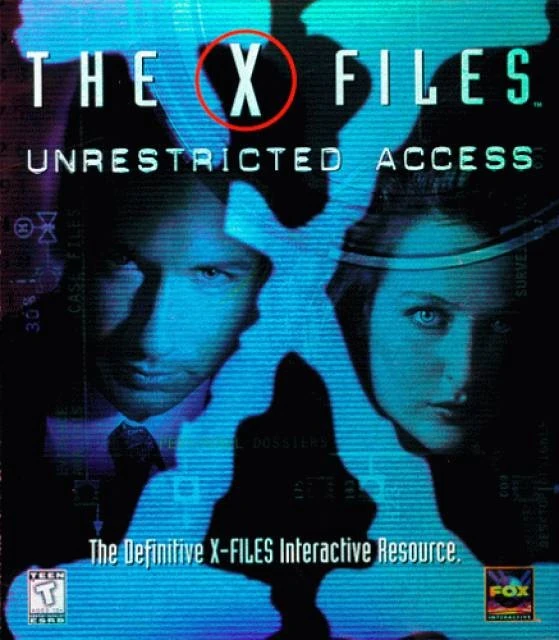
The X-Files was one of the most ambitious TV shows ever made back in the day. With its very clear horror elements, it’s no surprise that there were some games based on The X-Files too. The first two weren’t much to talk about, the first being an interactive folder of info about the show’s first four seasons, while the second one was a point and click that did feature the cast of the show. But it’s 2004’s Resist Or Serve that deserves your attention.
Despite the show being a boundary pushing phenomenon, Resist Or Serve simply cribbed from the homework of Resident Evil to create yet another fixed camera horror game, though not one without merit. While not a genre-definer in terms of critical reception, the game has developed a bit of a cult following for good reason.
Pitched as a trilogy of lost episodes from the show’s seventh season, the dynamic duo of Mulder and Scully are called to the town of Red Falls to investigate a series of murders, but when they arrive, they find zombies and a potentially alien artifact that seemingly has the power to resurrect the dead.
As far as gameplay goes, this is about as rote as survival horror games get, but what makes it impressive is how it ties into the rich tapestry of X-Files lore, pulling from already established events while also giving you more insight into certain characters.
The X-Files: Resist or Serve even shows the type of ambition that the PS2 era was known for, with 24: The Game, coincidentally another Fox show, playing a similar role in bridging the gaps between seasons.
Extermination
Considered to be the first new survival horror release on the PS2 when the previous console had become a hotbed for the burgeoning genre, hopes were high that Extermination would kick off the PS2’s horror love affair with a bang. I had high hopes for it just from that shiny, cool box art. The dev team even boasted some Resident Evil alumni like Tokuro Fujiwara, and Sony threw their weight behind the project by publishing the game worldwide.
The results weren’t….astounding, with reviews for the final product remarking that it was a perfectly average take on the RE formula, albeit with elements of The Thing thrown in for good measure. Who doesn’t love fighting off mutated creatures on an Antarctic research base?
You play as Marine Dennis Riley investigating a top secret research base crawling with mutants, and there might be a bit of a conspiracy going on. That’s all you need to know really, but despite the muted reception and basic premise, Extermination is a pretty interesting game. Gameplay wise, players had an infection bar to manage, which could only be cured with vaccines that are in limited supply, and while you could modify your assault rifle with new gadgets, good luck finding ammo.
Perhaps most interesting of all though are the localisation efforts Sony went to when releasing Extermination, as the Europe and North American versions of the game had a completely different voice dub and script. The main character even gets a redesign across both versions, so if you’re sailing the seven seas, matey, make note of the version you’re playing or you could have quite the mare.
Daymare: 1998
At one point in time, Daymare: 1998 had absolutely everything going for it. Originally starting out as a fan project called Resident Evil 2 Reborn, the developers of Daymare, Invader Studios, were called to a meeting at Capcom’s Osaka HQ and promptly told to stop the project entirely. Unlike a Nintendo cease and desist though, Capcom were much more polite about the whole thing, showing them unreleased footage of both Resident Evil 7 and their own remake of RE2. Capcom even asked Invader for their input and feedback on the remake, leading to them being mentioned in the game’s credits, which is genuinely a nice touch.
At the “suggestion” of Capcom, RE2 Reborn died that day, but Invader was born and they set to work on Daymare, an homage to the setting, gameplay and atmosphere of the original Resident Evil 2. Some talent from Capcom even helped out on the project, with RE3: Nemesis director Kazuhiro Aoyama and artist Satoshi Nakai getting involved. Leon’s original voice actor Paul Haddad was also cast as The Cleaner in what would unfortunately be his final role.
All the pieces looked like they’d be in place to create magic once again, but between the perspective hopping story, general clunkiness, and crap inventory management system, critics couldn’t quite gel with this genuine love letter, though audiences seemed to fare slightly better.
Blue Stinger
If we told you there was a game where you fight monsters on “Dinosaur Island” and also “Dreamcast”, you’d probably just assume we were talking about Dino Crisis and move on. While Blue Stinger did launch at a similar time to Dino Crisis and share some similarities, Blue Stinger deserves its own flowers too.
Instead of fighting raptors and a T-Rex, Blue Stinger has you fighting mutants born from an alien egg in the distant future of 2018.
Over the course of the game, you control both Eliot or Dogs as they try to survive the events of Dinosaur Island, each with their own strengths and weaknesses. Eliot might be quicker and have access to more weapons, but Dogs can fist fight a mutant, so who’s the real winner? Probably the guy with a small arsenal in his back pocket, honestly. But he isn’t called Dogs. As RE Clones go, it’s definitely more action than survival horror, something others have noted before us, but the influences are certainly clear. It’s also clear that this is very much a game from 1999.
Something that does make Blue Stinger truly interesting though is that the original version of the game used a fixed camera perspective, which was so poorly received that for the Western release, a new over-the-shoulder camera was developed at the request of Activision. Take that Resident Evil, the clones started innovating before you did. While some in the West lamented the idea of these changes, according to the game’s creator Shinya Nishigaki, Blue Stinger sold low in Japan but was considered a success in America, and is now something of a guilty pleasure as survival horror vintage, especially when paired with cheese.
Crow Country
If you want to experience the best of the old school Resident Evil formula, and you’re sick of everyone already recommending Signalis, which is good too, of course, Crow Country is your best bet.
Calling Crow Country a Resident Evil clone doesn’t fully capture the range of influence that this retro-inspired indie hit is pulling from. The game’s graphics and character models look like the cast of the original Final Fantasy 7 took a detour through Raccoon City.
Taking the low poly visuals from PS1 RPGs and applying them to a survival horror setting is definitely a more novel take on a Resident Evil-alike, but when it comes to the gameplay and exploration, Crow Country is every bit the Resident Evil clone, and we mean that as the highest of compliments.
Playing as Mara Forest, the whole of Crow Country is set in the game’s titular theme park. If anyone is keeping track of the Cultured Vultures “titular usage” counter, chuck another one up there. Anyway, instead of finding all of the fun of the fair during her time in Crow Country, the place is infested with monsters and survivors hoping to find a way to not become a monster’s lunch. There’s puzzles to solve, clues to find, a limited number of resources to manage and even upgrades to find if you excel at puzzle solving. There might be gorier or scarier Resident Evil clones out there, but Crow Country absolutely nails the retro aesthetic it’s going for, and deserves all of your attention. Next up: we will segue tonight.
You Will Die Here Tonight
Anyone who’s been keeping up with the channel will have picked up on me mentioning this in the Crazily Ambitious DS Games video, which you should watch by the way, but You Will Die Here Tonight is a Resident Evil clone that absolutely deserves its own spotlight.
Developed by Spiral Bound Interactive, You Will Die Here Tonight actually came from the studio founder and creative director Jon Williams’ own memories. Jon would rent PS1 games like Resident Evil when he hadn’t yet bought a memory card, meaning he’d have to finish the game in one run. He never could, of course, but the idea of a horror game mixed with that perfect run clearly stuck with him.
Much like how the original Resident Evil sees the S.T.A.R.S team investigating a mansion and finding zombies, You Will Die Here Tonight opens with six police officers entering a legally distinct mansion in the woods, only to find zombies too. Crazy how common that is. The premise might be similar, but You Will Die Here Tonight combines an isometric camera for exploration with a first person shooter for combat, like a top-down version of Killer7, or even the Game Boy’s own Resident Evil Gaiden, famed for the twist ending of Leon being a shapeshifter. Leon S Kennedy, or Leon IS Kennedy?
There’s also a permadeath system in place, as each character can die throughout the course of the night, and you’ll then have to go and retrieve their items should they have been carrying all the good ammo. Critics either loved or hated this one, apparently, so if you want to experience the RE clone equivalent of Marmite, You Will Die Here Tonight is the game for you.
READ NEXT: Bizarre & Obscure Video Game Spin-Offs
Some of the coverage you find on Cultured Vultures contains affiliate links, which provide us with small commissions based on purchases made from visiting our site.