

The N64 has a bit of a bad rap, mainly from people who weren’t around in its glory years. For those who were, it was absolute magic, and still is. But from a more modern lens, it’s viewed as a console that has aged about as well as online passes. That’s not true. While some of its games have certainly aged, or will age, we’re pretty sure these N64 games just will not age at all. Now, what do you make of this first game?
Mischief Makers
The first 2D side scroller on the N64, Mischief Makers could’ve made a case for itself that actually, 3D isn’t all it’s cracked up to be. Sure, it’s a 2.5D game to an extent, as the game featured pre-rendered 3D backgrounds in a similar manner to Donkey Kong Country, but it’s a 2D banger through and through.
Critics might not have agreed at the time, but Treasure was out here letting players and game developers know that they didn’t need to use the growing power of consoles to just chase more polygons. Instead, we got even better 2D platformers instead, and that’s fine by us.
Set on the planet Clancer, which rolls off the tongue about as well as “subscribe so we can hit 100k before the end of the year so I can show off my entire decrepit hairline as a little treat”, players control the robotic maid Marina as she tries to rescue her creator from the Emperor and his brainwashed forces. Rather than the usual approach of punching enemies or stomping on their foreheads, players can pick up enemies and other objects in the game and shake them like hysterical women on airplanes. Shaking can then turn objects into projectiles, or lead to power-ups and loot that players will need to power through the game’s five worlds and dozens of levels.
With innovative gameplay, amazing graphics and Treasure’s staple of impressive boss fights, Mischief Makers still manages to entertain nearly three decades later. Also, check out DoubleShake, which will come out three decades from now.
NFL Blitz 2000
Oh yeah, here we go, it’s sports time.
Consider this vindication for the large American contingent of our audience as we’re finally talking about an American football game, and it’s probably the best one ever created: NFL Blitz 2000.
Arguably the most successful Midway arcade game not named Mortal Kombat, the NFL Blitz games gave fans of the sport the chance to play a version of the game that didn’t take itself too seriously. Late tackles, pro wrestling moves, faster gameplay, less players on the pitch (or is it field?) and all the showboating you’d want from an in-your-face, attitude filled take on gridiron helped make NFL Blitz an enduring part of the NFL’s legacy. This is in spite of even the NFL itself, who would begin to enforce changes on the Blitz series to tone down the more violent and cartoonish side of the game. You know, its whole identity, basically.
Fortunately, NFL Blitz 2000 came out before the NFL started being boring with all the Looney Tunes-esque violence, bone crunching tackles and after-play leg drops that players knew and loved. Essentially just a port of NFL Blitz ‘99, Blitz 2000 dropped on home consoles and offered immediate support for four players, making it one of the best home console multiplayer games regardless of whether or not you cared about sports.
What’s helped NFL Blitz 2000 retain its youth in comparison to other sports games is that arcadey, fast-paced nature. Simulation games from those times didn’t have technology powerful enough to be truly realistic, so something from that time period that plays fast and loose with realism? Yeah, it’s crystal clear which ages the best, and probably always will.
Kirby 64: The Crystal Shards
Say what you want about the N64 and its library,but something that can’t be denied is how Nintendo tried to elevate their biggest franchises in the transition from 2D to 3D.
One of the most famous examples was, of course, Super Mario 64, but there’s titles like Pokemon Colosseum, Donkey Kong 64 and both The Legend Of Zelda games which all breathed new life into their respective franchises. Kirby was no different, with Kirby 64: The Crystal Shards by HAL Laboratory being the first Kirby game to feature 3D graphics of any kind. Fortunately for those who loved regular Kirby gameplay, the core remained mostly the same, but the 2.5D graphics still manage to hold up compared to others on the platform.
Like games such as Pandemonium, Klonoa and others, Kirby 64 opted for a 2.5D approach, retaining the classic eat and copy gameplay that Kirby fans had loved for years before the release of The Crystal Shards. Still, Kirby 64 innovated on that timeless formula by introducing Power Combos, which allowed players to combine copy abilities together to create even stronger combinations.
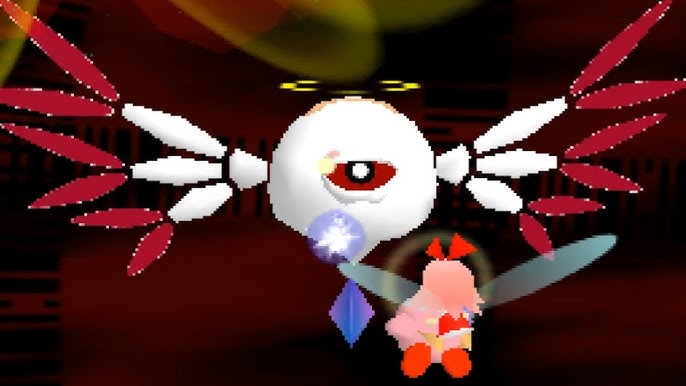
Admittedly, Kirby 64: The Crystal Shards is on the shorter, easier end of the spectrum than some other Kirby games, but the gameplay is as accessible and joyous as Kirby has ever been. It also continues Kirby’s simmering love affair with sudden Lovecraftian, interdimensional horror, with the final boss being a bleeding, angelic eyeball. Way to go, mon.
Goemon’s Great Adventure
Known as Ganbare Goemon and based on the real Ishikawa Goemon from Japanese folklore, this is a series with roots tracing back to the 1980s. RPGs, platformers, puzzle games; Ganbare Goemon has done it all. Well, except MOBAs I guess if you want to get technical, but it’s been around for a long time.
Starting with The Legend of The Mystical Ninja on the SNES in 1991, Konami started bringing the Goemon series to the West, but waited six years for the next instalment, Mystical Ninja Starring Goemon for the N64. It was a 3D platformer that kind of received an unfair critical reception as it was compared unfavourably to Super Mario 64.
Skip forward two years and Konami launched Goemon’s Great Adventure across the world, the fourth and final Goemon game to receive a Western release. Ditching the 3D free roam platforming of Mystical Ninja Starring Goemon, Goemon’s Great Adventure was a return to the glory days of the SNES’ 2D platforming, albeit with shiny 3D graphics. The gameplay has plenty of depth too, as despite being a simple platformer, there’s a world map to open up between levels, multiple routes to take and even a day and night cycle that introduces tougher enemies.
All that, combined with a game that blends Japanese history with weird sci-fi stuff like robots, along with the game’s silly humour, make Goemon a game that will not age. Ooh, this entry’s finished, don’t forget to wave goodbye.
Wave Race 64
Here’s another example of a previously 2D game getting a new lease on life on a more powerful platform. The original Wave Race back in 1992 for the OG Game Boy was a top-down racer, but when Nintendo brought the series to the N64, it was time to enter the brave new world of the third dimension.
Little did Nintendo know that it would lead to one of the most well-reviewed games on the N64, and considering the fact that the N64 includes the likes of Super Mario 64 and The Legend of Zelda: Ocarina Of Time, that’s a pretty big accolade. Somehow, it even got better reviews than F-Zero X, but we won’t hold that against Wave Race 64… much.
Originally conceived to be somewhat like F-Zero on water complete with transforming power boats, the decision was made to pivot to jet skis instead. Players race across eight different courses with differing weather and water conditions, with the challenge being to beat other racers while also navigating in the correct manner around buoys.
You’d think a forced slalom would be a bit crap, but Wave Race 64 makes it one of the most compelling racing games on the platform, and while the graphics might seem a bit dated compared to the gorgeous Wave Race: Blue Storm on GameCube, some people reckon that the N64 Wave Race is the pinnacle of the series. New one when, Nintendo? Let’s not kid ourselves.
Rakugakids
We’ve been known to hype up the Treasure game Rakugaki Showtime on the PS1 before, and rightly so. It’s a lot of fun, but we’d be lying if we said that it’s the only game with a hand-drawn graphical style that released in the late 90s.
Enter Rakugakids, developed by Konami and launched a year before Rakugaki Showtime, with a name that’s actually a clever portmanteau of rakugaki and kids. Considering rakugaki is Japanese for “doodle”, it explains why both games utilise a hand-drawn artstyle, with Rakugakids’ story seeing a group of kids stumbling onto some magic crayons that bring their creations to life. Imagine if Concrete Genie was a 2D fighting game and you’d be about there. Also, what a whipper Concrete Genie was. Go play that.
A six button fighter similar to Street Fighter, Rakugakids certainly doesn’t have the depth you’d expect from other fighting games on the N64, Killer Instinct Gold chief among them, but Rakugakids is worth a revisit anyway. Each character has a dedicated launcher and a double jump while in the air, making aerial combat a key part of the gameplay, while the game’s admittedly paltry roster of nine characters happens to have more variety in design and moves than some modern fighting games.
Because Konami didn’t just chase the 3D trend though, Rakugakids happens to be one of the best aging games on the N64 to look at. It was gorgeous then, it’s gorgeous now, and as far as we’re concerned, it’ll be gorgeous in the future too.
Paper Mario
Paper Mario causes a bit of an issue in how you properly designate a 2.5D game, as instead of 3D characters exploring levels on the 2D plane, Paper Mario instead has 2D characters roaming around 3D levels. Given how sometimes 3D graphics on these early consoles ages about as well as Rob McElhenny, where is the light in his eyes, you’d think that the majority of Paper Mario’s environmental design and graphics would be what ages the game beyond belief, but this is a Nintendo game after all.
Between the environmental visual and cutesy character designs, Paper Mario still looks as good now as it did when it launched in Japan 25 years ago, and it probably always will.
Set in a version of the Mushroom Kingdom where everyone’s made of paper for some reason, Paper Mario follows the Italian plumber as he’s actually defeated by Bowser, who cheated and stole the Star Rod to make himself invincible. With Peach’s castle now floating in the air, Mario needs to travel across the kingdom, forming a party of various creatures to locate the seven Star Spirits that can negate the powers of the Star Rod.
Not only are the graphics some of the best that the Mario series has ever seen, the RPG gameplay and combat that introduces real-time action commands into turn-based gameplay makes Paper Mario one of the most accessible and timeless RPGs on the N64, or anywhere.
Mario Party 2-3
We’ve spoken before about how Mario Party has aged well, and that’s based purely on the fact that the series is still going strong today using the same basic premise as it did on the N64.
Up to four players roll dice to move around a board, activating different elements and competing in minigames to earn coins and stars before a winner is decided. It’s been an effective formula for years now, and while Nintendo did try to mix it up a little halfway through with everyone on some kind of carriage instead of moving individually, the core has remained. Because of this, we’re throwing Mario Party 2 and 3 together to demonstrate how well both games have aged. We’d include the first game, but that one genuinely destroyed the hands of children.
Mario Party 2 introduced a whopping three new minigame types to formula, with Battle, Item and Duel becoming a core of the series going forward, but the biggest addition to the series that really changed everything going forward is the shop. Yes, the first Mario Party didn’t include a shop that players could purchase items from during the game, meaning no screwing your mates out of coins and stars. Mario Party 3 meanwhile continued those changes, while upping your item inventory count to really let you plan how to screw people over. Combine all that with the fact that 2021’s Mario Party Superstars was simply just a collection of old boards and minigames, and there’s so much proof that these two games will never age.
Beetle Adventure Racing
Look, gonna be honest: the N64 library isn’t that big, so it’s hard to come up with new topics or games to talk about when creating new videos. Because we’re not too sure if we’re gonna be coming back to the N64 at all because, again, there are very few games compared to other consoles, let’s talk about a game that we’ve never mentioned before but a lot of you guys love: Beetle Adventure Racing.
On the surface, Beetle Adventure Racing, or BAR if you’re a fan of tag teams featuring Sheamus and Cesaro, looks like it’s only going to age well for people who consider Herbie to be the greatest cinematic franchise of all time. Still, there’s plenty of reasons why this, another one of the best reviewed racing games on the N64, will never age.
First of all, the game was developed and published by EA, with Paradigm Entertainment also helping on the development front. Because of this, Beetle Adventure Racing borrows a lot from the Need For Speed series, and if you want a series of arcade racers that are able to withstand the test of time, NFS is the one you want. Secondly, while the game didn’t have a huge range of tracks or types of vehicles, given that it was focused on specifically one type of car, the graphics on offer stood out among some of the best that the console had to offer, with some surprisingly pretty solid draw distances.
Unless you lived in Australia anyway, as they received HSV Adventure Racing, which used the Holden Special Vehicles VT model of car instead of the iconic Beetle. Talk about a downgrade.
Worms Armageddon
This entry just speaks for itself, doesn’t it?
Oh, you want more? Fine, look: Team17’s Worms possesses the perfect formula for endless multiplayer chaos that’s been relatively unchanged since the series’ inception in 1995. 30 years, and functionally, Worms is still the same game now as it was back then. Two pr more teams of Worms take turns to fire ludicrous weapons at each other in an attempt to kill each other. Sure, Team17 have tried to reinvent the wheel over the years, with 3D and water physics, or just abandoning the traditional gameplay for a battle royale mode that literally no one wanted or asked for, but it’s the classics that keep people coming back.
For a lot of people, Worms: Armageddon sits at the pinnacle of that traditional formula, offering a decent sized single player campaign and training missions for players to practice until their mates turn up. Lots of new weapons, plenty of customisation options for the Worms teams and even the match types themselves, along with Worms’ patented terrain generator that ensured there’s always new battlefields to wreak havoc upon…
Yeah, Worms never needed to evolve from this point. It was already the perfect multiplayer experience, anything else was just pointless meddling. If you want further proof, Team17 recently ported Armageddon to modern platforms as the Anniversary Edition. Spoiler: it still whips.
READ NEXT: Controversial PS2 Games
Some of the coverage you find on Cultured Vultures contains affiliate links, which provide us with small commissions based on purchases made from visiting our site.