

The PS2 was no stranger to controversy. In fact, just looking at some of its advertising showed that Sony almost welcomed it. But there were a lot of games that caused plenty of headlines, and not all for cross-clutching reasons. Now, I’ve decided to not highlight Manhunt, cos that’s always mentioned, even by us, and also The Guy Game because I can’t really show it considering it’s entirely just, you know…
Metal Gear Solid 2: Sons of Liberty
If you were a PS2 owner and huge MGS fan in 2001, Metal Gear Solid 2 pulled off one of the greatest “gotchas” in video game history. Right, so, the marketing was pure Solid Snake. Trailers and demos had him sneaking through oil tankers, flexing the PS2’s firepower with the best visuals and finest details ever seen on a console. Magazines hyped it up like you’d be Solid Snake all the way, because, well, they knew no better. Everyone was ready to have their minds blown.
Then the game came out, and everyone’s mind was blown. But not in the way many expected. You get through the tanker chapter and suddenly you’re playing the rest of the game as… Raiden?
Raiden wasn’t just a new character; he was the opposite of Snake. Well, appearance wise. Young. Blond. Clean-cut. Not a smoker, so less cool obviously. A bit, let’s be honest, whiny. Cue worldwide forum meltdown.
Snake was still around, of course, but in a supporting role. Forums were flooded with players demanding to know why their beloved Snake was sidelined for this caked-up rookie.
Kojima later admitted the whole thing was deliberate. He wanted to show Snake as a legendary figure through someone else’s eyes and subvert expectations of who you play as in a Metal Gear game. At the time, though? A lot of people weren’t ready and the backlash was kinda loud for a bit.
Looking back, it is pretty genius. What felt like a bait-and-switch in 2001 is now largely seen as one of the boldest narrative gambles in gaming, and it helped to make the franchise a much broader beast overall. There’s a good chance that if Sons of Liberty hadn’t completely changed my perception of games when I was young, this channel simply wouldn’t exist.
Right, let’s go from Big Shell to another kind of shell.
Shellshock: Nam ’67
Shellshock: Nam ‘67 is a game that tried so hard to be edgy and authentic it almost gave itself Dench foot. Sorry, trench foot. Trench.
Released just a couple months before Killzone, this was Guerrilla Games’ first big game, and they did kinda go for it. Shellshock pitched itself as “the raw, uncut truth” about Vietnam. The marketing talked up graphic violence, PTSD, war crimes, all the not very fun stuff. And yeah… there’s gore. Lots of it, and lots of concerned parents. Dismembered corpses, landmines ripping guys apart, civilians caught in the crossfire—you name it. It wore that 18 rating like a badge of honor.
The problem? The actual game felt more like Platoon Leader and less like, you know, Platoon. It had all the brutality but none of the…weight? It was just like “here’s a guy’s torso, isn’t that shocking, anyway check out this other torso”. Reviews tore into it for leaning on shock value without saying anything meaningful. In Australia, the Classification Board raised eyebrows over the torture scenes and almost banned it before a slightly cut version got through.
And this is without mentioning the fact that you can buy drugs and, um, “be entertained by female corner correspondents”?
It’s no wonder that for a lot of players—especially younger teens at the time—Shellshock: Nam ’67 probably left a mark. I really remember loving it, in a grim way. And even if it stumbled, you could argue Shellshock helped pave the way for the kinds of war stories games would start telling more seriously a few years later.
I’m choosing to ignore the sequel.
Anyway, let’s leave Vietnam behind and talk about a game where the only thing getting blown up was whatever was left of Acclaim’s reputation.
BMX XXX
If Shellshock tried to traumatize teenagers with gore, this one tried to save an entire publisher with nudity and fart jokes. And it…absolutely didn’t.
By 2002 after a string of failures, Acclaim was circling the drain. Their big idea? Take their existing Dave Mirra Freestyle BMX series, strip out any last shred of credibility, and add tits. Not to Dave himself.
No, out went Dave and in came a lawsuit from Mirra, levels set in strip clubs, unlockable videos of real-life topless dancers, and a Jackass edge without the hateable pain in the arse to tie it all together.
Retailers hated it. Walmart refused to stock it. Australia outright banned it until Acclaim submitted a toned-down version with the FMVs cut. Even Sony reportedly forced content edits before allowing it on PS2.
But surely sex sells? For the first time ever, sex did not in fact sell.
Critics panned it for being juvenile and lazy, and players just… didn’t show up. The internet was speeding up a bit, after all. Instead of saving Acclaim, BMX XXX became their unofficial headstone with a couple of tassels on top. Two years later, the company folded completely, leaving this as one of their last desperate flails for relevance, along with trying to pay parents to name their kids Turok.
But hey, Jeff Jarrett now part-owns a revived Acclaim, so maybe we’ll get BMX XXX 2: Electric Boogaloo one of these days? Bully for them.
Bully
I’m pretty sure Rockstar had a small kink for upsetting tabloids back in the day.. Released in 2006, Bully was so controversial pre-launch that UK stores wouldn’t even stock it under its original name. Here, as well as in other parts of Europe and Australia, it came out as Canis Canem Edit . That’s “Dog Eat Dog” in Latin. There are no dogs eating each other here. What the hell.
But here’s the twist: Bully wasn’t actually about bullying. You play as Jimmy Hopkins, a bumblebee-chewing lad who’s been dumped at Bullworth Academy by his negligent mum and her new squeeze. And instead of picking on smaller kids, you spend most of the game fighting against the bullies, standing up for nerds, and climbing the school’s social ladder. Sure, there are pranks and the odd wedgie, but for a Rockstar game, it’s surprisingly wholesome. Apart from the maths lessons.
That didn’t stop the moral panic. Jack Thompson, the infamous anti-video game “lawyer”, called it a “Columbine simulator”. Which is, just, not true. There are no guns here, Jack. Brazil banned it completely, calling it a “threat to public order”.
Like, did these people even play a game? Ever? No? Thought as much.
But critics and players loved it. Under the hood it’s GTA with water balloons and slingshots featuring a clever sandbox that really teaches you the importance of having a second job. Today it’s fondly remembered as one of Rockstar’s most creative departures from the grim of Liberty City and the neon of Vice City, and I’d give 100 nerds a swirly if it meant we finally got that sequel.
Cum what may, we will get a Bully 2. One day. Probably. Maybe.
Leisure Suit Larry: Magna Cum Laude
Everyone who got near the back of their gaming magazines back in the day probably remembers Leisure Suit Larry: Magna Cum Laude. It’s the PS2-era reboot of Sierra’s long-running series about everyone’s favourite polyester-loving sleazeball. But does sex still sell when Larry is the one selling it? If this man turned up at your doorstep with a suitcase full of sex, would you buy it? Well, censor boards didn’t.
In the US, the original version got slapped with an AO (Adults Only) rating, thanks to its abundance of nudity, sex jokes, suggestive mini-games, and barroom banter. Since console makers hate AO-rated games, Sierra trimmed out the explicit bits so it could get the more palatable M rating. Later on, they released an uncut version on PC titled Uncut and Uncensored, restoring the explicit bits and bobs.
Down in Australia? Nope. The Office of Film and Literature Classification banned it outright for “sexuality and nudity in relation to incentives and rewards”. That meant no official PS2 version ever hit Aussie shelves, though rumor has it some bootleg discs still circulate. Someone check in on the Leisure Suit Larry black market please.
But how is it to actually play? Gameplay-wise, pretty basic mini-games tied to seduction set around college life, and there’s little cartoon sperm. Critics said it leaned too heavily on shock humor and repetitive tasks, calling it more a game set on a treadmill than adventure.
Magna Cum Laude was an American Pie-infused, half-cocked return to the Larry formula: edgy, awkward, and trying way too hard. But if you were 11 years old when it came out, this was probably your Citizen Kane. Hey, talking about getting it up.
Marc Eckō’s Getting Up: Contents Under Pressure
This one isn’t as controversial as you’d expect considering the guy who co-produced the music.
Published by Atari, which is kinda odd on its own, Marc Eckō’s Getting Up: Contents Under Pressure is hands down the most early-2000s name for a video game ever, and the game itself is equally of its time. It’s beautiful. This was fashion designer Marc Eckō’s attempt to merge street art culture, hip-hop, and a nice dash of urban rebellion into a PS2 action-adventure.
The story follows Trane, an aspiring graffiti artist fighting an authoritarian regime in the fictional city of New Radius. You tag walls, dodge cops, and beat the hell out of rival gangs while a surprisingly stacked voice cast—including Rosario Dawson—cheers you on. For a game about painting walls, it had a lot of punching too.
Predictably, the concept didn’t sit well with certain groups. Some politicians accused it of glorifying vandalism and gang violence, and the Australian Classification Board banned it completely, citing “explicitly linking graffiti with crime”. Just cos I explicility make food in Overcooked, it does not mean I am a chef. In the US, New York politicians made noise about its influence on youth, but the game still hit shelves uncut.
Looking back, it was a weird but ambitious mix of platforming, stealth, and combat. It’s kinda like Jet Set meets Prince of Persia, and I remember digging it when I was young. Critics were divided—some praised its originality, others felt it played more like a marketing campaign for Marc Eckō’s brand than a fully-realized game. But love it or not, it remains a pretty unique time capsule that you can actually try out for yourself on Steam for a couple of quid.
All the GTA
Wherever there was PS2 controversy, Grand Theft Auto wasn’t far behind. GTA III, Vice City, and San Andreas basically stirred the pot with a pneumatic drill, then kicked it to death.
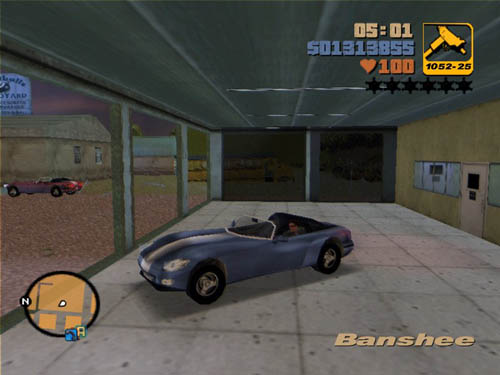
Starting with GTA III in 2001, Rockstar ripped the handbrake off and let players loose in a fully 3D open-world crime sandbox. This was an absolute watershed moment for me as a kid. I’ll never forget the Banshee in that showroom. And look at me now, I’m fine! Probably!
Politicians went ballistic, though. UK tabloids wet themselves, and Australia’s ratings board refused classification until edits were made.
Vice City upped the ante with ‘80s neon, cocaine cartels, and a soundtrack so good that it may still be the best the series has ever seen. Or, well heard. But it caught flak for some writing and was briefly pulled from shelves in some regions for it.
And then there’s San Andreas. Sheesh. While not strictly on PS2, the hidden Hot Coffee mini-game unlocked via PC mods ignited lawsuits, led to an AO rating in the US, and forced Rockstar to issue a patched version to get it back on shelves. Australia banned it entirely, and several European countries demanded content changes before re-release. All of that for about 12 pixels awkwardly clanging together, I mean honestly.
Every time some politician wagged a finger at “violent video games corrupting our youth” odds were good that someone at Rockstar was laughing all the way to the bank. Punchline definitely didn’t with this next game, though.
Rule of Rose
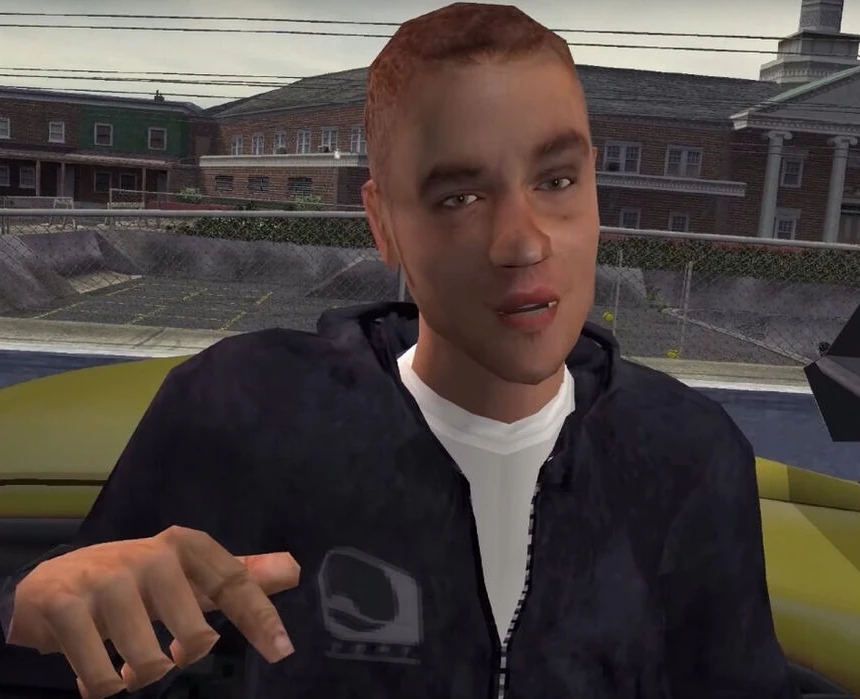
This is the perfect example of what happens when moral watchdogs can’t get their hands on GTA, so they go after something smaller and weirder instead. Released in 2006, this PS2 survival horror game from Punchline, the makers of that sweet kissing game, was instantly buried under a heap of controversy.
The story follows Jennifer, a young woman trapped in a nightmarish orphanage run by cruel, Lord of the Flies–style children. Typically not the best style of children. It’s bleak, unsettling, and dripping in psychological horror. It’s a good, sometimes clunky game worth a look.
But in the months leading up to release, European tabloids exploded with headlines about “child torture” and “underage eroticism” that all stemmed from a complete lie of an article in Italy. Politicians called for bans, and religious groups decried it as depraved filth corrupting youth.
Here’s the kicker: none of it was true. The game contains no sexualised depictions of children, and while the themes are disturbing, they’re far tamer than what was claimed. But the narrative had already spun out of control. Australia refused classification, and the release of the game in the UK was cancelled. Sony even distanced itself from the game despite initially agreeing to distribute it in the United States.
It felt like the censors couldn’t stop GTA, but they sure as hell could crush this niche Japanese horror game no one in parliament had ever heard of, seen, or played. Ironically, the controversy turned Rule of Rose into a cult classic, and prices for it boomed.
Someone last year actually found a massive load of sealed PAL copies that’d been held back in storage, and now the prices are a bit better, but it’s still one of the most wanted games on PS2.
America’s 10 Most Wanted
America’s 10 Most Wanted is the kind of game you’d find in a bargain bin between a £1 DVD of Stealth and a knockoff controller for Pro Evolution Soccer 6. Hell yeah.
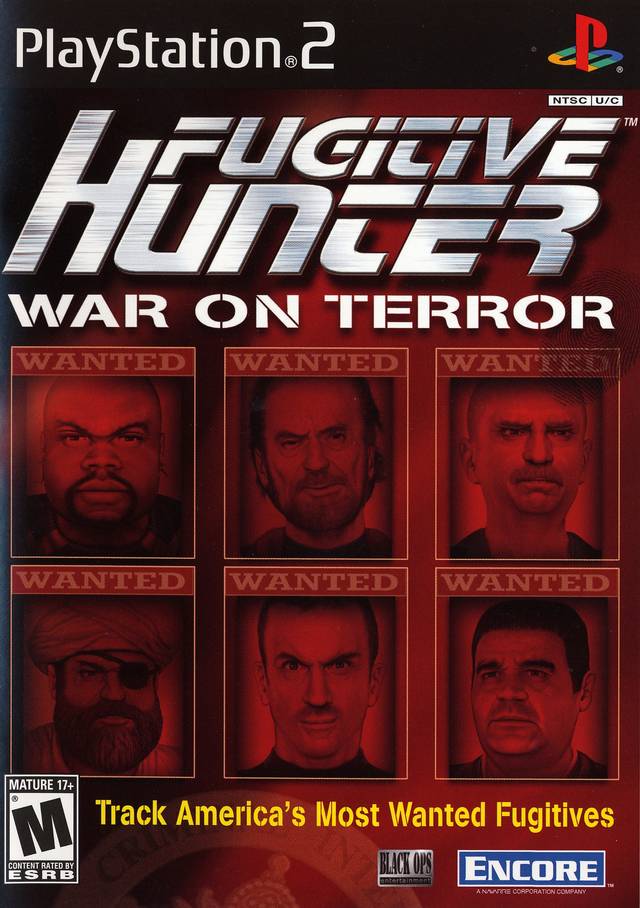
Released in 2004, this is a budget FPS where you hunt down global terrorists including, yes, Osama bin Laden. Jessica Chastain hadn’t got round to it yet.
America’s 10 Most Wanted, or the slightly less cool Fugitive Hunter in the US itself, went all-in on turning the War on Terror into a cartoonish shooting gallery. You blast through airports, deserts, and office buildings while a soundtrack of B‑list rap blares in the background. But wait, it also suddenly turns into Tekken when you hunt down those fugitives, and I’ve never loved anything more. Hmm, maybe Saddam Hussein having his own Giant Bomb character page, actually.
The controversy was about as predictable as the ending of Lincoln. Saddam himself was actually removed from the American version due to all the uh war stuff. A few people slammed it as tasteless exploitation of real‑world tragedies, but most could see that the game was buried in like the eighth layer of irony. Some retailers quietly refused to stock it, maybe largely due to it being straight cheeks, but in the UK you could still find it on Woolworths shelves, right next to Celebrity Deathmatch.
And the game itself? Rough. Clunky controls, laughable AI, and graphics that looked dated even for PS2. But as weird as it was, America’s 10 Most Wanted is a game that’d never, ever get a physical release on a console anymore, and it’s worth treasuring.
Right, let’s see what we’ve whipped up for the last game.
Whiplash
Okay, so Whiplash isn’t the darkest controversy of the PS2 era, but it still managed to rile up a few people who just wanted to kinda…get annoyed. You play as Spanx the weasel and Redmond the rabbit, who are literally chained together like your favourite streamer’s favourite rage slop. You’ll be busting out of an evil animal-testing lab by wrecking everything in sight and, yes, swinging the rabbit around like a flail.
Reviewers liked the anarchic concept, but the repetitive combat and clunky controls held it back. IGN said it was worth renting while GameSpot described it as fun in short bursts, but shallow overall. On Metacritic, it sits in the high 60s. Respectable enough, but it’s no Kao the Kangaroo, is it?
The RSPCA, and even the UK’s House of Commons Science Committee weren’t impressed, though. Miserable bastards said it turned real-world animal cruelty into slapstick comedy, trivialising abuse for cheap laughs. Eidos pushed back, insisting the game was meant as a satire that actually raised awareness of animal testing
Here’s the twist: PETA itself, they of hypocrisy fame, gave the game a weird semi-thumbs-up. While they criticised the cartoon violence, they admitted it had potential to make players think about animal rights. I feel very, very conflicted. It’s a strange footnote for a game where you use a bunny to electrocute guards and smash lab equipment, and proof that they don’t actually play any games.
You should play Whiplash on your nearest software for digital recreation of physical goods, though. It’s a fun, dumb time.
READ NEXT: Video Game Spin Offs That Killed The Main Series
Some of the coverage you find on Cultured Vultures contains affiliate links, which provide us with small commissions based on purchases made from visiting our site.