



Army management is a vital component to succeeding in King’s Bounty 2’s combat system, as a well-crafted army could mean the difference between successfully tackling a tough skirmish and hemorrhaging money through constant battle retries. This primer should help players get their bearings on how the army systems interact with one another.
Here are the three main components of army management in King’s Bounty 2:
And here’s everything you need to know about army management in King’s Bounty 2.
Hero
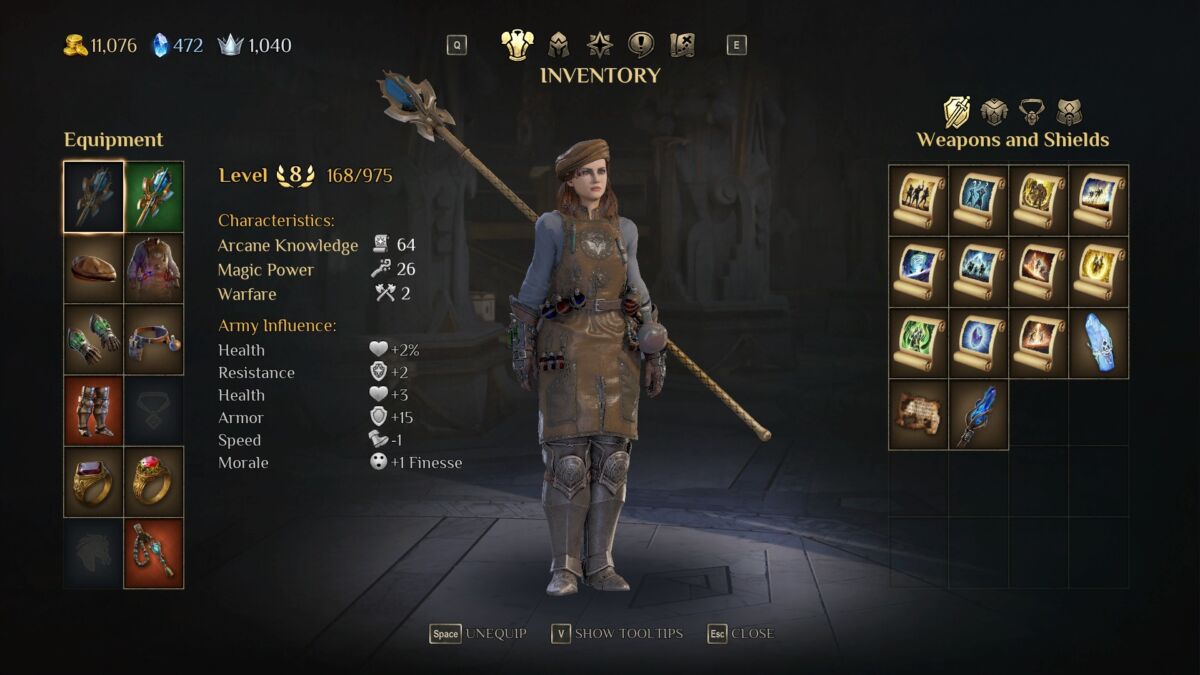
There are three ways through which characters affect the army: leadership, units buffs, and magic buffs. The character’s leadership stat denotes the maximum size of a squad of units. In other words, the maximum number of entities that can be in a group.
Heroes will also have stats and upgrades that directly affect their own units. For example, the Warfare stat directly increases unit damage output by a percentage, while army influence stats can improve unit health, add extra armor, increase morale for units of a particular affinity, change resistances, or even affect movement speed.
One of the main character’s most prominent abilities is their magic. While spells may not necessarily have a constant army effect nor a direct impact on unit performance, the hero’s magic-oriented stats can help define the role magic plays in the player’s combat tactics.
The Arcane Knowledge stat denotes the total mana pool available to the hero during combat. The Magic Power stat, on the other hand, directly increases the effect of damage spells, as well as increases the duration of spell effects.
All of the listed hero characteristics can be improved by finding or buying equipment, leveling up, and unlocking level abilities and upgrading them.
Squads
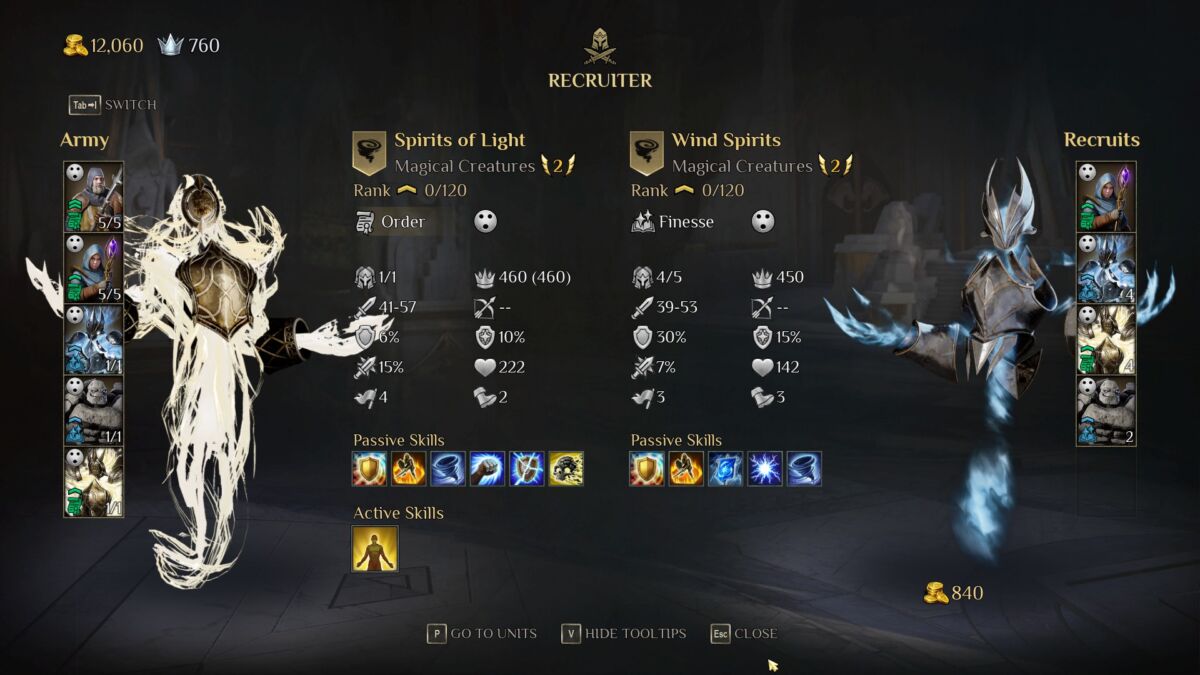
Players can have as large an army as they want, but they can only ever bring five squads of units to any battle. Any unused units will be placed into a reserve and players can freely shift troops around when not in combat.
Squads are groupings of the same unit formed into a single force. When in combat, the damage output of every entity is cumulative, but the unit will take damage on a per-entity basis, meaning that all damage will go towards one entity of a squad and once it’s eliminated, any remaining damage will be inflicted on the next entity.
Important to note: players cannot have two squads of the unit type in their active force. Players will have to bring five unique units to battle.
Units
Unit roles are defined by their stats alongside passive and active abilities. Unit stats can be broken down into: damage, armor, critical chance, health, initiative, speed, and level.
Units will have melee damage or melee and ranged damage if the unit has a long-range weapon or attack. Damage reflects how much harm a unit can inflict either with an attack action or when counterattacking.
Armor is split into physical and magical percentages. These percentages indicate how much damage the unit will mitigate depending on its source. Units with a higher armor stat are generally more resilient and will stay alive longer in battle.
The critical chance percentage represents the chance at which a unit attack will cause additional damage against their target. Health indicates the level of damage a single entity can suffer before being eliminated.
The initiative rating denotes how quickly a unit will act during any given round of combat. Units with a higher initiative rating will act first, giving them a chance to affect the battlefield before any other unit.
The speed stat simply represents how many hexes the unit can move on the tactical battlefield.
Over time, units will also level up. As units level up, their stats will increase across the board, improving their overall performance, and even give some units extra abilities they may not have had previously.
Speaking of abilities, every unit will always have a passive ability associated with it, indicating any special benefits or disadvantages it may have. Some units will also have one or more active abilities, which can be triggered in battle for their described effect.
Army management gives the freedom to players to compose forces of troops they will bring to any particular combat engagement. Depending on the enemy, players may want to change their gear, shuffle their reserves, or purchase new units to tackle the challenges in front of them. Equipped with this knowledge, it’s up to the player to figure out what combination of forces and hero abilities will aid them in victory on King’s Bounty 2.
King’s Bounty 2 is available on PC, PS4, Xbox One, and Switch.
READ NEXT: King’s Bounty 2 Morality Guide
Some of the coverage you find on Cultured Vultures contains affiliate links, which provide us with small commissions based on purchases made from visiting our site.