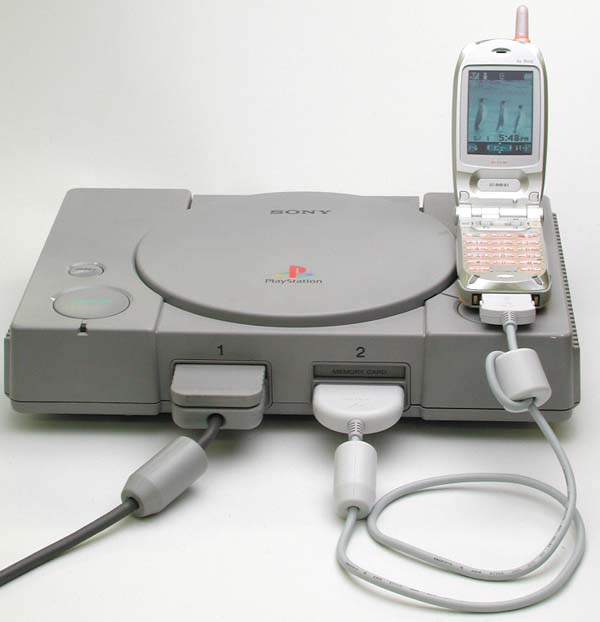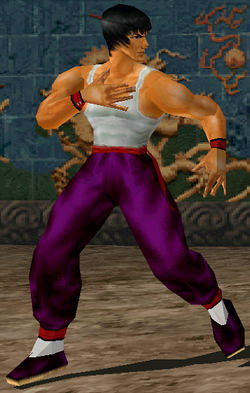


The PS1 was a marvellous console as far as mid 90s tech go. You could play music on it, and in Japan there was even the option to connect it to your mobile and internet later in its life. But it was not a supercomputer and it couldn’t handle every game. These amazing ports, though, left doubters in their quake.
Quake 2
It feels like a millenia ago at this point, but there was a time when Quake sat atop the throne as the best first person shooter on the market. Maybe two millenia ago.
Quake 2 might just even be the best of the bunch, with landmark changes that improved the core formula in massive ways. Hub and spoke level progression, along with altogether larger levels in general, improved damage models on the enemy Strogg and more helped cement Quake 2 as one of the PC’s finest shooters of the 90s. Naturally, publishers Activision wanted to make as much money as they could from this runaway success, so console ports were commissioned. We did also get an uber impressive N64 version too. But due to Quake 2’s leaps and bounds improvements, a PS1 port was deemed to be impossible. Technically, they’d be right, as while Quake 2 did launch on the PS1, there is an asterisk here.
Instead of simply porting the PC version to consoles and calling it a day, while also being sued by Sony for blowing up their consoles, PS1 port developers Hammerhead actually rebuilt the game and engine from the ground up in order to have Quake 2 work properly on the PS1. The result is something of an abridged version of Quake 2, with Hammerhead needing to break levels up with some mid-level loading corridors in order to mitigate their sheer size and thus strain on the engine. Aside from that though, it’s effectively the same game, complete with four player multiplayer that runs on PS1 natively at 512×240 resolution at 30 fps.
It’s an impressive undertaking for a console that everyone seemingly counted out before Quake 2 could even be launched. We could’ve MYST out on greatness, here.
Myst
Something we didn’t mention with the previous game is the PlayStation Mouse, an underutilised peripheral that allowed PS1 ports of PC games to control in a similar manner to its original version. If you want a video just on that, let us know down below.
Quake 2 offered that functionality, but if you’re going to port one of the biggest point and click adventure games of all time onto the PlayStation, it feels apt that it should be compatible with a mouse. Myst lets players use that mouse to solve the game’s various puzzles, which is a damn sight better than using the d-pad to move a cursor around the screen. This was before the days of default analogue sticks on controllers, remember, which — well, it wouldn’t have been much of an improvement, but it would’ve been better than d-pad at least.
As for Myst’s conversion to consoles, the full game is basically all there, readily available to play with some compression issues for audio tracks and visuals. Those concessions aren’t too surprising, considering the backgrounds in Myst are pre-rendered anyway, so it’s not like the developers needed to rebuild the game from the ground up in order to make this work.
What they did need to do though, and what made the PS1 version an inferior experience, is institute longer loading times between screens, making the game more of a slog to play. If you think that’s bad though, take a look at what sequel Riven had to do in order to fit on the PS1, as it’s one of two games in the console’s library to launch on FIVE discs. That’s Tekken the mick.
Tekken 3
You know that a port should be considered among the impossible when even the game’s developers and representatives seemed to think that it simply wouldn’t happen. Reportedly, that was true of Namco when it came to porting Tekken 3 to the PS1, and it’s not hard to see why.
While Tekken 1 and 2 were created on the PlayStation based Namco System 11 arcade board, Tekken 3 was developed for the System 12 board, which offered massive upgrades on what was currently available. Basically, the System 12 blew the PS1 out of the water, so naturally, Namco had reservations.
What came out of that dev team was nothing short of a miracle. While the conversion process took longer than the first two entries, the sacrifices made feel miniscule compared to other ports at the time. The backgrounds were changed to 2D panoramic images, similar to the previous games, the polygon count was reduced for the characters, the sound effects were higher pitched and the resolution took a bit of a knock, but aside from that, this was an arcade perfect port.
Even more shockingly, this version of Tekken 3 even included a bunch more features, including two new characters, Anna becoming her own separate character, and two new modes in the form of Tekken Force and Tekken Ball, fan favourites to this day. When it comes to PS1’s impossible ports, this is one of the very best and we’ll take you on any day. Law is banned though.
Command and Conquer
Remember the PlayStation Mouse? You’d think a game like Command & Conquer, a real-time strategy game, would make use of a peripheral like that, considering RTS titles require fine control over specific units and such. You’d be right, technically, as C&C: Red Alert and its updated version, Retaliation, would both be compatible with the PlayStation Mouse, but the first Command & Conquer? Controller only, boys.
Given the PlayStation’s reduced capabilities compared to a PC, the idea of bringing an RTS game as strenuous as C&C sounds like a bit of a fool’s errand, but fortunately for strategy fans, the team over at Westwood Studios found the ideal path for everyone to get what they want.
Instead of porting the game straight to PlayStation and dealing with the difficulties that would bring, Westwood ported the game to the more powerful Sega Saturn first. Mildly interesting sidenote: everyone forgets that Tomb Raider actually came to the Saturn first. That was your legally mandated Saturn fact for the year.
For the Saturn version of Command and Conquer, Westwood Studios modified the game to fit the mold of a console, changing the UI and controls as such to make for a more pleasant experience. There were some concessions, like unit shadowing being removed entirely, but did add features like control groups before they were added on PC.
From the Saturn version came the PS1 release, which offers basically the same experience only with slightly higher resolution cutscenes and a handful of exclusive bonus missions. Unfortunately, the power of the Saturn meant that the PS1 would suffer moments of huge slowdown if too much was happening, but that’s the price you pay for an impossible port.
MDK
The dictionary definition of a cult classic run and gun shooter, MDK is probably the game your mum saw that made her think all games are violent. To be fair, the game does stand for Murder Death Kill, a reference to the excellent Demolition Man, even if the game does try to cover it up with certain acronyms like Mother’s Day Kisses or Mission: Deliver Kindness.
What made MDK so impressive, and what made a port of the game seem nightmarish to some, was the fact that Shiny Entertainment’s developers created their own programming language with relevant tools in order to make the game. Spare a thought then for poor Neversoft, who were given the task of porting the game to the PlayStation 1.
If that doesn’t sound like enough of a daunting task for you, consider these extra little tidbits: Neversoft were originally given a deadline of six months, and work started on the port before the PC build was even finished, so Neversoft would have to constantly make updates and changes to keep parity with the PC version. Still, developer Mick West was hopeful that the PS1 version would actually improve on the PC release in a couple of ways, compressing data for a knock on some animation quality in favour of things like a huge increase in visible colour and some new lighting effects.
The end result is a game that, admittedly, isn’t as nice to look at graphically, but manages to maintain almost full parity with the PC release. It’s a remarkable port, even if the devs had to craft a few things in a cave. With a box of scraps. Hope it wasn’t too dark.
Warcraft 2: The Dark Saga
Another RTS game, and also another example of a game being ported to both the PS1 and the Sega Saturn, Warcraft 2 was the continuation of Blizzard’s seeming stranglehold on the RTS genre.
Sure, C&C might have been on the come up, but Warcraft was, arguably is, and might forever be the king of the RTS genre. That, or Starcraft, but that’s just sci-fi Warcraft. Age of Empires actually.
Anyway, released in 1995, the Warcraft sequel offered more of the same “collect resources, build units and establish dominance” that fans fell in love with when the game first launched a year earlier. New campaigns, new levels, new units, along with an expansion pack in the form of Beyond The Dark Portal made Warcraft such a massive experience, so how do Blizzard bring all of that over to consoles?
Pretty easily, all things considered. Instead of offering some kind of neutered version of Warcraft 2, Blizzard managed to give everyone the complete package, with just some graphical downgrades and the standard controller quibbles being the only notable downsides to the PS1 version.
Released as The Dark Saga with both the original game and expansion content, Warcraft 2 on console even offers a few upgrades designed to make the strategy formula on console a bit easier. You can now set units to be automatically created, along with auto upgrades for buildings and the like once you have the resources, and you can even create bigger groupings of units for attacking and defending. Granted, look, it is obviously not better than the PC version, but it’s impressive what they were able to accomplish here.
Diablo
From one Blizzard game to another, Diablo is the byword on dungeon crawling action RPGs, even if the most recent one has the most stupid live service shite going. Fun game, daft modern bollock. At least the original version of the game was a complete experience.
Diablo changed the game massively when it came to dungeon crawling, and even though it took a year for the PC release to come to consoles, the end result was pretty impressive for the time. Sure, the game needed what felt like constant loading screens for things like opening menus or your inventory, never mind the absolutely ridiculous loading times for actual level transitions, but just getting it to work is impressive in its own right.
What’s interesting about Diablo on the PS1 is that it felt like the loading times were the only real downgrade when coming to consoles. The resolution isn’t as good, the animation isn’t as smooth, all the usual stuff you’d expect, but beyond that, it’s a pretty solid port, especially once you get into all the additions Blizzard made to the PS1 version specifically. For starters, couch co-op became a standard feature, meaning you and a friend could brave the forces of the abyss (and those loading times) together, while quality of life improvements like autoaiming for ranged attacks meant even controller players could experience higher level builds and long-range combat with ease.
Throw in an increased game speed option to make travelling easier, and this is a wildly impressive port of a classic.Bloody hell, what’s going on here though?
Forsaken
Another “hell yeah, brother” cult classic, signified by the fact it received a Nightdive remaster a few years ago, Forsaken is a game someone close to you owned that you played for two hours straight and never learned the name of.
A game that’s basically Quake on a hoverbike, complete with full 360 degree movement, Forsaken on the PC was essentially a bit of benchmark release for the platform. If you want to see the best looking textures or lighting that you can get out of your graphics cards, you play a game like Forsaken, but that makes the idea of porting it to console sound like an impossible task.
If you want further proof of Forsaken being a bit of a nightmare to port, look at Forsaken 64, the N64 release that’s essentially a completely different game. The core gameplay is the same, but the levels are completely different to the PC version. Developers Probe Entertainment would develop both the PC and PS1 versions though, so if anyone could make magic, it’d be them, and boy did they.
As usual, you’ve got your resolution dips, and some of the textures look wonkier in that PS1 way, especially when compared to the PC version, but other than that, the PS1 version is the same as the PC. Same levels, same lighting effects, same pretty much everything. It’s a wonderful port, and the best part is that it kept the 60fps gameplay of the PC release. Well. Mostly. They aren’t warlocks.
JoJo’s Bizarre Adventure
One of the earliest examples of a JoJo game, Capcom’s arcade release of JoJo’s Bizarre Adventure brought the high octane and overly flamboyant combat of the anime and manga to the virtual world.
Now, when talking about arcade ports of this whipper, obviously the Dreamcast version is basically arcade perfect, but that’s not surprising. The console essentially based on arcade boards manages to accurately power an arcade port? Stop the bloody presses. The PlayStation, meanwhile, had been notoriously struggling with Capcom’s CPS2 arcade ports like Street Fighter Alpha 3, Darkstalkers 3 and Marvel Vs Capcom: Clash of Super Heroes. All the PS1 versions of those games suffered from cut frames and even bigger compromises, like no tag features for MvC. Wild. JoJo’s Bizarre Adventure used CPS3 though, so if two was causing issues, three should’ve been impossible.
Somehow though, Capcom managed to finesse this one, porting a sort of 1.5 version of two JoJo’s Bizarre Adventure games, JoJo’s Venture and JoJo’s Bizarre Adventure: Heritage for the Future, which included more characters. The PS1 port was based more off the first version, albeit with all the characters from both versions, along with a brand new Super Story Mode, which offered a direct retelling of the entire Stardust Crusaders arc.
Some concessions had to be made, of course, with the stands in particular taking the biggest loss to both colour and detail. Aside from that though, the core gameplay is basically the same, making JJBA a genuine work of wonder. It’s a sin it costs so much,
Syndicate Wars
Does anyone here remember Syndicate? Chances are, you’re either old enough to remember the old Syndicate, the real-time tactics and strategy game from 1993 that launched on PC before being ported to various consoles, or you’re cursed with the knowledge of the dreadfully mediocre 2012 FPS reboot. Mediocre is probably being too pleasant, honestly, but that’s another story for another day.
The original Syndicate, you know the tactical one that people liked, did receive a sequel, Syndicate Wars, which upped the ante in a number of ways, most notable being the leap into the third dimension. Proper 3D environments, characters and space were implemented here, instead of just 2D sprites and whatnot, but it’s how you could interact with the space that made Syndicate Wars an impossible port prospect.
You see, almost all of the structures available in-game could be destroyed, allowing you to essentially carve your way through a level as you saw fit in order to achieve your objectives. Taking destruction on that scale and stuffing it into a box the size of the PS1 was no tall order, and as you’ve probably guessed, sacrifices had to be made. The PS1 release of Syndicate Wars removed aspects like the technology research tree, demoting them to regular mission unlocks, while the graphics and resolution felt more like a low settings PC build.
Some missions were also completely changed, along with the intro cutscene, but the core of Syndicate Wars remained the same. Still, the PS1 version also removed a lot of the obstructing background buildings by making them transparent, so you can actually see what you’re doing.
READ NEXT: Forgotten PS2 Online Games
Some of the coverage you find on Cultured Vultures contains affiliate links, which provide us with small commissions based on purchases made from visiting our site.