

These impossible handheld ports, through one way or another, pulled off the unthinkable. One of them even made a bad game pretty good.
Dragon’s Lair – Game Boy Colour
Bringing Dragon’s Lair to the Game Boy Color was an absurd technical challenge. Just stupid, actually. The original arcade game, directed by animator Don Bluth and developed by Cinematronics, ran on laserdisc hardware and played more like an interactive cartoon than a conventional game. If you didn’t realise, the Game Boy was not built for movie games on the go. You know, considering it was tech from 1989. Translating the Dragon’s Lair experience to Nintendo’s tiny handheld with its limited cartridge space and modest CPU seemed nearly impossible.
Developer Digital Eclipse, who are this meme when it comes to their ports, managed the impossible though. They approached the problem by recreating the arcade scenes as simplified, single-screen action rooms with shapes moreso than like, you know, faces and stuff. Each encounter mirrors a famous moment from the original game, with them collapsing floors, swinging blades, and arse-blasing difficulty, but rendered with sprites and straightforward movement rather than full animation.
The result is still Dragon’s Lair at heart. You guide Dirk through rooms where the correct movement or timing is required to survive, echoing the trial-and-error structure of the arcade version.
What makes it impressive is how recognisable it remains. Despite the drastic hardware downgrade, the GBC port preserves the sequence of traps and the overall feel of Dirk stumbling through danger. It really is essentially Dragon’s Lair compressed into an 8-bit puzzle-action format. Yeah, you won’t want to play it today, but considering we were still a bit away from SpongeBob episodes on the GBA, not a bad attempt at all. You should make your optician your bitch by squinting at it too much though.
Daikatana – Game Boy Colour
The original Daikatana is remembered less for its gameplay and more for its mental development and infamous marketing campaign led by John Romero. It attempted to push the limits of first-person shooters at the time, but instead just tested the limits of how many times you can go in circles before you just wander off.
This is a long-winded way of saying the main game is actually a bit shit. But the Game Boy Colour port is actually…really good?
You see, instead of attempting a doomed first-person port, it reimagines the game as a top-down action adventure, blending shooting, exploration, and light puzzle solving.
You move through labyrinthine stages, collect new weapons, unlock doors, and fight enemies across multiple time periods. It ends up feeling closer to a hybrid of Zelda-style exploration and arcade shooting than a traditional FPS.
What makes the port notable is how much more structured it feels compared to its bigger brother. The progression across different eras remains much more consistent here, you almost always know what you’re doing, and the game offers a surprising amount of content for such small hardware.
Ironically, the Game Boy Color version is often regarded as one of the better games on the Game Boy Color, largely because its simpler design suits the platform far better than a man with beautiful hair threatening you with a bad time.
Driv3r – Game Boy Advance
The console version of Driv3r, developed by Reflections Interactive and published by Atari, aimed to push the Driver series into full open-world territory with both driving and on-foot action, like the fulfilled potential of that second game. But just like me when I learned my 5 times tables faster than the rest of my class in year 2, that potential was never quite fulfilled.
What makes the Game Boy Advance port — developed by them wizards Velez & Dubail — so surprising is how much it really wants to just be a handheld version of the PS2 and Xbox game. Rather than turning the game into a simple racer, the GBA version still features large open cities where you can freely drive, exit your vehicle, and run around on foot.
That alone is pretty bloody unusual for the hardware. The GBA rarely attempted open environments with both vehicles and character movement, yet Driv3r manages police chases, mission objectives, and free roaming across sizeable maps. VD-Dev used a lot of the techniques they learned on the also amazing GBA version of V-Rally 3.
Visually it’s obviously simplified in a lot of ways, but mechanically the game remains recognisable. You steal cars, evade the police, and move between objectives just like the console version. You do explode if you touch water as if you’re from Rhyl, but swimming would probably make the GBA blow up.
For a handheld from over 20 years ago, yeah, this kind of port should’ve been doomed.
Doom – Game Boy Advance
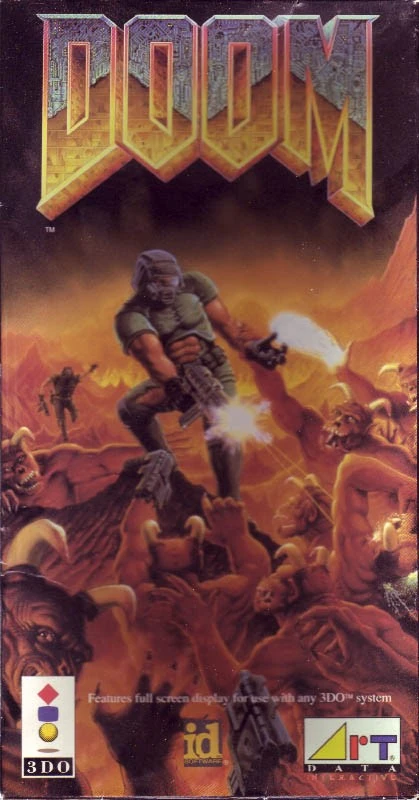
Porting Doom to the Game Boy Advance sounds unlikely, even if some crackhead is probably trying to make Doom work on the Game Boy Camera. But the result from back in 2001 is surprisingly close to the real thing.
The original game from id Software had already proven famously portableish across PCs and consoles. Even so, fitting it onto a handheld in 2001 was a different challenge entirely. And it’s a challenge to me to figure out how they managed to engineer this from the Jaguar port source code, but they did.
The conversion was handled by David A. Palmer Productions, and rather than reinventing the game, the studio delivered a straight adaptation of the original campaign. Levels, weapons, enemies, and the core run-and-gun pacing are all recognisable and pretty fun.
What makes it particularly interesting is how much better it fares than earlier console attempts at Doom-style shooters. Some are not…that surprising. Various Doom ports from the mid-90s famously had to cut levels, reduce enemy types, and simplify the game heavily just to run.
By contrast, the GBA version feels far more complete. Aside from darker visuals and some trimmed enemy counts, it largely delivers the same experience. Yeah. you don’t want to deal with the aiming these days, but for a handheld from the early 2000s, essentially a full version of Doom running on a device powered by two AA batteries is pretty remarkable. And then they did it again with Doom 2! Pretty neat N-deed.
Tony Hawk’s Pro Skater – Nokia N-Gage
All 4 of you N-Gage sickos who have been waiting for this day, your time has come. If you want an N-Gage documentary, you know where to go,
Bringing Tony Hawk’s Pro Skater to handhelds had already produced some inventive and genuinely very fun reinterpretations on the Game Boy Advance, but the N-Gage version takes a different approach. Developed by Ideaworks3D and published by Nokia, it attempts something far more ambitious: a fully 3D portable Tony Hawk. In 2003!
Rather than converting the game into an isometric or top-down format, the N-Gage hardware is pushed to deliver a structure much closer to the console originals. You skate around compact 3D parks, complete objectives within a time limit, and chain tricks together using familiar mechanics while trying to deal with the weird portrait view that means you can’t really see a lot, but still.
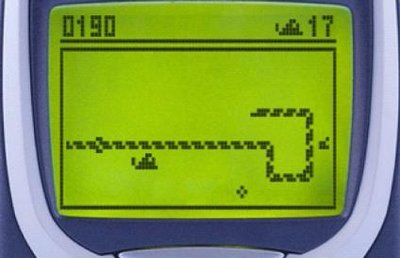
That alone is fairly impressive given the hardware. The N-Gage was essentially a mobile phone trying to function as a handheld console, yet it still manages 3D levels, multiple skaters, trick combos, and recognisable course design. Put it this way: like three years earlier, mobile games looked like this.
Now granted, controls can be a bit awkward due to the N-Gage’s unusual button layout that demands you have four hands and two brains, but mechanically the game holds together well. It ends up feeling like a scaled-down version of the PlayStation era games that sold millions of cans of Red Bull. The audio, however, is about as graceful as Phil Margera trying to do a kickflip.
For a device often remembered as…actually it’s not remembered at all. Hm. But this is a surprisingly convincing take on a portable skateboarding game.
Spider-Man 3 – PSP
The console versions of Spider-Man 3 developed by Treyarch built on the open-world structure introduced in Spider-Man 2, but just didn’t have the same sauce, did they? Just like the third movie itself, you could say, but this isn’t your favourite imageboard in 2007. W
Swinging across Manhattan had become the movie adaptation series’ defining feature, so translating that to a handheld was a fairly daunting task.
The PlayStation Portable version, developed by Vicarious Visions, manages something surprisingly close. Instead of breaking the game into small stages, it still features a freely explorable version of New York City where you can swing between buildings, fight street crimes, and tackle story missions.
What makes it especially notable is that the earlier Spider-Man 2 on PSP wasn’t actually open-world at all. You know, the Spider-Man 2 game that basically redefined what superhero games could be? That one played more like Spider-Man: The Movie on PlayStation 2, built around like…linear missions rather than a fully navigable city with a thriving pizza economy.
Spider-Man 3 changes that completely. The city is smaller and simplified, but the core systems — you know, web-swinging traversal, combat, and side activities — are intact. It even has Bruce Campbell back doing tutorial stuff.
For a handheld in 2007, being able to freely swing around a portable Manhattan was still a pretty impressive trick.
The Warriors – PSP
When The Warriors launched on PlayStation 2 and Xbox, it stood out as one of the more unusual projects from Rockstar Games. Back when they could release more than two games every 15 years.
Based on the 1979 cult film, it turned a relatively short movie into a surprisingly large brawler, complete with story missions, side activities, and a detailed recreation of late-70s New York. It’s also just really random to adapt a movie like nearly thirty years movie. Imagine if, I dunno, Dragonheart got a game today.
Two years after its 2005 home console release, it arrived on PlayStation Portable, developed by Rockstar Leeds, and the result is remarkably intact. Rather than carving the game into smaller pieces, the PSP version retains the full campaign, the same coming out to play ay ay, and even the two-player cooperative mode.
Visually it’s pared back compared to the PS2 release, but it still looks great on the smaller screen. The character models in particular are still a bit of alchemy. You’ve got recognisable gang members with expressive faces and chunky animations that feel far more detailed than the hardware should really allow.
Considering the size of the original game, the PSP version feels less like a handheld adaptation and more like a full console experience somehow compressed onto a portable system. Quite the show of force.
Star Wars: The Force Unleashed – PSP
The console release of Star Wars: The Force Unleashed was pitched as a major technical showcase for LucasArts, built around flashy physics systems, killing stars and large-scale action. Basically the video game version of that Linkin Park song, it introduced players to Starkiller, Darth Vader’s secret apprentice, and was all about using Force powers that could fling enemies and objects across the screen while being a bit of a naughty boy.
Trying to replicate that spectacle on handheld hardware sounds about as smart as making a new movie based on Rey in 2026, but the PlayStation Portable version, developed by Krome Studios, holds together surprisingly well.
The core structure is intact: you still fight through story missions using a mix of lightsaber combat and Force abilities like lightning, pushes, and throws. The campaign closely follows the main narrative, and the portable version even adds extra content such as duel modes and additional unlockables.
Naturally the environments are simplified compared to the console versions, but the combat system still feels recognisably Force Unleashed. You’re juggling enemies, blasting them across rooms, and generally making a mess of stormtroopers, and it all chugs along nicely.
For a handheld release, it captures the series’ power fantasy remarkably well — essentially turning the PSP into a pocket-sized Jedi power trip.
Mortal Kombat 9 – PS Vita
When Mortal Kombat rebooted the long-running series on consoles, it was a major comeback for the franchise. Can’t win every reboot, eh?
Developed by NetherRealm Studios and led by series co-creator Ed Boon, the game combined modern visuals with classic 2D fighting mechanics and a surprisingly lengthy story mode. It’s gone on to be regarded as one of the best games in the whole series.
The PlayStation Vita version, released the following year, is impressive simply because it’s almost the entire console game running on a handheld. The full roster is present, the story campaign is intact, and the fast, responsive fighting system survives the transition without much compromise.
Visually it’s obviously pared back slightly compared to the PlayStation 3 and Xbox 360 versions, but on the Vita’s OLED screen it still looks sharp. Character animations remain smooth, arenas are recognisable, and the series’ famously over-the-top fatalities are all still here and all still very hard to show on YouTube in 2026.
The handheld version even adds extra content, including challenge towers and touchscreen mini-games designed specifically for the Vita. It also of course has Kratos, a character who should be in all fighting games.
For a portable fighting game, it’s an unusually complete package — essentially Mortal Kombat 9 in your pocket, which felt pretty remarkable when the Vita launched and sold 100 million units and we all loved it forever. Yes, we did.
The Witcher 3: Wild Hunt — Nintendo Switch
Few ports sound more ridiculous than The Witcher 3: Wild Hunt running on the Nintendo Switch. You see, the original RPG from CD Projekt Red was famous for its enormous open world, dense cities, and technically demanding visuals when it launched on consoles like the PlayStation 4 and Xbox One, so on the Switch? That should be impossible right?
The Switch version, developed with assistance from port specialists Saber Interactive, takes on the nearly impossible task of squeezing that entire experience onto a handheld console. And it’s all fairly playable.
What makes it so impressive is that almost nothing was removed. The full campaign is here along with both major expansions, Hearts of Stone and Blood and Wine, and it all comes on a cart too. The massive world of Velen, Novigrad, and Skellige is still fully explorable, with the same quests, characters, and systems.
Naturally the visuals take a hit. A pretty big hit really, we can’t lie Resolution is lower, textures are simplified, and there’s a lot of that “crystalised” look on the assets. Even so, the game still manages to look surprisingly good on the smaller screen.
Considering the scale of the original release, the Switch version feels like a small technical miracle. You really want to play it on Switch 2 or the Steam Deck these days, but The Witcher 3 really made everyone wonder what could be squeezed out of Nintendo’s little hybrid.
READ NEXT: Gizmondo: A Tale of Mafias & Millionaires
Some of the coverage you find on Cultured Vultures contains affiliate links, which provide us with small commissions based on purchases made from visiting our site.