

San Andreas. Metal Gear Solid 3. Shadow of the Colossus. All titans of the PS2 and bona fide classics, as well as close to perfect. But sometimes perfection is overrated, and you know all about those games. For today, let’s look at just some flawed, sometimes janky PS2 games that probably shaped a whole bunch of childhoods while never getting near the acclaim of the console’s biggest names, but that’s OK. You loved them. Strap in: you’re in for a total trip back in time.
Spartan: Total Warrior
I can’t explain what I really mean by this, but I think about 80% of Arsenal fans have owned a copy of Spartan: Total Warrior at some point in their lives.
And I don’t blame them. There’s something deeply satisfying about a game that lets you mow down entire battalions of Roman soldiers with a flaming sword while a Greek god whispers unsolicited advice in your ear, like a stock exchange bot on Twitter when you mention the plot of My Girl.
Spartan: Total Warrior is a game people remember not because it was polished or perfect, but because it made you feel like an absolute menace.
Yes, it’s technically a God of War clone born from a Total War experiment, and it’s as cool as it sounds, but it is all pretty limited. The combat is pure button-mashing without much to it. And the camera occasionally forgets what it’s supposed to be doing, like me when I look at the eighteen different loaves at Asda. What’s a seeded tiger bread gluten? Is that legal?
But it absolutely goes for it. Every fight is a chaotic opera of limbs and shouting and additional shouting. The scale is bonkers for a PS2 title, with actual hordes of enemies charging at you with zero regard for your personal space. How rude. It’s ambitious, rough around the edges, but it’s cool as hell.
And if you were lucky enough to play it when you were definitely too young to, you’d fall madly in love with it. What? It’s not a crime. A true crime.
True Crime: Streets of LA
There’s a very specific kind of PS2 game that bites off far more than it can chew, chews it anyway, and then spits it into our mouth like some kind of weird bird dad. And it’s delicious! But it shouldn’t be.
True Crime: Streets of LA is the posterchild for that.
It’s a cop drama featuring Gary Oldman and Christopher Walken in which you’re solving crimes, engaging in third-person shootouts, and occasionally fistfighting giant flaming skulls. All in a day’s work for Detective Nick Kang, the coolest LAPD officer ever rendered in 480p.
Let’s not pretend this was some refined experience, though. The driving was floaty, the gunplay clunky, and the story was like someone watched Rush Hour on loop with the subtitles off. Eurogamer said it could sometimes feel like “forcing nails into your eyes and running over your own head with a traction engine”. Alright mate, it’s not Made Man is it?
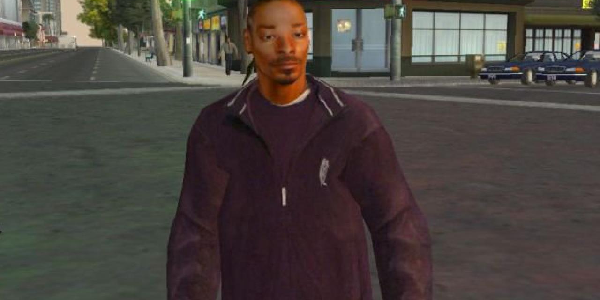
And yet, True Crime had this magnetic energy, especially if you had never played GTA. The licensed soundtrack whipped, the city was huge for the time, and the sheer variety of things you could do made it feel like you were always five seconds away from complete nonsense unfolding. Professional money hoarder Snoop Dogg was an unlockable character, for goodness sake.
True Crime wasn’t a masterpiece. But it did lead to a kinda even messier sequel in New York City, and, spiritually, eventually our beloved Sleeping Dogs. It may have left critics a bit conflicted, but we’ll always love it.
Conflict: Vietnam
Now here’s a forgotten PS2 banger that really said, “What if the guys behind The Great Escape game made a Full Metal Jacket game with five quid?”
A sequel to the similarly respected Conflict: Desert Storm, Conflict: Vietnam dropped into the already overcrowded military shooter scene and tried to stand out by doing something different. It kicked your arse.
This wasn’t your standard rah-rah shooter. You controlled four soldiers stuck deep in the Vietnamese jungle after everything goes predictably sideways. The squad-based setup involved switching between characters on the fly, issuing commands, and trying to keep everyone alive long enough to limp through the next ambush. Of course, the AI often had its own ideas, usually involving standing directly in a mortar blast. Brilliant.
The reception was as murky as the eyesight of people who thought Platoon was a pro-war film. GameSpot gave it a 6.1, what an annoying score to give something. They called it “solidly average” and pointing to “screwy controls, pacing problems, and a punishing save-game system.” The checkpoint situation alone could make a Buddhist monk snap. Visually, it wasn’t much to look at either—brown, green, and misery being the dominant themes.
And yet, Conflict: Vietnam stuck with quite a few people. I remember playing this in my mate’s basement and having just an eye-opening time. His whole house was a basement actually. Weird. Conflict: Vietnam was exhausting, confusing, and cruel. “Just like war itself,” he says, sat in his spare room with a fat cat snoring in the corner.
Vexx
Some mascots have charm. Some have attitude. Vexx had…a dead granddad. This was a platformer where your edgy goblin boy hero watches his grandfather get murdered in the opening cutscene and then straps on a pair of demonic gauntlets.. It’s not exactly Banjo-Kazooie.
Released in 2003 after work began as far back as 1999, Vexx is what happens when the studio behind Iggy’s Reckin Balls is told to make something “like Mario 64 for Evanescene fans”. And to be fair, the actual platforming is solid. Tight jumps, big vertical levels, and decent variety across its hub-worlds.
But ultimately the devs were trying to make a platformer that was just like…stuck between eras, and it didn’t make too much of a splash. Reviews said it was the best of the b-tier bunch, which means it wasn’t quite Mario, but it was up there with the likes of Kao the Kangaroo. i-Ninja, anyone?
Still, if you played it at the right age, there’s a good chance you thought Vexx was the coolest thing since a spear from atop the ladder. It was challenging in ways a lot of its chirpier cousins weren’t, and its world design had this eerie, alien vibe that stuck with you. And hey, if the shop had run out of copies of Jak 2 back in the day, it’d more than do, right?
Juiced
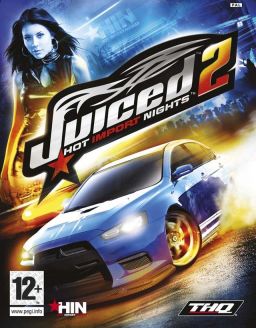
Juiced was the street racer for people who thought Fast & Furious was a bit too subtle. Originally supposed to launch in 2004, this little beauty got caught in the publishing limbo left behind by Acclaim’s collapse. So, THQ picked it up, delayed it, and by the time it finally screeched onto PS2 in mid-2005, the big dogs had already been solidified. Underground 2 had shaped teenagers around the world. Midnight Club was basically the hipster’s pick. Juiced? Not exactly freshly squeezed.
Still, it tried. The respect system was neat. Winning races wasn’t everything, as you had to bet, build reputation, and earn the right to even challenge some crews, who’d always awkwardly be represented by floating heads giving you some lip. It leaned hard into that early-2000s tuner culture that sold a million cans of Lynx Africa, complete with car customisation that was extensive, if slightly pointless.
Eurogamer gave it a 6/10, saying it was “good, but sadly just not good enough to recommend you go out and buy it.”
And yet, people did go out and buy it, and a lot of people loved it. Because for all the dodgy AI, awkward menus, and rubber-banding shite, Juiced was pretty fun and unashamedly 2000s. Yeah, it wasn’t the best racer on PS2, but it had a pretty neat look, and connected enough to get a sequel that came out on basically everything.
I really wish someone had the freedom to make more street racers these days.
Freedom Fighters
In an era flooded with generic military shooters, Freedom Fighters felt fresh and brand new, like something never done before.
Released in 2003 by IO Interactive (yes, the Hitman lot and publishing masterminds behind Mindseye), it ditched the stealth and embraced guerrilla warfare. That means explosions. You played as Christopher Stone, a plumber who goes from fixing radiators to blowing up Russian propaganda centres with a ragtag militia, because of course he does.
You built your squad by earning charisma points. If you liberated prisoners and captured bases, people literally queued up to follow you into battle. You could command up to twelve fighters by the end, and directing them in real time gave the game some strategy. It wasn’t tactical like Rainbow Six, and it was more like, I dunno, Pikmin for psychos, but it was amazing.
IGN gave it a glowing 8.4, praising how fun it was but felt it could’ve been amazing with online multiplayer. That feels like a wild criticism for the PS2 in 2003, right? It would’ve been sick though.
But Freedom Fighters is ultimately about storming a police station with Molotovs, shouting orders, and shooting things until they are dead.
Roadkill
Roads won’t forget?
If GTA were thrown in the back of a Mad Max rig, drenched in vinegar and left to bake until it got sunstroke, you’d end up with RoadKill. It saw you liked running things over in a sandbox in GTA and went “hey, more of that.”
Released in 2003, RoadKill blends open‑world chaos and car carnage. It is basically GTA meets Twisted Metal. I’m pretty sure it even nicks some of the fonts from GTA 3.
You’re Mason Strong, a plague survivor turned machine‑gun‑turreted hero in a post‑apocalyptic wasteland, cruising through three anarchic cities and doing missions for gangs, scavenging parts, and knocking down pensioners as you go.
GameSpot probably nailed it best when they said it would “send a PTA meeting into a panic” with their 7.6 out of 10 review, calling it “good”.
Metacritic reviews in general were good, just about.
It wasn’t slick, it wasn’t subtle, it wasn’t made for more than like 200 quid, and it certainly wasn’t for everyone. But for those of us drawn to impalements, turbo boosts, and listening to nu-metal while you commit a lot of murder, it was very formative. It even chucked in things like hurricanes years before games like Just Cause 4.
Is Roadkill as good as GTA? Of course not. But once you’d blown up as much of Vice City up as you could, Roadkill was the ultimate guilty pleasure.
Prisoner of War
Oh man, a lot of people have forgotten about this beauty.
Prisoner of War is a third‑person WWII escape simulator from 2002 tha–no, it’s not The Great Escape. What makes you say that?
You play as Captain Lewis Stone, imprisoned in Nazi camps, forced to sneak your way out using distractions, bribes, and scarcer-than-gold cigarettes.
GameSpot gave it a 6.8, calling it “a short but original and often entertaining game” with “suspenseful sneaking gameplay and a strong dose of character interaction,” even while noting some rough edges: “disappointing graphics, unconvincing AI … and the game’s brevity”. That was written by Greg Kasavin, by the way, who is the creative mind behind Hades.
The game does have a bit of a mixed reception overall, but I dunno man. For 2002, this felt super immersive and very ambitious. It was kinda like an immersive sim — slightly. Imagine Splinter Cell, but instead of doing splits you’re doing the rounds with your fellow prisoners.
You’re calculating routines, trading candy for keys, and donning costumes in basically a sandbox. It’s a stealth game that wants you to be smart and patient, and while that’s a lot to ask of a soon to be teenage mind, I remember it properly blowing my mind back in the day. The PS2 can do this?
Smuggler’s Run
Before GTA III reinvented open-world games and started making boring people wet themselves with rage, Angel Studios, not long before they became Rockstar San Diego, dipped its toe into the chaos pool with Smuggler’s Run.
Released as a PS2 launch title in 2000, it was part racer, part courier sim. You were bombing through forests, deserts, and snowstorms at 100mph, flinging contraband out the back of a buggy while helicopters chased you down. It was peak.
The maps were massive for the time, the physics were mental, and there was a great sense of momentum. The game even got a sequel the following year, which added more environments, more smuggling, more runni–sorry, driving, and a bit more polish.
But Smuggler’s Run always had a “proof of concept” vibe, you know? It was Rockstar figuring out how to do scale, vehicle handling, and things hitting other things at speed. Once GTA III dropped, the real show had started and Smuggler’s Run quietly faded into cult memory.
Critics at the time mostly liked it, but it really was just “drive here, do a big jump, now drive somewhere else.” From a modern lens, the missions could blur into each other, and the game didn’t have a lot of variety.
Still, for a launch game? It was a pretty wild step up in terms of tech, and a game that ran so that others could run.
RedCard
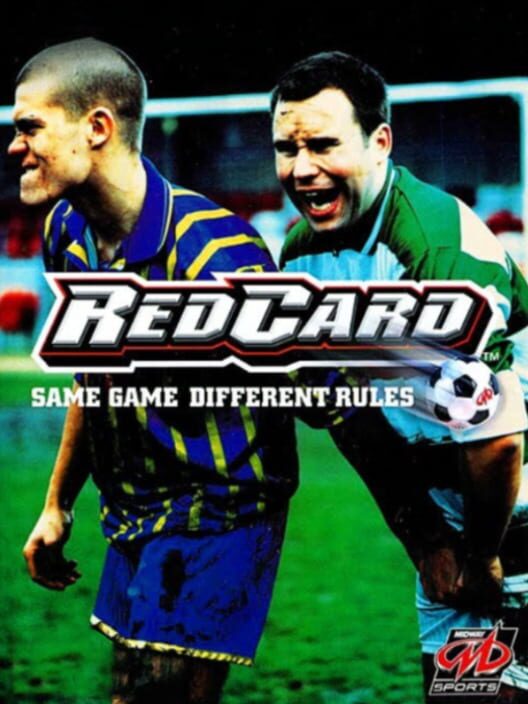
Years before Shaolin Soccer, we had RedCard, or the much more immodest RedCard 2003 in America. Imagine buying this game expecting a nice time with Brian McBride and not realising it’s actually more like…this game. I will never forget that dude’s face.
Fouls are encouraged, referees are ornamental, and the boost meter lets you unleash the kraken at will. It’s like the Mario football games if it was designed by, I dunno, Viz comics.
Critics were generally into the nonsense. GameSpot noted that it doesn’t sacrifice the “fun, easy-to-learn gameplay that most of Midway’s sports games possess”. Metacritic has it in “mixed or average” zone at a 73.
It never really challenged PES (nothing did back in those days), or even FIFA, but there was something about RedCard that really stuck with you if you were a teenager who lived on Van Wilder and Equilbrium DVDs back in 2002 . It’s the kind of sports game from a mainstream publisher you simply wouldn’t see today, at least without some kind of DLC for the dolphins.
Oh yeah, you can play as dolphins in this one. And aliens. And monkeys. That’s basically just scratching the surface of what a daft bit of arcadey brilliance this was, and while the awards bodies will never remember RedCard, the streets will never forget it and so many other PS2 bangers.
READ NEXT: Controversial PS2 Games
Some of the coverage you find on Cultured Vultures contains affiliate links, which provide us with small commissions based on purchases made from visiting our site.