


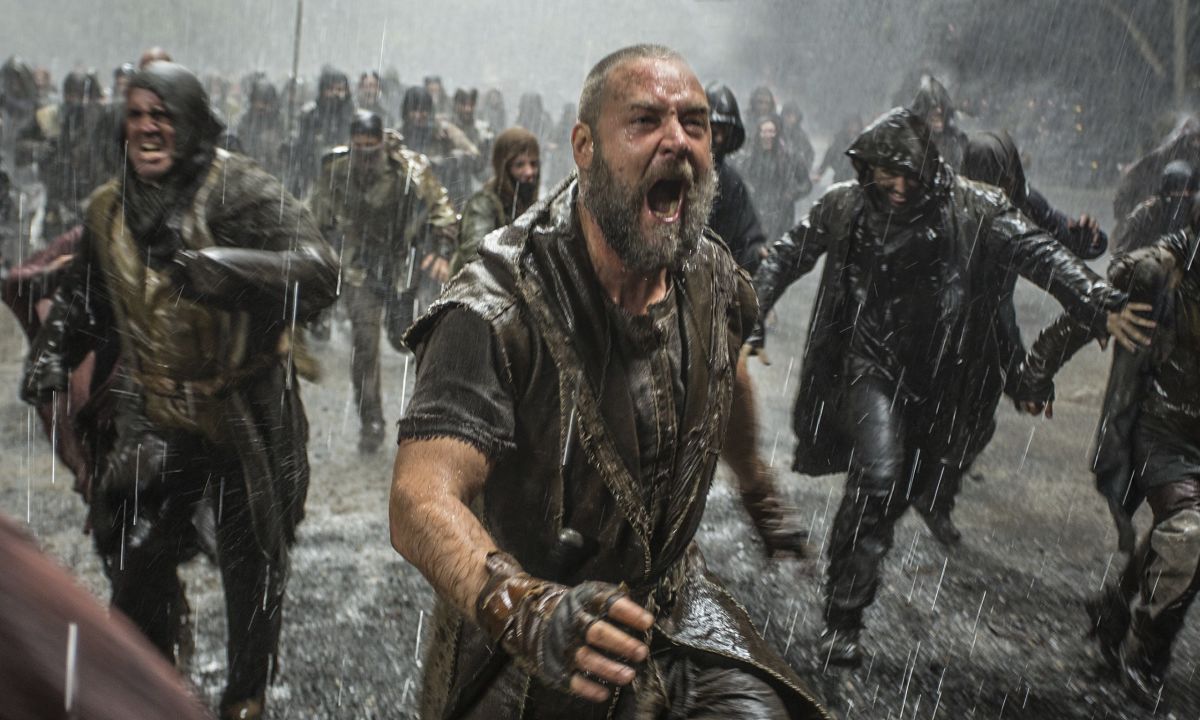
Biblical films are in right now, whether you like it or not. Earlier this year we had the self-indulgent, theatrically released television movie that was Son of God, later this year, we will see Ridley Scott’s star-studded new production Exodus: Gods and Kings, and sandwiched right in between is Darren Aronofsky’s interpretation of the biblical flood story, Noah.
Here, Aronofsky has taken great interpretative liberties with the biblical story—interpretive liberties which, often are interesting. The problem with this film is not a lack of creativity. It is possibly one of the more imaginative interpretations of an original text that I have seen in quite some time. The problem with the film is the fact that much of that creativity is misplaced and wasted, which seems singularly strange coming from Aronofsky, who should know better.
Darren Aronofsky, who is generally and arguably regarded as one of the best directors working in Hollywood today, has a particular aesthetic, and here he does not change his ways. The shades of black and grey, so present in earlier films like Black Swan, Requiem for a Dream, and The Wrestler, once again dominate the color palate in Noah. Beautiful, dark, overhead shots of the barren landscape in which the film is set quickly give us a sense of the world we will be inhabiting for the next two and a half hours. The setting is meant to be vaguely post-apocalyptic, and the cinematography by Matthew Libatique (Aronofsky’s longtime Director of Photography) makes that clear to us early in the film.
The film’s visuals are impeccable, and perhaps the only element of the film that seems complete. The animals (of which there are many) are expertly realized with top of the line CGI. The Watchers (or as they have come to be known–rock monsters) seem lifelike and giant and really made of rock. And all of the films visual elements are directly in keeping with Aronofsky’s signature grim, sprawling, art house influenced style.
However, these glimmers of hope can’t make up for the multitude of misfires this film supplies.
From the beginning, Clint Mansell’s bombastic score begs you to understand that the whole thing is so very epic. The score is basically as close as Mansell could get to the score of the Lord of the Rings films without overtly plagiarizing. The film only grows more obvious as it’s hugely bloated runtime trudges on.
Once on the ark, the plotline which had before retained some element of suspense, resorts to petty melodrama in a strange and unsuccessful attempt to rend emotions from the viewers. I won’t spoil anything, but there is a significant sub-plot involving infanticide which is absolutely contrived and leaves you ambivalent in a way that potential infanticide never should. Another odd plot turn in the film’s second half involves Tubal-cain (Ray Winstone), the film’s main antagonist, boarding the ship and attempting to thwart Noah’s mission. The plot twists, transparently designed to ratchet up the tension, are not only unnecessary but also seem incongruent with everything that came before them. Interpersonal dramas seem fairly inconsequential and small in the context of the whole of humanity drowning in a flood.
Perhaps all this wouldn’t seem quite so bad if there were even an ounce of humor in the movie, but there isn’t. It takes itself so painfully seriously, that sometimes you feel like you can sense the actor’s actual concern (presumably about whether anyone will actually take this seriously) seem through their character’s concern (about the possibility of imminent death). Emma Watson and Jennifer Connelly both try very hard to make some of this dull, clunky dialogue come to life. Watson’s effort is endearing (though still not enough to make you forget how bad the movie is). Connelly’s effort becomes grating and shrill as the plot progresses (or rather, digresses). Russell Crowe is almost a parody of himself as Noah—gruff voiced, brutish and stoic. It is embarrassing that he, who has shown flashes of greatness throughout his career, is still playing his character from Gladiator almost 15 years later.
Noah is interesting at times, and visually stunning through its entirety. But ultimately, what Aronofsky gets right is not nearly enough to make up for everything he gets wrong—contrived subplots, cringeworthy melodrama, campy dialogue and unsettling shifts in tone.
Some of the coverage you find on Cultured Vultures contains affiliate links, which provide us with small commissions based on purchases made from visiting our site.