

The PS1’s got a big old library that’s many thousands strong. The actual number seems to change depending on where you look, but there’s definitely more than like 12 games in its catalogue. With so many games, there are bound to be some that even we had never heard of, and we’re the arbiters of PS1 funk and junk. Let us know down below how many games you’d heard of already, but first, Ken I just say:
Kensei: Sacred Fist
I thought I’d heard of every fighter on the PS1, but somehow never knew of this one, especially from a publisher in their glory years. Kensei: Sacred Fist is Konami’s forgotten punt at a Tekken rival. Grounded hand-to-hand combat, no weapons, no fireballs, just meaty strikes and footsies. Is that a thing?
It dropped in 1998 when every publisher wanted a slice of that delicious 3D fighter pie, and while it isn’t secretly a masterpiece, it’s alright. Yeah! Movement’s snappy, sidesteps are reliable, and the hit-stop gives punches that satisfying thud. It’s not very flashy though, and that’s really where it struggled to stand out.
Where Kensei falls down is identity, really. The roster is a mix of archetypes without many memorable hooks. I mean, it’s got the world’s first Vampiro clone? The stages are pretty much boxes, and the presentation feels like it wandered in from a budget game. Reviews at the time were lukewarm for exactly that reason: it was competent, but just not excellent. If you were buying one fighter in 1998, it probably wasn’t this.
Still, if you like just punching stuff on the PS1, Kensei is pretty fun for how straight-faced it is. No gimmicks, just elbows, jabs, and the age-old art of baiting a whiff. That’s where you get your opponent to smell you to distract them, of course. Right, time for a change of tone.
Johnny Bazookatone
Also released for the 3DO and Saturn, this is a very forgotten 1996 side-scroller from Arc Developments, where you play a rockstar trying to reclaim his beloved guitar from a devilish suit called Mr. L. Really? Mr. L? Did a Twitter blue twick write this?
But the gimmick here writes itself: your axe is also a gun, so you’re hopping through gaudy stages, blasting enemies while ricocheting shots off walls like a pinball wizard. How do you think he does it? I don’t know!
On paper, it sounds kinda neat. But it’s actually not.
Johnny’s movement is floaty, collision can be slippery, and enemy placement loves a cheap shot. You can angle shots to hit switches and secrets, which is smart, but the level design doesn’t make the most of it. Instead of traditional spritework, the characters are all pre-rendered 3D models flattened onto a 2D plane, giving everything that plasticky, airbrushed sheen. It’s like Donkey Kong Country done at home.
The soundtrack leans into twangy rock pastiche, which is fun for a few minutes, then it loops and you realise you’re stuck listening to some bastard child of elevator and lounge music.
There’s little sense of escalation beyond “more” and the boss fights are more attrition than anything else. Still, as a relic of that time where every publisher wanted a mascot with ‘attitude’ and ‘cowabunga’, Johnny Bazookatone is kinda interesting enough to check out.
Brain Dead 13
Developed by the same minds behind Space Ace, Brain Dead 13 is a mid-’90s interactive cartoon from the Dragon’s Lair school of design. That basically means it’s not very fun these days. But it’s nice to look at? Sort of?
You’re Lance, a mouthy tech dragged into the lair of Dr. Nero Neurosis, and survival is a memory game disguised as a video game. It’s like Bop It with higher stakes. Each scene is a fully animated set-piece where you guess the correct input within a heartbeat. Sometimes you press left, and die. Other times, you press right, and then still die.
On PS1 it’s very much a port of its time. The hand-drawn animation is genuinely slick with loud colours and rubbery motion that’s a nice time capsule. But video compression turns the artwork into a crunchy soup, and the controls feel a little as if designed by hamsters, for hamsters. Load times don’t help. You can map the correct route through a room, but you’ll do it by trial and error, and it just feels like it’s wasting your time.
To be fair, Brain Dead 13 is more like an animated booby trap with a sense of humour, and it has a nice energy to it. The problem is longevity and repetition, especially as it’s like less than an hour long. Once you’ve memorised the flowchart, there isn’t much left to chew on beyond admiring the animation and wondering how many times Lance can be flattened, zapped, or fed to something with too many teeth.
Merlin Racing Universe
You know those bargain-bin PS1 racers that all look like they were built from the same bits and bobs? Turns out some of them literally were.
You see, Rascal Racers, Miracle Space Race, ATV Racers, and XS Airboat Racing are essentially carved up from Merlin Racing, a really, really bad kart racer built for NUON. You know, NUON! The “games-in-your-DVD-player” tech Samsung and Toshiba pushed around 2000. NUON got a tiny handful of titles, Merlin among them. Later, chunks of that game were repackaged on PS1 as separate, themed racers.
Merlin Racing itself is Mario Kart by way of made in an afternoon via Net Yaroze, but not completely awful. It had some colourful tracks, chunky karts, multiple vehicle types, and a surprisingly clean frame rate for a DVD player game. The PS1 “quadrology” pares that down into four micro-budget releases: karts with Rascal Racers, sci-fi pods Miracle Space Race, airboats for XS Airboat Racing, and quads with ATV Racers, . You will notice reused geometry, UI ideas, and general handling DNA between them. It’s like a modern AAA game! Chopped up and sold into chunks of DLC.
If any name rings a bell, it’s Rascal Racers. That one did the rounds on YouTube (hello, Caddicarus), and became a minor meme for being suspiciously bare-bones even by PS1 karting standards. I do remember seeing Miracle Space Race a few times though, and I only remember it cos it’s always weird to see updated age ratings on PS1 games here in PAL.
Slamscape
Take an alt-rock band, wrap a CG cheese dream around them, and ship it as a shooter video game. That’s Slamscape, and Slamscape is mid-’90s “multimedia” thinking summed all the way up.
Released in 1996 by Viacom New Media—yes, the MTV/Viacom arm moonlighting as a game label—it pairs arena vehicle combat with an original, reactive soundtrack by God Lives Underwater. Who? You know, 16,000 listeners a month on Spotify? They’re not awful, though.
You pilot a rocket-ram called the Slamjet through surreal arenas while hunting hidden orbs and fending off respawning weirdos. You’re trapped in a simulator with other captives, so you clear a zone, move to the next, try not to get mulched. Mechanically, it’s closer to a lock-on hovercraft arena game than Twisted Metal, with lots of strafing and sudden 180s as the soundtrack throbs underneath.
On paper, that “interactive soundtrack + nightmare carnival” pitch is kinda neat. In practice, the arenas feel samey, navigation can be disorienting, and the combat lacks bite once you’ve clocked the enemy patterns. Reviews did not mince words: Next Generation gave the PS1 version one star out of five. In terms of games mags from back then, that’s basically asking for capital punishment for its developers.
As a curio, though, it is worth a look and/or listen. It doesn’t all quite come together, but some of the extremely negative word of mouth feels a bit like overkill.
Project Overkill
Project Overkill is another weird one from Konami’e. You see , it was developed not in Tokyo but by Konami Computer Entertainment Chicago, a short-lived US branch better known for coin-op work.
Project Overkill shipped on PS1 in 1996, looked like a chunky isometric Amiga blaster that had wandered onto a 32-bit machine, and never quite found the nasty charm that made Loaded pop. There was even a Sega Saturn version in the works, but it never saw daylight, which tells you how confident Konami was by the end.
The premise is simple: four mercs, keycards, corridors, lots of muzzle flash, and a control scheme that maps aiming to the face buttons. For any younger readers, all like 2% of you who retain your cartilage, you probably can’t fathom how annoying that is.
The “between generations” vibe is strong here in general. There’s blood everywhere in that 5th gen cool way, but there’s also art and level layouts that could pass for a late Mega Drive pitch demo.
Reviews were all over the place. GamePro called it “flawed but engaging,” which is about right if you like your shooters stubborn and a bit gristly. Electronic Gaming Monthly’s panel split down the middle: some dismissed it as another ultra-violent also-ran, while others insisted it was “deep and challenging.” The recurring complaint was that four-button aiming turned lining up shots into busywork, and was also just straight up arse.
As a curio, Project Overkill is worth a play from your nearest emulation emporium, or even physically for as much as a YouTube premium subscription. Get a load of this guy.
Silverload
Silverload is a strange game developed by some of the minds who would eventually go on to make…C-12. You can’t escape it around here. Also, Primal and Ghosthunter. Neat.
Silverload is a horror point-and-click adventure originally made for PC in ’95, then ported to PlayStation in ’96, where things got even messier. You play a wandering gunslinger who rolls into a cursed frontier town filled with vampires, werewolves, and a sheriff who looks like he’s about to collapse into pixels. On PC it was already clunky, but the PS1 version that they had to heavily change is notorious for mangled dialogue, glitches, and controls that are like wrestling with wet cardboard.
It had a solid hook, and the creepy atmosphere does poke through here and there. But it’s the sort of thing where you’ll spend twenty minutes fumbling for the right hotspot, only to trigger a cutscene that looks like it fell off the back of a Sega CD.
Critics did not hold back. Official U.S. PlayStation Magazine slapped it with 1.5 out of 5, calling it “a sadistic experiment in patience.” GameSpot landed at 4.6/10, pointing out the broken interface and “ugly beyond words” graphics. It’s not good, but it is a fascinating point in history. A vampire cowboy game from the people who later made a moody alien shooter for Sony. Vampires and cowboys, by the way, can’t get enough of that. More of it please.
Silverload is the PS1 at its most stupidly ambitious without the tech or even technical know-how quite being there yet, but if you’re enjoying um, organic libations one evening, if that makes sense, it’s a good laugh.
Rosco McQueen Firefighter Extreme
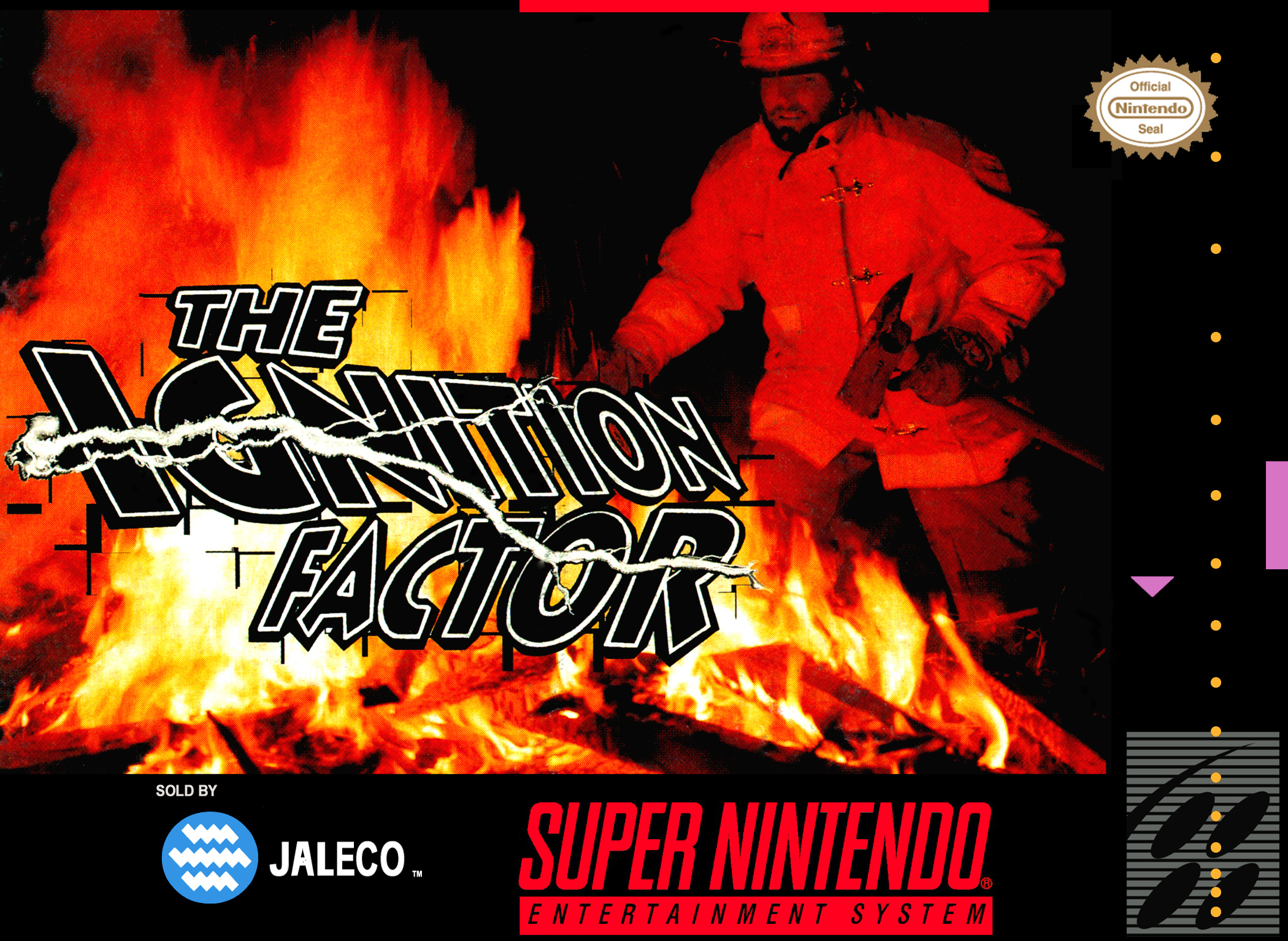
Rosco McQueen: Firefighter Extreme takes the very ordinary idea of fire safety and tries to stretch it into a full PS1 action game. In the third dimension!
You play a towering firefighter stomping through burning buildings, blasting water, smashing fuse boxes, and dragging survivors out before the timer hits zero. Released in 1997 across PAL territories before eventually coming to America in late 1998, it stood out simply because almost nobody else was touching this theme. Well, in the fifth generation anyway.
The loop is straightforward: put out flames, stop the electrics from cooking you, and keep an eye on civilians so the building doesn’t become their tomb. You’ve got a hose and extinguisher for the blazes, an axe for brute force, and just enough gadgets to make you feel like you’re actually doing a job rather than blindly spraying polygons.
It’s not a great game, and the cracks show quickly. The camera fights you in corridors, movement feels a bit floaty considering you’re play as a human fridge, and after a while the missions start blurring together. It reviewed kinda poorly for a reason.
Rosco McQueen is not a hidden gem, but as a reminder of how experimental the PS1 library was, it’s a fun little time. Hey, speaking of that thing that comes for us all:
Excalibur 2555 A.D.
Excalibur 2555 A.D. is the awkward middle step between Tomb Raider and a budget sci-fi adventure that John Travolta might’ve been in.
Developed by Tempest Software, it hit PlayStation in 1997, then PC later that year. You play as Beth, Merlin’s apprentice, who’s punted into a dingy futurescape to recover Excalibur from time-nicking goons.
This is a 32-bit game doing its best. Excalibur 2555 has proper 3D rooms, voice acting, and a few spells. It plays like a stop-start maze of small rooms where you trade objects, poke switches, and fight by standing toe-to-toe while the frame rate begs for mercy. The comparison marketing didn’t help, which saw that guys loved Lara Croft and just decided to make Beth have her backside out all the time.
Reviews gave it a right kicking. IGN went with 3/10, calling it “an adventure in futility,” which is funny. GameSpot landed at 3.9/10, saying it “misses the mark” at being either engaging action or interesting puzzler. GamePro scored graphics 3/5 and everything else 1.5/5, slating its “complete trash” combat and awful music.
As a time capsule where you can see developers being inspired in real time, it’s kinda cool, kinda. Tomb Raider meets King Arthur but with concrete and arse cheeks. If you’re curious, it’s short and cheap, so you don’t even need to ask Santa for it this year.
Santa Claus Saves the Earth
Santa Claus Saves the Earth arrived so late on PS1 you could practically hear Jak and Daxter impatiently tapping on their watches. We’re talking 2002 late. Even better: it was developed in Lithuania by Ivolgamus, who later became Nordcurrent, famous for just a whole load of…yeah.
Lithuania’s finest exports are basketball legends, amber, and cepelinai. Ooh looks lovely that. Add “PS1 Santa game” to the list, I guess.
It’s a side-scrolling platformer where Santa legs it through snowbound levels collecting keys, bouncing on platforms, and swatting grumpy toys. You’ve seen this template a hundred times, but this is the knock-off selection box version. Sprites are big, animations are basic in the sense that sometimes you just glide along, and the music loops like a shopping centre on Christmas Eve, or your dad telling your mum he definitely won’t drink this time.
Mechanically it’s fine in the way a Pot Noodle is food. Jumps feel floaty and hitboxes are iffy, but it definitely does function. The biggest talking point is honestly the timing: dropping a Christmas game on PS1 after PS2, GameCube, and Xbox had already moved the conversation on is frankly amazing. It even came out on the GBA as well?
Still, fair play to Lithuania.
Some of the coverage you find on Cultured Vultures contains affiliate links, which provide us with small commissions based on purchases made from visiting our site.