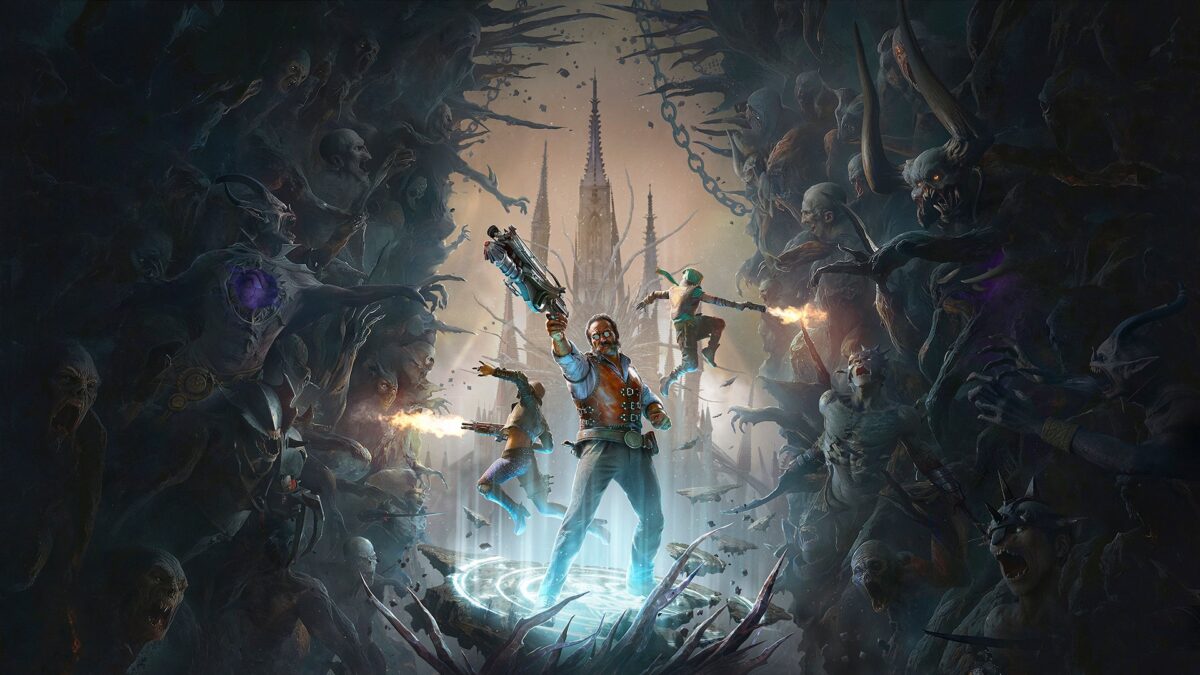



If you wanted to know what the diehard fans of Painkiller think of 2025’s new vision for the series, well, you could just check the Steam reviews page. The idea of making a boomer shooter a forced co-op experience is certainly one that’s left a sour taste in the mouths of anyone who doesn’t want to spend 8-10 hours in the company of two bots of questionable helpfulness. While it’s not an experience exactly like the originals, there’s definitely fun to be had plunging into this version of Purgatory. Just don’t expect the fun to last forever.
You and up to two friends play as one of four lost souls, recruited by Metatron to carve a path through the demon Azazel’s forces. This means nine levels and one roguelike mode of various arenas and platforming challenges where you battle hordes of hellions. In terms of structure, think DOOM (2016) crossed with Left 4 Dead and you’re about there. There’s even moments of banter between the playable characters, though I doubt the selection on offer here is going to match up to the likes of Francis, Bill, Zoey and Louis.
Once the game gets going and the action kicks off in earnest, Painkiller is a lot of fun. Abilities like the dash and slide would typically be used for just traversal, but Painkiller lets you use them offensively too, allowing you to ragdoll monsters in a way I’ve only seen in Bulletstorm before. Fitting that the new Painkiller devs would find a roundabout way to honour the series’ legacy with People Can Fly. Throw in a grapple hook that can be used as an execution tool and you’ll be zipping across the arena turning demons into mulch in no time.

The levels themselves are fine, if a bit repetitive. Essentially, you’re running through nine levels set in one of three biomes: gothic, desert or poison jungle. They’re nothing we haven’t seen in other boomer shooters in the past, and original Painkiller was definitely guilty of leaning into spooky gothic vibes. Still, classic Painkiller games also experimented with its levels too. Levels in older games like Opera House, Loony Park, Asteroids, City on the Water and more were at least more imaginative than the levels on offer here.
It’s the structure of the levels where players might get bored of Painkiller quickly, as holding out against hordes of the same enemies, with only five special demons and three “end of biome” bosses to spice things up, loses its appeal by level 9. Again, the core gameplay is still quite enjoyable, but there’s only so many times you can survive waves in an arena before it gets old. There are other objectives sprinkled in, but they’re either to kill enemies in a specific area to charge an object, escort missions or picking up and throwing items at machines. Again, it’s very Left 4 Dead, only you’re playing a game where you rocket around the arena at mach one while shooting everything that moves.
The actual weapons themselves are fantastic too, though regrettably there’s only six of them. Seven if you count the titular melee weapon, but still. Each weapon has its own obvious strengths and weakness. The returning Stakegun or the Hand Cannon requires precision that’s rewarded with immense damage. The Shotgun and Rocket Launcher specialise in massacring groups with just one pull of the trigger, while the Electrodriver and SMG use overwhelming rate of fire to create demon mincemeat.
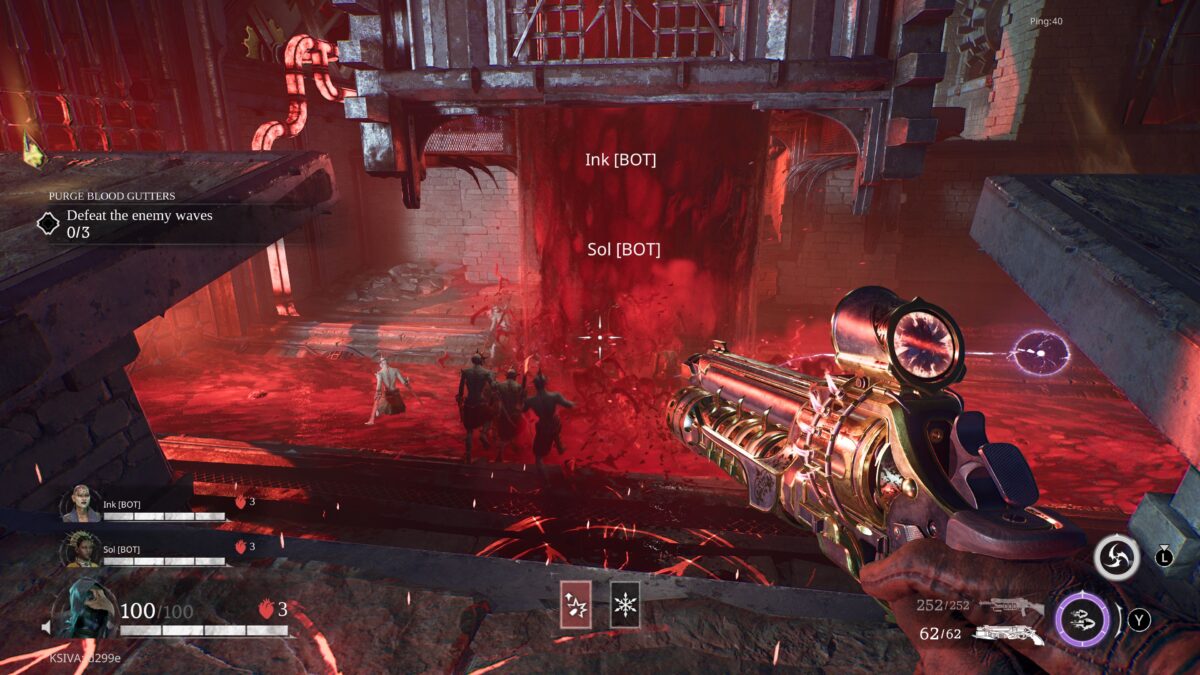
It doesn’t sound like a lot, but each weapon also comes with two chooseable alternate fires that radically alter your destructive output. Each alt fire, along with the base weapon itself, has its own skill tree too, so you can truly customise how you want to defeat your enemies. Do you want a shotgun that freezes enemies in place for others to finish off, or one that repulses every enemy in front of you, allowing you to set up environmental kills easily? There’s only four upgrades per firing type, with you choosing a path of two upgrades at the outset, so it’s not a deep system, but it’s something at least.
Upgrading your weapon into a demon demolishing juggernaut is always fun, though it would be cool if you could also upgrade your character in a more permanent way too. Each of the four characters has their own unique stat increase, and players can unlock tarot cards for use in a level that offer unique upgrades. Unfortunately, tarot cards burn after use in a level, meaning you continually have to spend in-game cash on a tarot card lottery to either earn new cards or restore old ones. Perhaps some kind of small skill tree per character would’ve helped make each one feel more unique.

What developers Anshar Studios were likely hoping would be the main selling point of Painkiller is the Rogue Angel mode. A roguelike take on the formula, you go through various arenas that either test your platforming, murdering or both, unlocking tarot cards or support items as you go. You get to the end, you fight the boss and then you might win. It’s a decent idea in theory, but it’s just more of the same gameplay, and if you’re getting bored after the main campaign, a mode like Rogue Angel isn’t going to keep you around any longer.
What we’re left with is a legacy sequel that’s not quite what fans were hoping for when the project was announced. If you’ve got two friends and you’re willing to accept that it’s not the same as it was, Painkiller can be plenty of fun for a little while, though the £33.50/$40 price point is a bit much for a game you’ll probably only get a weekend out of, tops. Painkiller is enjoyable enough, especially if you’ve got friends to play it with, but it’s not going to stay in your rotation for too long.
An Xbox Series key was provided by PR for the purposes of this review
Some of the coverage you find on Cultured Vultures contains affiliate links, which provide us with small commissions based on purchases made from visiting our site.