

The PS1 heralded the dawning of a tonne of successful franchises that are still going strong today as some of the biggest in the industry. But it also saw a bunch of sequels for its pretty beloved games that nobody has ever heard of, or at least can remember. It’s enough to leave you pretty jaded.
Jade Cocoon 2 (Jade Cocoon)
The original Jade Cocoon on PS1 carved out a very specific niche. You see, it wasn’t the most mechanically deep RPG of its era, but it stood out through atmosphere and cool Minion mechanics. Not those. You had muted colours, a melancholy tone, and monster designs overseen by Studio Ghibli alumni that gave it an identity no other late-90s RPG quite matched. Reviews tended to praise its worldbuilding and creature fusion system while noting that the combat and pacing were fairly basic. It wasn’t in the top 10 RPGs on the PS1, but it wasn’t far off.
Interestingly published by Ubisoft in the West, Jade Cocoon 2 arrived on PS2 and immediately felt like an all or nothing pivot, and people basically gave it nothing in return. It’s brighter, more colourful, and far more animated, with hundreds of cutscenes, but it does also lack that Ghibli touch. Mechanically it’s more system-heavy, as monster battles play out in arenas, fusion is expanded, and progression is far more explicit and gamey. More of everything equals more love, right?
Reception, however, flipped in an interesting way. Where the first game was forgiven for its simplicity because of its mood, Jade Cocoon 2 was often criticised for losing that atmosphere without fully replacing it with depth. Many outlets described it as competent but unremarkable, praising the technical improvements while lamenting that it felt closer to a standard PS2 RPG than a continuation of something special. It reviewed about as well as the original, but had pretty much no impact.
It’s not a bad game, but it didn’t have the same sauce as the original and it’s pretty much forgotten now.
Galerians: Ash (Galerians)
Remember this one? Well you probably will if you watched our forgotten survival horror games vid. All 7 billion other potential viewers that didn’t, you’re in for a ride.
The original Galerians on PS1 is best remembered for the sheer commitment to its own strange energy. It mixed survival horror with anime body horror, psychic powers, and a headache-inducing reliance on pills to stop your brain literally exploding. Imagine Akira but a good bit wetter. Some critics admired how different it felt from Resident Evil clones, others found it stiff, awkward, and borderline just a pain in the arse. Sales were modest, but it did garner itself a small cult reputation.
Galerians: Ash takes that cult curiosity and drags it into the PS2 era, but not without sanding down a few edges. Psychic powers are still the pull here, but combat is more direct with less emphasis on careful resource juggling and more on spectacle. It’s cleaner and more detailed, but also far more conventional — the grimy, claustrophobic feel of the original is a lot sleeker to its detriment here.
Where the first game was criticised for being clumsy but praised for originality, Ash did not get as much patience. Reviews noted that it played better moment to moment but had lost some of the unsettling identity that made Galerians stand out in the first place, but also that it didn’t really feel like a generational leap from the PS1. At least it had a cool breakcore soundtrack
Sales were much worse, but we did get some sick cover art and a forgotten anime film too.
Galerians: Ash isn’t a terrible game, but it simply lacked a gritty spark as the PS2 exploded into life. It also didn’t help that it came out two years after Silent Hill 2. You’d be a big sil to say it’s one of the best PS2 games out there.
Valkyrie Profile 2: Silmeria (Valkyrie Profile)
The original Valkyrie Profile on PS1 is a game people talk about as if it saved their life. A side-scrolling RPG built around Norse mythology, existential tragedy, and a combat system that felt completely bespoke, it reviewed extremely well at the time and only grew in stature as copies became harder to find, even as it received a pretty brilliant version for the PSP.
Valkyrie Profile 2: Silmeria is where things get maybe slightly daft. Instead of following up directly, tri-Ace essentially rebooted the format while keeping the name and setting events before the first game. The sequel shifts to a fully 3D presentation, with cinematic camera work, sprawling environments, and a combat system that’s deeper, flashier, and far more technically demanding. It’s an impressive PS2 game in a very literal sense and you could say it’s pretty broadly underrated.
Critically, Silmeria was received well, but differently. Reviews tended to praise its combat depth, visual ambition, and sheer scope, while also flagging pacing issues, long dungeons, and a story that takes a long time to properly assert itself. Compared to the PS1 original’s almost universal critical affection, the sequel reviewed strongly, but with a bit less generational reverence.
Valkyrie Profile 2 is denser, more demanding, and arguably less essential, but also bolder in ways few PS2 RPGs dared to be. If you’ve been putting off playing it, it’s definitely worth a look.
Also, I’m looking forward to putting Valkyrie Elysium in a similar thing in a few years. Anybody remember that one? Hard to imagine.
Die Hard Trilogy 2 (Die Hard Trilogy)
The original Die Hard Trilogy is remembered as a moment in time when the video game industry decided to offer amazing value. That one single time.
A licensed PS1 release that somehow bundled three completely different genres into one package, it was an absolute riot that you or at least one of your mates would play when you were a bit too young. You were getting a shooter, a light-gun-style on-rails section, and a driving game in one box, even if none of them were especially refined. Its reputation has only grown stronger with age, and it’s still probably the best Die Hard game.
Die Hard Trilogy 2: Viva Las Vegas, which, as you guessed, takes place in Dagenham, takes a very different approach, by instantly making its name meaningless. Rather than doubling down on the multi-film insanity, the sequel strips things back into being based around a single original storyline in Vegas. So shouldn’t it be Die Hard Single? Isn’t that what most Newcastle fans do anyway?
Reviews were noticeably harsher, criticising stiff controls, awkward camera work, and a general sense that the game felt dated even by late-generation PS1 standards. Where the first game got a pass for being messy but inventive, Die Hard Trilogy 2 was judged as a straightforward action game — and found to be just a bit too bland. Developers n-Space would learn from their mistakes here and go on to make…Geist. And…Jillian Michaels’ Fitness Adventure?
Die Hard Trilogy 2 is not offensively bad, but it’s as forgettable as that Die Hard movie with Jai Courtney in…exactly.
Shadow Hearts (Koudelka)
More people probably know developer Sacnoth for Shadow Hearts than Koudelka, but a lot of people probably don’t know that they’re connected.
That’s not surprising, as Koudelka on PS1 is a strange starting point for anything resembling a franchise. It’s a slow, gothic hybrid of survival horror and RPG, set almost entirely inside a Welsh monastery, with a heavy emphasis on atmosphere and voice acting, which was some of the best of all time in 1999. Reviews praised its tone, soundtrack, and ambition while openly questioning the clunky combat system and uneven pacing. It reviewed decently rather than spectacularly, but its user reviews really tell the full story.
Shadow Hearts is technically its sequel, but you’d be forgiven for never realising. It drops the Koudelka name entirely, jumps to PS2, and retools almost everything. The combat system becomes faster and more expressive thanks to the Judgment Ring mechanic, the scope expands dramatically, and the tone shifts to still weird, still dark, but far more willing to be playful and theatrical.
Where Koudelka was seen as an interesting but awkward experiment, Shadow Hearts was widely praised as a confident, distinctive RPG. Reviews highlighted its originality, combat system, and willingness to lean into horror themes without becoming oppressive. Scores were notably higher, and for many players it felt like a breakout success rather than a continuation of something niche.
Its sequel, Shadow Hearts: Covenant, is frequently held up as one of the best RPGs on the entire PS2, praised for refining the combat, sharpening the writing, and fully committing to the series’ strange tonal balance.
G-Police: Weapons of Justice (G-Police)
This one was a surprise to me.
The original G-Police on PS1 was already pushing the console to somewhere near its limits. Set in a sprawling, futuristic city with full 3D environments and long draw distances, it was ambitious to say the least. Critics at the time largely admired what it was trying to do: the sense of scale, the dense urban layouts, and the attempt at something more simulation-leaning than most console action games, but it did have a few performance dips. It didn’t stop it from being like one step above a cult hit, but not quite a mainstream banger.
G-Police: Weapons of Justice doesn’t so much fix those problems as double down on them. It’s bigger, more complex, and far more demanding. Missions are longer, objectives more layered, and it even has like 25 different weapons and over 30 enemies to fight. It refines the flight model and expands the arsenal, but it also asks even more of the PS1 hardware.
Critics generally agreed that G-Police 2 was the better-designed game, praising its deeper missions and stronger structure. However, it did also have quite a lot of negativity for performance and for just making things quite complicated while also being pretty short, somehow. The sequel was judged more harshly for its rough edges, especially as players’ expectations rose near the end of the PS1’s life.
There was no third game, and no attempt to carry the idea onto PS2, and no real closure, which is a shame. Within a few years, Psygnosis was fully absorbed into Sony, rebranded as Studio Liverpool, and redirected toward faster, cleaner, more commercially viable projects like WipEout Fusion and Formula One. But they had one other forgotten PS1 sequel up their sleeve before then.
Rollcage Stage II (Rollcage)
The original Rollcage landed on PS1 with a very clear hook: going very fast upside down. It was futuristic racing where your car could drive on walls, ceilings, and anything else that vaguely counted as a surface. It was fast, aggressive, and technically impressive, but it also felt slightly rough around the edges. Reviews at the time were generally positive, praising the sense of speed and originality, while pointing out awkward physics quirks, a steep learning curve, and AI that could feel a bit feral, but it was the game that’s legacy is arguably carried by its banger demo alone.
Rollcage Stage II is a textbook example of a sequel that fixes almost everything but everyone forgets. Americans: if this is ringing zero bells, it was actually renamed Death Track Racing for you and was published by Take-Two, later of GTA fame.
The handling is tighter, the tracks are more readable, and the sense of momentum is better balanced. It adds more modes, more cars, and more ways to weaponise speed without fundamentally changing what made the original appealing. Crucially, it also feels less like a tech experiment and more like a fully realised racing game.
Where Rollcage was praised for ideas, Stage II was praised for execution. But the problem was timing. Released right at the tail end of the PS1’s life in March 2000, it arrived as attention was already shifting toward the PS2, and there were a lot of racing games on PS1 at that point.
If you want more of this kinda thing, several members of the Rollcage development team later formed Atompunk and went on to create Grip: Combat Racing, which was basically a Rollcage 3.
Musashi: Samurai Legend (Brave Fencer Musashi)
Brave Fencer Musashi on PS1 is remembered as a sadly often overlooked action RPG whipper. It’s stuffed with voice acting, and built around a day–night system that directly affected towns, dungeons, and enemy behaviour. Absolutely crazy stuff for the time, and it garnered plenty of fans. It wasn’t a blockbuster, but it was distinctive enough to carve out a loyal following that still talks about it very fondly when you bring up PS1 hidden gems.
Musashi: Samurai Legend for the PS2 is technically the sequel, but it makes almost no effort to feel like one. The tone is darker, more serious, and far less whimsical which was the style at the time.mp4 . Structurally, it ditches the time-management ideas almost entirely and pivots toward a more conventional action RPG format, with linear progression, combo-heavy combat, and a heavier emphasis on spectacle. It even has character designs from Tetsuya Nomura, which should be obvious from the cover alone.
While Samurai Legend wasn’t savaged by critics, it reviewed more modestly than the PS1 original. Reviews often praised the production values and combat ambition, but criticised the repetitive encounters, thinner personality, and loss of the systems that made Brave Fencer Musashi feel unique, while also just mashing genres too much. Where the first game was remembered as quirky and surprising, the sequel was seen as competent but interchangeable. It just did not possess the sauce, and it really did not sell very well and the series died here. Neither game has ever been ported to anything.
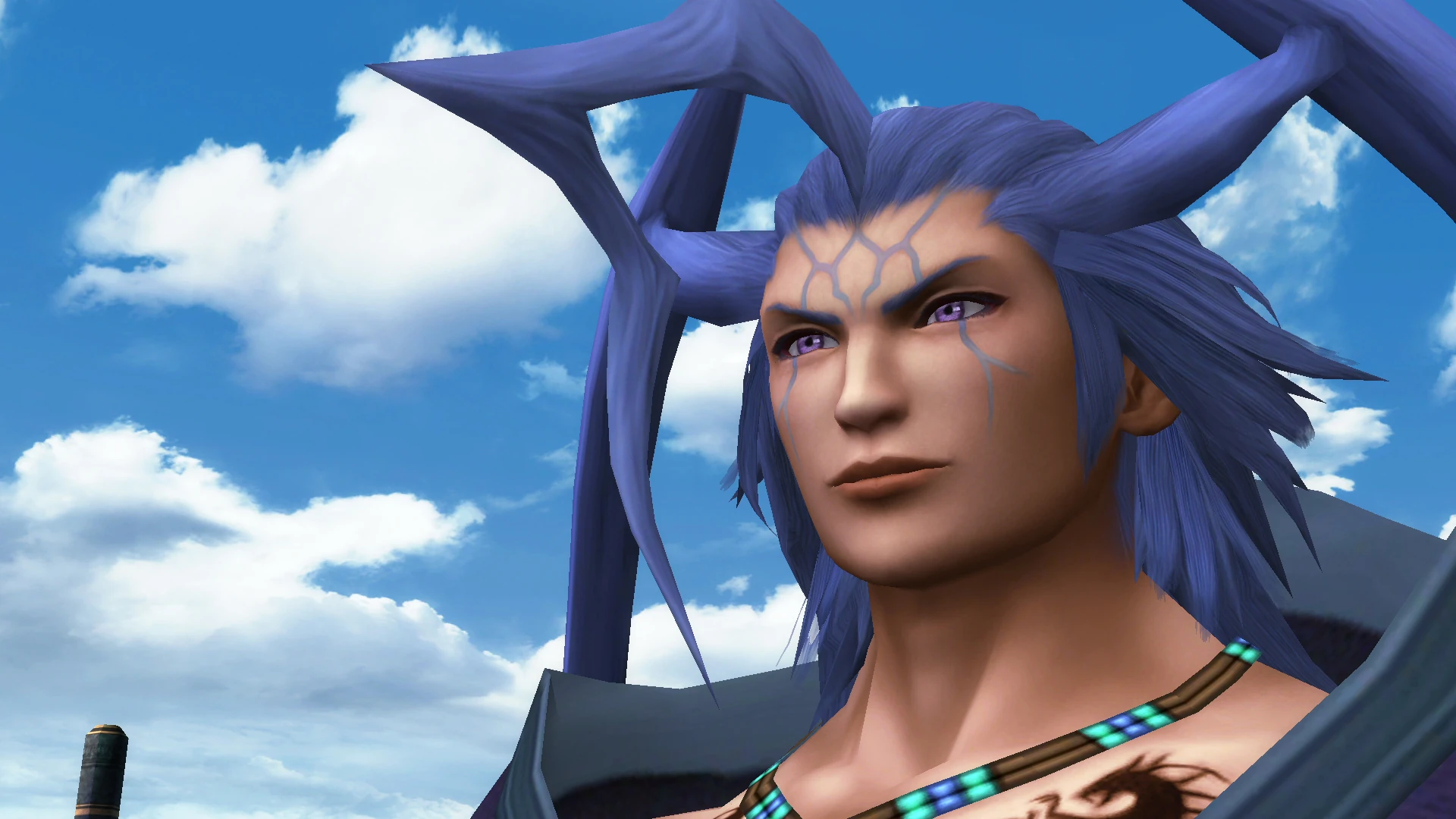
Basically, people didn’t want Musashi to grow up — they wanted it to stay strange. By chasing a more mainstream action-RPG identity, Samurai Legend lost that sauce and is now most notable for having hairstyles that would make even Seymour wince.
Legaia 2: Duel Saga (The Legend of Legaia)
Published at the tail end of Sony realising that “hey people sure do like this Final Fantasy stuff, “ The Legend of Legaia on PS1 earned its reputation by doing something really quite cool.
You see, its turn-based combat used directional inputs to create long, custom attack strings, giving fights a feel closer to a fighting rhythm game than a traditional JRPG. Critics and players responded well at the time, praising how distinctive the system felt and how effectively it broke up the usual menu-driven flow. The story and presentation were considered solid rather than spectacular, but the amazing combat alone was enough to give the game lasting cult appeal.
Legaia 2: Duel Saga arrived early on the PS2 in 2001 with a clear mandate: make it bigger, faster, and more accessible. The core Arts system returns, but it’s streamlined and simplified, with fewer restrictions and more emphasis on chaining flashy attacks. It’s obviously a visual step up with brighter environments, cleaner character models, and a more traditional heroic fantasy tone. Structurally though, it feels a lot more straightforward. Maybe too straightforward.
While Duel Saga was generally well received, it rarely inspired the same enthusiasm as the PS1 game. Reviews often described it as competent and enjoyable, but less distinctive. The combat was still praised, yet some critics felt it had lost a bit of its personality. It’s also worth remembering that it didn’t come to the west until after Final Fantasy X had already been out for a year. Clear winner there.
Sales were poor and there was no third game. That disappearance also lines up with a broader shift at Sony. After the PS1 era, Sony published far fewer traditional JRPGs, increasingly focusing its internal output on action, racing, and Western-leaning prestige titles instead. We never even got a sequel to Legend of Dragoon. Tobal mistake there.
Tobal 2 (Tobal No. 1)
Tobal No.1 on PS1 is largely remembered for a reason that has almost nothing to do with Tobal itself. In the West, its legacy is inseparable from the Final Fantasy VII demo bundled in the box, which is a shame as the fighting game itself is actually pretty decent. It’s basically the Zone of the Enders of the PS1, which came with an MGS 2 demo. I played the hell out of that
Critics at the time were polite but lukewarm when it came to Tobal. The animation and character designs by Akira Toriyama were praised, but the combat was often described as stiff, undercooked, and lacking the depth needed to compete with established 3D fighters. It reviewed modestly well, but just really struggled against Tekken and the like.
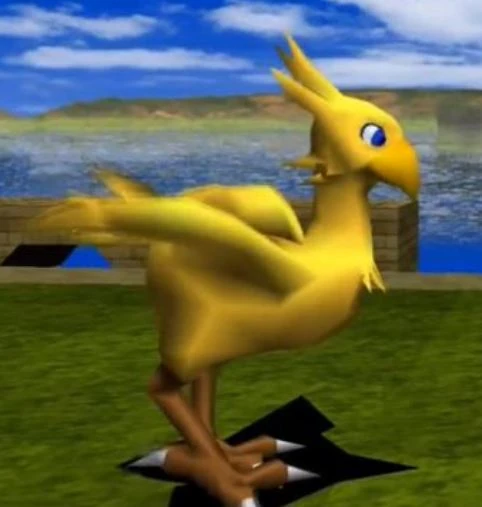
Tobal 2 is where the story takes a sharp turn — mostly because almost nobody outside Japan played it. Released exclusively in Japan, the sequel dramatically expands the combat system, adds a massive roster, and introduces a full-fledged quest mode that blends fighting mechanics with RPG-style progression and exploration. What you can catch in this mode actually unlocks them as characters in versus mode. You can even catch a chocobo and use it as a fighter.
Tobal 2 is actually a much better, more complete game, addressing nearly every complaint levelled at the first game. It’s the version people wanted Tobal No.1 to be in the first place.
Compared to the original’s middling response, Tobal 2 was widely seen as a genuine improvement and, in some circles, one of Square’s best PS1 games. It’s still never officially made its way over here, but fan translations have been knocking around for about 20 years now. Matey.
READ NEXT: PSP Games That Aged Beautifully
Some of the coverage you find on Cultured Vultures contains affiliate links, which provide us with small commissions based on purchases made from visiting our site.