


In February of 2009, Street Fighter IV was released on home consoles in America. Being the first installment of the prolific game series to be released in 10 years, it opened a door to one-on-one competitive gaming to an entirely new generation of people. One of those people was me. Having played games for the entirety of my conscious life, I was naturally attracted to the “reboot” philosophy of this release; the kind of return to basics that’s needed to foster a new generation of World Warriors. Upon playing it, it blew my fucking mind.
First sitting down in my friend’s living room, controllers in sweaty excited hands, while the game booted and we were greeted by the opening cinematic. Finally getting to the character select screen felt like a whole new world. We spent hours upon hours fighting furiously with our own lack of dexterity, juggling our complete lack of finesse with the ever present excitement that playing each new character brought.
Though videogames had been an immortal presence in my everyday life, I couldn’t recall a game in the past that had induced such a visceral reaction of joy and schadenfreude in completely decimating my best of friends and being decimated in return. Spending hours practicing combos and garnering match-up knowledge. For the first time, I had seen the charm of competition and I had no intention of ever letting it go.
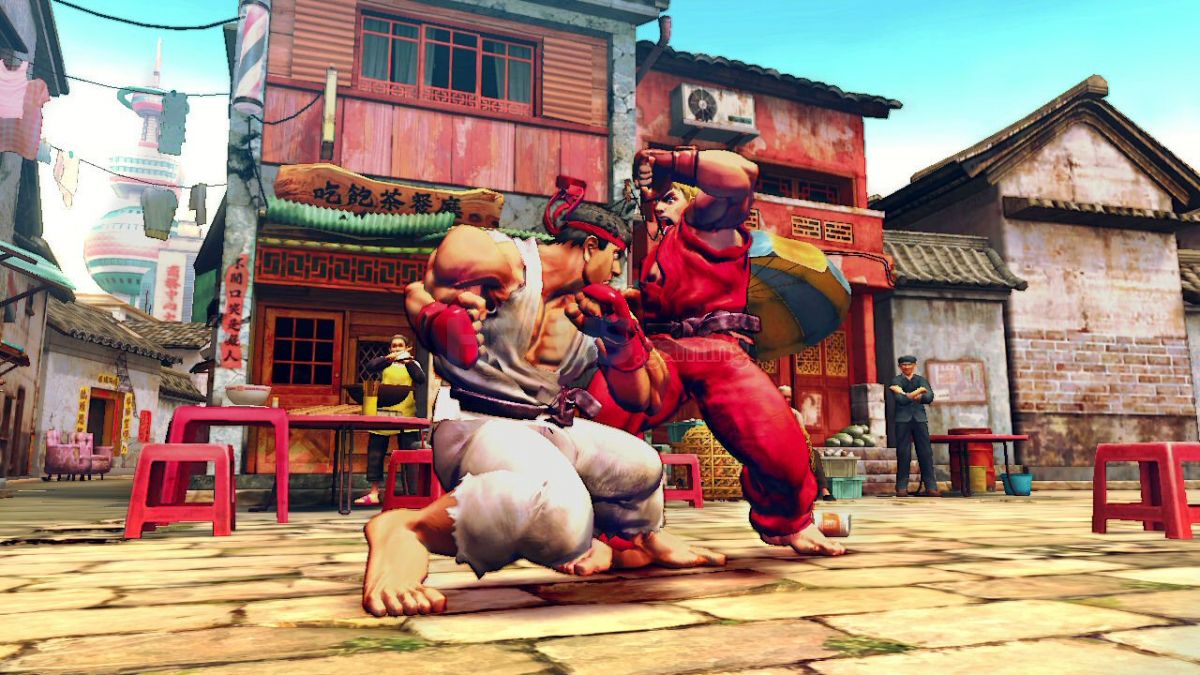
For the next six years, every social gathering between everyone in my close circle was permeated by Street Fighter. “Let’s hit the bar then go play some Street Fighter”. “It’s my kid’s birthday tomorrow, bring a set up so we can run a round robin”. “I don’t have gas money for you. Play me in a first-to-five. If I win, the ride’s free”. It was all encompassing. Through every iteration and re-release we were there. For every major tournament, we were all huddled at the TV watching every second with bated breath. Every hit, every block, every movement evoked responses, clear and strong.
Naturally, over time, the attachment and love of competition fostered appreciation for other games in the scope of competitive gaming. League of Legends, Dota 2, Marvel vs Capcom, Hearthstone, Counter-Strike, Heroes of the Storm; we were right in the center of the eSports boom. Everywhere you looked, both locally and online, there was competition to be had and someone’s ass that needed to be beat. The world over had begun to embrace competitive gaming in way that I had never thought possible. Hundreds of thousands of viewers tuned into EVO (the world’s largest fighting gaming tournament) for the last few years to watch the best in the world compete for a title in a game that most viewers don’t even play. Being at the crest of that wave of capitalist endorsement and social acceptance was fantastic. For the first time in my life and the lives of many of my friends, our love of these games felt legitimate; and everyone around the world felt the heat of competition that engrossed us so.
In April of 2015, the finals for the first major tournament for Blizzard’s MOBA Heroes of the Storm, Heroes of the Dorm, broadcast on ESPN2. The esteemed sports broadcaster had never devoted hours of on-screen time to a competitive video game before. This was an enormous step forward for the perception of competitive games to the greater population. For though the active communities for many of these games have grown greatly in the past few years, they all still remain very niche in the greater capitalist sense of legitimacy, as well as the greater social spectrum of acceptance as a healthy hobby. Many average Americans look at those who play football or basketball in a positive light because if performed well enough and consistently enough, success and acclaim are near guaranteed. Replace the sport with a video game, and no one’s expecting a free ticket to the Promised Land.
After years of playing and spectating, I began to wonder why, not only Street Fighter, but all of these games geared toward the competitive audience had clicked so fully with me through my young adulthood. I also began to look around at my peers in these gaming communities and realized that so many of them were male, at least those who were engrossed to the degree that I have been. While female representation in the gaming industry is making big moves in the right direction as of lately. The realm of eSports remains, on the whole, a boy’s club. Why is this? If women make up at least half of the general gaming population, including non-competitive single player games, why is there so little participation in eSports? What is reigning in the men? Also, why is it so important that our love of these games be accepted and promoted?

I had to think back to every time I’ve sat down in front of a monitor, arcade stick balanced on my thighs, knees and shoulders inches away from my opponent sitting next to me. Every time the announcer called “FIGHT” and the room fell silent for minutes on end except for the tapping of furious fingers on buttons. Every time I’d win and feel like a warlord drinking the blood of my enemy as the room around me erupted into a cacophonous melange of celebration and deprecation. Every time I lost and it felt like a personal affront to my character rather than the friendly virtual scuffle it appeared to be. Every time the content of a match so thoroughly influenced my opinion of my opponent, no matter how few words were shared.
All of these experiences and emotions are larger than any one game. They speak to a deeper place in the human psyche (particularly the male psyche) than any autonomous artistic experience could hope to communicate to. Whether it Ryu vs. Ken under the Tokyo Overpass, or Shadow Fiend and Puck battling it out in the middle lane, competitive gaming interfaces directly with the part of the male psyche that requires development through combat. Besting someone else in a test of wits and finesse, or failing and hopefully starting the train of improvement. Being able to do so in an arena that poses no physical threat to the user while still requiring great skill is naturally attractive to young male adults. It is through these Freudian developmental processes that men are able to grow gracefully into adulthood.
That is not to say that women are not capable of finding the joy of competition; there are many examples that prove the antithesis of that idea. That being said, I don’t feel it’s as wholly cathartic or developmentally integral to the female psyche as it is to the male.
Now, the question still stands as to why we find such joy in the acceptance and enjoyment of these games on a growing scale. For this, I can only speak for myself. I simply want everyone around me to experience the ecstasy and freedom of competition that has enveloped me for so many years now and allowed me to develop into the man I am today. While for decades now, the larger American audience utilized the NFL or the NBA to fuel the primordial need for competition, we now have a plethora of games and online arenas that allow us to not only enjoy as a spectator, but be an active participant in our own competitive nature. To interface so directly with that ancient aspect of ourselves as humans on such a large scale of population must be the most amazing part of the eSports movement.
Some of the coverage you find on Cultured Vultures contains affiliate links, which provide us with small commissions based on purchases made from visiting our site.