

RPGs can provide some brilliant escapism. But RPGs can also make you confront some rather dark themes.
Fire Emblem: Genealogy of the Holy War
As the fourth mainline entry, Fire Emblem: Genealogy of the Holy War not only established major mechanics like the weapon triangle, character relationships, and child units, it also took things in a wildly different direction that no Fire Emblem game has attempted since.
Jugdral is a continent full of political intrigue and dark conspiracies, and its story begins after a castle’s worth of people are slaughtered by barbarians. As its citizens were caught in the crossfire, the kingdom of Grannvale sends forces to retaliate — leaving protagonist Sigurd to defend the homeland after another kingdom takes this opportunity to invade.
Genealogy features a notably denser story than most other Fire Emblem games, and it dives into some seriously horrific territory for a late 90s Nintendo game. Many will likely know the big twist from halfway through — thanks to a series of political maneuvers and backstabbing, Sigurd and his army are all executed. Nearly two decades later, their children are forced to pick up where their parents left off to purge Jugdral of evil once and for all.
But aside from that major plot twist, Genealogy also goes out of its way to show that Jugdral isn’t a pleasant place to live. Aside from the villains’ schemes involving uncomfortable relations between half-siblings (which, incidentally, involves brainwashing, with all of the disturbing implications that brings), there are also absolutely lovely government policies such as the Child Hunts, where children are rounded up to be sacrificed to a dark god. I can excuse child labour, but I draw the line at child sacrifice.
Almost no other Fire Emblem game dives this deep into the abyss, and so Genealogy of the Holy War established itself as one of the most beloved games in the series, with hopes — and rumors — of a remake continuing to endure so we can get it officially in the west.
Look Outside
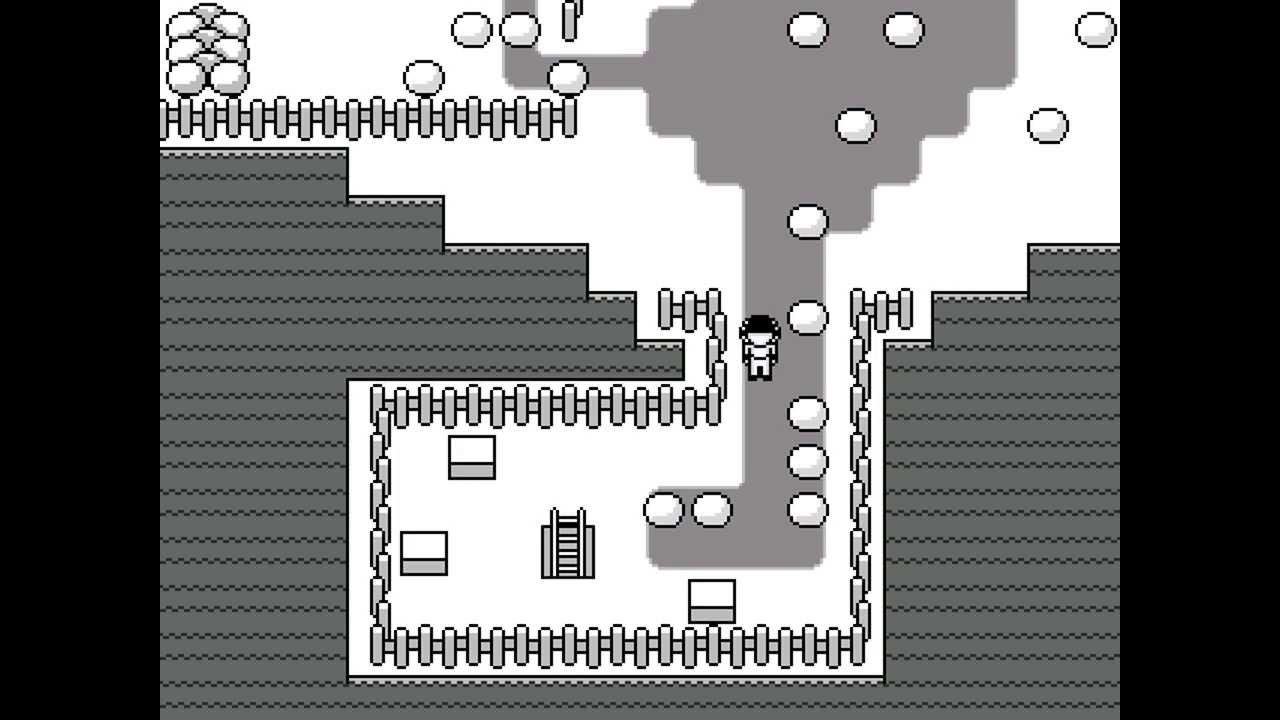
Inspired by Sweet Home — a game we’ll be covering later — this RPG Maker horror game made its debut earlier this year, after five months of development following its conception as a game jam submission.
Similar to its inspiration, Look Outside is an RPG set entirely in the confines of an apartment building. You are Sam, an unremarkable tenant who wakes up one day with a strange urge to look outside. Fortunately for him, a neighbor stops him from doing so — because something is going on outside, and while it’ll all be over in 15 days, the people unfortunate enough to look outside have all mutated in all manner of horrific creatures. Imagine Bird Box meets Sweet Home…the other one, and you have the right idea.
You’ll explore the apartment, fighting off monsters, scavenging for items, and potentially forming social relationships with the still sane inhabitants. Sam will also need to keep an eye on things like his hunger, cleanliness, and weapon durability. Make the right choices, and you’ll also be able to recruit a wide variety of party members who come knocking at you. Ignore the fact that they’re all a bit…wrong.
Characters growing more than one too many eyes or limbs is a recurring theme in Look Outside, but also only the tip of the iceberg of what lies in store in the apartment building.
I blasted through this one earlier in the year and had a great time. Look Outside is a densely packed horror RPG experience, one that’s perfect for fans of classic turn-based RPGs, survival games, and the works of H.P. Lovecraft.
Shadow Hearts
Thanks to an unfortunate release date leaving it overshadowed by Final Fantasy X, Shadow Hearts is one of those RPGs forgotten by time — though it’s at least developed a cult following.
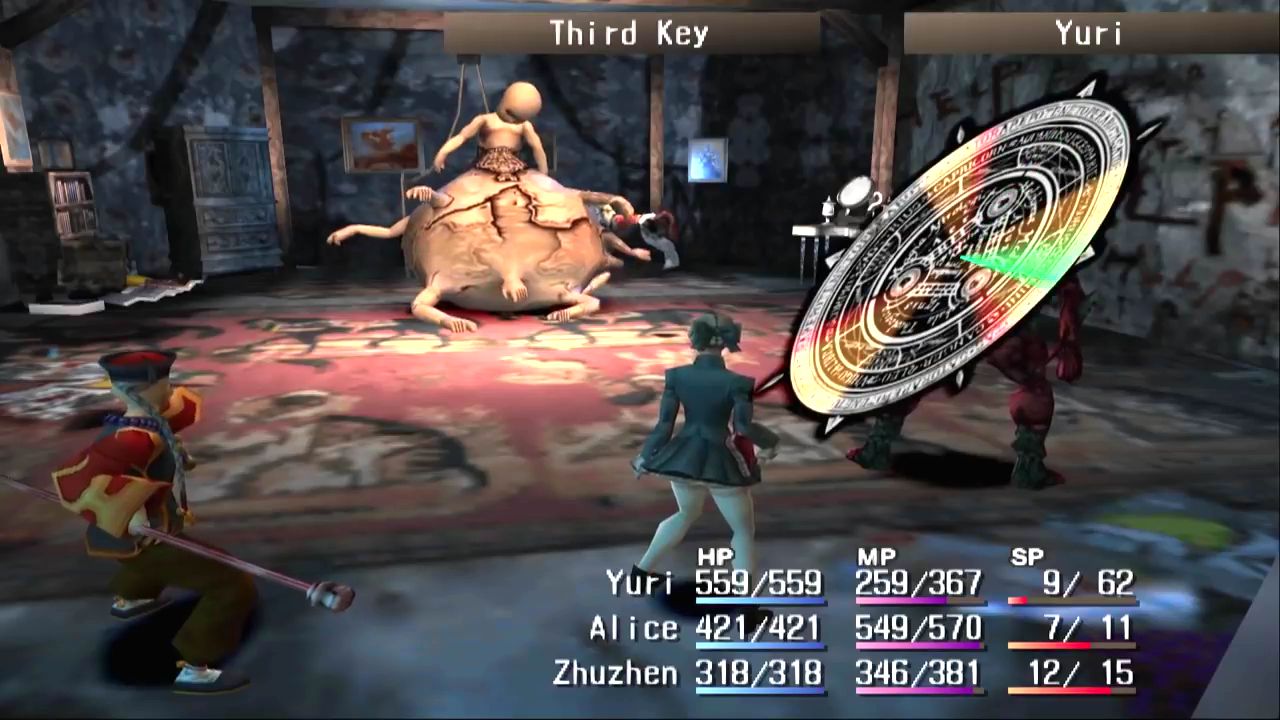
As a sequel of sorts to the PS1’s Koudelka, Shadow Hearts is set in the same world. While Koudelka is set in the confines of a mansion, Shadow Hearts leaves the constricted setting behind for an alternate history story spread across China and Europe, complete with Lovecraft-tinged horror flavor.
Our protagonist is a man who can absorb and transform into the monsters he kills. He’s also not exactly a sociable type, and unfortunately for him, he’s got a voice in his head compelling him to board a specific train to meet and then protect an exorcist named Alice.
Aside from its Judgement Ring and Sanity system adding a few twists, the game’s combat is on the more traditional end of the spectrum. Instead, what really sells the game is its unique atmosphere and the monster designs you encounter. Thanks to the technical limitations of the era, these Lovecraftian horrors were deliberately given stiff and unnatural animation to really help lean into that horror vibe.
We did actually get two more Shadow Hearts games, including Covenant, which genuinely is one of the best RPGs on the PS2. We also got Shadow Hearts: From the New World, which absolutely tried to confuse people waiting for a new Kingdom Hearts game, but it didn’t work and the franchise died! Oops!
While Shadow Hearts took inspiration from the works of H.P. Lovecraft, this next game instead takes inspiration from a real life tragedy.
Nier
Probably the greatest game franchise spun off from a really weird ending in a forgotten hack and slash series with dragons ever, right?
You play as a father working to care for his ailing daughter Yonah. The medieval fantasy setting is one in decline, with its people under threat from creatures known as Shades. When the protagonist comes across a magical book known as Grimoire Weiss, he sets off on a journey to find a cure for Yonah’s illness, while battling the Shades.
Nier presents a world where things are never what they seem. On your first playthrough, this is already a rather bleak and somber RPG — but just like its predecessor Drakengard, that first playthrough is far from the end of the story. Nier incentivizes multiple repeat playthroughs by revealing more and more details. First by making the Shades intelligible to the audience, then by adding more cutscenes that further delve into the game’s cast.
It all culminates with revelations that paint its supposed heroes in a much different light, and chances are, even if you haven’t played the game, you might have heard of how its final ending infamously asks the player to sacrifice everything, including their save data and the ability to reuse their chosen name for the protagonist on new save files.
Yoko Taro saw 9/11 and the War on Terror as tragedies where both sides believed they were doing the right thing, and that idea’s influences can be seen all throughout Nier. Sure, the game features tropes like friendship and the power derived from it, but it also makes it clear that sometimes, what you do with that power may not be the right choice after all.
Tales of Arise
For 300 years, the entire planet of Dahna has been trapped under the rule of Rena, a planet once thought to be the land of the divine and the afterlife. In truth, Rena is home to an empire filled with advanced technology and dangerous bioweapons — with which they conquered Dahna virtually overnight.
While most other RPGs begin in a peaceful setting before ramping up the action, Tales of Arise instead opens with an incredibly oppressive atmosphere, one that shows an entire people trapped in slavery, with most being too weak and broken to survive, let alone even think about mounting a resistance.
Though a chance encounter leads to protagonist Alphen gaining the power and allies he needs to begin liberating the world, Tales of Arise makes it clear that the journey will be a long one. The damage that Rena did to Dahna is long lasting, and even within the main party, it takes a lot of time and effort to overcome long-held prejudices. Killing a Renan Lord also realistically doesn’t solve everyone’s problems overnight. The game calls to attention ideas like what it really means to be free, and what happens when someone dedicates themselves to their ideals at the expense of all else, including morals.
While this is still a Tales game through and through, complete with tropes like amnesiac heroes and budding romances, Tales of Arise is still a surprisingly grim and mature adventure. And if you’re still itching for more dystopia in your JRPGs after this, Monolith Soft has you covered.
Xenoblade Chronicles 3
While the Xenoblade games are ultimately optimistic experiences with uplifting endings, the journeys to get there are often filled with pain, anguish, and heartbreak. Nowhere is that more apparent than in Xenoblade Chronicles 3, because while the previous entries ended on a hopeful note, somewhere along the line, things have gone horribly wrong by the time this game begins.
You don’t need to spend much time to see just how dystopian the setting of Aionios is. Aionios is inhabited by only two nations: Keves and Agnus, both of which are composed entirely of soldiers. There are no civilians or non-combatants.
These soldiers are all born from machine pods, have artificially limited lifespans of only 10 years, and spend their whole lives fighting the opposing nation. And there are no real politics behind this war — everyone is forced to fight just to steal the life force of their enemies to stop their own from running out, which would kill everyone stationed at a given colony. Survive the whole ten years, and the best you’ll get is the equivalent of a state funeral, something that everyone has been mentally conditioned to anticipate and celebrate.
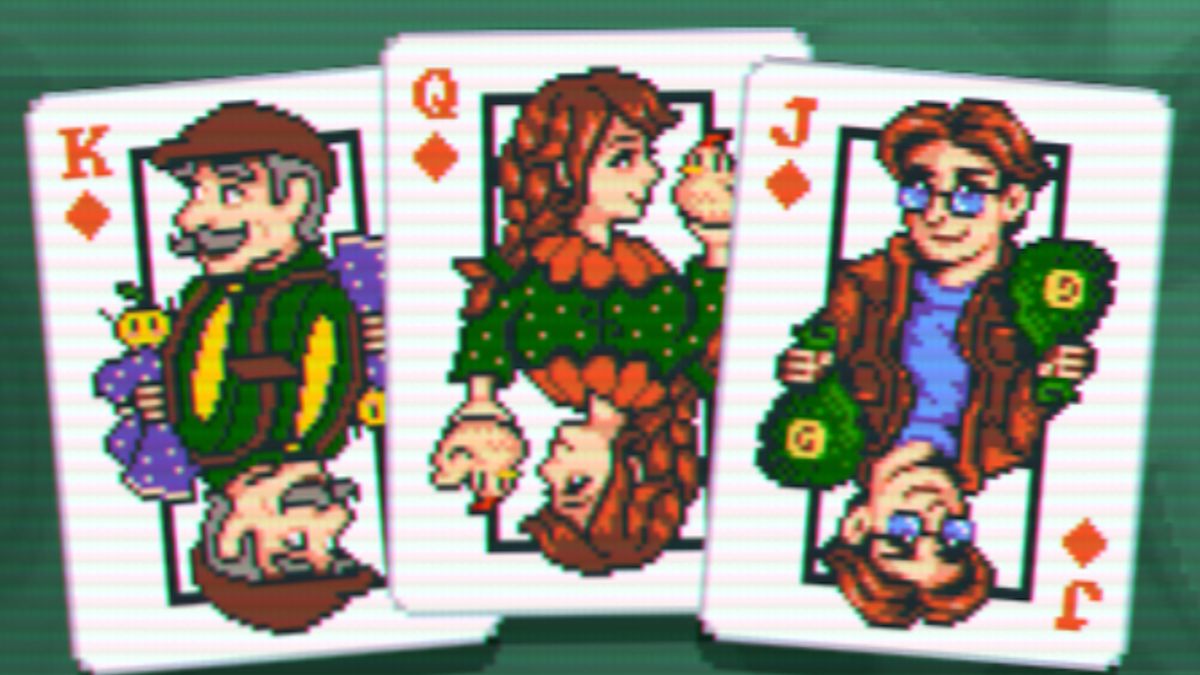
This may all be presented in a bright, modern anime art style, but look beneath the surface, and you begin to realize how deep the dystopia goes. The main cast have all spent their lives doing nothing but fighting, and know nothing else. Concepts that we take for granted, like growing our own food, falling in love, having children, playing Balatro for 9 hours, and growing old are all utterly alien to these soldiers. While there’s eventually a light at the end of the tunnel and the gang manage to use the sick Stardew cards, Xenoblade Chronicles 3 stands as Monolith’s darkest and most somber game since Xenogears and Xenosaga.
For those looking for something a bit more OFF-kilter, though, our next game brings into question whether its protagonist is really a hero.
OFF
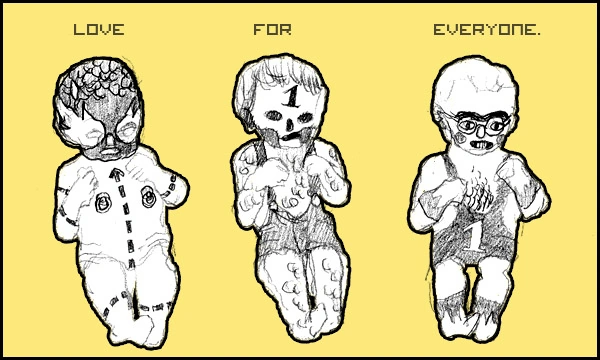
You are The Batter, and your mission is to deep fry the world of its impurities. What does that mean? Well, for starters, that means traveling through a variety of different areas, all of them surreal, while killing Spectres in classic turn-based combat.
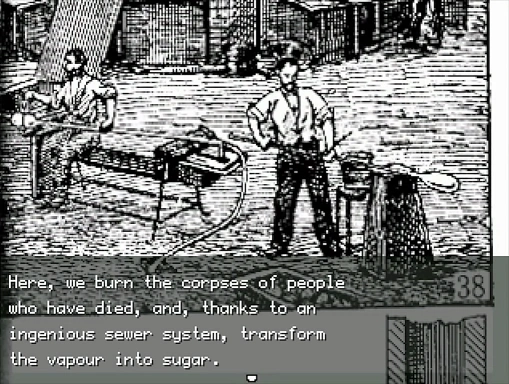
As it so happens, the Zones that the Batter is tasked with purifying are also each ruled over by Zone Guardians, who are making life miserable for the people living there, and taking them down is all part of the process. Things also get creepier as the story goes on, especially once you discover the truth of “sugar”, one of the game’s five fundamental elements.
The real kicker, of course, is what exactly happens when a Zone is purified: the color is completely drained from the world, NPCs are all gone, the music becomes more unsettling, and all enemies have been replaced by bizarre and extremely powerful demonic-looking dolls known as Secretaries.
Your mission isn’t exactly in the best interests of the inhabitants of OFF. Think of Haze, but good and “for human consumption”.
The morality of the game’s cast isn’t cut-and-dry, either, given that the Zones are ruled by tyrants, and the Batter himself has so little backstory that his actions can ultimately be left up to interpretation.
We’re choosing to interpret a port of this next one happening in the next ten years.
Xenogears
Even before he left Squaresoft to start Monolith Soft, Tetsuya Takahashi had ambition. What began as his and Soraya Saga’s pitch for Final Fantasy VII became an entirely different beast, one filled with so much religious and philosophical content that all but one translator quit the project.
Xenogears begins on well-worn ground. Protagonist Fei Fong Wong is an amnesiac painter and martial artist living in Lahan Village. It isn’t long before the village is attacked by a group of giant mecha known as Gears, and when Fei attempts to hijack one to fight them off, a catastrophic loss of control destroys Lahan and kills many of its inhabitants.
The ensuing epic dives deep into topics like split personalities, the effects of psychological trauma, false deities, and reincarnation.
To top it all off, the world of Xenogears has already been through multiple apocalypses, most of them being in service of the ancient conspiracies running the show. Things get even worse by the end of the game, with humanity only barely being saved. It’s all grim stuff, and that’s without getting into the part of the game that’s one big shout out to Soylent Green.
Xenogears is a dense game — so much so that one playthrough may not be enough to fully understand it. And its willingness to dive so deep into its protagonist’s psychology gives it an edge that most modern RPGs — even Xenoblade — find themselves a bit lacking in.
Sweet Home
This 1989 turn-based mansion crawler is actually an adaptation of a Japanese horror movie that was released the same year. Both film and game follow one premise: a film crew enters an abandoned mansion in search of a famous artist’s frescoes, and horror ensues when they’re trapped inside by a malevolent ghost.
All of this lends Sweet Home a rather unique flavor, even by today’s standards, as it’s an RPG set entirely in a haunted mansion. What’s more, despite horror movie convention dictating that it would be an awful idea, splitting the party up into smaller groups is a major mechanic here, as characters can go off solo or explore in groups of two or three.
In addition to the general difficulty from games of this era, to really ratchet up the tension, Sweet Home also features permadeath: anyone who dies is gone for the rest of the game, with the ending changing based on the number of survivors. Naturally, there aren’t any shops or inns, so your only method of healing is through limited, rare tonics.
Though certainly not the darkest RPG on this list, Sweet Home is still notable for also being quite graphic for a Famicom title — which really helps sell the atmosphere even on limited hardware.
Shin Megami Tensei Nocturne
Most RPGs involve you saving the world. In Shin Megami Tensei Nocturne, the world is destroyed in the first hour.
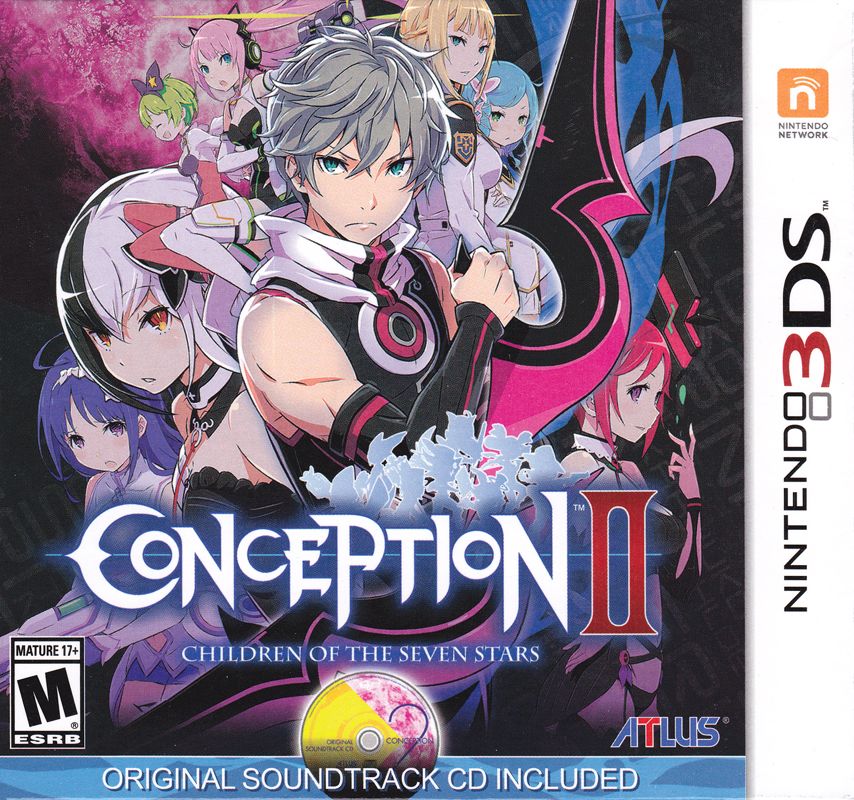
Following an event known as the Conception (no, not that Conception), Nocturne takes place in the remains of Tokyo, now warped into a sphere surrounding a star known as Kagutsuchi. The protagonist, one of the few human survivors, winds up transformed into a half-demon, and sets off to explore the demon-infested Vortex World.
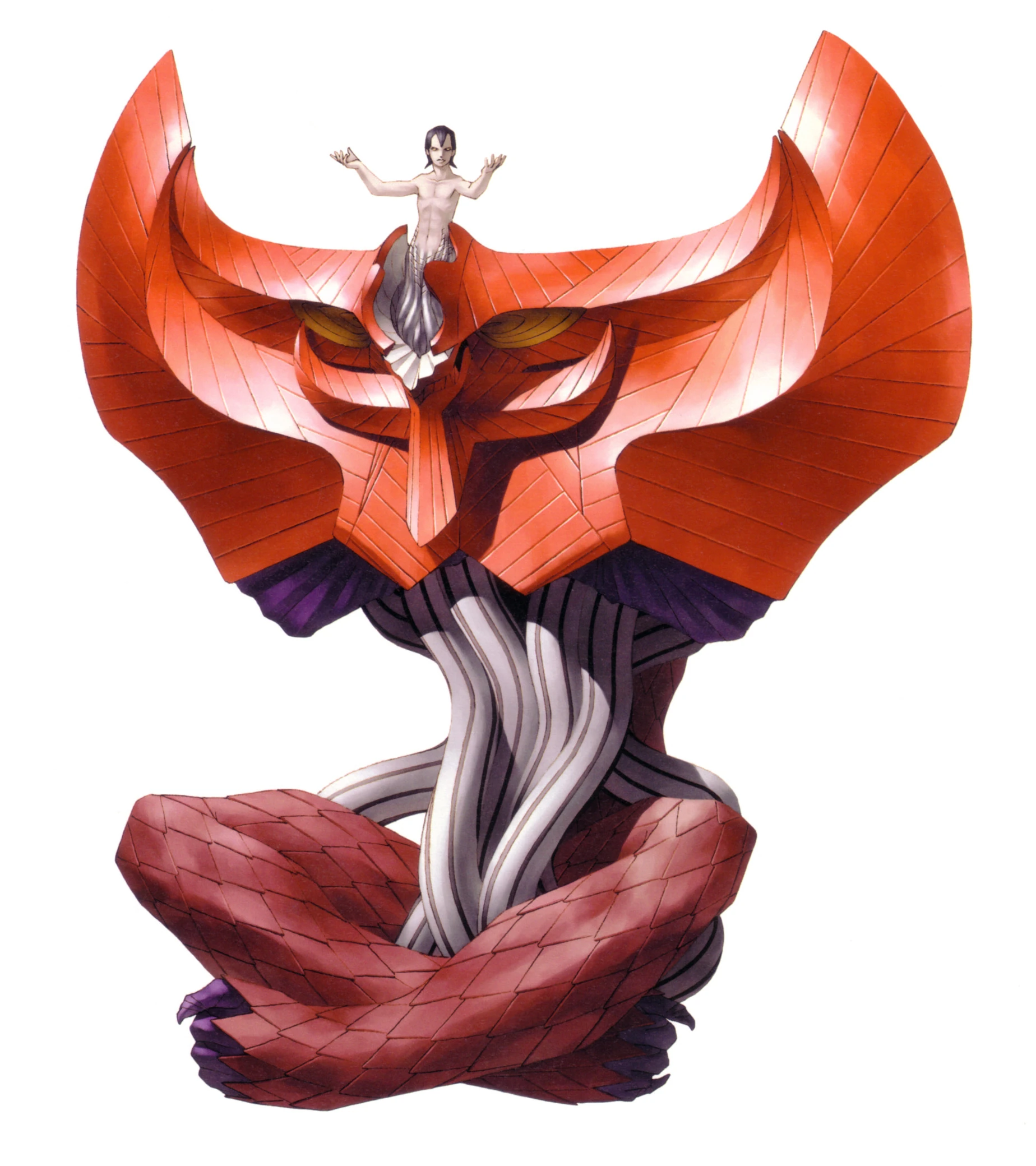
In contrast to most other games in the series, Nocturne relies more heavily on its atmosphere than a dense story. And that means exploring warped, exotic environments, taking in Kazuma Kaneko’s excellent demon designs, and surviving the challenging turn-based combat, where exploiting weaknesses nets you extra turns.
The Demi-fiend will run across a few of his human friends who likewise survived the Conception, as well as the man who helped kickstart it, and all of them have their own extreme ideas on what society should become. The Demi-fiend can support one of them — at the cost of killing all of the others — or he can also reject them all to find his own path.
Players who fulfill the right conditions can destroy the world altogether, bringing down the cycle of death and rebirth before challenging Lucifer himself for the right to become his champion in a war against God.
For a different flavor of the post-apocalypse, this next game brings the pain in both gameplay and story.
LISA
There may not be any demons in this post-apocalyptic setting, but LISA: The Painful — the sequel to adventure game LISA: The First — is an even grittier experience. For starters, it’s set in a world where all women have been killed by an event known as The Flash, which was somehow even more disastrous than that movie.
As the game begins, our middle aged protagonist Brad Armstrong makes a shocking discovery: a baby girl lying out in the wasteland of Olathe. Given her status as the only woman in the world, Brad takes her in and raises her in secret, naming her “Buddy”. Unfortunately for the two of them, Buddy is eventually kidnapped, kicking off a journey to find and rescue her.
The death of all women is far from the only problem, as the lawless wasteland is filled with dangerous warlords, and people are hooked on a drug known as Joy. Even if he can be accompanied by a wide variety of recruitable party members, Brad’s journey won’t be easy.
This extends to the gameplay, where everyone except Brad is susceptible to permanent death, resources are scarce, characters can get addicted to Joy (complete with withdrawal symptoms), and even sleeping is dangerous because it runs the risk of getting poisoned or kidnapped. And throughout the game, Brad will be forced to make difficult choices.
LISA’s bleak story gets even darker with its DLC expansion, LISA: The Joyful. Despite its moniker, its story is all about Buddy going on the warpath. As the finale for the overall story, it’s also got some revelations that paint some of The Painful’s plot points in an even darker light.
While this bleak, borderline nihilistic narrative didn’t land with some critics, fans found a lot to love with this indie classic.
Fear & Hunger
A lot of dungeon crawlers make a show of the danger you’ll face, with difficult, resource-oriented combat and a core gameplay loop that rewards patience and caution, while punishing recklessness.
But while something like Etrian Odyssey is bright and colorful, Fear & Hunger will show you just how terrifying dungeon crawling can actually be. Whether it’s getting your limbs chopped off, being flayed alive, being violated in unspeakable manners, or simply finding yourself trapped with no way to escape, there’s no shortage of gruesome ways your journey can end.
Adding to the misery is the gameplay itself, which is bone-crushingly difficult and borders on outright unfair. For starters, while battles are turn-based, they also involve a lot of dismemberment. Targeting enemy limbs to cripple them is vital to survive, especially when they can do the same to you. Get your own limbs chopped off, and your stats will tank and you’ll also potentially lose the ability to wield certain weapons altogether.
Even something as simple as saving the game is a matter of life-or-death, with the game’s scant few save points requiring a coin flip — lose the gamble, and you’ll be met with some unsavory consequences.
In spite of — or perhaps because of — its brutal, unrelenting realism, Fear & Hunger has done quite well for itself on Steam, even managing to spawn a sequel in late 2022.
For the RPG fans whose preferred brand of horror is psychological instead of physical, you’ll probably recognize our next and final game of the day.
Omori
Our final RPG is perhaps the heaviest of them all.
Omori begins in an empty void known as White Space, home to the titular protagonist. Once Omori enters the world of Headspace, though, things brighten up considerably as he meets his friends. It’s not long before things go awry. The worlds and inhabitants of White Space and Headspace are the dreams of Sunny, a teenage shut-in.
It quickly becomes clear that Sunny is dealing with some serious issues, as he’s tormented by nightmarish hallucinations. His real life friends aren’t faring much better.
Omori, for the most part, is a turn-based RPG with art and vibes that are evocative of classics like Earthbound and Undertale. But while those games are jovial affairs that bury most of their darkness, Omori weaves its heavy themes directly into the story itself.
On the surface level, its combat places a big emphasis on characters’ emotional states. There are four potential moods: neutral, happy, angry, and sad; the latter three all have various effects, including a rock-paper-scissors relationship that influences damage dealt.
Of course, combat and exploring a vibrant dream world are only one part of the equation, and occasionally, it all gives way for a deep exploration of its protagonist’s psyche in a psychological horror setting, complete with some nightmarish imagery.
Although Omori also has its share of jump scares, the real horror ultimately lies in the trauma its characters suffer from and the mental health issues they’ve developed as a result. This game isn’t for the faint of heart, but those who play it will find it tugging at their heartstrings.
READ NEXT: Worst SNES Games You Should Avoid
Some of the coverage you find on Cultured Vultures contains affiliate links, which provide us with small commissions based on purchases made from visiting our site.