


While a lot (like way too many) games launch in sorry states these days, a lot of them do eventually get polished up over time fixes. The same can’t be said for these properly broken games.
Fist Of The North Star: Twin Blue Stars Of Judgment (Infinite Infinites)
You’d think that for a genre that has such a thriving and competitive professional scene, fighting games would be bastions of balance and fairness. That might be true for more mainstream titles today, but back in the day, even Capcom were prone to just throwing ideas out there and seeing what happens. Marvel Vs Capcom 2 alone is busted beyond belief, along with Street Fighter 3: Third Strike, yet both are universally beloved to this day.
One game that’s beloved for altogether different reasons is Fist Of The North Star: Twin Blue Stars Of Judgment by Arc System Works, as it’s considered to be the poster boy for “kusoge” fighting games. Kusoge means shit, by the way, but “kusoge” doesn’t mean shit to play. It’s just that if you want to sit down and play FOTNS, you have to accept things like this. Trying to bribe your opponent into dropping their combo is wild, not going to lie.
Infinite or “touch of death” combos aren’t anything new in fighting games. Again, Marvel has several for a bunch of their characters, but Fist Of The North Star is unique in that everyone on the roster has one and most of them involve treating your opponent like the ball in Pong. The game’s so-called infinite prevention system increases the knockback of an opponent with every hit, but clearly it wasn’t enough. What’s even worse though is the potential softlock that can occur from one character’s move.
Rei has a special move called Nanto Gekisei Kakubu, which can be performed in the air and acts like an aerial shoryuken. On top of that, there’s something called Grave Install, a tool that can be used to boost the properties of attacks. If players combine those two things on the arcade version of the game, they get an infinite DP that lasts the rest of the round and would softlock the arcade machine. There have been claims that the arcade machines would even overheat and start smoking, but no evidence has been shown of that. The PS2 version would patch the softlocking issue at least, but all the other infinites were left unchanged, which is just like putting some duct tape over an earthquake fault line, honestly.
Saints Row 2 (The Freezer)
You remember Herobrine? That whole urban legend that surrounds Minecraft where you’re basically being followed around by an evil version of Steve? I don’t cos I’m basically dead from back pain, but whoever on 4chan came up with that original myth was clearly stealing their homework from Saints Row 2, which would launch two years earlier and include a phantom that would be even more devastating than Herobrine could ever hope to be: say hello to The Freezer.
Granted, called Saints Row 2 truly broken for this glitch is a bit of a misnomer, largely because you really need to go looking for trouble in order to encounter “The Freezer”, but the consequences of meeting this destructive figure are catastrophic. In order to find The Freezer, you first need to boot up the Zombie Horde minigame, which takes place in the ruined Old Stilwater underground section found underneath Saints HQ. Using a series of grenades and low gravity cheats to just ragdoll your character into unintended areas, you can actually glitch through the map, falling into an infinite void. You’ll respawn, but in the normal city instead of Old Stilwater, with the minigame still active, and things have gotten weird.
Objects won’t render correctly, the lighting is super bright, and now you’re being tailed by a figure the community have dubbed The Freezer. The Freezer looked like a rendered shadow of either a civilian or the player character, and would approach the player slowly but surely. Once The Freezer finally makes contact though, he’d live up to his name, crashing your game and, according to some reports, would actually brick the game completely on Xbox 360. Be careful when you next go clipping through the map, in Saints Row 2 or any other game for that matter.
Soulcalibur 3 (Save Corruption)
There’s a lot of broken fighting games out there, and we’ll talk about one in a bit where the gameplay itself is truly busted (subtle foreshadowing), but there are some fighting games that are broken on a more technical level. Soulcalibur 3 is one incredibly notable example, and while the broken part in question did get a fix, it was only for the Japanese release of the game, meaning the majority of the world had to forever deal with save files that would kamikaze themselves at the slightest hint of trouble. Plus, a) it’s just such a huge oversight that we can’t believe made it to the release build in the first place, and b) the script writer really loves talking about Soulcalibur 3. How could you say no to this face?
The Save Corruption glitch is an infamous part of the Soulcalibur 3 history, as it’s an incredibly destructive glitch that nukes your entire save file, can cause a corrupted block on your PS2 memory card and, worst of all, is inevitable. The reason for this is because the bug concerns Soulcalibur 3’s huge single player mode, Chronicles of the Sword, the RTS mode that uses completely original characters to tell a whole new story. Completely COTS is mandatory if you want to unlock absolutely everything the game has to offer, which leaves yourself open to corruption. Yes, even just having a COTS save file on your memory card can lead to save corruption occurring, but there are more active ways this bug can be triggered.
The most well-known and tested method of this bug occuring is by deleting save data from your memory card that was created before the COTS data was created. Weirdly, this’ll create some secret, dummy data on the memory card that will cause your save data to corrupt if you try to load or overwrite data after completing or failing a mission. Bye bye, save data. It’s funny, as the story of Soulcalibur is all about the corruptive and destructive power of the sword Soul Edge, but clearly there’s a bigger threat out there.
The Elder Scrolls III: Morrowind (Alchemy)
Some games are broken because of developer oversight; either they couldn’t anticipate the sheer inventiveness of the average player looking to find every exploit or broken thing they can, or they simply lacked the ability to fix certain bugs before release. Other times, games are broken by design, as some developers know how fun it can be to let players loose with all the tools possible, and if that means breaking the game, so be it.
We’re not entirely sure what camp The Elder Scrolls III: Morrowind falls into, especially considering further installments of the series toned down these elements, but it’s clear that Morrowind is busted and everyone loves it. While there’s a bevy of glitches that players can encounter, which is typical of a Bethesda game, let’s be real, there’s also a number of exploits players can take advantage of to turn their humble adventurer into a nigh-on demigod. There’s infinite level tricks, allowing players to improve their stats further and further despite hitting a level cap, and there’s a shocking amount of people in Morrowind you can steal from because their alarm level is set to 0, determining if they’ll act on hostile actions.
Super potions are where the real action is though. The effects of potions can stack in Morrowind, even if they’re of the same type, so players quickly found that stacking potions of Fortify Intelligence would send your Intelligence stats through the roof, allowing you to create super potions for practically any purpose. This could even be stacked further if the player used Fortify Intelligence spells too. Once you’ve used your spells and potions, you can create potions of Fortify Speed or Levitate and basically fly through the whole world map in record time. Considering you’re pushing the limits of what the game is capable of, you can run into glitches and crashes pretty regularly, but for Morrowind die-hards, it’s part of the fun.
Tomb Raider: Legend (Serpent Softlock)
Another one in the category of “they launched with that?”, Tomb Raider: Legend was released across multiple platforms with a couple of opportunities to softlock yourself, forcing you to either fall back to a previous save or, if you were especially unlucky and didn’t rotate your saves, restart the game entirely. Some redditors have found themselves without a lifeline in the levels Nepal and Ghana, but there’s one level in particular that’s haunted some Legend players: England. As it turns out, the biggest problem facing England isn’t knife crime, but dodgy levers.
The sixth of Legend’s eight traditional missions (not including Croft Manor), England’s level is actually pretty interesting, as you basically ransack a touristy King Arthur museum only to find a very real Arthurian tomb lurking underneath. Sounds cool in theory, until you reach a moment during the back half of the level where you encounter a subterranean lake and King Arthur’s final resting place, which you’ll need to pilfer in order to find a fragment of Excalibur and move the plot along. However, you’ll also see some bells and a few hanging cages attached to a couple of levers and if you pull one of them before finishing your business inside the tomb, you’ve doomed yourself to an eternity of being deeper underground. Like Jamiroquai, but without the cool hats.
After claiming Excalibur, Lara is attacked by a large serpent that emerges from the lake, and you’re supposed to use the bells to distract the serpent into position to drop the cages on its head using the levers. Sounds simple enough, no? Well, if you fiddled with the lever beforehand, you’ll find in this boss fight that at least one of the levers won’t drop the cage at all, leading to a softlock as the boss can only be damaged in this specific way. Because Tomb Raider: Legend autosaves, and only offers level select when you’ve completed a level, encountering this glitch in regular play has some nasty consequences. What’s most baffling though is that, despite launching on platforms that can receive updates, this is still a problem.
Age of Empires: The Age Of Kings (Four Characters Or Less Corruption)
You’d think a series as tenured and as respected as Age of Empires would manage to avoid releasing a game that’s broken beyond belief, but we wouldn’t be here talking about it if that was true. The mainline PC games are, to the best of our knowledge anyway, fine enough when it comes to glitches and exploits. If any do emerge, they’ve been fixed. The same can’t be said for Age Of Empires: The Age Of Kings, however, which housed a nasty surprise for anyone who liked to use their initials when naming a save file.
Age Of Empires 2: The Age Of Kings was a pretty successful installment in the long-running RTS franchise, adding new features and options that strategy and history buffs would love, going on to sell two million copies in three months on PC alone. Microsoft would approve a port to PS2, but a Nintendo DS version was also created without being developed or published by Microsoft or Ensemble Studios. Backbone Entertainment and Majesco would develop and publish Age Of Empires: The Age Of Kings for the DS, bringing pretty much everything except political scheming to the port, though switching to a turn-based formula to accommodate for the handheld nature of the DS.
So far, so good, but The Age Of Kings for the DS would include a terrible bug where, if you named your save anything three characters or less, then hit save and quit, you’d brick the cartridge. No recovery possible, no return to a last save state, the cartridge would just be useless. Naturally, publisher’s Majesco were made aware of this fatal flaw in the game’s code, but instead of getting the developers to fix the code and reprint the cartridge with the fixed data, or issue some kind of downloadable patch, their solution was to stuff new copies of the game with a warning slip about how to avoid the bug. I mean, something is better than nothing I suppose.
Star Fox 64 (The Infinite Flight Of Fox)
Anyone who thinks Nintendo doesn’t publish broken games clearly hasn’t played Super Mario Sunshine. Love of our life, but broken beyond belief. Still, Nintendo’s flings of publishing broken video games started before the launch of Sunshine, as they also released Star Fox 64 in the 90s with a couple of heinous softlocks. This is before the days of autosaving and the like too, so soft locking always meant restarting the level or even game again. Bummer.
Star Fox 64 offered two instances where this could occur. The first one comes from the Sarumarine fight on Zoness, where you can stop Sarumarine from attacking you by entering first-person view at the right time. Or wrong, in this instance. The problem here is that you need Sarumarine to fire cannonballs at you so you can collect smart bomb ammo to do actual damage. A quick level restart fixes the issues, but a rarer and worse softlock can happen later on the level Venom 2. After beating Star Wolf, if the Arwing is in the wrong location facing a certain way, the victory cutscene will turn into an endless turning loop as the AI pathing struggles to find the level exit. As it’s supposed to be a cutscene, there’s no level restart either. It’s either restart the game, or rage quit, trade in your copy and buy Banjo Kazooie instead.
To Nintendo’s credit, they did launch an updated version of Star Fox 64 for the Nintendo 3DS, the aptly named Star Fox 64 3D, and by all accounts, the soft lock issues shown in the N64 version aren’t present. However, the 3DS version also completely overhauls the game to work with the 3DS’ gyroscopic functions, and offers new graphics, models and more. It also doesn’t include a first person mode, so really, Nintendo avoided a softlock by taking features away from the player, and is that really a fix? No, we say like a politician looking for votes in an election.
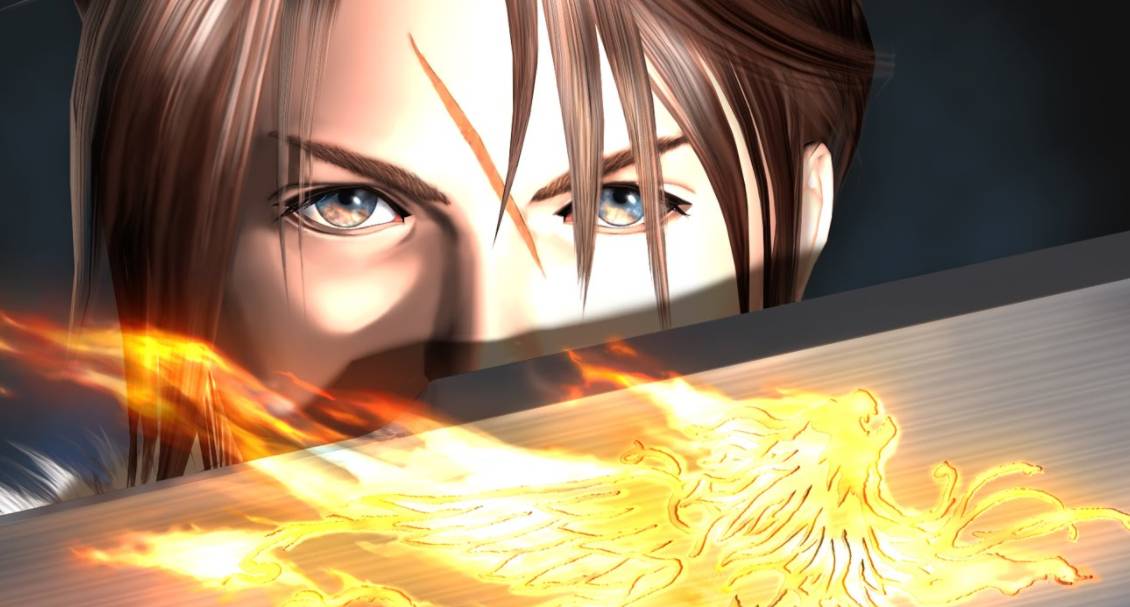
Final Fantasy 8 (Junction? I Hardly Knew Her)
Dedicated fans of ours will know that we’ve been on a bit of a quest to determine whether or not Final Fantasy VIII is actually good or not, with pretty much most of the community telling us it’s great while we’ve been confused screaming at the boring tutorials. The debate on if FFVIII’s quality is one story, but regarding the question of whether the game is broken, the answer is a lot more clear: absolutely.
The reason for Final Fantasy VIII’s broken nature is all down to the Junction system, which has achieved Marmite levels of reaction from people over the years. Some people swear blind that it’s the best character progression system in the entire series, others consider it to be a confusing mess of items, menus and grinding that can slow the pace of the game down considerably. Speaking from experience, FFVIII’s tutorials really don’t do a good job of selling what the Junction system is capable of, though if they did, Square Enix would have to admit they’ve created one of the most broken RPG systems in history.
The idea is that you draw magic from monsters and from draw points on the map, which you can “junction” into specific stats via Guardian Forces or GF, which are your standard FF summons. GFs can also learn skills via AP that unlock new abilities, like creating Magic from Triple Triad cards, and it’s this that makes Final Fantasy 8 truly broken.
With the right knowledge and a bit of patience when grinding, you can easily use junctions to craft yourself a high level build before the first disc is even over. Obviously, this requires knowledge, experimentation or a handy GameFAQs guide to make the most out of it, but truly ridiculous levels of broken stats are there for those willing to take them.
Animal Crossing (Fly Like Paper, Corrupted Your Save)
Another one in the “Nintendo makes broken games sometimes” column, Animal Crossing has a rather insidious bug that can absolutely destroy your save file, but the chances of it occurring are so rare that Nintendo likely didn’t find it during the game’s testing. It’s also a bug that can be combated if you’re quick enough, but those without the knowledge on how to deal with this glitch can either end up softlocking their game or rendering an entire town unusable.
First, some context. Every item and tile in Animal Crossing is stored in the game using a hex ID, which are converted into binary code. For whatever reason though, either due to excessive playtime or cosmic radiation (no joke), a “bit flip” can occur which changes a single bit from a 0 to 1, or vice versa. What this means in relation to Animal Crossing is that the hex ID for an empty tile, 0x0000, is just one digit different in binary from the paper airplane, 0x8000. If you’re thinking to yourself that there wasn’t a paper airplane in Animal Crossing, you’d be half right, as the object is a leftover item from a beta build.
Because the airplane is a leftover item from an unfinished build, there’s a lot of unforeseen consequences that come with it. Trying to pick up and throw the item will lead to a softlock, as the game doesn’t know what to do with their animations and inputs that are supposed to play but don’t actually exist, but the real kicker comes if you leave the airplane alone. Every time you leave and return to the acre it’s spawn on, the airplane will have multiplied. This begins to happen at an exponential rate too, until you reach a point where there’s too many airplanes and the game becomes unplayable. The chances of this happening randomly are long, of course, as it’s more commonly replicated through cheats, but it’s still possible, making it broken.
Big Rigs: Over The Road Racing
Let’s get this straight now: we don’t think any game developer intentionally goes out to make a broken game. Whether it’s due to an abundance of ambition compared to an ability to execute, or a publisher’s over-inflated expectations and strict deadlines forcing a team to release a game that clearly isn’t ready for public consumption, the point is that dev teams pour their heart and soul into a game. When one releases broken, that’s unfortunate for everyone involved, though there’s never been a game more broken than Big Rigs: Over The Road Racing.
The box states that Big Rigs: Over The Road Racing is developed by Stellar Stone who are based in California, but according to one Sergey Titov, the CEO of TS Group who licensed his Eternity engine to Stellar Stone, Big Rigs was actually developed on the cheap by a team in Ukraine. He had no involvement, though was still credited as producer and lead programmer, and the game released in a pre-alpha stage thanks to publishers GameMill, leading to one of the worst Metacritic ratings of all time. You think the reception to games like Anthem, Aliens: Colonial Marines or Redfall was bad? Big Rigs: Over The Road Racing sunk to a new low.
The actual game itself is like a racing game if it was fundamentally broken in every conceivable way. There’s five courses, and one of them causes the game to crash, races have no time limit, and your opponent doesn’t even leave the starting line, meaning you’ll always see the famous “YOU’RE WINNER!” screen at the end of a race. Also, friction, traction and gravity have become foreign concepts, with the truck able to just glide up steep hills without a hint of difficulty. Like Mr Johnson from Abbott Elementary would say: it’s trash. However, the trash has achieved an ironic, meme-level of appreciation from some, causing Margarite Entertainment to publish a re-release on Steam earlier this year. It’s the same game, bugs and all, only now it has AI-generated Steam Trading Cards. Isn’t gaming fun?
READ NEXT: 40+ Ultimate PS1 Hidden Gems
Some of the coverage you find on Cultured Vultures contains affiliate links, which provide us with small commissions based on purchases made from visiting our site.