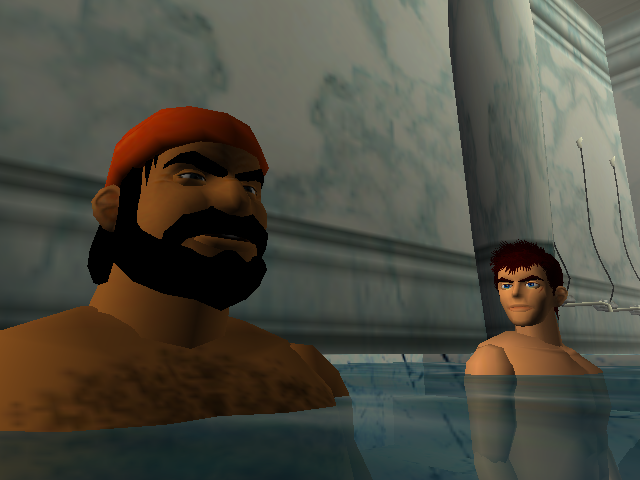


Solid wood, a good segue, and absolutely launching a paper airplane at someone’s head. These things will not age. But time does tend to come for video games a lot. Generations go by and your childhood favourites start looking more like Lawnmower Man deleted scenes with each one. But these games? We reckon they might just live forever.
Super Mario World (1990)
There is a very British temptation to do a Jackie Stallone and say “yeah, Mario” and end the entry there. It’s a given, but Super Mario World has been giving joy for 36 years now. Nintendo’s SNES launch title remains about as close to platforming perfection as you can get.
Building on the foundations of Super Mario Bros. 3, Super Mario World introduced Dinosaur Land, Yoshi and the iconic Cape Feather, which allowed Mario to take to the skies. The controls are still ridiculously responsive, the level design is endlessly inventive, and even something as simple as getting a running start and taking flight feels fantastic all these years later.
And then there’s the sheer amount of stuff. Good stuff. Bits. Bobs. With 96 exits spread across its interconnected world map, Super Mario World rewards players who put their peepers about, whether they’re uncovering secret routes, finding hidden Switch Palaces or stumbling into the notoriously difficult Special Zone.
Visually, it’s barely aged a day, either. The colourful sprites, expressive animations and Koji Kondo’s endlessly catchy soundtrack mean it doesn’t need fancy graphical effects to stand out. Though I would enjoy seeing lens flare everywhere, just because.
Nintendo has spent decades refining the 2D Mario formula, but there’s a reason Super Mario World remains a favourite for so many people. You could release it exactly as it was in 1990 today, and it’d still be streets ahead.
Streets of Rage 2 (1992)
Some games need remakes, remasters and a healthy dose of nostalgia to remain enjoyable decades later. Streets of Rage 2 needs none of those things. But it does need roast chickens. Sega’s 1992 beat-’em-up is still one of the finest examples of the genre, and pretty much nothing about it has aged a day.
Streets of Rage 2 brings back Axel and Blaze alongside newcomers Skate and Max, with each character offering a different combination of speed, strength and reach. The combat isn’t deep, but isn’t shallow. It’s like a nicely temperate pool. And nobody has bunions. Throws, grapples, defensive specials and character-specific attacks gives players plenty to master. There’s a satisfying weight to every punch, and clearing a screen of enemies remains just as entertaining today as it was more than thirty years ago.
The enormous, expressive sprites, colourful urban environments and wonderfully detailed animations are still fantastic, while Yuzo Koshiro and Motohiro Kawashima’s electronic soundtrack remains one of the best ever. We’ve had Streets of Rage music for our outro for years for a reason.
Streets of Rage 2 remains a benchmark for side-scrolling beat-’em-ups, even after the genre’s modern revival. Streets of Rage 4 may have introduced new mechanics and gorgeous hand-drawn visuals, but the second game still holds its own remarkably well.
Sometimes the simplest formula is the hardest to improve upon.
Chrono Trigger (1995)
JRPGs from the 90s can be a bit of a hard sell to modern audiences, especially when random encounters, endless grinding and painfully slow battles are involved. Chrono Trigger, however, managed to sidestep many of these frustrations back in 1995, and the result is a game that feels remarkably modern more than three decades later.
Developed by Square’s so-called Dream Team, which included Final Fantasy creator Hironobu Sakaguchi, Dragon Quest creator Yuji Horii and Dragon Ball artist Akira Toriyama, Chrono Trigger follows a group of unlikely heroes travelling between different periods of history to prevent the destruction of their world.
The best thing about it? No time wasting. Enemies are visible on the map rather than appearing through random encounters, battles take place directly in the environment, and the combat system allows characters to combine their abilities for devastating Dual and Triple Tech attacks. Even by modern standards, it’s an incredibly well-paced RPG, with a main story that can be finished in around 20–25 hours. Plenty of time left in modern life for screaming!
The presentation has held up beautifully, too. Toriyama’s distinctive character designs translate wonderfully into expressive sprites, while Yasunori Mitsuda’s soundtrack, with contributions from Nobuo Uematsu, remains among the best the SNES ever produced.
Chrono Trigger also helped popularise New Game Plus, allowing players to carry their progress into subsequent playthroughs and discover its numerous endings.
Plenty of RPGs have become bigger, prettier and more complicated since 1995, but very few have managed to improve on Chrono Trigger’s combination of pacing, personality and frogs. Always gonna shout that out. Oh, we’d also suggest Final Fantasy 6.
Castlevania: Symphony of the Night (1997)
While plenty of developers were scrambling to embrace 3D gaming in the late 90s, Konami decided to stick with 2D for Castlevania: Symphony of the Night.
But rather than following the traditional level-by-level structure of earlier Castlevania games, Symphony of the Night puts players in control of Alucard as he explores Dracula’s enormous, interconnected castle. New abilities gradually open previously inaccessible areas, while RPG elements introduce equipment, levelling and an enormous selection of weapons to experiment with.
It’s a formula that’s been copied countless times since, but the original remains an absolute whipper. Alucard’s movement is wonderfully fluid, combat is satisfying, and there’s an almost ridiculous amount of stuff hidden throughout the castle. Even something as simple as discovering a new weapon can completely change the feel of the game.
Interestingly, the game wasn’t an immediate commercial sensation, particularly in Japan, but its reputation grew enormously over time. Today, it’s considered a defining entry in the genre that would eventually become known as Metroidvania.
Crazy Taxi (1999)
Yeah yeah, yeah yeah yeah.
There aren’t many games where driving a taxi around a city for three minutes sounds like the best possible use of your time, but Crazy Taxi has been making a convincing argument for it since 1999. Originally released in arcades before becoming a Dreamcast favourite, Sega’s daft driving game is still a right laugh.
The premise couldn’t be simpler. Pick up passengers, drive them to their destinations as quickly as possible, and try not to ruin the tour. Naturally, this involves ignoring practically every traffic law imaginable, launching your taxi off enormous ramps and occasionally driving straight through a park like you’re Homer Simpson visiting New York.
Techniques like the Crazy Dash and Crazy Drift allow skilled players to maintain speed, navigate tight corners and shave precious seconds off their journeys. Learning the city layout and discovering shortcuts really makes you feel like a crazy taxi. What?
Its colourful, exaggerated visuals have aged well enough, but the presentation is really carried by its personality. It’s crazy. The Offspring and Bad Religion soundtrack is practically inseparable from the experience, while the original arcade game’s real-world businesses, including Pizza Hut and KFC, are the only advertising I can tolerate. Mm, chicken licking, or whatever.
Crazy Taxi is designed around short, frantic sessions, and whether you’re playing for five minutes or trying to beat your personal best for an entire afternoon, the appeal is exactly the same.
Sometimes all you really need is a yellow cab, a ticking clock and someone screaming at you to make a left turn.
Jet Set Radio (2000)
While it’s withstood time better than most consoles, there are plenty of Dreamcast games that look their age. Blue Stinger looks more cursed every year. But Jet Set Radio could probably be released tomorrow and still turn heads. More than 25 years later, its bold outlines, vibrant colours and exaggerated characters remain absolutely gorgeous.
Jet Set Radio’s distinctive visual style was partly developed as a way to stand out from the increasingly realistic 3D games of its era. Rather than trying to compete on technical fidelity, Sega created something that looked completely different. And hey, 26 years on, it worked.
Jet Set Radio follows a gang of inline skaters called the GGs as they spray graffiti across the city, challenge rival crews and generally make life miserable for the local authorities. It’s a wonderfully strange mixture of skating, platforming and arcade-style challenges, with players grinding along rails, leaping between rooftops and tagging walls while avoiding increasingly ridiculous police responses.
And then there’s the soundtrack. Cor. Phwoar. Door. And so on. Hideki Naganuma’s mixture of funk, hip-hop, electronic music and sampled vocals gives Jet Set Radio an identity that few games have ever matched. But it’s good to see that there are some nice spiritual successors trying their best.
Now…the controls aren’t quite as timeless as the visuals. The lack of a dedicated camera stick and occasionally awkward movement can make certain sections frustrating. Still, once you get comfortable with its momentum-based skating, you will be humming on the bassline in no time.
Jet Set Radio might have a few mechanical wrinkles, but you won’t care when the vibes remain this immaculate.
Super Smash Bros. Melee (2001)
Nintendo probably didn’t expect Super Smash Bros. Melee to still have a dedicated competitive scene more than two decades after its release, especially considering it was developed in just 13 months. Yet here we are, with a GameCube fighting game from 2001 continuing to attract tournaments and questionable hygiene regulation.
Building on the original Nintendo 64 game, Melee expanded the roster to 26 playable characters, introduced a wealth of new stages and significantly increased the speed of combat. It also packed in an enormous amount of single-player content, from Adventure Mode and Event Matches to hundreds of collectible trophies celebrating Nintendo’s history.
What really gives Melee its longevity, however, is its movement and combat. Advanced techniques like wavedashing, L-cancelling and dash dancing create a skill ceiling that competitors are still exploring today. Many of these techniques emerged from the game’s underlying mechanics, which is crazy to think about in an era of over-explanation.
Visually, Melee has held up reasonably well, too. Its colourful characters, readable stages and expressive animations mean that even chaotic four-player matches remain easy to follow.
It’s not without its problems, particularly the substantial differences in viability between characters, but there’s a reason Melee has survived alongside several official sequels. Even with newer Smash games offering larger rosters, more stages and way more features, there’s still an audience that prefers the GameCube original.
Twenty-five years later, Melee remains proof that sometimes the mechanics are enough to keep people playing for decades. Also, ragebaiting your mate as Kirby never gets old.
Katamari Damacy (2004)
Most games become more complicated as they progress, introducing new abilities, mechanics and increasingly elaborate challenges. Katamari Damacy does not do that. You roll a ball around, make ball bigger. That’s it. Give me 20 of them.
Released for the PlayStation 2 in 2004, Namco’s wonderfully bizarre creation puts players in control of the Prince, whose father, the King of All Cosmos, has accidentally destroyed the stars during a drunken night out. Naturally, it’s now your responsibility to replace them by rolling up increasingly enormous collections of household objects, animals, people and whatever else happens to get in your way.
What makes Katamari Damacy so enduring is how satisfying that central mechanic feels. Every level begins with you struggling to collect pencils, sweets and other tiny objects, before gradually expanding into a ridiculous rampage through entire neighbourhoods. The sense of progression is immediate, and there’s something immensely entertaining about returning to an area where you were previously dodging cats, only to discover that you can now roll them up without a second thought.
Its deliberately simple, angular visuals have also aged remarkably well. Rather than attempting realism, Katamari Damacy embraces its strange proportions, bright colours and absurd character designs.
Katamari Damacy has received numerous sequels and remasters, but the original’s appeal remains almost impossible to improve upon. It doesn’t matter how advanced gaming tech becomes. Big ball always big fun.
Paper Mario: The Thousand-Year Door (2004)
Nintendo has spent decades experimenting with Mario’s RPG adventures, but there’s a reason fans keep coming back to Paper Mario: The Thousand-Year Door. Originally released for the GameCube in 2004, it’s a wonderfully inventive RPG that looks almost as good today as it did more than twenty years ago.
Rather than attempting to recreate the Mushroom Kingdom in increasingly realistic 3D, The Thousand-Year Door embraces its storybook presentation. Characters are flat, environments resemble cardboard dioramas, and Mario can fold himself into a paper aeroplane, turn sideways to squeeze through gaps and even roll himself into a tube, Morty.
The turn-based combat has aged particularly well, too. Battles take place on a theatrical stage, complete with an audience that cheers, throws items and occasionally causes trouble. Timed button presses make attacking and defending more engaging than simply selecting commands from a menu, while the Badge system allows players to customise Mario’s abilities and experiment with different strategies.
The Thousand-Year Door is considerably stranger and funnier than your average Mario adventure, with a memorable cast, genuinely entertaining dialogue and a story that isn’t afraid to poke fun at Nintendo’s most famous mascot.
Not everything has aged perfectly, particularly some of the backtracking, but The Thousand-Year Door is still an excellent RPG with an art style that has lost very little of its appeal. More than twenty years later, its biggest problem might be that Nintendo still keeps putting too much soup in the broth or whatever the saying is.
The Legend of Zelda: The Wind Waker (2002)
The Legend of Zelda: The Wind Waker might be one of the sweetest examples of vindication in gaming history. When Nintendo unveiled a realistic-looking Zelda tech demo at Space World 2000, fans understandably assumed it was a glimpse of the series’ future on GameCube. Instead, Nintendo followed it up with a cartoonish, cel-shaded adventure that immediately divided opinion. But one concept has aged far better than the other.
The Wind Waker swaps Hyrule’s familiar fields for the Great Sea, an enormous ocean dotted with islands, secrets and the occasional enormous monster. Link’s adventure involves sailing between these locations, exploring dungeons and gradually uncovering the history of a kingdom buried beneath the waves.
What makes the game such a perfect fit for this video is, well, just look at it. The cel-shaded graphics, expressive character animations and wonderfully exaggerated facial expressions have barely aged at all. Link’s enormous eyes even serve a practical purpose, drawing the player’s attention towards important objects and environmental details.
The gameplay has held up remarkably well, too. Combat builds on the foundations established by Ocarina of Time, while the dungeons feature some of Nintendo’s most inventive puzzles. Admittedly, the original GameCube release has its frustrations ,but most were addressed to varying degrees in the Wii U remaster.
Nintendo has released plenty of technically impressive Zelda games since, but The Wind Waker remains the weird stepbrother that you realise was actually kinda chill the whole time.
Burnout Revenge (2005)
Here’s a controversial opinion: road safety is for dweebs.
Released in 2005 for the PS2 and Xbox before receiving an enhanced Xbox 360 version the following year, Criterion’s spectacular racer remains one of the most immediately fun racing games ever.
Building on the already excellent Burnout 3: Takedown, Revenge introduces traffic checking, allowing players to smash into vehicles travelling in the same direction and send them flying into unsuspecting opponents. You basically turn hatchbacks into missiles.
The rest of the formula is just as good as it was 20 years ago. Aggressive driving fills your boost meter, takedowns reward you for smashing rivals into walls and oncoming traffic, and the game’s enormous crashes remain spectacular thanks to the excellent physics and damage modelling. Road Rage and Crash modes offer plenty of distractions from traditional racing, while the World Tour provides a steady stream of events to master.
Burnout Revenge has aged well visually too, particularly the Xbox 360 version, with its detailed environments, convincing vehicle deformation and excellent sense of speed. The soundtrack is also a wonderfully mid-2000s collection of rock, punk and electronic music that shaped a million personalities.
Nearly everything about its core gameplay still works, and it’s genuinely difficult to think of much that a modern sequel would need to change.
Well, apart from giving us another one in the first place.
Ōkami (2006)
Ōkami has quite a lot in common with The Legend of Zelda, particularly The Wind Waker. Both are colourful action-adventures built around exploration and both have distinctive art styles that have barely aged, and both have enjoyed way more appreciation in the years since their original releases. The difference is that while The Wind Waker was commercially successful despite its divisive reception, Ōkami struggled to find an audience at all.
Released for the PlayStation 2 in 2006, Clover Studio’s gorgeous adventure takes inspiration from traditional Japanese ink paintings and woodblock prints. Players control Amaterasu, a sun goddess in the form of a white wolf, as she travels across a world corrupted by darkness. Its landscapes resemble moving paintings, with thick black outlines, swirling clouds and vibrant colours that make even the simplest environments look fantastic.
The game’s defining mechanic, the Celestial Brush, is just as cool. By freezing the action and drawing symbols directly onto the screen, players can summon gusts of wind, restore broken objects, cut through enemies and manipulate the environment. It makes the act of painting an essential part of both exploration and combat, and you don’t have to be Bob Ross to enjoy it.
Despite receiving widespread critical acclaim, Ōkami initially sold poorly, becoming Clover Studio’s final original game before Capcom closed the developer in 2007. Its fortunes have changed considerably since, however, with numerous ports and remasters helping it reach the audience it deserves. In fact, Capcom reported that Ōkami HD had surpassed four million copies sold by 2024. Not bad.
And while those newer versions offer sharper, the fundamental artwork has barely needed touching. Ōkami looked beautiful in 2006, looks beautiful today, and will probably look beautiful in another twenty years.
OutRun 2006: Coast 2 Coast (2006)
And now for slightly more chill racing.
Released for the PS2, Xbox, PSP and PC, Sega’s arcade racer is still one of the most enjoyable driving games ever made, and a reminder that sometimes the best thing you can do with a car is throw it sideways around a corner at 200mph.
Building on OutRun 2, Coast 2 Coast puts players behind the wheel of a selection of Ferraris as they race through gorgeous coastal roads, mountain passes and sun-soaked cities. Rather than worrying about realistic handling, tyre temperatures or carefully managing your racing line, the game encourages you to drift around practically every corner, maintaining ridiculous speeds while the scenery flies past.
It takes only a few minutes to understand but rewards hours of practice. The branching routes of the original OutRun formula return, while Coast 2 Coast adds a substantial collection of missions, challenges and races. There’s even a mode where your passenger judges your driving. I love driving tests.
The game has held up remarkably well thanks to its bright colours, exaggerated environments and beautiful Ferrari models. The soundtrack? Still an absolute bopper.
While modern racing games boast enormous open worlds, realistic physics and hundreds of vehicles, few capture the simple pleasure of driving quite like Coast 2 Coast. It’s fast, colourful, immediately entertaining and still feels fantastic to play.
Pick it up today and lose a few hours without even thinking.
Portal 2 (2011)
Some games have such a brilliant central idea that there’s very little reason to change it. Valve’s 2011 puzzle-platformer took the original game’s ingenious portal mechanic, expanded practically everything around it, and delivered an experience that can still make you feel very dumb.
You’re tasked with escaping the crumbling Aperture Science facility using a portal gun capable of creating two interconnected openings in almost any suitable surface. What starts as a series of relatively straightforward spatial puzzles gradually introduces increasingly elaborate mechanics, including propulsion and repulsion gels, light bridges and tractor beams.
Each new mechanic is introduced gradually before being combined with everything you’ve already learned, resulting in puzzles that can make you feel like an absolute idiot one minute and a genius the next. There’s very little wasted time here.
It also helps that Portal 2 is genuinely hilarious. Stephen Merchant’s performance as Wheatley and Ellen McLain’s wonderfully passive-aggressive GLaDOS are particular highlights.
There’s also an entire cooperative campaign featuring two robots, Atlas and P-body, with puzzles specifically designed around four portals rather than two. It’s practically another game in itself, and remains one of the best examples of cooperative puzzle design around.
Valve has released remarkably few single-player games since Portal 2, but maybe it’s because games like Portal 2 are too daunting to match. Maybe. Or maybe it’s the Counter-Strike money. One of them.
Minecraft (2011)
In the sadly too near future, an AI-built Roblox map will probably become the Galactus of video games. Just an all-consuming thing with everything in it. It will be Stuff: The Game. You’ll have Tony Hawk giving you quests to get him some R-Coins, or whatever. Wait, actually this might be just be Fortnite. But it won’t have anywhere near a feel like Minecraft.
Minecraft looked outdated before it was even officially released. That’s not a bad thing. While other developers were pushing increasingly realistic graphics in the early 2010s, Mojang was busy building an entire world out of enormous cubes. Fifteen years later, that approach has helped Minecraft become one of the most recognisable games ever made. Everyone know Minecraft Dave!
You can gather resources, build a shelter, explore caves, fight monsters or spend hundreds of hours constructing an unnecessarily elaborate replica of your own house. There’s no particular way you’re supposed to play, and that’s what makes my mate Wynn abandon his family for a month every year.
Its visual identity has also proved remarkably resistant to ageing. The blocky environments, simple textures and instantly recognisable creatures were never attempting to compete with realistic games, meaning they won’t really look worse as technology improves. Creepers, Endermen and those possibly skinwalking villagers are as interesting visually today as they were years ago.
There’s also the enormous creative community to consider. Even after you’ve defeated the Ender Dragon, there’s very little stopping you from continuing indefinitely. Custom maps, mods, multiplayer servers and increasingly ambitious player-built creations have given Minecraft a lifespan that few games could ever match. Plenty have used it to create entirely different games within the game itself.
Minecraft has changed a lot since its full release in 2011. But the fundamentals of exploring and building will never really lose their magic.
Journey (2012)
Remember the video games as art debate? When people used to actually think that Wet didn’t belong in the same pantheon as the Mona Lisa? Crazy times. Then Journey came along in 2012 and made a pretty convincing argument without needing to say a single word.
Developed by thatgamecompany for the PlayStation 3, Journey puts players in control of a mysterious robed traveller making their way towards a distant mountain. Along the way, you’ll cross enormous deserts, explore ancient ruins and uncover fragments of a civilisation that has long since disappeared. It’s a relatively short adventure, usually lasting around two hours, but they will both stick with you.
Its sweeping sand dunes, striking architecture and beautiful use of colour give it a painterly quality, while the flowing animation of your character’s scarf makes even simple movement look wonderful. Austin Wintory’s orchestral soundtrack is equally sumptuous, responding dynamically to your actions and helping communicate emotions.
Perhaps its cleverest feature, however, is its unusual multiplayer system. Other players can appear during your adventure without warning, but you’re limited to musical chimes and movement, creating a strangely personal experience with someone you will never encounter again.
Journey isn’t a game you’ll necessarily replay hundreds of times, and its simple mechanics won’t appeal to everyone. But its relatively brief runtime, memorable imagery and unconventional approach to storytelling have helped it remain distinctive long after the PS3 generation ended.
Journey is a game that deeply moved me over a decade ago, and it probably will for the decades to come.
Inside (2016)
Inside accomplishes a lot with so little. There’s no dialogue, no traditional combat, barely any interface and absolutely no interest in spelling things out. Yet Playdead’s 2016 puzzle-platformer manages to tell a more memorable story than plenty of games with ten times the budget and a few thousand more lines of dialogue.
Following an unnamed boy fleeing through a bleak, industrial world, Inside gradually introduces increasingly disturbing scenarios. What begins as a relatively straightforward escape from armed pursuers eventually descends mind-controlled workers, underwater experiments and one of the most debatable endings ever.
Inside uses a restrained colour palette, striking silhouettes and carefully controlled lighting to create environments that look almost like moving dioramas. Its character animation is super impressive, with the boy stumbling, scrambling and reacting to his surroundings like he’s you know, a scared boy. I would be scared too if I was in a game where some of the music was recorded through a human skull.
Rather than constantly introducing complicated new systems, Inside builds its challenges around simple interactions with the environment. You’ll manipulate machinery, evade dangerous creatures and occasionally use some rather unpleasant methods to progress.
Inside isn’t particularly long, typically taking around three or four hours to complete, but that’s arguably another reason it works so well. There’s almost nothing unnecessary here.
Ten years later, Inside still looks fantastic, plays beautifully and remains deeply unsettling. Whatever the future of gaming looks like, it’s difficult to imagine its particular brand of minimalist horror ever losing its wince factor.
Cuphead (2017)
There are games that look like cartoons, and then there’s Cuphead, which looks like somebody somehow managed to turn a lost 1930s animated film into a video game. Oh, and then they turned it into a cartoon.
Inspired by the rubber-hose animation of early Disney and Fleischer Studios cartoons, Cuphead features hand-drawn characters, watercolour backgrounds and imperfect animation designed to recreate the appearance of films from nearly a century ago. The developers used traditional hand-drawn animation techniques, creating thousands of individual frames before colouring them digitally. Even the film grain and occasional blemishes are intentional, helping sell the illusion that you’re playing something from another era.
Of course, looking beautiful wouldn’t mean much if the game itself wasn’t worth playing. Fortunately, Cuphead is an excellent, if spine-shiftingly challenging, action platformer built around elaborate boss encounters that demand you play on a level that is fricking sublime.
The controls are wonderfully responsive, too, with precise jumping, dashing and shooting mechanics that make even the toughest encounters feel manageable once you’ve learned what you’re doing. It’s brutally difficult at times, but the satisfaction of finally defeating a boss after dozens of attempts is enormous.
There will undoubtedly be games with more detailed graphics and technically impressive animation in the years ahead, but Cuphead isn’t really competing with them. Studio MDHR’s ridiculously ambitious run-and-gun platformer was already a visual marvel when it launched in 2017, and it’s probably going to be a looker for the next 100.
RimWorld (2018)
RimWorld might be the only game where losing your entire colony to a man-eating squirrel feels like a good way to spend an afternoon. Released in full in 2018 after several years in early access, Ludeon Studios’ colony simulator has become one of the finest examples of how complicated systems and a little imagination can produce virtually endless entertainment.
Inspired partly by Dwarf Fortress, which you could also put here, RimWorld puts players in charge of a group of survivors stranded on a distant planet. You’ll build shelters, grow crops, research technology and attempt to keep everyone alive while dealing with everything from pirate raids and disease outbreaks to colonists having mental breakdowns because somebody ate without a table. Or maybe tried to eat a table.
Instead of following a predetermined narrative, the game uses AI storytellers to generate events based on your colony’s circumstances. A seemingly insignificant injury might leave your best doctor unable to work, which leads to a medical emergency, which eventually results in half your colony burning down. Cool! Devastating, but cool!
Colonists are represented by little figures without visible arms or legs, while buildings and environments use clean, functional artwork. It looks like a weird Flash game that you’d find on like page 9 of Newgrounds, but it does a lot for your own imagination.
The sheer amount of freedom is staggering, too. You can build a peaceful farming settlement, establish a heavily fortified military compound or descend into the sort of morally questionable behaviour that makes RimWorld players seem a bit mental.
RimWorld doesn’t need photorealistic colonists or cinematic cutscenes to remain entertaining. As long as its systems keep producing ridiculous stories, there’ll always be a reason to start another colony.
And then lose it because someone punched an explosive animal.
Balatro (2024)
Poker from bizarroworld is never not going to be fun, is it?
Developed almost entirely by a single person, LocalThunk, this poker-inspired roguelike arrived in 2024 and became the kind of game that made you think you might be good at poker actually, if poker was all different and full of clowns.
The premise is deceptively simple. You’re dealt a selection of playing cards and tasked with making familiar poker hands to reach increasingly demanding score targets. Pairs, straights, flushes and full houses all contribute points, but once you start introducing Jokers, things get a bit daft in numerically bonkers ways.
These special cards modify the rules in all sorts of ridiculous ways, multiplying scores, rewarding particular combinations or interacting with other Jokers to break the game. Throw in Tarot cards, Planet cards and various upgrades, and you’ve got the best way to play poker without debt.
You can understand the fundamentals within minutes, but discovering which combinations work best can occupy hundreds of hours. Every run presents different opportunities, and there’s something immensely satisfying about assembling a ridiculous collection of modifiers that sends your score into the stratosphere.
Its presentation is also wonderfully distinctive. The pixel-art playing cards, psychedelic backgrounds and subtle CRT effects give Balatro the appearance of something weird you played on Net Yaroze back in the day.
Of course, being released in 2024 makes Balatro the youngest game on this list by some distance, so declaring it timeless might seem a little premature. But poker from bizarroworld is never not going to be fun, is it? It will run on anything. I wish I could download it onto my skin somehow.
If Solitaire can survive more than thirty years of being installed on office computers, Balatro should be absolutely fine.
READ NEXT: Once Huge, Now Forgotten Games
Some of the coverage you find on Cultured Vultures contains affiliate links, which provide us with small commissions based on purchases made from visiting our site.