

The Oscars bore me. There, I said it. I’ve tried writing this article three different times but I’ve found myself staring at an unavoidable truth (and blank word document); the Oscars, simply, bore me.
They bored me in the run-up to the Oscars, they bored me with the incessant Leo memes, they bored me with the debate, the fascination with the figures and the probabilities, they bored me with the celebrity interviews, the constant speculation, they bored me with the arguments about representation (because yes, the Oscars are too white, but Hollywood is also too white, and I feel like when Hollywood changes the Oscars might change suit).
I am bored, mainly, by the false sense of importance attached to the Oscars. They are meaningless shiny totems that in no way measure or quantify the worth of any given piece of art. If a film is good, or indeed if anything is good, it will be remembered, and there is absolutely nothing that an award can add or take away from that.
When, for example, Brokeback Mountain lost to Crash (to audible gasps!) in 2006, everyone was surprised, shocked, maybe a little sad; was it not clear that Brokeback Mountain was the better, more nuanced, more classically composed film? The clear winner? Was Ang Lee’s achievement not more impressive than Paul Haggis’?

Yet, surprisingly, the Oscar didn’t really do anything to alter the reputation of either film. Brokeback Mountain is still considered in critical circles as one of the best films of the decade, and Crash can often be seen littering the bargain bins of discount second-hand outlets and charity shops. The Oscars added absolutely nothing to the debate of which film was the better film aside from the ephemeral nature of award itself.
Another one; 1994 is known as the year it all kicked off, with The Lion King, Forrest Gump, Pulp Fiction, and The Shawshank Redemption all being released within a short space of one another (also; Three Colours Red, a film you all need to see if you haven’t). Whilst only one of those films may have won the Oscar, and there is seemingly ire to this day that another film didn’t win, all four of them have endured in the annals of popular cinema; it leaves one questioning the worth of the award at all.
Finally (and I promise this is the last example); Alfred Hitchcock never won an Oscar during the whole of his exceptionally prolific career. And he’s Alfred Hitchcock; the truth is, he never needed an Oscar because his career stood as a model of cinematic excellence and didn’t need to be adorned with a shiny golden fella. Would an Oscar have been nice for him? Sure, probably. But it’s not like his career depended on it; his career depended on the innovative, bold, ground-breaking films he managed to put out year after year. And this is how it should be.
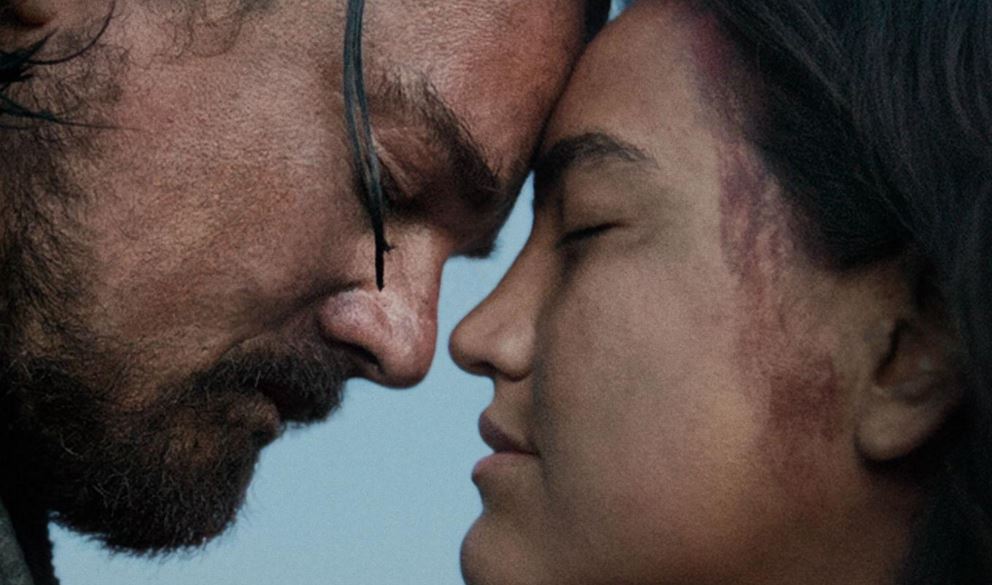
But to look at Leo again, it seems as if people have viewed the Oscar as the realisation of his entire career, which simply isn’t the case. There’s a sense of preciousness about it that’s mawkish and jarring. Actual, genuine, critical analysis of his performance in The Revenant seems to have fallen to the wayside; instead, it’s all about the insane lengths he went to for the role, as if there’s some kind of quota of commitment to any given acting bit that somehow qualifies you for an arbitrary trophy. If you thought his performance was good, then that’s all the validation you need. The Oscars is Hollywood’s way of congratulating itself, and no more.
However, ignoring the finer points of the inanity of social constructs such as awards shows, I think that the Oscars might be in serious trouble anyway. Online streaming platforms (I will not say “with the rise of Netflix”) have lead to a certain diversification within film. As access to cameras and general film-making equipment becomes more and more readily available (we’ve even had the first iPhone shot film, “Tangerine”), more and more people consequently are going to start seeing their cinematic visions realised.
Ignoring wider debates about whether this will cheapen films as a whole and lead to their saturation as content (although the fact that a million dross math-rock EPs are littering Bandcamp doesn’t seem to diminish the release of the latest “Battles” album, for example), one must infer that if more films are made, the chance of something original, fresh and exciting coming along will also rise. The Oscars just won’t cut it anymore; I predict that there will be so many films being released by so many excellent filmmakers with unparalleled access to equipment that one awards show won’t cut it. It could be soon that the most enduring, thoughtful and excellent film of the year is one that doesn’t come close to the Hollywood system at all, it was one made by a young girl in her back-garden, cobbled together by her mates, edited on a low-end Mac.
This is where I think (and hope) film will go, or at least that seems like where it’s headed, and when that does happen what place will there be for the Oscars? As film stops being the preserve of the elite, of the rich, the white, the American, the male, and stops telling the same old trite stories, and stops littering the multiplex with CGI bloodbaths, and it gets handed down to a new generation with something interesting to say, something fresh and bold, the Oscars will hopefully come to be seen as the meaningless nothing they are.
Maybe it’s not so much the Oscars that bore me, but the boring, stale side of films that they represent. Film, in all its multifaceted glory, deserves more than this.
Some of the coverage you find on Cultured Vultures contains affiliate links, which provide us with small commissions based on purchases made from visiting our site.