

As well as providing possibly the only place in the world that you should watch Bulletproof Monk, the PlayStation Portable was quite brilliant for RPGs. Heavy hitters like Final Fantasy, Disgaea and Persona were all well repped on the little wonder, but the PSP also boasted a tonne of weird and experimental RPGs that made the handheld a hotspot for genre fans. Sadly, not all of them have been remembered, and RPGs on old systems tend to be expensive. If you want to check these out through alternate means, we won’t tell the Popo.
PopoloCrois
Seeing as it was the system’s first year, 2005 was a bit of a light one for the PSP as far as RPGs were concerned. But publisher agetec saw fit to bring west a franchise that had been locked in Japan for decades.
PopoloCrois began life as a manga in the late 1970s, and with the release of PopoloCrois Story on the PS1 in 1996, it became a video game series. How do you say it? Naturally my brain wants to get a bit French and say Popolocwah. Let me know down below. PopoloCrois Story starts as a simple, kid-friendly adventure: Prince Pietro of the PopoloCrois kingdom discovers that his mother, once assumed long dead, has actually been in a coma this entire time, spurring him onto a journey to save her.
The series would also see a roguelike spinoff and a direct sequel released, and in 2005, PopoloCrois for the PSP condensed the original game and sequel into a single experience. Though it retains the turn-based combat, art direction, and general story of the originals, it’s far from a simple remake. This release made major changes and cuts to adapt the experience to the PSP.
However you choose to play PopoloCrois, it’s a traditional turn-based RPG with SRPG elements and an endearingly simple story that nevertheless gets a little dark at times. Despite its charm, though, PopoloCrois remains trapped on the PSP, and the series has only seen one new game in the years since: a crossover with Story of Seasons that (thankfully) made it west in 2016. Right, how long was that entry? Minute? And a half?
Half-Minute Hero
That voiceover was genuinely one minute 30 seconds long. That’s gotta be worth a sub right? Get us to 100k before the end of the year and I will do a full gore hairline reveal.
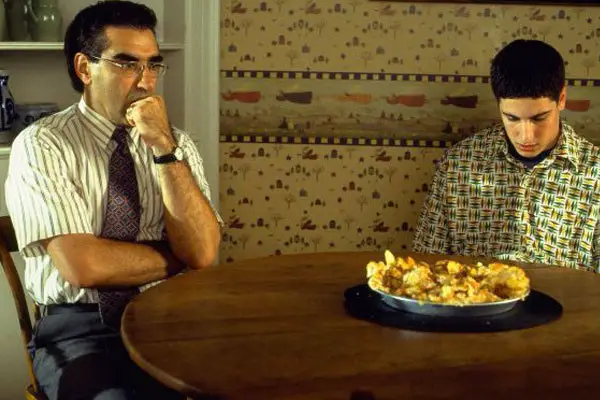
Don’t have time for a hundred hour RPG epic? How about saving the world in 30 seconds instead? In Half-Minute Hero, nearly everything about the genre has been condensed into bite sized gameplay loops. From random battles, to leveling, to gearing, to taking down the evil lord who’s cast the spell of destruction, it’s all over quicker than you can say American Pie.
Alright, so this game isn’t really only 30 seconds long. You’ve got a greedy Time Goddess on your side, so the countdown is frozen in towns to let you catch your breath, and Goddess Statues let you pay her to reset the clock. And the journey is far from over once you take down the big bad — because there’s plenty more villains waiting in the wings, with 30 missions to embark on.
This is only the primary mode of Half-Minute Hero, as the game features five other game modes starring other characters, which also branch out into genres like shoot ‘em ups, RTS games, and action. All together, though, it’ll still only take about 8 to 12 hours to experience what this game has to offer — which still makes it a brisk experience if you’re looking for a break from the latest massive open world game.
Half-Minute Hero may not have been a smash hit, but it still managed to dash its way onto Xbox Live Arcade and Steam with a remake that adds in a new art style. A sequel was even released on PSP, but it remains trapped in Japan, and only its Steam port made it west. What do you Gurumin by that?
Gurumin
In 2004, just before Ys and Trails began to really dominate their output, Nihon Falcom put out a quirky little dungeon crawler action RPG by the name of Gurumin.
With her parents sent to work abroad, daughter Parin is sent to stay with her grandfather. After rescuing a young girl from being threatened by a dog, Parin discovers that the girl is actually a monster, and is taken into a monster world as thanks — only for the monster village to be attacked, forcing Parin to take up arms to protect her new friends’ home.
Could she not have just taken up Beyblade instead?
Gurumin is a brisk ten-to-fifteen hour action RPG that sees Parin explore the world and brave dangerous dungeons to rescue the world’s monster inhabitants, as well as their furniture to help rebuild the town. Unlike your usual action game protagonist, Parin fights with a special drill; in addition to basic combos and charged attacks, there’s a charge meter that builds up as Parin does damage. Filling it up completely allows her to use special attacks, while getting hit drains it, incentivizing players to be agile.
Gurumin’s solid fundamentals are all packaged together and brought to life with a cutesy, cartoonish art direction that’s quite unlike Falcom’s usual fare. Unfortunately, despite its PSP, 3DS, and PC versions all managing to secure western releases, the game has only seen modest success at best, being overlooked by many Falcom fans in favor of the promised land, which is basically, more money. Hey, segue:
Riviera: The Promised Land
This Norse mythology-influenced RPG stars, you guessed it, an amnesiac protagonist. Ein is a Grim Angel, sent by Asgard to destroy the land of Riviera to stop the demons from returning — even if it means innocents will die in the process. After a run-in with a mysterious woman leaves him without his memories, he takes it upon himself to protect Riviera instead.
Rather than dump you into a traditional world map, Riviera asks you to direct Ein’s party to move through smaller areas divided into screens. Items, events, and battles can be triggered on each screen.
When it comes time to throw down with the demons plaguing the land, Riviera puts you into the driver’s seat of a rather inventive turn-based battle system. Players bring a party of three into a scuffle, and are given two formations to choose from, each with different effects. At the start of a battle, you’ll have to pick four items from your inventory to use, and these items are shared by the whole team.
Outside of battle, you’ll get loads of chances to chat with the girls and pick different dialogue options. What you say can change how much they like Ein, and it all adds up to different endings depending on who you’ve won over.
Even though Riviera and a few other games from Sting’s Dept. Heaven series made their way to the PSP over the years, they never really broke out. They’ve stayed under-the-radar cult favourites, and their legend just hasn’t really grown.
Nayuta no Kiseki
These days, Nihon Falcom is known for two things: Ys and Trails. Ys is all about fast, simple combat and adventure, while Trails goes for deep storytelling and a super detailed world.
Following Trails to Azure in 2011, however, Falcom took the time for an experiment, combining the action gameplay of Ys with the story sensibilities of Trails to give us Nayuta no Kiseki, a 2012 PSP Trails spinoff with no connection to the main series.
In the middle of a vast ocean lies Remnant Isle, home to a village and a pile of shooting stars that fell from the sky. Glimpses of another world can be seen within these stars, and protagonist Nayuta, who longs to see what lies beyond the ocean, is thrown into this hidden world and embarks on a life-changing adventure.
Nayuta no Kiseki combines simple hack and slash combat with a heavy dose of platforming, and divides its locations into replayable stages. There’s optional objectives to spice things up, and Nayuta will eventually be able to change the seasons of each stage, which then changes the level layout. Neat.
Owing to their massive scripts, Falcom’s Trails games have had major trouble coming west. By the time western releases really started to pick up steam in 2015, the PSP was long dead, ensuring that Nayuta would remain trapped in Japan — at least until 2023, when a remaster was finally brought west under the title The Legend of Nayuta: Boundless Trails. See, when you wish upon a star, sometimes your obscure PSP RPG gets localised.
Lunar: Silver Star Harmony
Despite regularly making it onto lists of the best RPGs ever made, Lunar never achieved the money printer status its contemporaries (like Final Fantasy) did. Yet that hasn’t stopped the game from seeing enough ports, remasters, and remakes over the years to make the likes of Final Fantasy IV and Skyrim blush.
Silver Star Harmony, a remake for the PSP, keeps the framework of the original, but gives it a fresh coat of paint.
Lunar’s story is charmingly old-school. The sleepy village of Burg is home to protagonist Alex, a young man dreaming of becoming a Dragonmaster — a legendary hero. Upon trekking to a local cave with his friends, Alex is encouraged by its draconic dweller to embark on a journey to realize that dream, kickstarting a grand fantasy story of good versus evil.
A new prologue sequence shows a glimpse into the past of Dragonmaster Dyne, Ghaleon, and others as they confront a dark wizard. Meanwhile, the visuals have been completely overhauled for an isometric style, and the turn-based combat has been jazzed up with flashy limit break attacks.
Though a solid remake all-around, Silver Star Harmony features a new, more faithful English localization courtesy of XSEED. It sounds good in theory, but it’s a bit controversial—especially for fans of the original Working Designs version, even if that one took some creative liberties that probably wouldn’t fly today. Right, this fly is gonna fool into some very awkward pronunciation.
Puella Magi Madoka Magica Portable
2011 was a turning point for the magical girl anime genre, with the debut of Puella Magi Madoka Magica. Written by Gen Urobuchi, what first seemed like another magical girl anime turned out to be a grim deconstruction of the genre’s tropes and trappings. I love a grim deconstruction.
Madoka has grown into a sprawling franchise, with a whole slew of manga and games being released in addition to several movies. Not all of these spinoffs and adaptations had the same reach as the original series, however — today’s game has been trapped on the PSP and in Japan since 2012.
How do you take an anime about magical girls infiltrating supernatural labyrinths to fight deadly witches, and turn it into a video game? It’s simple: you turn it into a visual novel and roguelike dungeon crawler.
Madoka Portable truly embodies that roguelike aspect. A familiar witch awaits you at the end of every story route, and if you fail to defeat her, you’ll have to start a new playthrough. Though with upgrades that can be bought with karma points to make characters in the next run stronger. Outside of battle, your dialogue choices as Kyubey have a variety of effects — including turning magical girls into witches.
While this unique anime roguelike curio is still trapped on a single platform and region to this day, an in-progress fan translation has made four of the story routes playable in English for those who want to explore more of Urobutcher’s dark world.
Princess Crown
For the past decade, Vanillaware’s games have been published by Atlus in Japan — but founder George Kamitani’s history with them stretches back even further. After leaving Capcom in the 90s, Kamitani joined an unnamed development studio and started work on a life sim project similar to Gainax’s Princess Maker 2. Only for him to abruptly shift towards being an action RPG to get Sega to accept the pitch.
Development troubles ultimately meant that Atlus stepped in to help fund and finish the game, but being released at the end of the Sega Saturn’s life doomed it to low sales and cult classic status. While Kamitani moved on to found Vanillaware, Atlus hasn’t forgotten about Princess Crown, having also ported it to the PSP.
Princess Crown is a 2D sidescrolling action RPG that tells the tale of a princess, who leaves the safety of her castle to personally help solve the problems plaguing her country. Exploration and combat all take place on a 2D plane, with Gradiel typically engaging enemies one-on-one. In addition to dishing out basic combos, she can jump, block, or dodge attacks, and all actions consume a Power meter that works like modern stamina systems.
Princess Crown may have been obscure even in Japan, but it still has its fans. Atlus staff member Hiroki Toyama had been impressed when he played the Sega Saturn original as part of his task of porting the game to the PSP. And while Princess Crown has never officially come west, its essence lives on in successors Odin Sphere and Dragon’s Crown. Not a bad rebirth.
Tales of Rebirth
Though it lacks the same reach as Final Fantasy and Dragon Quest, Tales is still a long-running JRPG stalwart that endures to this day. But the road to mainstream popularity has been a long one, and in the west, that means that several games were never localized. Three mainline titles and over a dozen spinoffs are still trapped in Japan today.
Tales of Rebirth stands out for how it plays with the series’ battle system and recurring narrative themes. This well-received PS2 classic was ported to the PSP in 2008, and features the action RPG combat that defines Tales. Rebirth’s take on the formula comes from the era before the series incorporated full 3D movement in combat, and utilizes a three-lane system where characters can move across three different lines in battle to dodge or flank enemies.
Long time Tales fans will undoubtedly recognize one of the series’s recurring themes: challenges on the path to co-existence. It’s a JRPG trope that’s practically as old as the series itself, and it’s appeared to varying degrees in nearly half of the mainline entries.
Tales of Rebirth, however, makes it the story’s central theme, and what starts as a quest to rescue a childhood friend eventually escalates into a darker tale examining themes like prejudice.
Though both the PS2 and PSP versions of this action RPG cult classic remain locked in Japan, a fan translation of the PS2 version has given the game a rebirth, oh wait I already did that one. Umm something something legend? Wait I did that one too. Just roll the last game.
The Legend of Heroes Gagharv Trilogy
Given that Falcom has been around since 1981, it’s only natural that they have a long and rich history. From 1994 to 1999, they put out a trio of games that would collectively be known as the Gagharv trilogy: The Legend of Heroes III: The White Witch, IV: A Tear of Vermillion, and V: A Cagesong of the Ocean.
Named after the massive chasm that divides its world, each title of the Gagharv trilogy is set on a different continent, decades apart, with fresh characters for every game. Though nowhere as huge as the ongoing dozen-game epic that is the Trails series, the Gagharv trilogy is still an important part of Falcom’s history, having laid down the foundations for Trails to follow, with its heavy emphasis on storytelling and rich worldbuilding.
These games likewise have a rich history of ports across multiple platforms, each of which made major changes. The most noteworthy portsare the PSP releases, which were the only versions to make it west.
Under the supervision of Bandai Namco, the trilogy was released out-of-order in the west and renamed. A Tear of Vermillion came first, then followed by Prophecy of the Moonlight Witch and Song of the Ocean.
While the PC-98 and Windows originals all iterated on a simplistic real-time combat system, the PSP versions swapped it out for turn-based combat. The PSP versions also sadly suffer from poor localization, with typos and grammar mistakes hampering what are otherwise great stories.
Even so, this forgotten group of PSP RPGs remains the only way right now for westerners to experience quite the RPG legacy.
READ NEXT: 20 Fighting Games Everyone Should Play
Some of the coverage you find on Cultured Vultures contains affiliate links, which provide us with small commissions based on purchases made from visiting our site.