



Kainga’s central theme is adaptability and flexible strategy. To establish a thriving village and successfully complete mission objectives, it’s vital to read the terrain and work with what’s readily available and accessible. Here’s some pointers to help players get in the right mindset.
Take Stock of Your Surroundings
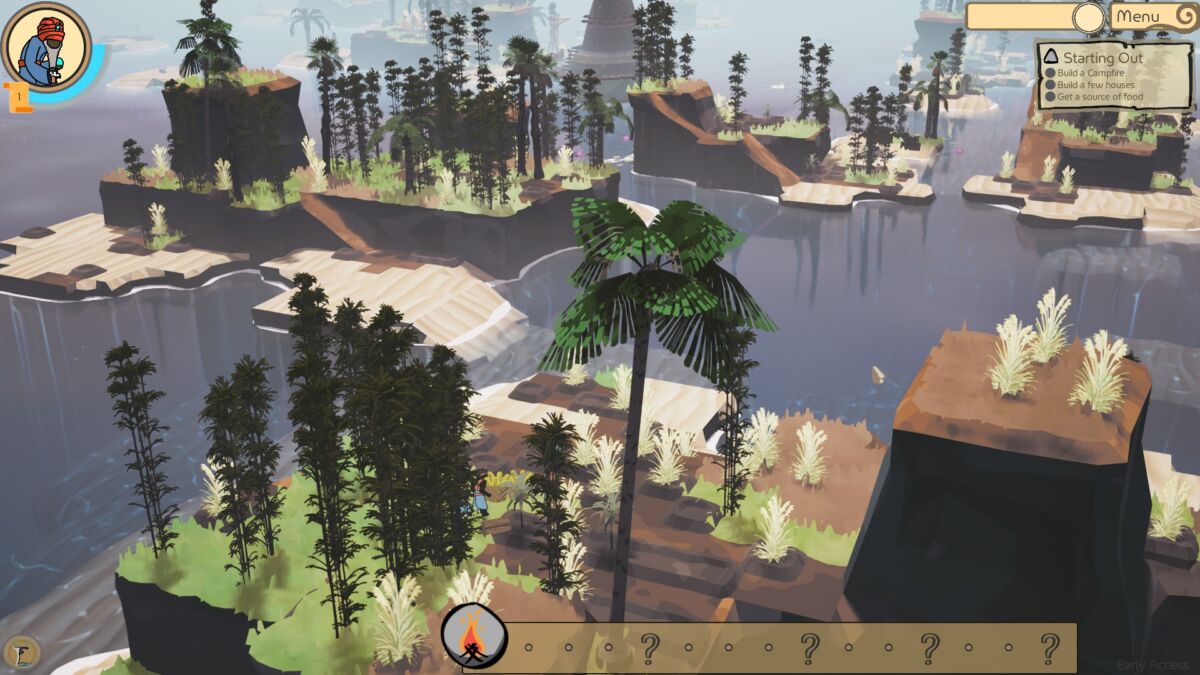
Succeeding at Kainga is all about understanding geography, the shape of the terrain, and the general lay of the land. After choosing a mission to complete and spawning into the game world the first vital thing to do is to pan across the map and study its features – concentration of resources, chokepoints, proximity to wildlife, and distance to NPC villages. All these factors will help make an informed decision of where to place the village hearth and lay the first foundations for your village.
Move to a Good Location
There’s no requirement or even incentive to immediately settle in the spawn area once you’ve loaded into a mission. In some biomes, like Terraces or the Pebbles, the player may not have much of a choice or the initial spawn point is decent enough, but where possible, it’s highly advisable to shift to a better location after studying the map’s features.
In fact, the game’s timer doesn’t start until the player constructs the village hearth, which means you can take all the time you need to find an optimal settlement location. Don’t forget to command your Braves to pick up and carry any resources you may spawn with.
Clay and Reeds are Key in the Flatlands
Clay and reeds are the most common and useful resources found in the Flatlands. Clay is an excellent material for shelter due to its resilience to fire and heavy wind, which are relatively common occurrences in the desert, while reeds are useful for food production and as a secondary material for shelter construction.
Though this tip primarily concerns a specific biome, the general point of finding two or three central resources that can cover your village’s basic needs is relevant to any environment, as it can help in prioritizing technology and developing a build order.
Claim Land Early
When players place down their village hearth, they will notice a large circle around the campfire. This means any resources within this indicator are active for a village Brave to come over and harvest.
To expand the village’s resource reach, place a resource totem, for which the activation button can be found right next to the large hearth button. Placing these resource totems expands the range and location to where Braves will go to gather resources. Granted, it’s not efficient to place a resource totem too far from the village hearth, as it will increase travel time.
Turn Off Houses
The first actual village structure players will likely place for construction are houses – buildings that increase the settlement’s overall village capacity and also produce new Braves. For a shelter to produce a Brave, an idle villager will need to occupy the active house and consume a unit of food.
This means that when a village gets large, the drain on the idle work force to keep all houses active as producers of new workers increases dramatically and there might not be any free workers left to do other vital tasks. Make sure to manually select and pause houses that you don’t need to stay active to free up Braves for other tasks.
Actively Search for Inspiration
To gain new technology, players will need to send their village Thinker to a point on the map represented by a glowing light. These are points of inspiration and they’re randomly placed around the map. The more technology players can unlock, the more options they‘ll have to work with in developing their village.
Protect the Thinker
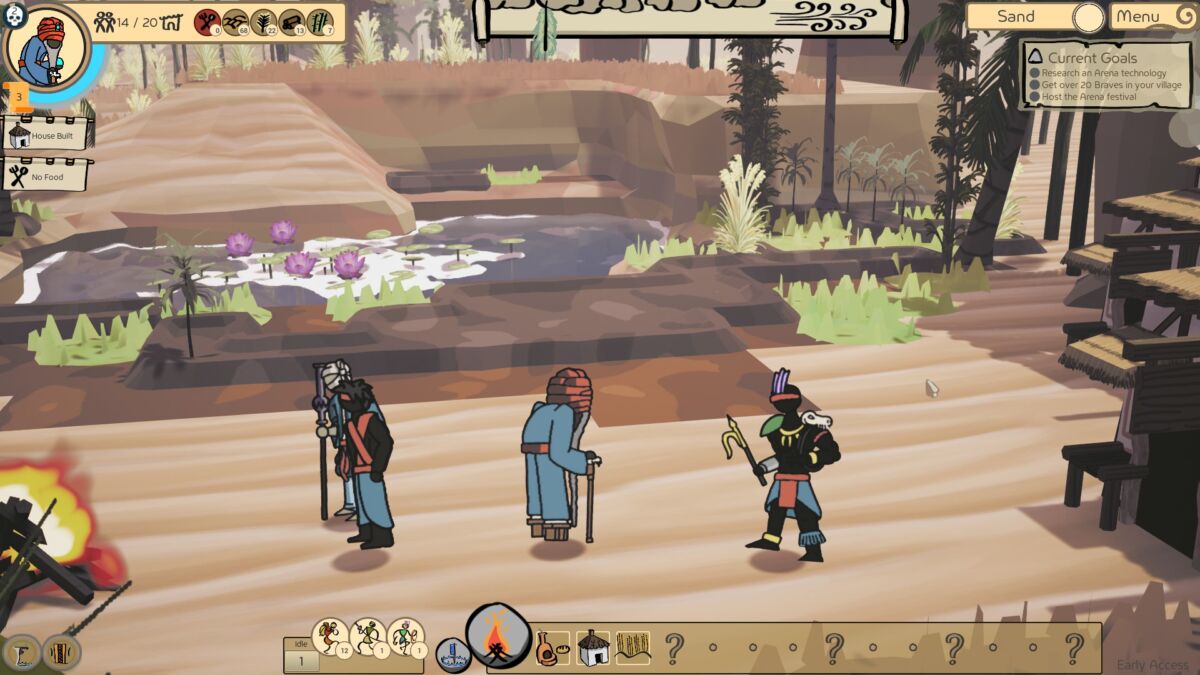
There’s only one major loss condition in Kainga and that is the loss of the Thinker. When NPC villages decide to attack the player’s village they’ll typically send their own Braves to harass the Thinker, especially if they’re wandering far from their home village.
Flatheads in the Flatlands are particularly dangerous to Thinkers as the charge damage from these creatures can one shot a Thinker, so it’s vital to give this crucial villager a small or moderate escort and avoid aggressive wildlife.
Get Passive Tribe Upgrades
It’s almost guaranteed that players won’t need every single technology they invent from their Thinker’s inspirations. There’s still a use to researching sources of inspiration in that players can choose to reject whatever tech options they get and instead opt for a passive upgrade.
These upgrades can range from giving villagers rattan hats to help them work under rain, all the way to inventing snail bridles that utilize snail acid to fertilize ground. These passive upgrades benefit the entire village and oftentimes can be more useful than inventing a specific new building or item, especially if it’s not necessary to the overall wellbeing of the village.
Collect Loot
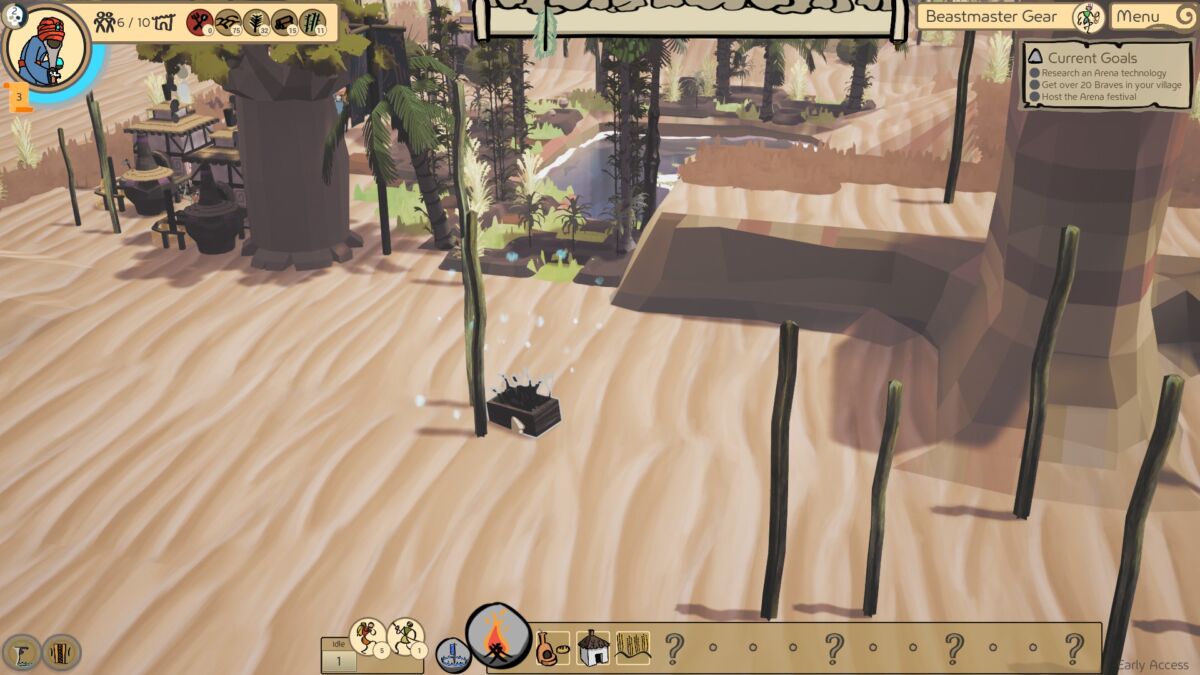
Aside from building material, the land can also offer other types of gifts. In any given mission, players may notice small black boxes placed on the ground in various sectors of a mission map.
These are equipment boxes that turn a villager into a new class of unit, such as a beastmaster, a spearman, an archer, or some other type of fighter. If your village has a number of idle Braves, it can be a prudent move to collect this equipment to expand tactical options and security of the settlement’s workforce.
Tame Beasts
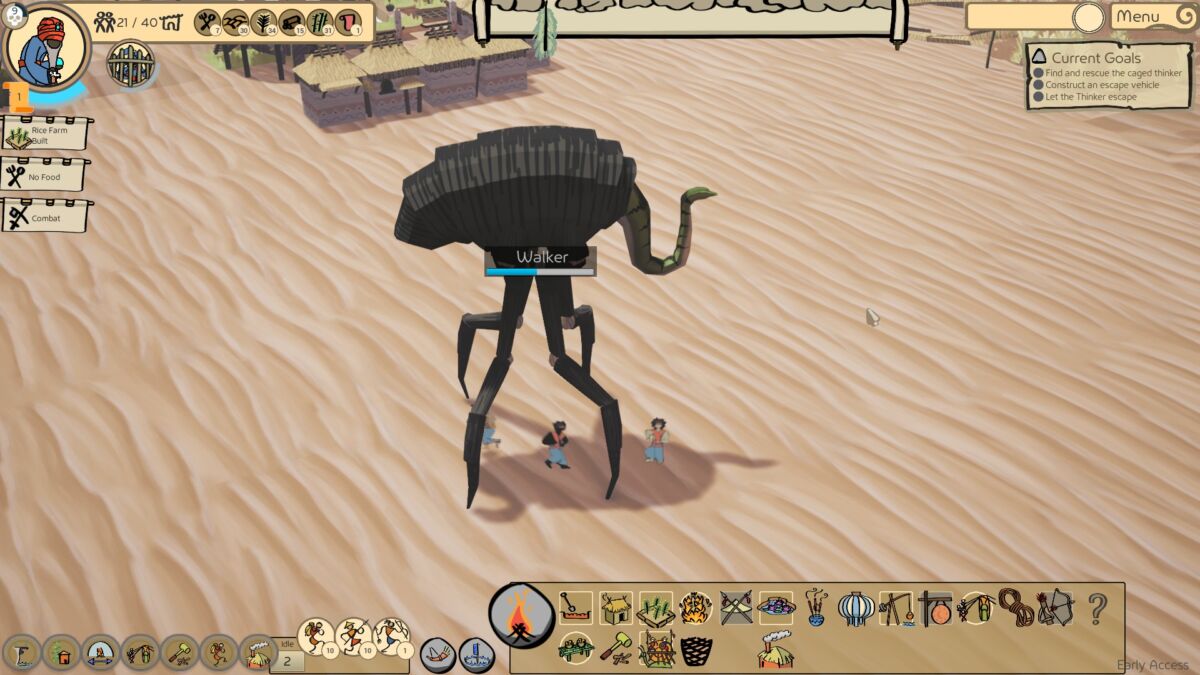
Kainga has a number of weird and wondrous creatures that wander the various environments of the game’s world. A number of them can be tamed and used as beasts of burden or even combat units. On top of the tactical, construction, and traversal options, taming beasts gives players extra Karma points for use at the Karma shop on the main menu.
Purchase New Tech

As you successfully complete missions and tame beasts, you will accrue the Karma resource. This resource can be used in rerolling technology options during a mission or, more importantly, used at the Karma shop to purchase new technologies, which will be added to the technology pool to subsequent missions. There’s no real benefit to retaining Karma, so go ahead and purchase as much new technology as you have Karma points to expand your own strategic options in future missions.
Kainga is available on PC.
READ NEXT: The Best Strategy Games For Beginners
Some of the coverage you find on Cultured Vultures contains affiliate links, which provide us with small commissions based on purchases made from visiting our site.