

The PlayStation 2 provided a fascinating shift for the platformer genre. While new names like Jak and Daxter and Ratchet and Clank came to the fore, icons like Crash Bandicoot battled with substance abuse. A console with thousands of games also has a lot of forgotten platformers, some of which you and I are going to have a look at today. If you hate puns, you’re in for a ruff time.
Ruff Trigger: The Vanocore Conspiracy
With a furry hero, a selection of guns and plenty of things to smash for pocket money, Ruff Trigger is basically Italian Ratchet and Clank. Minus Clank. Add furries.
Released for the PS2 in 2006, yes, in the same year as the Japanese release of the PS3, Playstos Entertainment’s platformer follows a canine bounty hunter tasked with recovering genetically engineered pets called Piglots after a shipment crashes. Naturally, there’s something dodgy behind the adorable little creatures, and it’s not just because they aren’t really pigs. But there are lots of them.
You explore alien environments, shoot robots and escort the stranded Piglots to teleporters, with different varieties helping you solve puzzles. There are vehicles to drive, equipment to purchase and unlockable minigames, so it certainly has a go at keeping you occupied. Ruff can also drink a mysterious green substance to become a werewolf, bringing a bit of Jak II into an already rather familiar mixture.
Unfortunately, the comparisons rarely do it any favours. This came out after all of them, but for a quarter of the budget. The shooting suffers from an awkward targeting system, while the camera can make straightforward encounters unnecessarily fiddly. Reviewers acknowledged some interesting mechanics but criticised the bland environments, some poorly voiced characters and frustrating combat. Graphically, it also looks a bit Veggie Tales at times. However, Mr Trigger is voiced by David Gasman, who was also the voice of Rayman and also starred in another PS2 platformer I will get to in about 57 seconds.
I genuinely had never heard of this game before, and I’m the guy who used to read PS2 manuals on the bus. Weirdly, though: Ruff Trigger returned as a downloadable PS2 Classic on the North American PS3 store in October 2012. It’s not a classic, but it was on PS2. And it will digitally disappear next year. We are still on the darkest timeline.
Kya: Dark Lineage
Being dragged into another dimension with your half-brother is bad enough, especially if it’s like a Jumanji thing going on, but Robin Williams never had to sort out a dictatorship. That’s Kya’s predicament in this uber forgotten PS2 exclusive, first released in 2003, which sends its blue-haired heroine through a world of floating islands to rescue her sibling and help the oppressed Nativs. Don’t tell James Cameron.
Originally conceived as a Harry Potter project, Kya: Dark Lineage was developed by Eden Games, who probably needed a change after developing like 6 V-Rally games in 5 years. At least their next non-racing game would be an improvement. Ah. I see. Well at least they’ve now mastered the racing genre —ah. I see.
While it’s no Smurfs Kart, Kya is actually a pretty good game. Not amazing, but it does have cool ideas. Powerful currents carry Kya between areas, send her hurtling through tunnels and turn long drops into playable freefall sections. Elsewhere, she slides down tracks on a magical board, rides lizard-like creatures and gets into fistfights with the Wolfen. The movement is actually pretty good here.
Those enemies also serve a purpose beyond providing something to punch. Wolfen are transformed Nativs, and freeing them sends more residents back to the village, where they establish shops selling equipment you’ll need to progress. Rescuing people and immediately becoming their best customer sounds a bit like a mob protection racket, but this one’s ethical. You can even talk to David Gasman. You might remember him from 87 seconds ago.
Critics praised its variety and impressive environments while finding the fighting repetitive and navigation occasionally confusing. Despite the Rayman comparisons, Eden co-founder David Nadal identified Princess Mononoke as a visual influence, explaining that Atari’s marketing team had requested brighter colours during development.
Unfortunately, it had about as much mainstream succes as Ghibli too. Nadal reported sales of around 160,000 copies by September 2004, and it’s not had much of a lineage to speak of. Not a single port!
Scaler
Scaler opens with a boy tied to a chair in his neighbour’s basement. That’s worrying, but there are no billionaires around. Bobby Jenkins has discovered a plot involving an army of mutant lizards, and soon finds himself transported to another dimension and turned into a reptile. Understandably less worrying. Released in 2004 by Artificial Mind & Movement for PS2, Xbox, and GameCube, it wastes very little time getting to the blue mascot on the box.
Bobby’s new body comes with claws, a long tongue and the ability to grind along vines, with the latter sending him through environments like a rollercoaster passenger who’s been denied a seatbelt. Collecting eggs is the aim of the game, while climbing walls and clinging upside down give the levels some welcome verticality. The scenery is pretty decent too, full of oversized vegetation and strange creatures moving about in the distance.
The transformations are what will keep you entertained enough. Scaler can assume five enemy forms, gaining abilities including flight, swimming and bomb throwing. There’s also an appropriately unpleasant upgrade system: hand over your collected currency to a creature that breathes some kind of scotch mist on you. Can we not just sort a Clubcard out?
Reviews were all over the shop. Reviewers appreciated the visuals but criticised uneven difficulty and frustrating trial and error, but some did consider it among 2004’s better platformers. Its original $19.99 US price also helped make the shortcomings easier to forgive. And, somehow, it’s still around that price today. That’s like four chunks of DLC for Dead By Daylight, which is, by the way, developed by the same studio. Artificial Mind & Movement changed its name back to Behaviour Interactive in 2010.
Scaler is not the best game ever or even in the top 10 platformers on PS2, but it’s a fun little game. No sequels or even ports, but that’s hardly vexing is it?
Vexx
Vexx looks a lot like he wandered in from that Linkin Park In The End-verse, doesn’t he? Spiky hair, edginess…giant flying whales? Acclaim’s 2003 platformer gives him a suitably grim motivation, too: an evil ruler has enslaved his people and killed his grandfather. Finding a pair of magical battle gauntlets gives him the means to push as far as he can go.
Underneath that angry exterior is a fairly traditional collectathon, with nine worlds accessed through a central hub. Completing challenges earns hearts that unlock further areas, and you can choose which objectives to pursue. The Super Mario 64 influence is obvious, although collecting the hearts of shadow creatures gives it a different feel. They tried so hard, and got so far.
The environments are a large part of the appeal, offering sprawling spaces with plenty tucked away above and below the obvious route. Some challenges even send Vexx into paintings, where the game switches to sidescrolling platforming. His moveset is generous as well, with long jumps, uppercuts and aerial combos that let you keep enemies suspended while you batter them before they fall, to lose it all.
Reception was…mixxed. GameSpot awarded it 6.3/10, finding its familiar mechanics and presentation dated beside newer competitors.Others praised the imaginative worlds and challenges while repeatedly criticising a camera that makes about as much sense as giant flying whales.
Interestingly, Vexx was originally announced as Jinx, and early publicity promised 18 levels rather than the finished game’s nine. That larger version never materialised, and I’d recommend you check out Matt McMuscles’ video if you wanna dive deeper into the Vexx-verse. The game only managed 200,000 sales, which was not enough to save the very deeply unwell Acclaim. If you miss platformers that let you wander off and investigate something peculiar in the distance, put your trust in us and give it a go.
Dr. Muto
Released by Midway in 2002, also for Xbox and GameCube, this forgotten platformer follows a scientist who definitely doesn’t have the same barber or father as Neo Cortex, attempting to rebuild Planet Midway after an experiment goes catastrophically wrong. You travel between other planets collecting components for a machine that can reverse the damage, which is a lot of admin. Just get a broom.
The main attraction is Muto’s ability to collect DNA and transform into different creatures. Smaller forms squeeze through gaps, while the hulking ape can smash things with a ground stomp. These changes give you different ways to navigate the environments, although the game restricts which transformations are available in particular areas. Like Scaler, it’s another one of them masky shapeshifty kinda games that I’m sure had an actual name?
There’s an enjoyably grubby science-fiction style to it all, with peculiar machinery, mutant creatures and a leading man whose lips flap about when he uses his rocket shoes. You can even use something called a Splizz Gun, which sounds a bit like a slur in Warhammer. Unfortunately, there’s also an awful lot to collect before you can properly enjoy his abilities. Critics praised the transformations but criticising the backtracking, camera and lack of polish.
No real legacy for this game. No port or anything. But it was the final game for Lead programmer Ed Logg, an arcade veteran whose credits included Asteroids, Centipede and Gauntlet. In Game Design: Theory & Practice, Logg described Dr. Muto as the largest project he had worked on, with more than 25 team members plus additional support. Considering 10x that rendered Lucia’s armpits in GTA 6, it’s really not too bad at all.
Malice
Having your head eaten by a giant dog is an unusual way to introduce your platforming heroine, isn’t it? With this and Scaler, platformer developers in the 2000s seemed to not like kids that much.
After the Grim Reaper refuses to accommodate her, Malice returns to the living and begins collecting keys for a talking clock, armed with an enormous hammer. Argonaut’s 2004 platformer certainly has some cool ingredients, but the recipe was slightly upside down and maybe also filled with old milk.
You spend most of your time jumping between platforms, battering enemies and gradually acquiring magic. These abilities let Malice glide, move faster and slow her surroundings, although generous supplies of magic crystals mean there’s little pressure to use them carefully. The hammer is cool, but all you really do is swing it like you’ve got a hallway to be in. For like the entire game.
Its development was more interesting. Malice began as a PS1 project before moving to newer hardware, and a demonstration featured during Microsoft’s Xbox unveiling in 2001. There was even a celebrity casting announcement: Gwen Stefani would voice Malice, with her No Doubt bandmates also involved. Here’s her saying “shut up and fly” 5 slightly different ways.
Her voicework never made the final game, and the game even changed publishers as it struggled to get made. It was supposed to help sell the future of console gaming; by the time it reached PS2 and Xbox, it had become a budget release.
Reviewers criticised the repetitive challenges, thin storytelling and shorter length, and yeah. Former Argonaut boss Jez San later acknowledged that Malice’s substantial costs contributed to the company’s troubles, alongside other problems. The guys behind Croc and Alien Resurrection would limp on for a couple of years before taking a giant dumper in the litterbox. They did come back in 2024. Hopefully they try a different tack.
Tak and the Power of Juju
I feel like this one has largely been forgotten, but it is also an absolute streets won’t forget game?
In it, Tak has to save his village because the intended hero has been turned into a sheep. Happens all the time here in Wales, but you just gotta get on with it, you know? Released in 2003, Avalanche Software’s platformer follows a young shaman-in-training trying to undo an evil spell, restore the Moon Juju’s power and get his people back on two legs. Avalanche, by the way, like a surprising amount of devs in today’s video, are still going. They’re the ones who did Hogwarts Legacy, not the ones who did Just Cause.
The animal interactions give Tak much of its personality. Wildlife forms part of the puzzle system, with creatures responding to Tak and each other in ways you can exploit to get around. His equipment has several uses, too: a pole helps him vault onto higher platforms and doubles as a blowgun for triggering things from a distance. There’s plenty of conventional jumping and collecting, but involving the local wildlife gives it a fun Jungle Book flair, except Mowgli is a little goblin guy instead.
Also released for the GameCube but interestingly not Xbox, Tak and the Power of Juju is carried by its visuals and just general vibe, which makes sense as its concept was actually sold to Nickelodeon. Critics praised its visual style and voice acting while criticising tedious collecting and confusing navigation. It did alright critically overall, but with inspirations like Jak and Daxter and Mario 64, it was always going to be a big ask to outdo them.
Despite the Nickelodeon connection, this wasn’t an adaptation of an existing cartoon. The game came first, with the television series arriving in August 2007. By then, the original had sold more than a million copies worldwide and spawned two follow-ups, but without any official ports, these days it’s more like Power of Whowho? That pun was a gift.
Gift
The unfortunately named Gift works behind the bar at a company that sends heroes into video games to test them. Unfortunately, its latest game keeps killing the volunteers, so management sends in the barman. Better than talking to drunks, I guess? Developed by French studio Eko Software and published by Cryo, Gift reached PS2 in 2001 after its original PC release.
Your red, yellow-eyed hero has to rescue a princess by gathering seven garden gnomes, travelling through worlds with names including Star Stress and Tipanic, which sound like a rash and then the ointment for a very specific part of your lower body. The parody extends across films, fairy tales and games, with a deliberately unglamorous protagonist replacing the usual athletic mascot. He looks like a Wotsit made of blood. French comics artist Régis Loisel co-created the character with Philippe Ulrich, the creator of the Dune game. Alright! Fine!
Different creatures react to illumination, and Gift’s equipment lets him alter the lighting or immobilise enemies by shooting their shadows. You can even swap between third and first person view, beating MGS2 to the punch. His staff can also gain elemental powers for interacting with the scenery. The game has a stronger puzzle focus than its appearance suggests, but don’t worry, it’s not exactly Myst. Thank god.
Reviewers did actually kinda like it, praising its originality and distinctive world while criticising camera restrictions and sections so dark that judging jumps became frustrating. All in all though, they did like how odd it was, but that oddness stopped it from really selling very many copies.
It did, though, get a French TV series in 2005 that you can basically only watch on YouTube. Eko Software’s next game would be a much more mainstream effort, and feature the most lovable cartoon character ever…sorry, I meant the Colonel Gaddafi of cartoons.
Zapper: One Wicked Cricket!
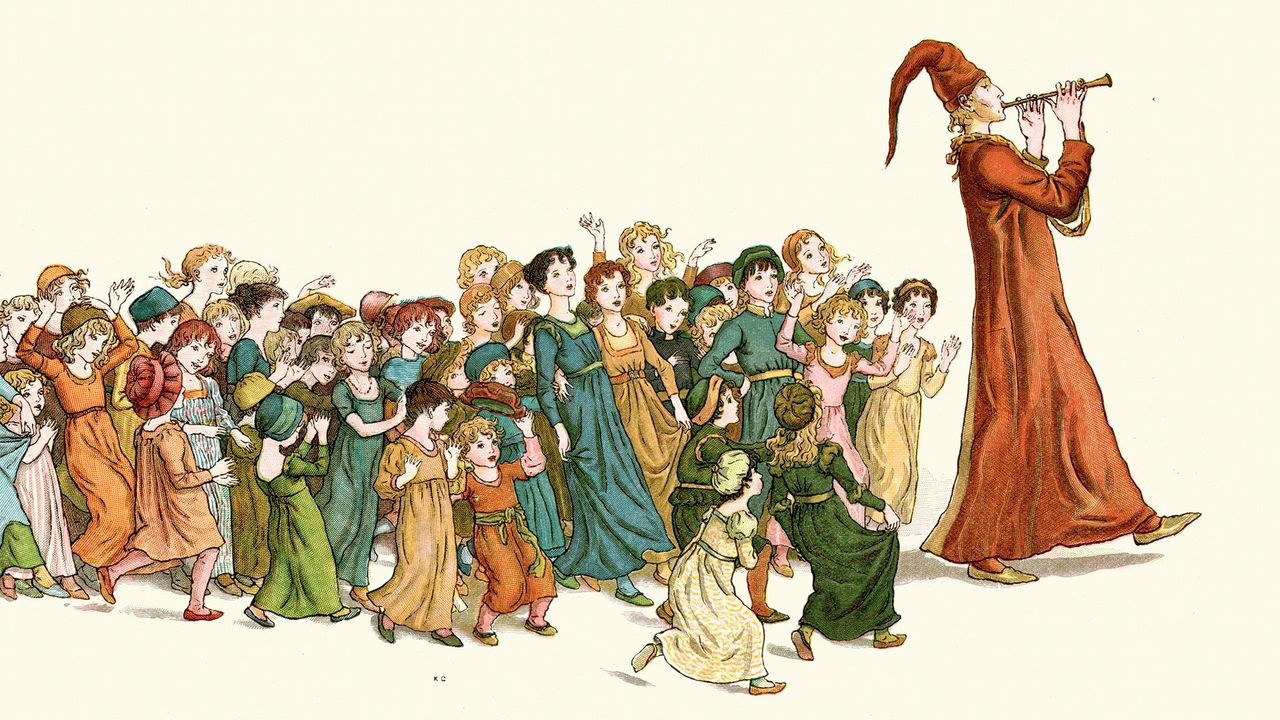
Zapper’s rescue mission begins because he’s tried using his baby brother as a television aerial. A magpie promptly steals the unfortunate sibling, leaving our electrically gifted cricket to retrieve him. Released in 2002, Blitz Games’ platformer gives you a protagonist whose first concern upon saving the day should probably be a visit from social services. Seriously, platform devs of the 2000s: were you fans of the pied piper or what?
Movement follows a grid, with Zapper hopping between individual spaces rather than running freely through the levels, which is kinda interesting. You need to judge enemy patrols, dodge hazards and use longer jumps to clear gaps, smashing six magpie eggs in each stage. His electrical attack deals with enemies and crates, while more powerful zaps help uncover secrets. It’s a methodical game but you also need to beware of the ground disappearing.
If this all sounds suspiciously like Frogger, there’s a reason: Blitz also developed Frogger 2: Swampy’s Revenge. Zapper tries something similar with a legally distinct animal and a few additional tricks. Imagine if instead of Spyro the Dragon we had Gyro the Wyvern and you’re not far off.
Critics didn’t think this was that wicked though, appreciating the challenging puzzles while finding that its ideas became repetitive. It’s the kinda game where you can get on its wavelength or just get bored of it very quickly.
But then there’s the soundtrack, which goes unbelievably hard for a game about a cricket collecting eggs.
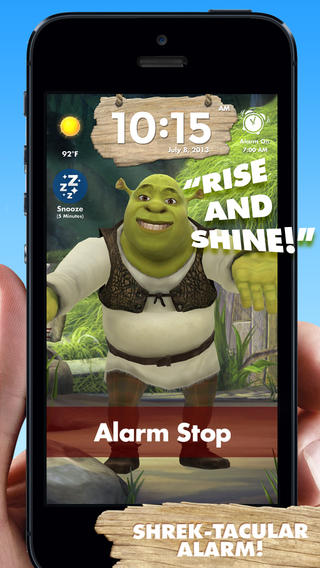
Even if you’ve no intention of playing Zapper, give the music a listen and then demand a vinyl release. It did actually get a Steam port, but that’s about as well thought out as Blitz’s final game, which was…the Shrek alarm. That’ll do?
Castleween / Spirits & Spells
Alicia and Greg are late arriving at a strange house supposedly packed with sweets. Kids are not very smart. Their friends have already been turned to stone by the Bogeyman, leaving the two stragglers to venture into the world of the dead and rescue them. Castleween reached the European PS2 in November 2002. Yes. A Halloween game in November. And now look, we’re doing the same thing here pretty much! Just 24 years later.
I’ll be honest…there’s not really much to talk about on this one. It’s a pretty basic platformer. Greg’s devil outfit lets him withstand fire and use his pitchfork for extra jumping height, while Alicia’s witch costume protects her from cold and allows her to squeeze through small spaces beneath her hat. You switch between them to negotiate obstacles, with collected crystals paying for each change. It’s a neat premise, although it’s just a bit annoying when you reach an obstacle with the wrong child and insufficient crystals.
Graveyards, crooked scenery and Halloween monsters give the game a recognisable, budget Tim Burton atmosphere. It’s a little bit charming, in the same way that a janky, very unethically sourced costume in a bargain shop is.
Unfortunately, contemporary reviews found plenty to criticise, highlighting repetitive situations, awkward camera behaviour and the possibility of having to restart a level after running out of transformations. It’s definitely not got the same budget as your Jaks or Daxters, or really of like most of the games even in this episode, and it shows.
There’s also some regional naming confusion. You see, Castleween became Spirits & Spells in North America, where it appeared on GameCube, and only the GameCube. You could see this coming right? Remember this simple spell before you throw money at a very ordinary game: Googlus Searchimus.
READ NEXT: Once Huge, Now Forgotten Games
Some of the coverage you find on Cultured Vultures contains affiliate links, which provide us with small commissions based on purchases made from visiting our site.