

Video game tie-ins. Sometimes maybe good, most time maybe um not good. It’s a cliche at this point. Short deadlines and smaller teams often means that games like Goldeneye and Spider-Man 2 are the exception. But what happens when a movie is bad and it’s the tie-in game that is good? Let’s have a look at this slightly alien concept.
Alien Resurrection
The Alien series had already killed Ripley, killed Newt off-screen (still so mad about that) and almost allowed a dog to be a xenomorph, so by 1997 there was really only one sensible option left: clone Sigourney Weaver and start again.
Alien Resurrection takes place 200 years after Alien 3, with military scientists successfully recreating Ripley so they can extract the Alien Queen growing inside her. Try not to think about that. Or anything in this movie. Unfortunately, the cloning process has mixed their DNA, leaving Ripley considerably less human and considerably more interested in basketball.
Space Jam did come out the year before. Jean-Pierre Jeunet directed, years before Amélie, while a pre-Buffy Joss Whedon wrote the screenplay, although Whedon would later be extremely critical of how his script was executed. It may not have been the script’s fault mate!
The $75 million production eventually made around $161 million worldwide, but reviews were mixed to negative and it’s not anyone’s favourite Alien movie. I hope.
The PlayStation adaptation somehow had an even more troubled gestation period. Argonaut began work in 1996, initially creating an overhead shooter inspired by Loaded. What a whipper. After Tomb Raider changed expectations for 3D games, a year’s work was scrapped and it became a third-person adventure instead, prompting several developers to leave. Amazingly, that version was itself eventually abandoned and the whole thing became a first-person shooter.
That torturous development accidentally produced a game that would basically change games. Released in 2000, yeah, 3 years after the movie, Alien Resurrection uses the left analogue stick to move and strafe and the right to look and aim. In other words, it controls like virtually every console FPS today. At the time, GameSpot hated it, complaining about the bizarre control setup and awarding the game just 4.7/10 in a now pretty famous review. Within a few years, Halo and others would help make essentially this arrangement the standard.
While it’s not the best game I will chat about today, there’s more here than just novelty. The cramped corridors, flickering lights, motion tracker and excellent audio make Resurrection unusually effective horror for an FPS of that time. Xenomorphs can attack from walls and ceilings, ammunition is precious, and getting caught by a Facehugger actually impregnates you, starting a countdown to find an Autodoc before your new friend makes a dramatic exit.
Come for the bit of gaming history, stay for the decent graphics and mood. Could be Ecksactly what you need.
Ballistic: Ecks vs. Sever
Some films are remembered for winning Oscars, breaking box-office records or changing cinema forever. Ballistic: Ecks vs. Sever achieved immortality by putting the Balls in Ballistic.
Released in 2002, it starred Antonio Banderas and Lucy Liu as rival agents who eventually discover they’re being manipulated by the same villain. Then bullets happen. Other stuff as well, you must assume. Despite costing around $70 million, it earned just $20 million worldwide. More impressively, it received 0% on Rotten Tomatoes from over 100 reviews. To clarify, a film on the site will get a positive rating even if it’s just sort of alright, you know like a 5/10. The I Heart Huckabees effect. But nobody even sort of tolerated it. Roger Ebert awarded it half a star.
Yet somehow Ballistic got not one, but two good Game Boy Advance games.
Even stranger, the first, Ecks vs. Sever, arrived in 2001, roughly a year before the film. That’s because the movie spent years in development, changing directors, stars and even titles while Crawfish Interactive was already making a game from an earlier version of the screenplay. Consequently, the original Ecks vs. Sever is effectively a videogame adaptation of a film that didn’t yet exist in its finished form.
And it was remarkably ambitious. This was a proper first-person shooter running on the GBA, using impressive pseudo-3D environments at a time when the handheld was far better suited to 2D games. You could play separate campaigns as Ecks and Sever, use numerous weapons, fight surprisingly large groups of enemies and even play four-player deathmatch using link cables.
Then came Ballistic: Ecks vs. Sever, actually based on the finished movie and again developed by Crawfish. It expanded the formula with larger levels, stealth elements, sniper rifles, thermal goggles and another pair of character-specific campaigns.
So while the film became shorthand for early-2000s action-film garbo, its games demonstrated just how much could be squeezed out of Nintendo’s little handheld.
The Mummy Demastered
Universal had enormous plans for The Mummy in 2017. Enormous, stupid plans.
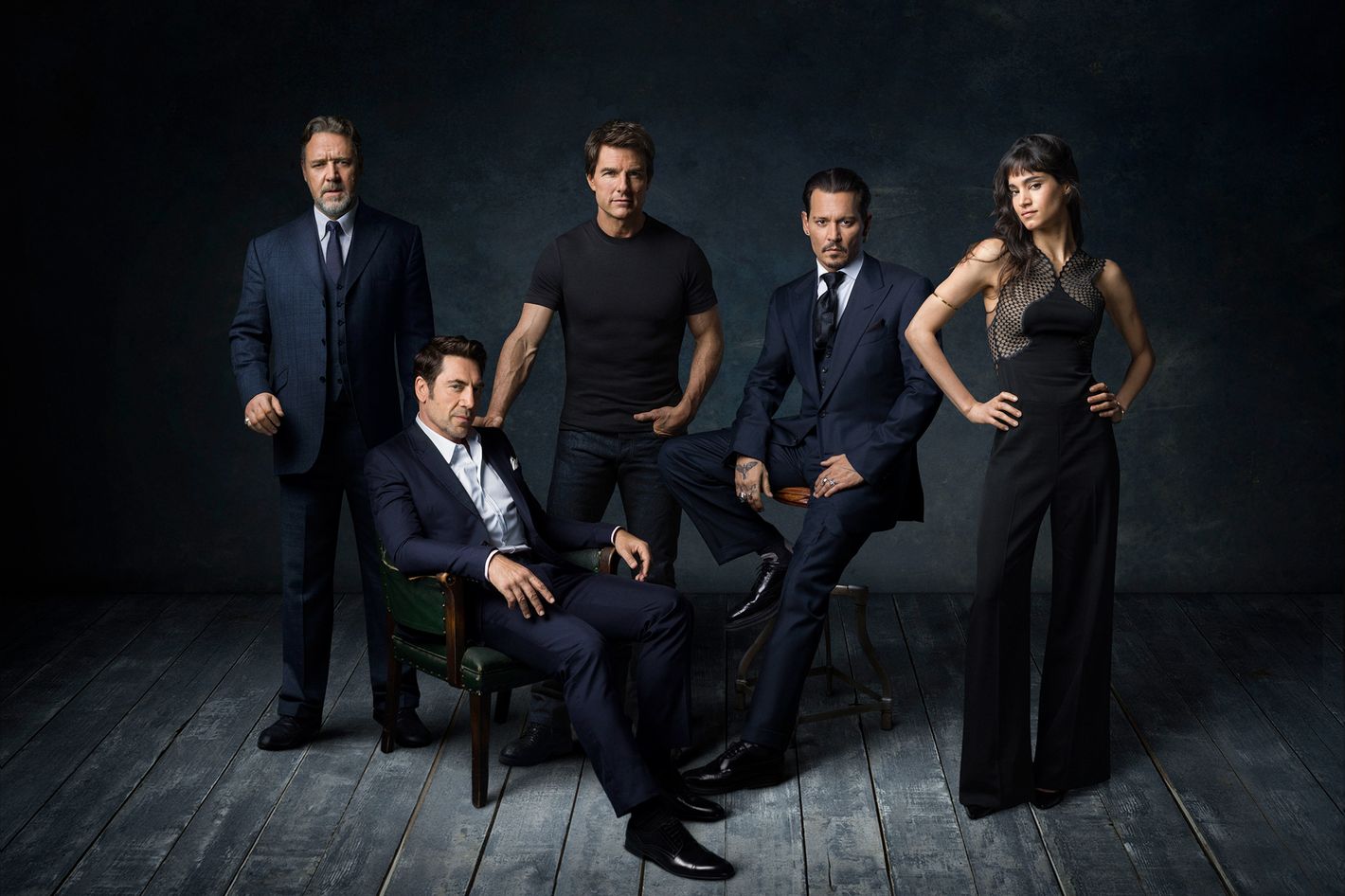
Rather than simply rebooting the Brendan Fraser series, this reboot was supposed to launch the Dark Universe, an interconnected cinematic franchise featuring the studio’s classic monsters. Tom Cruise starred as Nick Morton, Sofia Boutella played the resurrected Princess Ahmanet, and Russell Crowe appeared as Dr Jekyll, essentially wandering in from a future movie to remind everyone that a cinematic universe was being assembled without about as much subtlety as me queueing up a segue. Universal was so confident that it even released this cast photo, which I will always love because Sofia Boutella is just doing an Ashley Cole.
The film received dreadful reviews, currently sitting at 15% on Rotten Tomatoes, and although it made more than $400 million worldwide, its enormous production and marketing costs meant the result was considered a major disappointment. Director Alex Kurtzman later described making it as “probably the biggest failure of my life.” The planned universe rapidly unravelled, and now we’ll never get Frankenstein talking about shawarma with Dracula or whatever.
The videogame should have been disposable tie-in material. Instead, Universal handed the licence to WayForward, the studio behind Shantae, and somehow got The Mummy Demastered.
Released for PC and consoles in October 2017, it’s a 2D Metroidvania that has zero Tom Cruise. You play an anonymous Prodigium soldier exploring interconnected environments, collecting weapons and abilities while hunting Ahmanet’s supernatural forces. It’s a pretty neat Metroidvania.
Its cleverest idea comes when you die. Your soldier becomes a zombie carrying all your equipment, forcing your replacement to hunt down and kill your former character to recover it. It’s essentially a tiny personal boss fight created by your own failure. Imagine if you had to go and beat up the previous work day version of you for getting the accounts wrong.
But Universal did get The Dark Universe practically wrong entirely. Bizarrely, a Metroidvania is the best thing about it.
X-Men Origins: Wolverine
After two brilliant X-Men films and also The Last Stand, Fox decided Wolverine needed an origin story because the money machine needed oiling. X-Men Origins: Wolverine went back to Logan’s childhood, ran through his time fighting alongside Victor Creed and eventually reached the Weapon X programme and that famous adamantium skeleton. Unfortunately, it also gave us Will.i.am teleporting around, which I had almost completely managed to forget and a version of Deadpool with his mouth sewn shut. He’s not Abe. Though maybe he should be.
Things were going wrong even before its 2009 release. An unfinished workprint leaked online roughly a month beforehand, complete with unfinished visual effects, and was downloaded hundreds of thousands of times. The finished film still made around $373 million worldwide, but reviews were dreadful, and Ryan Reynolds spent years joking about what it did to Deadpool before eventually murdering that version of himself in Deadpool 2.
The videogame had a much better idea: just let Wolverine be Wolverine.
We’ll focus on the PS3 and 360 versions today, but basically every version of Raven Software’s X-Men Origins: Wolverine loosely follows the film but expands it with its own characters, locations and enormous action sequences. More importantly, it isn’t afraid of Logan’s abilities. Wolverine slices enemies apart, removes limbs and gets visibly shredded during combat, with wounds exposing his skeleton before his healing factor gradually repairs them in real time.
It’s a wonderfully excessive action game, mixing God of War-style combat with lunging attacks that let Wolverine launch himself across rooms and do that charming stabbing he does. Hugh Jackman and Liev Schreiber even returned to voice Wolverine and Sabretooth, which feels like one of the last major movie tie-ins that had its big names returning.
Interestingly, Raven had already been developing a Wolverine game before being asked to turn it into a movie tie-in, which helps explain why it feels considerably more substantial than the usual licensed rush job.
The film spent two hours trying to explain Wolverine. The game understood him immediately: point him towards some goons and stab.
Star Wars: Episode I – The Phantom Menace
Sixteen years after Return of the Jedi, The Phantom Menace had the unenviable task of bringing Star Wars back to cinemas. The hype was pretty much unprecedented. Fans reportedly bought tickets to other films just to watch the trailer, while merchandise flooded shops months before release. I still find some weird Episode 1 toy or gadget at a charity shop or car boot every month.
George Lucas took audiences back to Anakin Skywalker’s childhood, introduced Darth Maul and somehow devoted a substantial chunk of the first new Star Wars film since 1983 to taxation and trade disputes. You don’t need me to go over its legacy again, but we did get games like the direct PlayStation adaptation, Jedi Power Battles, Battle for Naboo, Obi-Wan, Gungan Frontier and even Yoda’s Challenge.
Yet buried inside the divisive film was one thing almost everyone could agree on: podracing was brilliant.
Star Wars: Episode I Racer arrived on Nintendo 64 and PC in 1999 and transformed podracing into an extraordinarily fast arcade racer. Rather than simply playing as Anakin, you could unlock more than 20 racers, each with different pods and characteristics, then upgrade their engines, cooling, traction and other components using winnings from races.
The sense of speed is still just really, really great. Tracks tear through caves, deserts, ice fields and industrial complexes while pods smash into scenery, overheat and gradually damage individual components. Managing repairs is a cool mechanic too, and it was pretty hard to master.
It was also enormously successful, with the Nintendo 64 version becoming one of the console’s bestselling games, and it later received ports and a modern rerelease. We’re even getting a new game just like it.
The Phantom Menace remains one of the most argued-about Star Wars films ever made. Episode I Racer took its best ten minutes, because you can’t have a game just based around Duel of the Fates, and gave us several hours of driving straight into walls and having a great time.
Ratchet & Clank
People don’t really grasp how weird this one is.
So, turning Ratchet & Clank into a movie sounded straightforward enough. Insomniac’s games already had colourful worlds, ridiculous weapons and enough wisecracking characters to fill an animated film. Maybe not enough minions, but it could still be good right?
Released in 2016, the movie retold the original game’s story, with Ratchet joining the Galactic Rangers alongside Clank to stop Chairman Drek and the Blarg from destroying planets.
Unfortunately, removing the bit where you actually play Ratchet & Clank exposed some problems. Reviews hammered its generic plot and humour, leaving it with a real clanker of 22% on Rotten Tomatoes. It also bombed commercially, earning roughly $14 million worldwide against a reported $20 million production budget, which is very little really. A planned Sly Cooper movie from the same studio subsequently disappeared into development limbo.
But alongside the movie came a PS4 game based on the movie, which was based on the original PS2 game. Even Insomniac embraced the daftness, describing it as “the game, based on the movie, based on the game.”
Rather than simply remastering the 2002 original, Ratchet & Clank rebuilt it with modern controls, drastically upgraded visuals, new planets and weapons, while remixing the story around Captain Qwark’s extremely unreliable narration. It even incorporates scenes taken directly from the movie so…you don’t even really need to watch it?
More importantly, the fundamental Ratchet & Clank formula remained just very fun. It looks really great with plenty of vibrancy, has way more personality than the movie, and weapons evolve as you use them. The Pixelizer turns enemies into pixelated versions of themselves, while the returning Sheepinator does exactly what its name promises and no, it doesn’t make you Welsh, before you start.
Ratchet and Clank the game based on the movie based on the game reviewed considerably better than the film and became one of the PS4’s fastest-selling entries in the series.
So Ratchet & Clank produced the unusual situation where a great game became a terrible movie, which was then turned back into a great game, like some kind of quality control ouroboros. Anyway, how is your sex life?
The Room
We’ve spent this entire episode looking at terrible films that somehow received amazing videogames, so there was really only one place we could finish. With the greatest movie of all time.
Tommy Wiseau’s The Room arrived in 2003 after Wiseau reportedly poured around $6 million of his own mysteriously sourced money into writing, directing, producing, and starring in it. The result is an unintentional romantic drama comedy about banker Johnny discovering that his fiancée Lisa is having an affair with his best friend Mark, and it’s tearing him apart a bit. People play American football in tuxedos, characters announce they have breast cancer before essentially forgetting about it, and everybody forgets how birds sound.
Its original Los Angeles theatrical run was a disaster, but The Room gradually became one of cinema’s great cult phenomena. Midnight screenings encouraged audiences to throw plastic spoons whenever framed spoon photographs appeared, quote the dialogue and greet Wiseau’s inexplicable establishing shots of San Francisco with cries of “Meanwhile, in San Francisco!”
Because the likes of EA are absolute cowards and frauds, there was no official videogame adaptation. So in 2010, Newgrounds users made one anyway.
The Room Tribute was created by Tom Fulp, Jeff Bandelin and Chris O’Neill as a free Flash adventure game, recreating the film as a wonderfully elaborate 16-bit-style RPG/adventure. You control Johnny, wandering around San Francisco, visiting locations from the movie and completing mundane tasks while the game gradually retells its increasingly ridiculous plot.
And it really commits to it. Rather than simply making a five-minute joke, The Room Tribute recreates scenes, dialogue and locations while expanding the bizarre universe around them. There are side activities, secrets, an explorable city and additional material that gleefully fills holes the film never bothered explaining.
It even gives Johnny a proper daily routine, meaning you’re effectively role-playing as Tommy Wiseau pretending to be a normal human being. And then aliens happen. A wonderful slice of 2000s mick-taking with love that we don’t get enough of now.
READ NEXT: GTA’s Different Universes Explained: 2D, 3D and HD
Some of the coverage you find on Cultured Vultures contains affiliate links, which provide us with small commissions based on purchases made from visiting our site.