
The PS1 provided a watershed moment for gaming, as not only did it break into the mainstream, but it was also huge in the counter-culture too. By firing on all cylinders and markets, the PS1 was able to reach millions upon millions of players, players who bought games in previously unseen numbers. Here are the best selling PS1 games that no doubt you all bought at least one of. Unless you had a chipped PS1, in which case: straight to jail.
20. Tomb Raider: The Last Revelation
It’s honestly a bit daft how much Tomb Raider we got on the original PlayStation. The Last Revelation was already the fourth game in four years, and as we’ll see a little later, Lara isn’t remotely finished with this list. Core Design essentially turned Tomb Raider into an annual event, but instead of you chasing a ball like in FIFA, you were chasing some very specific cheat codes that had become playground legend. If you know, you know.
Released in 1999, The Last Revelation tried to recapture some of the original’s tomb-raiding focus. Almost the entire adventure takes place in Egypt, while the story famously ends with Lara apparently being killed beneath a collapsing pyramid.
But did you know that that wasn’t just a dramatic cliffhanger? Or a pyramid…faller? Core Design were exhausted from making Tomb Raider games and writer Andrew Sandham later revealed that killing Lara was essentially an attempt to escape the series. Eidos obviously had other ideas, and the pretty meh Chronicles came out just a year later.
The Last Revelation was nevertheless well received, though there was definitely some fatigue creeping in. And with around 4.7 million copies sold, killing Lara Croft was always going to be easier than killing Tomb Raider. They should’ve just released Angel of Darkness sooner.
19. Crash Team Racing
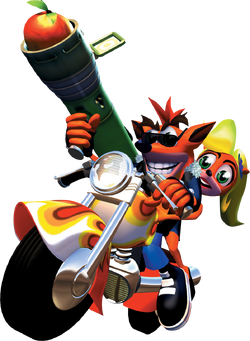
When your biggest rival has already perfected kart racing, making your own can look like an act of pure arrogance. Or you could just be Garfield as well. Fortunately for Naughty Dog, it turned out they were good enough to back it up. Rather than producing a cheap mascot spin-off, Crash Team Racing became one of the few kart racers that could genuinely stand alongside Mario Kart. Or sit alongside, cos car? Whatever.
Using characters and locations from the Crash Bandicoot series, the game paired tight handling with a super fun boost system. Power-sliding not only allowed you to take corners more quickly, but rewarded precision and practice, giving experienced players enormous room to improve. It also featured a fully fledged Adventure Mode, complete with boss races and exploration, offering far more single-player content than most kart racers at the time. Who knows where they got their inspiration from really.
Crash Team Racing sold around 4.8 million copies on the original PlayStation, making it one of the console’s biggest exclusives despite arriving near the end of its life. More impressively, it is still a great laugh now.. Plenty of players still argue it’s the finest kart racer ever made, and the hugely successful 2019 remake suggested there are millions of people still willing to die on that hill. I would not die for Crash Bandicoot myself and preferably not on a hill. Calves can’t take it.
18. Spyro the Dragon
Instead of saving the world through an almost toxic level of attitude and also a 9MM Beretta, Insomniac’s little purple dragon relied on colourful worlds, satisfying exploration and setting absolutely everything on fire like Keith Flint after wandering onto a Dreamworks production.
Developed by Insomniac Games, Spyro the Dragon focused less on punishing platforming and more on encouraging players to explore every corner of its sprawling levels. Hidden gems, rescued dragons and secret areas rewarded curiosity, while Spyro’s charge attack and gliding abilities gave the game a sense of freedom that many platformers of the era lacked. Combined with a soundtrack by Stewart Copeland, it became one of the PlayStation’s cosiest and best platformers without also ever being super easy.
Spyro the Dragon went on to sell around 4.8 million copies, firmly establishing something a bit different to Crash and Mario. The series would continue to evolve with two excellent sequels, while the successful Spyro Reignited Trilogy introduced a whole new generation to one of the PlayStation’s most charming stars. Apparently, we’re also getting a new one! I trust modern Xbox about as much as I trust Albert Wesker, mind you.
17. Resident Evil
Sorry to disappoint anyone who came here expecting Countdown Vampires. We’ll save the greatest horror game ever made for another list. Instead, we’re stuck with Resident Evil, Capcom’s tiny little franchise that only went on to redefine survival horror and sell millions upon millions of copies. Released in 1996, it locked players inside the Spencer Mansion with limited ammunition, awkward controls and the constant feeling that opening that door was a terrible idea.
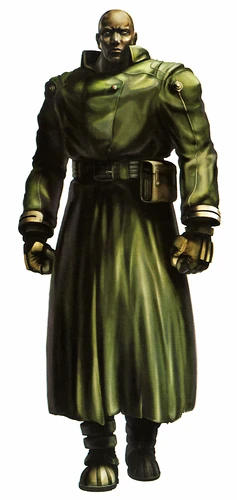
Seems like a wise and likable guy.
It’s almost impossible to mention the game without sandwiching in a reference to the cheese. Somehow, though, all that camp helped give it a cinematic identity unlike almost anything else on the PlayStation. Its mix of puzzle solving, resource management and exploration established the survival horror formula that countless games would borrow over the following decades, and even like 50 times on the PS1 itself.
Resident Evil sold around 5.1 million copies on the original PlayStation, launching one of gaming’s most successful franchises. Capcom has since revisited it several times, but whether it’s the 1996 release or the superb 2002 remake, it’s difficult to overstate just how much this game changed horror. Still, no Countdown Vampires.
16. Final Fantasy IX
It says a lot about the longevity of the original PlayStation that one of its best-selling games arrived after the PlayStation 2 had already launched. While much of the industry was busy looking ahead to Sony’s new console, Square gave the original PlayStation one final send-off with a role-playing game that deliberately looked back instead of forward.
Unlike the more futuristic worlds of Final Fantasy VII and VIII, Final Fantasy IX embraced the series’ medieval fantasy roots and also proved that jump rope is nonsense. Players followed Zidane and a memorable cast of allies on a globe-spanning adventure filled with kingdoms, airships and Black Mages, while the return of classic jobs, crystals and whimsical character designs made it feel like a celebration of everything that had come before. It was a fitting farewell to both the PlayStation and Square’s incredible run on the console.
Despite launching in the shadow of the PS2, Final Fantasy IX still sold around 5.5 million copies worldwide. It may not have reached the commercial heights of its two predecessors, but many long-time fans consider it the best game in the series, and it remains one of the strongest arguments for ending a console generation on a high rather than rushing to the next one. But then Square released Final Fantasy X less than two years later. No idea how they did that still.
15. Tekken 2
First of all, if you choose Law: you are a coward and a fraud.
Now that that’s dealt with:
For a series that’s now synonymous with the PlayStation brand, it’s easy to forget that Tekken was still finding its feet in the mid-1990s. The original game had been a success, but Tekken 2 was the sequel that turned Namco’s arcade fighter into one of the biggest names in the genre.
Tekken 2 expanded the roster to more than 20 playable characters, each with their own distinctive fighting style and surprisingly deep move lists. Whether you picked Heihachi, Paul, King, or Wang, the game rewarded practice while still letting you pick up a controller and batter mates. The smooth animation, responsive controls and flashy presentation made it an easy game to pick up at a friend’s house, but one that could keep dedicated players occupied for months.
Selling around 5.7 million copies, Tekken 2 helped cement the PlayStation as the home of 3D fighting games before its successor raised the bar even higher. And you know what: I’ll still beat you as Paul even today.
14. Resident Evil 2
Turns out blowing up one mansion wasn’t enough. You may as well do a city while you’re at it.
Resident Evil 2 swapped the claustrophobic corridors of the Spencer Estate for the streets of Raccoon City, proving that an entire city overrun by zombies and terrible fashion sense could feel every bit as terrifying as a single haunted house.
Developed by Capcom, the sequel built on everything that made the original a hit. Players could experience the story through either rookie police officer Leon S. Kennedy or Chris’ sister Claire Redfield, with the innovative ‘Zapping System’ allowing decisions made in one campaign to affect the other. Raccoon City felt like a place collapsing in real time, while monsters like the Licker and the relentless Tyrant kept the tension high.
Resident Evil 2 sold around 5.8 million copies on the original PlayStation, and it’s still immensely replayable today. Many fans still regard it as the series’ finest entry, and its acclaimed 2019 remake showed that returning to Raccoon City was just as compelling more than 20 years later.
13. Tomb Raider III
By the third game, Lara Croft had gone from breakout star to a console mainstay. Tomb Raider III arrived in 1998 with very little interest in slowing down, sending players from the jungles of India to London rooftops, Area 51 and even Antarctica in pursuit of four mysterious artefacts.
Developed once again by Core Design, with the barrel getting closer and closer to their forehead, the game pushed the original PlayStation about as hard as the series ever had. Levels were larger, darker and more complicated, with multiple routes, new vehicles and more emphasis on combat than before. That ambition came at a cost, though, because Tomb Raider III also has a reputation for being absolutely brutal. Traps were everywhere, some objectives were obscure, and the original save system could be a bit too much of a bugger depending on the version you played.
None of that stopped it selling around 5.9 million copies. Lara was simply too big to fail at this point, and even a noticeably harsher third outing still became one of the best-selling games on the entire console. Taphophobiacs, I am sorry for doing this to you.
12. Tomb Raider II
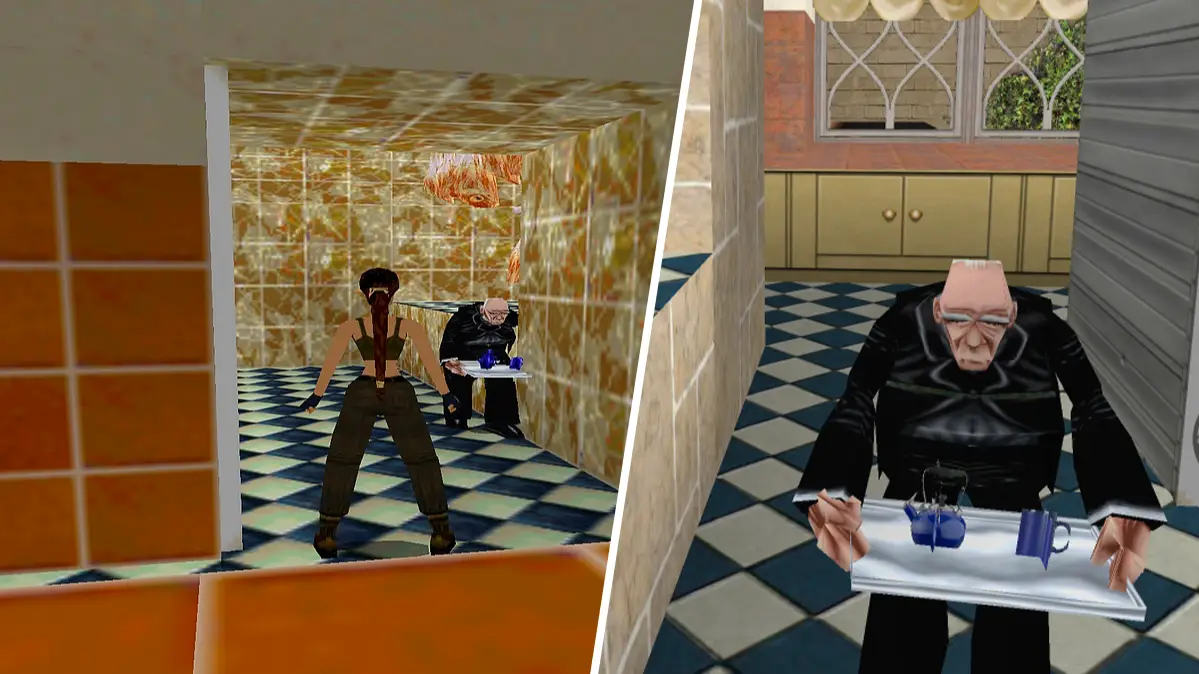
The original made Lara Croft a star. Tomb Raider II made her an icon. Well, the Lucozade might have played a part too. It also introduced one of gaming’s greatest traditions: locking Winston the butler in the freezer and leaving him there for absolutely no reason. Funny how we all just decided to just bully this little human turtle man.
Released just a year after the original, Core Design expanded the formula in almost every direction. This time Lara travelled from the Great Wall of China to the canals of Venice and the wreck of the RMS Maria Doria in search of a mythical Dagge. Combat played a much larger role than before, with more human enemies, bigger set pieces and even vehicles, while the increased variety of locations gave the sequel a more cinematic feel than its predecessor.
Tomb Raider II went on to sell around 6.8 million copies, proving Lara Croft wasn’t a one-hit wonder. Many fans still regard it as the definitive classic of the original series, striking the best balance between exploration, action and puzzle solving. It also cemented Lara as one of the defining faces of the PlayStation era, ensuring Core Design would be making Tomb Raider games every year for the foreseeable future until they eventually burnt out and collapsed. Yay!
11. Crash Bandicoot
It’s easy to forget there was a time when the PlayStation didn’t have a mascot. Well, unless you count that bizarre purple polygon head Sony briefly tried to make happen. Fortunately, along came a perhaps mentally deficient orange marsupial in a pair of shorts, and the PlayStation finally had a character capable of standing toe-to-toe with Mario and Sonic.
Developed by Naughty Dog, Crash Bandicoot funnelled players towards or away from the camera, allowing the developers to squeeze far more detail out of the PlayStation than many believed possible. The result was a game that looked mind-blowingly vivid in 1996, backed up by tight controls, memorable boss fights and some of the most infuriating bridge levels ever committed to a memory card.
Crash Bandicoot sold around 6.8 million copies, instantly establishing the weird little guy and laying the foundations for one of the PlayStation’s most important franchises. Two even bigger sequels would soon follow, but without this breakthrough success, the original PlayStation might never have found the character that came to define its early years. Right, I’ve been trying to ration my segues here.
10. Metal Gear Solid
Stealth games existed long before Metal Gear Solid, but this was the game that convinced millions of players that avoiding a fight could be far more exciting than winning one. Also, sometimes you just need to get urinated on to get ahead in life.
Developed by Konami and directed by Hideo Kojima, Metal Gear Solid put players in the role of Solid Snake as he infiltrated the nuclear weapons facility on Shadow Moses Island. Sneaking past guards, hiding in cardboard boxes and repeatedly running its lasers made it unlike almost anything else on the PlayStation. Then there were the unforgettable boss battles, from Psycho Mantis reading your memory card to Sniper Wolf’s emotional showdown, all wrapped up in lengthy cutscenes that pushed storytelling far beyond what most players expected from games in 1998.
Selling around 7 million copies, Metal Gear Solid transformed a niche Japanese series into a global phenomenon and helped establish cinematic storytelling as one of gaming’s biggest selling points.
9. Tomb Raider
Are you Myanmar in the 1800s and thoroughly sick of Brits yet?
The original Tomb Raider introduced players to a style of adventure that felt unlike anything else on consoles, blending exploration, platforming and puzzle solving into vast 3D environments that seemed enormous at the time.
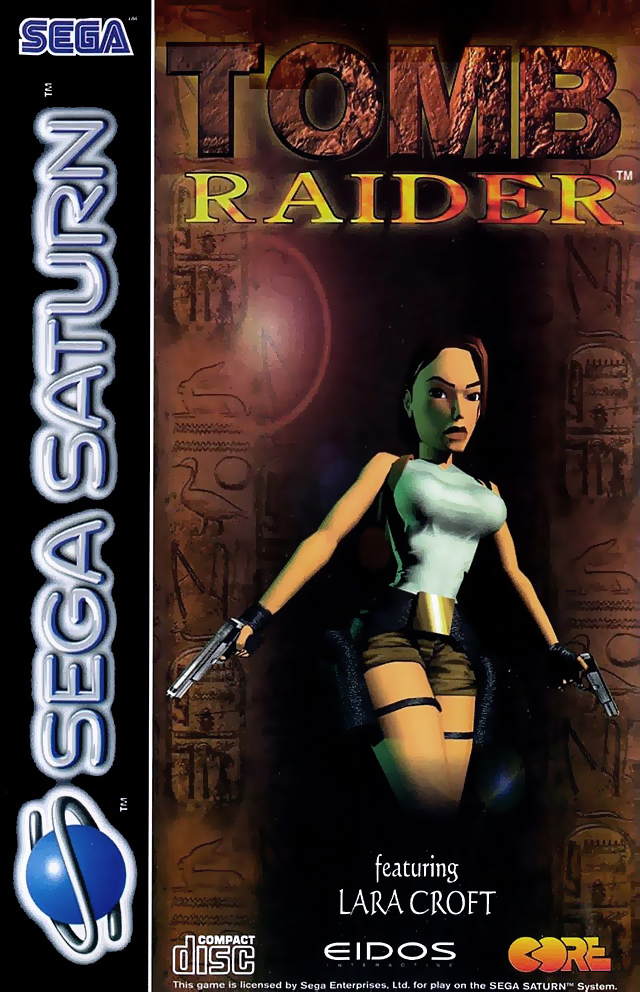
Developed by Core Design, Tomb Raider sent Lara across Peru, Greece, Egypt and Atlantis in search of the mysterious Scion. Combat certainly played a role, but the real appeal came from navigating elaborate tombs packed with hidden switches, impossible jumps and environmental puzzles. Lara herself quickly became a cultural behemoth and helped establish the PlayStation as the cool place to play. Did you know she went to the Saturn first though? Now you do. That’s how knowledge works!
Selling around 7.1 million copies, Tomb Raider became one of the defining games of the original PlayStation and transformed Lara Croft into one of entertainment’s biggest icons. It also sparked one of the industry’s earliest blockbuster franchises, even if Core Design probably didn’t realise quite how many annual sequels they were signing up for.
8. Crash Bandicoot: Warped
By the time Crash Bandicoot: Warped arrived, Naughty Dog had figured out this whole mascot platformer thing. Rather than simply making Crash bigger, the studio threw him through time instead, proving that if a formula isn’t broken, you may as well add dinosaurs, medieval knights and a plot to kill Hitler. What do you mean? Missed opportunity.
Warped built on everything the previous two games had established. Alongside the familiar platforming, players found themselves doing what your dad did after the divorce, piloting planes, racing jet skis and running towards the camera away from something. It could have felt like a collection of gimmicks, but thanks to Naughty Dog’s polish, the variety kept the adventure fresh without losing sight of what made Crash so enjoyable in the first place. It also looked super good for a 1998 PlayStation game.
Selling around 7.13 million copies, Warped became another enormous success, but it actually fell slightly short of a game we’ll get to in about 19 seconds. Still, it rounded off one of the strongest platforming trilogies of the era and cemented Crash as one of the most lovable gingers in the world. He’ll be right back.
7. Crash Bandicoot 2: Cortex Strikes Back
Crash Bandicoot 2 took one look at the original, ironed out almost every complaint players had and made itself the perfect platformer sequel.
Cortex Strikes Back introduced the Warp Room hub, making progression far less rigid while encouraging players to revisit earlier levels to uncover hidden paths and secret gems. Crash himself felt more responsive too, with new moves like the belly flop and slide adding extra depth to the platforming. The visuals took another leap forward, the level design became more inventive, and the whole game just felt way, way better. Far less dying because Crash’s big toe glanced the corner of a ledge.
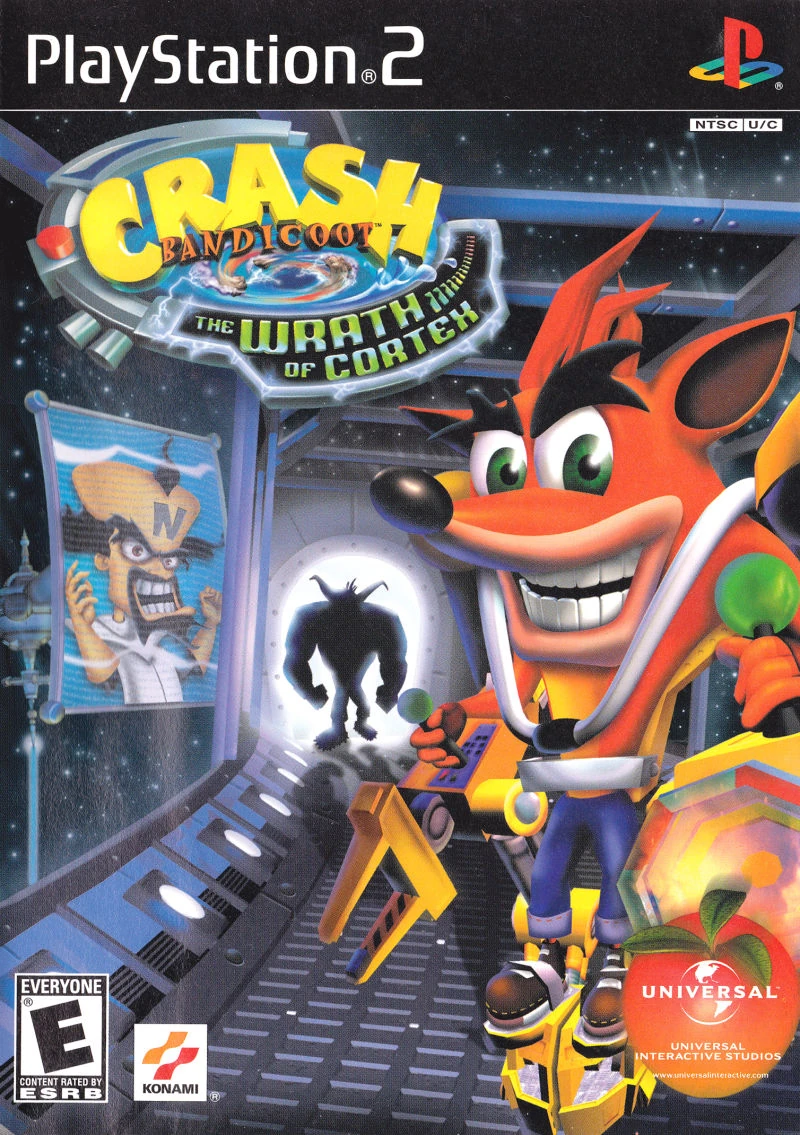
Selling around 7.58 million copies, Crash Bandicoot 2 was actually the best-selling Crash game on the original PlayStation, edging out Warped by roughly 450,000 units. And then Crash would continue his peak into the next generation and actually I just lied. Big time lied. Have you guys ever seen the South Korean cover art by the way? Stunning.
6. Harry Potter and the Philosopher’s Stone
Movie tie-ins aren’t exactly known for appearing on lists like this. But when it’s a licensed game about a boy who waves a stick and shouts Latin at things but not his parents, it should be no surprise.
Developed by Argonaut Games, who you may remember also did Alien Resurrection, Harry Potter and the Philosopher’s Stone, was designed with younger players in mind, blending light platforming, simple puzzles and spell-based exploration across a surprisingly faithful recreation of Hogwarts. Players attended lessons to unlock new spells, searched for Bertie Bott’s Every Flavour Beans and Chocolate Frog Cards, and relived the major events of the first book and film. It wasn’t especially challenging, but it captured the sense of wonder surrounding the wizarding world at exactly the right moment.
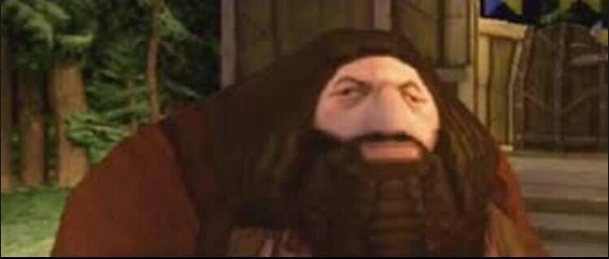
Selling around 8 million copies, it became the most successful licensed games ever released on the original PlayStation. Of course, it helped that Harry Potter had become a genuine cultural phenomenon by 2001, with the books dominating bestseller lists and the first film breaking box office records. Worth playing today if only for this fella.
5. Tekken 3
If you’ve been on the channel before, you‘ll know that Tekken 3 working this well on the PlayStation was what industry analysts call “nonsense warlock doings”. Namco’s arcade original ran on considerably more powerful System 12 hardware, yet the home conversion somehow retained basically the whole thing. There were obvious compromises, particularly to the backgrounds, but when the result was this good, nobody particularly cared.
Tekken 3 refined virtually every aspect of its predecessors. Movement became more fluid, while the roster introduced future fan favourites characters. Every character felt distinct enough to encourage endless experimentation, yet it remained accessible enough that someone could pick up a controller while drunk, mash the buttons, and batter you.
Selling around 8.3 million copies, Tekken 3 became the best-selling fighting game on the original PlayStation and is still regularly mentioned among the genre’s greatest. More than 25 years later, plenty of fans would argue the series has never quite topped it, and they may have a point.
4. Final Fantasy VIII
Following up Final Fantasy VII might have been one of the least appealing jobs in gaming. Square could have played it safe, but instead delivered something really quite different with one of the most divisive progression systems the series has ever seen.
Final Fantasy VIII follows Squall Leonhart, a student at the elite SeeD mercenary academy, as a local conflict gradually spirals into a story involving sorceresses, time compression and one of gaming’s most debated romances. The Junction system allowed players to customise characters by linking magic to their statistics rather than simply levelling up, while lavish CGI cutscenes once again pushed the original PlayStation well beyond what many thought possible.
Selling around 8.6 million copies, Final Fantasy VIII proved the extraordinary success of its predecessor was no fluke. While its presentation, soundtrack and ambition remain widely admired, the game’s unconventional Junction system has become increasingly polarising over the years, leaving it as one of the most hotly debated entries in the entire Final Fantasy series. What do you think? Let us know in the comments.
3. Gran Turismo 2
Gran Turismo 2 wanting you to earn your driving licence sounds like the least exciting sales pitch imaginable, yet millions of PlayStation owners couldn’t get enough of it.
Gran Turismo 2 took everything that ma de the original a phenomenon and expanded it dramatically. The garage swelled to more than 600 cars, dozens of manufacturers were represented and the number of events exploded, giving players hundreds of hours of content. Simulation Mode returned alongside Arcade Mode, allowing casual players to race immediately while enthusiasts painstakingly upgraded their dream cars and worked through licence tests to unlock tougher championships.
Selling around 9.4 million copies, Gran Turismo 2 somehow followed one of the best-selling games of all time with an even bigger, more ambitious sequel. Despite a notoriously rushed development that resulted in a handful of bugs and cut content, it remains one of the defining racing games of its era. But does it have snowboarding?
2. Final Fantasy VII
For many players outside Japan, Final Fantasy VII wasn’t just their first Final Fantasy. It was their first Japanese role-playing game, full stop. At a time when the genre was still considered fairly niche in the West, Square turned a sprawling, turn-based RPG about eco-terrorism, giant swords and existential dread into one of the biggest games on the planet.
Released in 1997, Final Fantasy VII followed Cloud Strife as he joined the rebel group AVALANCHE in their fight against the Shinra Electric Power Company, only for the story to go coo-coo bananas, as they say. Lavish FMVs, memorable characters and one of gaming’s most shocking plot twists helped it become a genuine cultural powerhouse, while the cinematic presentation showed what the PlayStation’s CD format could achieve in a way few games had before.
Selling just over 10 million copies, Final Fantasy VII transformed Square into a household name outside Japan and played a huge role in bringing JRPGs into the mainstream. Nearly 30 years later, it remains one of the most influential games ever made. But there’s not nearly enough cars in it.
1. Gran Turismo
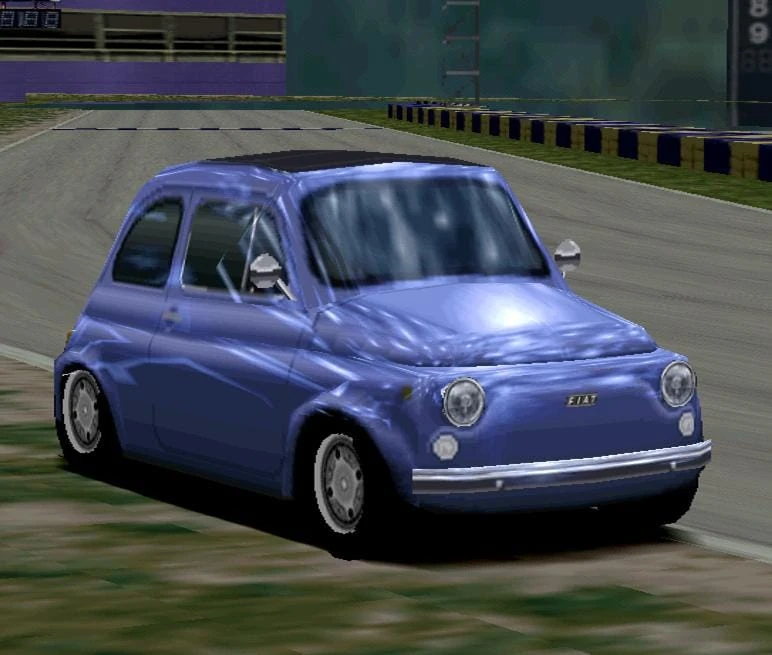
The best-selling game on the original PlayStation wasn’t about saving the world, fighting zombies or stopping an evil corporation. It was about driving a car you could never afford. And also a FIAT 500.
Developed by Polyphony Digital under the direction of Kazunori Yamauchi, Gran Turismo set a new benchmark for console racing games. Its meticulous attention to detail, realistic handling and huge selection of licensed cars made it feel worlds apart from the arcade racers dominating the genre at the time. The combination of licence tests, championships, used car dealerships and extensive vehicle upgrades gave players a compelling sense of progression that kept them hooked for months, if not years.
Selling around 10.9 million copies, Gran Turismo became one of Sony’s defining exclusives. It proved there was an enormous audience for realistic driving simulations on consoles, launching a franchise that remains one of PlayStation’s biggest success stories.
READ NEXT: 100 Best PS1 Games of All Time
Some of the coverage you find on Cultured Vultures contains affiliate links, which provide us with small commissions based on purchases made from visiting our site.