

The Super Nintendo might be the most literal console name ever. Nintendo made it, and it was pretty super at doing games. It was also pretty super at doing games it really had no right to even try, what with it basically being 16-bit tech from 1990 and all. We’ve already talked about SNES games that pushed the console to its limit, but here are just some SNES ports that are simply magic.
Sim City
Say what you want about Will Wright’s Sim series. No, please do. Especially these days as Sim City has been put out to pasture while The Sims 4 is a barely functioning mess that still insists on nickel and dime’ing its player base. What’s that, I can buy a lamp for £54? Sign me up!
But back in the day, these were crazy ambitious games. Even for someone playing on PC during 1989, the idea of a game about managing an entire city’s infrastructure felt like an alien concept. It’s why Sim City and Will Wright specifically struggled to find a publisher for a game we now know to be the genesis of a billion dollar juggernaut. Ludicrous in hindsight, but Sim City was redeemed when it launched on PC and a wave of positive press launched it into best seller lists, so much so that even Nintendo came knocking, sliding a million dollar check across the table in order to secure the rights.
Nintendo would work with developers Maxis to port the game to SNES, and while the SNES’ library did have other simulation games by the time the console reached the end of its life, what makes Sim City feel impossible is how much was added.
The SNES version of Sim City offers the same gameplay and even single player scenarios as the PC release, along with two new ones, but adds other features too. Special buildings like casinos, amusement parks and expo centers could be unlocked, while the monster/kaiju catastrophe was replaced with Bowser coming in and wrecking the place.
As for a really impossible port though? They tried making this for the NES before it was cancelled. Fortunately, prototypes have been found, showcasing what a properly downgraded Sim City we could’ve been doomed to. Wait, didn’t I use that segue already?
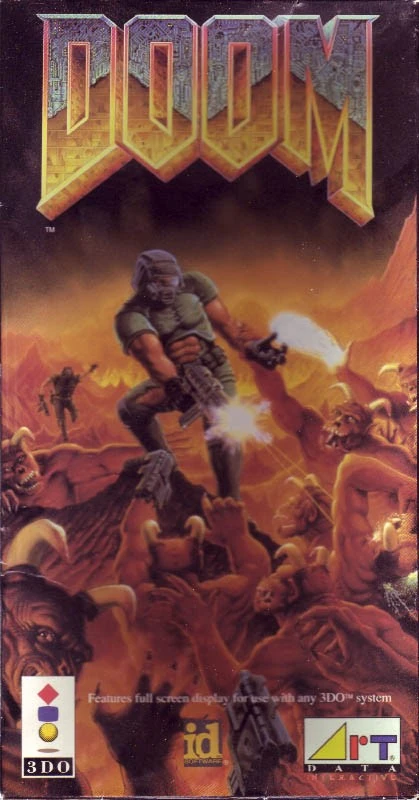
DOOM
The modern age might have distorted the perspective for many on just how easy it is to port DOOM to literally anything else. Once you’ve seen DOOM run on things like an air fryer, a pregnancy test, a calculator or even E.Coli cells, a SNES port of one of the most iconic FPS games ever made doesn’t seem all that impossible.
Back in 1995 though, when developers were frantically trying to port DOOM to the Super Nintendo, it sure felt a lot more impossible. In fact, DOOM was impossible, as in order for the game to run on the SNES, the developers needed to upgrade the cartridge, condense the experience and, perhaps most notably, completely rewrite the engine to work on console.
Instead of working off of the original DOOM engine, the SNES version of the game uses a custom engine known as the Reality Engine designed to emulate the look and feel of DOOM but within the constraints of the SNES. Said constraints still weren’t enough to contain the action of DOOM, so the custom red cartridges of DOOM on the SNES needed to be bolstered with the Super FX 2 chip in order to run the game decently.
Even then though, there were still a few sacrifices which needed to be made by the primary developer Randy Linden, like removing a couple of levels and dialling back on the graphics, but the SNES port is a huge improvement over other console ports. Get back to Hell please. The Cyberdemon and Spiderdemon monsters were here, unlike in other versions, and multiplayer was even enabled through an XBAND modem. Impressive stuff.
Street Fighter Alpha 2
A lot has been said by other outlets, channels and more about how much of a herculean task Capcom undertook bringing Street Fighter 2 to the SNES, but they clearly got it down to a fine science. You see, there were three versions of the game throughout the SNES’ lifespan.
Their real challenge came when trying to port a PlayStation and SEGA Saturn game in Street Fighter Alpha 2 to the SNES. No other words for it than sheer lunacy to be honest. What’s even worse is that Capcom really weren’t rewarded for their massive efforts. According to Polygon’s oral history of the SF Alpha series, Alpha 2 undersold and led to Capcom selling cartridges in bulk outside of the United States at a huge loss just to remove surplus inventory from their warehouses.
Porting Alpha 2 to the SNES from PlayStation and the SEGA Saturn felt impossible because Capcom were converting a game designed to be printed on discs, and retrofitted it for a cartridge console at the end of its tenure. The solution, like a bunch of other games on the SNES, was to use enhancement chips within the cartridge to do the heavy lifting. In this instance, it was the S-DD1, a chip designed by Nintendo for games that specifically utilise massive amounts of sprite data. Only Street Fighter Alpha 2 and Star Ocean would use this chip, making it quite a unique bit of technology.
But even that still wasn’t enough to create a perfect port. Alpha 2 is notorious for its loading times for every round of a fight as it loads new data in. Still, for something that probably shouldn’t have been possible, this is remarkable stuff.
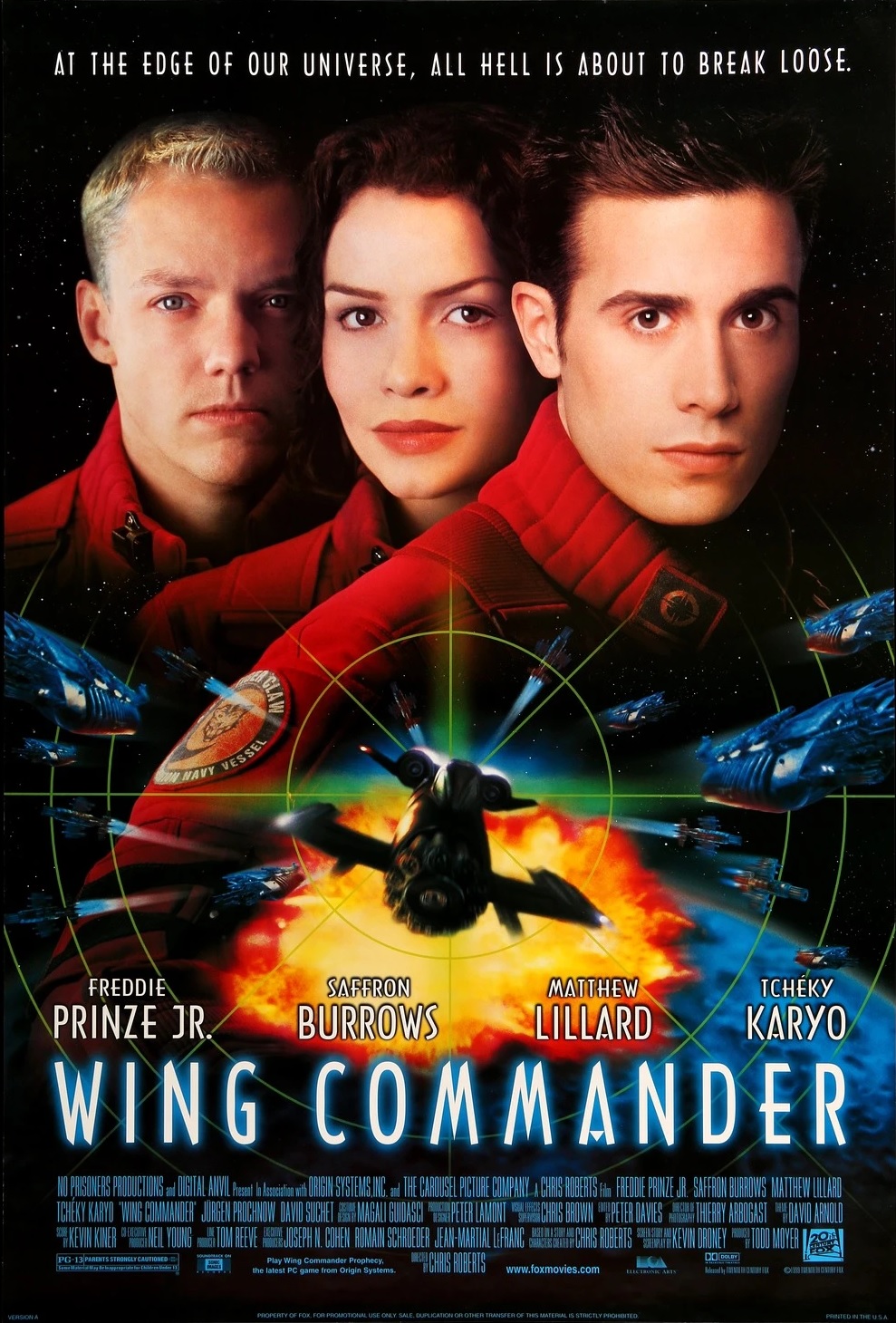
Wing Commander
A series perhaps best known these days for being ruined by Freddie Prinze Junior, at one point Wing Commander was the be all and end all of space sim exploration games, earning huge appeal on PC in the process.
Naturally, being a cool space dude is a fantasy most of us have, not just PC gamers, so Origin Systems had to port the game to multiple consoles, including the SNES. With a lot of complex systems, including the game’s open-ended, performance based mission structure that determined the path your campaign took, porting the entirety of this game onto one cartridge feels like it should just be impossible, but what’s even more remarkable is how Origin didn’t even need an enhancement chip to pull it off.
Wing Commander on the SNES is, ostensibly, the same game as the PC version. Some of the textures and the like are a bit downgraded, and the amount of ships you can actually see on screen at any one time has been scaled down so that the SNES doesn’t pop your cartridge out the console like the world’s most aggressive toaster, along with some other minor differences, but for the most part, it’s the same game. What would’ve made Wing Commander a truly impossible port, and is likely the reason why many would consider the PC version the superior one, is that converting the controls to console made the game feel a bit clunkier.
The follow-up, Secret Missions, a standalone SNES release of the PC DLC pack, tightened the controls a bit, but removed the freeflowing mission tree, so it’s much less of a killer experience.
Killer Instinct
If you wanted to put together a list of development teams who were able to make the most out of the SNES, Rare has to be near the top of that list. Just look at how timeless the graphics are for something like Donkey Kong Country.
Compared to some other SNES games, DKC still looks phenomenal, and Rare would use the same pre-rendered sprites of 3D models to create the characters of Killer Instinct, which became a huge hit in arcades back in 1994. Here’s the issue that Rare ran into though: Killer Instinct was initially billed to be part of the N64’s North American launch catalogue, with the arcade release’s attract mode even stating “available for your home in 1995 only on Nintendo Ultra 64”.
Rare and Nintendo had to pivot, releasing KI on the SNES in ‘95 instead.
Considering KI was developed for both arcades and the more powerful N64, stuffing the game onto an SNES cartridge would be no small feat. Shockingly, the decision was made not to use any enhancement chips, with the SNES version taking huge hits across the board when it comes to presentation. The graphics simply weren’t as good, the sprites were made much smaller and the stages, which included 3D panning effects that were revolutionary at the time, were simplified into 2D panning with parallax scrolling and usage of the raster effect to create a fake-3D result.
The victory FMVs were removed, along with most of the voice lines and samples, and even the music was just considered worse. Still, they managed to achieve something that should’ve been impossible and it’s still a fun game. It’s not out of this world. This is.
Another World/Out Of This World
One of those impossible ports that we actually have a detailed breakdown on how the impossible was made possible, Another World (or Out Of This World in North America) blew the collective socks off people when it launched on the Atari ST and Amiga back in November 1991.
More console releases were about as inevitable as you clicking the like button like a good little sub… scriber, with a Super Nintendo among the various versions that ended up being created in the years since. Considering it’s a cinematic platformer with some light shooter elements, Another World should’ve easily fit among the rest of the SNES’ library, but the actual development of the SNES version is the source of one of gaming’s greatest moments of developer ingenuity.
The tale, as told by Interplay programmer Rebecca Heineman (rest in peace) in an interview with GrokCode (NOT THAT ONE), is that Interplay didn’t want to shell out for a Super FX chip that would make porting Another World to the SNES a doddle. They wouldn’t even pay for Static RAM or a Fast ROM, which led to plenty of frustration. Heineman, who was the lead programmer for the SNES and Apple IIGS ports, took that frustration and used it as motivation:
“I shoved my block move code into the DMA registers and use it as RAM running at 3.6 MHz. It worked. I got fast block moves on slow cartridges and made a game using polygons working on a 65816 with pure software rendering.”
With that, the artificially impossible became possible, and the game would come to the SNES with some fantastic reviews.
Samurai Shodown
The NEO GEO is potentially the most impressive console of the fourth generation. The SNK beast was a console able to replicate arcade perfect experiences in the comfort of your own home. Granted, that’s mostly because SNK took their top of the line arcade boards, shoved them into a console and said “that’ll do donkey”, with the NEO GEO having a price that matched the components involved of $649.99. You thought $800 for a PS5 Pro was ludicrous, a NEO GEO adjusted for inflation in 2025 costs $1540. That’s at least two packs of Ascended Heroes.
All of this pre-amble is to say that if SNK wanted the home console market to actually play their games, such as the first Samurai Shodown, they’d need to port them to other, less powerful consoles, and the SNES was an ideal candidate.
While not the only one to receive a console port, the SNES version happened to be the most feature complete of the bunch, including all the stages and characters unlike the Genesis/Mega Drive version. Apparently, Earthquake’s girthy frame was too much for Sega’s console.
Most of the presentation is intact too, from character portraits to arcade endings, but what both versions lacked is the trademark SamSho dynamic zoom when fighters moved from close to far range. The SNES opted for a far camera with less detail, while the Genesis version sacrificed plenty of things for a close camera and more detail. Unfortunately, the SNES version also dealt with a bit of censorship, as Fatal Attacks were gone and blood was swapped to sweat.
Still, SamSho on the SNES was as close to the arcades as you could get without remortgaging your house for a NEO GEO.
Drakkhen
If there’s one issue that can make something impossible, it’s communication issues, and a language barrier is a huge impediment in that. Ti’n gwybod be dw i’n deud? No porting process seemed to have more language issues than Drakkhen though, and yeah, we’re even including Zero Wing in that.
A 1989 RPG for the Amiga and Atari ST that pioneered 3D exploration, Drakkhen was ported to the SNES by the Japanese studio Kemco, but Drakkhen was developed by the French studio Infogrammes. Okay, no worries there, but the legend goes that when it came time to release the SNES version in the West, Infogrammes provided the English translation based on the Japanese translation.
You know the sci-fi idea of not being able to clone a clone because you need the source DNA? Yeah, it’s like that, and we’re using that analogy because everyone and their best mate has called it Telephone and we like to be different. Throw in the fact that the SNES version didn’t include the supplementary stories the PC versions did, written by D&D creator Gary Gygax of all people, and it was the blind leading the blind as far as story and context were concerned.
It’s a shame because aside from that, the SNES version offers lots of improvements on the Drakkhen formula, adding features like a compass of sorts in the pause menu, along with the removal of loading times when crossing between continental divisions on the map. The presentation was tightened up too to make the text-heavy game more palatable for the console audience. Special mention should go to the sequel, Dragon View, as well, which added further improvements to 3D exploration while adding side-scrolling combat sections too. Ambitious as hell if you’re Liu Kang to push your SNES past its limit.
Mortal Kombat 2
The sheer amount of gutting that the SNES version of the original Mortal Kombat received is the stuff of legend at this point. Practically all the content that made Mortal Kombat such a beloved part of the arcade experience, including the blood and the Fatalities, was stripped from the SNES port. That was dumb.
If nothing else, Mortal Kombat 2 is the impossible port because it did what few have managed in the history of gaming: force Nintendo to admit they were wrong for once. All the censorship that plagued the original SNES release, making it the weakest option for home consoles, meant Nintendo were left with no choice but to allow all the blood and guys that MK 2 offered, lest they be left in the dust by the Genesis and other versions.
As for the game itself, Mortal Kombat 2 is about as 1:1 as home console ports of arcade games were getting at that point. The graphics have taken a noticeable downgrade, at least when compared side by side, with a lot of smoothing of character sprites that removes some of the detail, but the gameplay is nearly the same. There still was some censorship, but only in the Japanese version, meaning SNES owners up and down the land could rip spines out with reckless abandon.
In fact, the porting work done by Sculptured Software was so impressive that, when speaking to GamePro, lead designer John Tobias considered the SNES version to be superior to the Genesis: “I would go so far as to say that the Super NES version is one of the best arcade-to-home conversions I’ve seen.”
Here’s a conversion we haven’t yet seen though.
Castlevania: Symphony Of The Night (currently in development)
We as gamers will never be able to escape the thought of what your favourite games might look like on older hardware. It’s engrained in us, there’s nothing we can do about it. With that in mind, have you ever considered what Konami classic Castlevania: Symphony of the Night would look like on other platforms? Specifically the SNES?
Apparently, a YouTube account by the name of Kaffeeware agrees with this, as they’ve been working over the past year on trying to adapt the goliath PS1 and SEGA Saturn game that is Symphony of the Night onto the SNES. Before we carry on, we should give a special shout out to BlueSky user Jeff Hahn for discovering it, and retro focused website TimeExtension for spotlighting it.
While Kaffeeware’s attempt at porting SOTN to the SNES is still in development, it joins other Castlevania focused homebrews that have attempted to bring games to consoles they had diddly squat to do with. Symphony of the Night alone has been ported to the Sega Genesis, while another developer created a small tech demo of what the game would look like as an original Game Boy release. There’s even Intellivania, which showcased what the original game could’ve been as an Intellivision release, which is baffling. Game.com symphony of the night
Still, the idea of taking a game designed for 32-bit, disc based consoles and saying “nah, it’ll work on 16-bit, trust” feels like it should be impossible, and yet time and again, people keep making it happen.
Some of the coverage you find on Cultured Vultures contains affiliate links, which provide us with small commissions based on purchases made from visiting our site.