

Video games are always evolving. Okay, video games are sometimes evolving. And that’s especially true for long-standing franchises where innovation is essential to keep fans from getting, well, a bit bored. But there are plenty of franchises that just completely changed the game.
Dynasty Warriors
Dynasty Warriors likely wouldn’t be a series that’s still going to this day if it wasn’t for the fact that it pivoted almost right out of the gate. Dynasty Warriors is the most well known hack ‘n’ slash, “1 vs 1000” game series where your brain goes and does other stuff while Lu Bu goes brrrrr. But the original Dynasty Warriors is nothing like the series that came afterwards.
Originally debuting as a fighting game on the PS1 in 1997, the first Dynasty Warriors was still based on the Romance Of The Three Kingdoms, but focused on 1v1 brawling instead of carving your way through platoons of troops. Many were surprised when the game was first revealed at the 1996 PlayStation Expo as Koei would develop something that wasn’t another strategy/simulation game. Like a gunshot revealed via the power of dance, it was even more surprising when Koei Tecmo again changed the series completely despite the positive reaction to the first game.
When the series did re-emerge with the sequel as a PS2 launch game (outside of Japan), the fighting game genre was ditched in favour of hack and slash, and the main series hasn’t really looked back since.
That doesn’t mean there haven’t been innovations and slight genre shifts throughout the series. The Empires series gives DW a bit more strategy focus, while Dynasty Warriors 9 added a much maligned open world twist to the series.
The most recent game, Dynasty Warriors: Origins, overhauled the series again, with it telling the story of how Lu Bu beat your dad up and took his lunch money. No, not quite. While it’s still telling the same Romance Of The Three Kingdoms story, that’s just the backdrop to a new story about a mysterious warrior and a secret clan guiding the future of China. It’s also the best reviewed and highest selling game in the series for a long time, so the future seems to be brighter than ever. Brighter than a 1000 suns, perhaps.
Duke Nukem
Duke Nukem is largely known as a first person shooter series, but the Duke himself has had more genres than he’s had quips or genital warts. Okay, that’s not really true as Mr. Nukem never seems to shut or rubber up, but if you think that Duke’s video game appearances begin and end with FPS games, you’re sorely mistaken.
In fact, the series started life as a platformer, with Duke Nukem and Duke Nukem 2 releasing on the MS-DOS in 1991 and 1993 respectively. Both games were well liked enough, but in the time between the original game’s launch and 1996, games like Wolfenstein 3D and DOOM had given players the taste of first person shooting, and it was time for Duke to add some dimension to his character.
Duke Nukem 3D would ultimately catapult the red-vested one to superstardom, with high critical reception and enough commercial interest to greenlight several console spin-offs, like Time To Kill, Zero Hour and Land of The Babes. All three of those games return Duke to his platforming roots, launching on the PS1 or N64 depending on the game between 1998 and 2000, but they’d receive steadily worse review scores. Again though, these were spin-offs, and the diminished critical reception wouldn’t matter when the long awaited 3D sequel was going to drop soon, right guys?
Duke Nukem Forever would overtake Ocarina of Time as the best reviewed game of all ti–no, it actually became the poster child for development hell, and while it did return the series to the world of first person shooting, it also was an unmitigated dumpster fire.
Still got better reviews than Land Of The Babes though, in fairness.
Final Fantasy
Look, if we were to sit here and talk about all of the genre changes that the entire Final Fantasy series has gone through, including spin-offs, tie-ins and all that other extra stuff, we’d need to make not just a compilation of Final Fantasy, but a bloody library. But you can check out our video on some weird and forgotten Final Fantasy games.
Fortunately for us, the mainline Final Fantasy series, meaning anything numbered, has gone through a variety of changes over the years, and while they all broadly fit the category of an RPG, the differences are staggering. However, it took years for Final Fantasy to really evolve its mostly turn-based formula, beyond switching between Active Time Battle and Conditional Turn-Based Battle.
2002’s Final Fantasy XI offered the first big change in the formula, turning the single-player RPG into an MMO, arguably following the successful footsteps of Phantasy Star Online for the Dreamcast. There’s another franchise that could appear in a sequel video, so let us know if you want that down in the comments.
Final Fantasy XI proved to be a massive success for Square Enix, becoming known at one point as the most profitable Final Fantasy game of all time, and inspired Square Enix to make another MMO in Final Fantasy XIV. That one wasn’t immediately successful, to put it lightly, though a relaunch, refocus and several beloved expansions have made Final Fantasy XIV a new MMO gold standard for many. Square would play with the formula still, dropping turn-based in Final Fantasy XII for Active Dimension Battle, where you’re issuing commands in real-time.
XV and XVI, along with the VII Remake trilogy, are more action focused too, and while all of these more action focused games reviewed pretty well, the recent success of games like Clair Obscur: Expedition 33, Persona, Metaphor and other traditional turn-based games has made some fans wonder if Final Fantasy can switch back to turn-based soon.
Like A Dragon
The mirror opposite to Final Fantasy, the Yakuza/Like A Dragon series started out life as SEGA’s Shenmue successor, a slice of life simulator with realistic worlds and larger than life characters. The first game on PS2 wasn’t exactly the most well reviewed game ever made, particularly in the West, but Japan bloody loved this blend of crime drama and beat ‘em up gameplay, so SEGA just kept making them.
Sure, subsequent games in the series were also ported to the West, but they weren’t really selling too well until Yakuza 0, which has largely been credited as the game in the series that kicked off the West’s love affair with Yakuza. Despite finally hitting a winning formula though, Ryu Ga Gotoku Studio decided to take a big gameplay and change up the genre entirely.
2020’s Yakuza: Like A Dragon sparked a new era for the series, introducing a brand new protagonist and a whole new style of gameplay, ditching the real-time beat ‘em up action for a turn-based RPG akin to Dragon Quest. The reason for the change in gameplay was to fit the new protagonist, who in-universe is a huge fan of Dragon Quest. Naturally, he sees all battles as turn-based instead of real-time. It both makes sense and doesn’t, but either way, most were pretty receptive to the new change in genre. Beat ‘em up fans though didn’t have to worry, as RGG would also introduce games like Judgment and Like A Dragon Gaiden, which would retain the real-time brawling fans became accustomed to. Like A Dragon is the premier example of a franchise having its cake and eating it, pivoting the genre entirely while ensuring fans of the old style are still catered for. You shouldn’t feel guilty for getting a bit lost in the Yakuza timeline though. Right, let’s change up a gear.
Guilty Gear
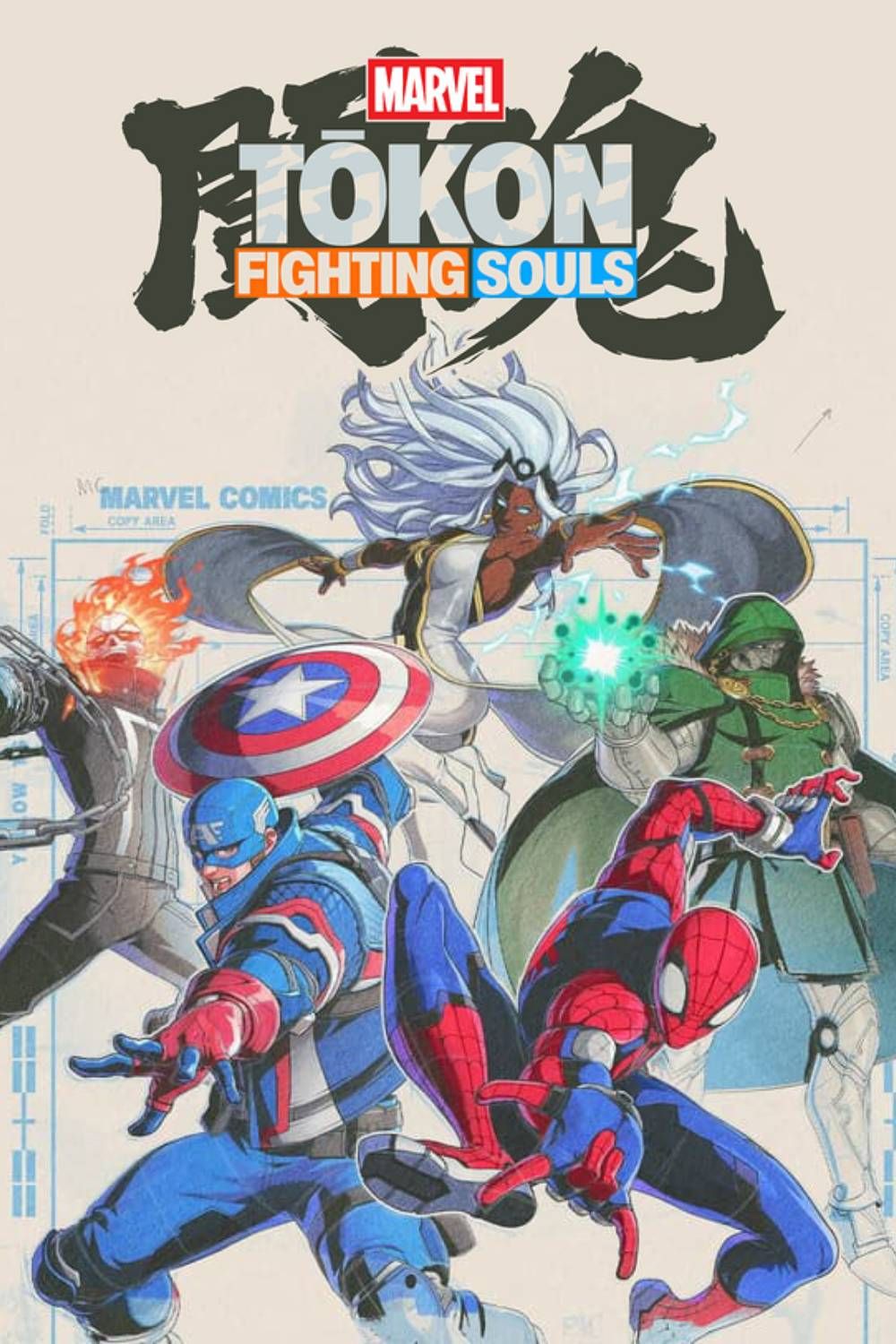
The rock and metal inspired Guilty Gear series created by Arc System Works’ Daisuke Ishiwatari is a pretty well known fighting game franchise. Sure, it might not have the same mainstream appeal as the likes of Mortal Kombat, Street Fighter and Tekken, but ever since Arc Sys introduced those gorgeous 3D cel shaded graphics to Guilty Gear Xrd Sign and Strive, Guilty Gear is bound to catch even the casual’s eye. There’s a reason Arc Sys use those graphics for pretty much every fighting game they make now, including that new Marvel one that sounds like a past tense Tekken.
Even this staunch fighting game series isn’t immune to a few dalliances though, and while we could talk about spin-offs like 2D beat ‘em up Judgment for the PSP, or the 4-player party brawler Isuka, there’s a mainline sequel that’s wilder than all of them.
Enter Guilty Gear 2: Overture. Set a few years after the events of the first Guilty Gear, Overture took arguably the strangest genre switch of all time by going from a fighting game to a MOBA. Yes, that’s correct.
For context, Overture launched in Japan in 2007, and 2008 in the rest of the world, and at the time, the only properly released MOBA you could play was either Defense of the Ancients, or you had to go really old school and play games like Herzog Zwei on the Genesis. Overture beats out League Of Legends by over a full calendar year, and it still hasn’t even come over to consoles, but here’s Overture proving that MOBAs could work on consoles before the genre even had a proper name.
Well, “proving” is a strong word, as critics kinda hated Overture, and series fans are still debating on whether or not the game is good, but the idea alone was massively ahead of its time.
Plants Vs Zombies
Potentially one of the most recognisable gaming franchises ever, pretty much anybody has played at least a wave of Plants Vs Zombies at some point, either on their phones while sat on the loo or via PSN/Xbox Live Arcade way back when. The point is, PopCap’s PvZ is, or was, ubiquitous. In some ways, it was one of the first “viral” games. You couldn’t move for seeing peashooters, sunflowers and other garden plants despatching the undead in lane-based tower defense gameplay. The main series of games has maintained that basic gameplay, even all the way up until Plants Vs Zombies 3, which has been about as well-received as a 21 bums fart salute in a cramped lift, relaunching a total of three separate times in response to player feedback. However, the tower defense gameplay is far from the only PvZ game, as the Garden Warfare/Battle For Neighborville game gave players the chance to experience multiplayer battles as these goofy characters.
Powered by DICE’s Frostbite engines, Garden Warfare incorporated elements from hero shooters and tower defense games to create a unique blend, with asymmetrical teams competing to attack and defend certain objectives. What could’ve easily been dismissed offhand as a joke game parodying the likes of Call of Duty actually became a pretty successful addition to the franchise, with over 8 million players enjoying the game since its release. Naturally, that prompted two sequels, and while Garden Warfare 2 offered more of the same, Battle For Neighborville seemingly focused way more on player versus environment gameplay than the multiplayer that everyone enjoyed. It’s been six years since BFN’s release and it’s looking likely this off-shoot of the series will never return. Then again, we’ve resurrected games in the past too. If we end up with another Garden Warfare but no God Hand HD, clearly we have no control over these powers.
Command & Conquer
The one strategy franchise that people hope make a comeback perhaps more than anyone else, only for it to actually come back as a mobile game that players roundly rejected, Command & Conquer was a staple of the strategy genre for the longest time. Of course, the strategy genre these days just isn’t quite what it used to be, so no wonder there hasn’t been a new C&C game in over a decade. Then again, if the series did come back, which version of it would return? Like Shin Megami Tensei for people who get excited about military maneuvers, Command & Conquer is split between Tiberian, Red Alert and Generals, each with their own storyline, world and slight gameplay tweaks to set them apart from each other. Functionally though, they’re all strategy games, except for one.
Nestled amongst the chaos and tyranny of the Tiberian timeline is Command & Conquer: Renegade, a shooter set during the events of the first game in the series. You control GDI soldier Nick “Havoc” Parker as he wages war against the Brotherhood of Nod, with players able to choose between first and third person viewpoints depending on their preference, and there’s a healthy selection of weapons, armour and vehicles at your disposal. Renegade was developed by Westwood Studios, as they were known at the time, and was the last Command & Conquer game before their liquidation by EA, something that hasn’t changed as the years have passed. As their last release, critics found it to be a pretty fun FPS in the C&C world, but for whatever reason, EA never revisited the FPS idea with Command & Conquer. If nothing else, they did something Blizzard couldn’t with Starcraft: Ghost. I bet that had a fear effect on the Irvine campus.
Fear Effect
Resident Evil and Silent Hill might have had the run of the survival horror genre during the PS1 and PS2 era, but that doesn’t mean that other survival horror games weren’t allowed to exist in that space. Take Fear Effect and Fear Effect 2: Retro Helix, for instance, two survival horror shooters that managed to blend cyberpunk futures with demonic, supernatural horror. Both games were given pretty decent critical receptions, with the first and second game both receiving a pretty even Metacritic rating, and there were plans in place to develop a third game in the series for the PS2, but for one reason or another, the series fell into obscurity. Fans kept loving the game despite the lack of new entries though, leading to Sushee, Forever Entertainment and the Square Enix Collective to create Fear Effect Sedna.
While Fear Effect 2 was a prequel, Sedna finally moved the series along after over 15 years, but it’s how Sedna moved the series along that really courted controversy. Instead of simply just making another survival horror/RE clone, Fear Effect Sedna became an isometric stealth action game, with players utilising the different abilities of the various characters in order to progress through the levels. Fear Effect Sedna isn’t going to be given a Razzie-like award for worst game ever made or anything, but the sharp genre change proved to be a divisive one, and while Sedna does have some defenders, it’s become seen as a rather disappointing full stop on an otherwise beloved retro franchise.
Wolfenstein
You might be looking at this entry in the video and wondering to yourself “what genre change did Wolfenstein go through?”, and before you ask, we’re not talking about how the series became a co-op shooter with the much-maligned, or at least, maligned by comparison, Youngblood. Sure, it might have been a bit of a change from previous games in the series, but at the end of the day, Wolfenstein has always been an FPS series. Or has it?
Wolfenstein 3D might have been the godfather of the FPS genre as a whole, but it’s not the first Wolfenstein game ever made.
That honour would go to Castle Wolfenstein in 1981. Developed by Muse Software for various platforms, including the Apple 2, Atari 8-bit, Commodore 64 and MS-DOS, Castle Wolfenstein was a top-down stealth game where you control an unnamed American soldier as he tries to sneak through the most famous castle in gaming history. Interestingly, the 60 rooms of Castle Wolfenstein were procedurally generated, meaning a whole new game every time you played. Castle Wolfentstein would be followed by a sequel, Beyond Castle Wolfenstein, and much like how Wolfenstein 3D was considered the forefather of FPS games, it’s possible that the modern stealth genre wouldn’t be what it is today without the existence of Castle Wolfenstein. Imagine blazing a trail in two completely opposing genres. Wolfenstein is simply just built differently.
Red Faction
If it wasn’t for Saints Row or even The Punisher, you could make the very compelling case that Red Faction is the most famous game from Volition, which just speaks to the talent they had to offer. Rest in peace, you beautiful bastards. Anyway, while Volition, or Parallax Software as they were originally known, got their start developing Descent and Summoner, it was Red Faction that arguably catapulted them into becoming a more mainstream name. A first person shooter with a genuinely innovative and impressive destruction system for the time, both Red Faction and its sequel are considered among the best PS2 shooters ever made. Considering that library includes the likes of TimeSplitters, Black and even the first Killzone, Red Faction deserves its place among the greats.
After a few years off, Volition would revisit the revolution on Mars once again with Red Faction: Guerrilla, but instead of another first person shooter, series fans would instead find an open world action adventure game, similar in a way to Saints Row. Compared to other open world games, Red Faction: Guerrilla did feel more like a third person shooter with open world elements, though the series’ trademark destruction was retained, so seeing buildings crumble into dust on a much larger scale that ever made Guerrilla a real statement piece of the 360 and PS3. Critics and fans would broadly agree, though Volition would ditch the open world gameplay in Armageddon, a less loved sequel that would ultimately cause the series to come to a premature end.
READ NEXT: 50 Best PSP Games of All Time
Some of the coverage you find on Cultured Vultures contains affiliate links, which provide us with small commissions based on purchases made from visiting our site.