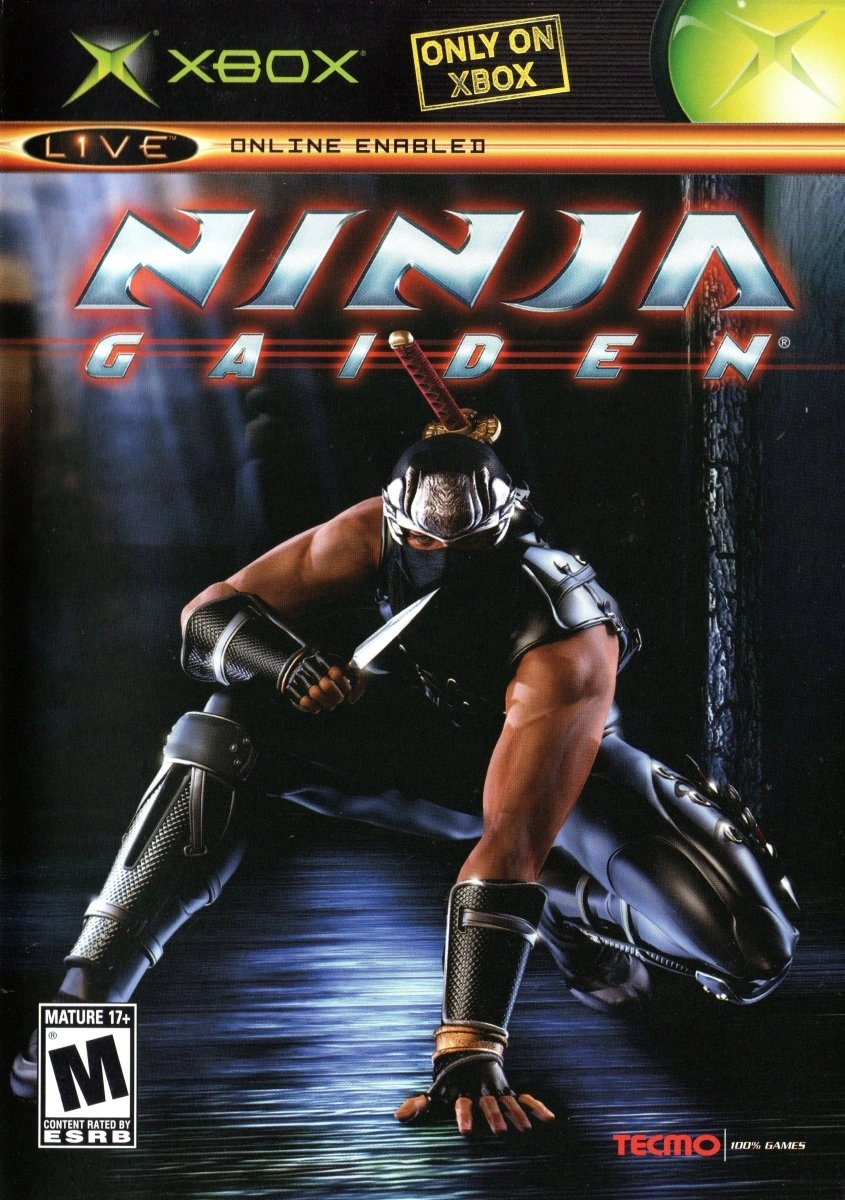


Over the last few years, the GameCube has been the 6th gen console that’s received a reappraisal as a little wonder with a brilliant, experimental library that deserves more love. But man, I’m still waiting for the day that the OG Xbox gets its day.
Honestly, there was a new game released on Microsoft’s alphabetical rectangle that was doing something new or just a bit weird every week, but nobody recognises it. Is it because the brand is doing poorly at the minute? Is is because the 360 was so much more successful? It’s a strange one, cos I think it really is an untapped well, as Microsoft really were willing to try a lot of different stuff. I’d love to dive into this console more, but for now here’s just a handful of games from the original Xbox you’ve probably never heard of. And hey, the prices aren’t too brutal either.
Kakuto Chojin: Back Alley Brutal
We’re going in pretty strong for the first game of today, but there’s a temptation to just say “Back Alley Brutal” and call it a day. What more can I add to that?
Developed by DreamFactory, yes, that’s the same lot responsible for The Bouncer, this one also feels like a weird tech demo they just kept putting stuff on top of until they had enough to release it as a full thing. You got leather trousers, neon sweat, and characters who look like they were rendered on a very tight deadline.
This is a 3D fighting game designed to show off the Xbox’s muscle, with fast, weighty hits, moody arenas, and a soundtrack that feels like your head is in a nightclub toilet. But just like The Bouncer, you spend half the time wondering when the actual game is going to start, and the other half wondering when the controls make sense. Tekken 5, it ain’t. But it isn’t the worst fighting game on the Xbox, and it even has a fun four-player battle royale mode where you and three mates fight over a crown and it sort of works. No online multiplayer at the time though.
Of course, the real reason it became a trivia question rather than a franchise is the controversy surrounding it. Microsoft pulled it from shelves pretty much immediately, and that was essentially that. It’s pretty cheap to pick up now, despite that.
Kakuto Chojin is a flashy, strange, extremely Xbox moment, now preserved mostly in giggles at its name.
Azurik: Rise of Perathia
No, nothing to do with Bridge to Terabithia. I can’t live through that again.
Azurik: Rise of Perathia set out to be Xbox’s big fantasy thing before realising halfway through development that it didn’t actually know what that meant. Even James Cameron knew to do more than just blueing yourself.
You play as Azurik, a stoic guardian with all the charisma of a loading bar, wandering a vast elemental world that looks impressive until you try interacting with any of it. You can’t, because it is quite empty. There are elemental disc fragments, real-time elemental powers that become more complex as you go, and a brooding techno-mythology. But it all comes together like someone put three different design documents into a round of Cards Against Humanity.
Movement is weird, combat feels like swatting ghosts with a broom made of soap, and the level design has a habit of sending you on scenic tours of very empty spaces. Yet there’s something endearing about how sincerely massive it tries to be. But it didn’t endear itself to critics one bit. I remember excitedly taking this one home from my local game shop after having my mind blown by Halo, and then…yeah. I think I got kind of sick of the hitboxes pretty early on.
Azurik just drifted out of everyone’s memory as that strange blue game everyone owned briefly. A noble failure, but a fascinating one.
Iron Phoenix
Iron Phoenix is one of the OG Xbox’s great “what were they cooking?” experiments. Trouble is: it’s not very edible. It’s a melee-focused multiplayer arena brawler released in 2005, just in time for nobody to be playing it.
The pitch: let’s make a medieval multiplayer Power Stone, but only for North America and also a bit crap.
To be fair, it was actually pretty bold for its day. There were big maps, third-person martial arts combat, selectable weapon styles, and online team battles where twenty people were supposed to sprint at each other with swords and hope the netcode didn’t explode.
The single-player “campaign” is basically a training montage stapled onto a mythology about magical weapons, but let’s be honest, this thing lived or died by Xbox Live, and Xbox Live looked the other way. Servers emptied almost immediately, leaving behind a game built entirely around fighting strangers who never logged in.
Still, there’s a weird charm to it. Especially as it was still kinda novel to see SEGA publishing games on other consoles, especially exclusively to the console that basically replaced them in the industry .
Power to you if you remember this one from your teen years.
Advent Rising
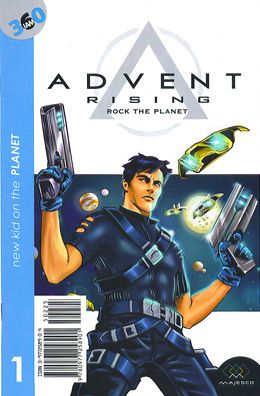
You guys know Advent Rising, right? The sci-fi epic pitched as the opening chapter of a multimedia trilogy, complete with novels and comics that also just had Jack Black star in a movie about it? I’m lying about that last bit, but don’t tempt him.
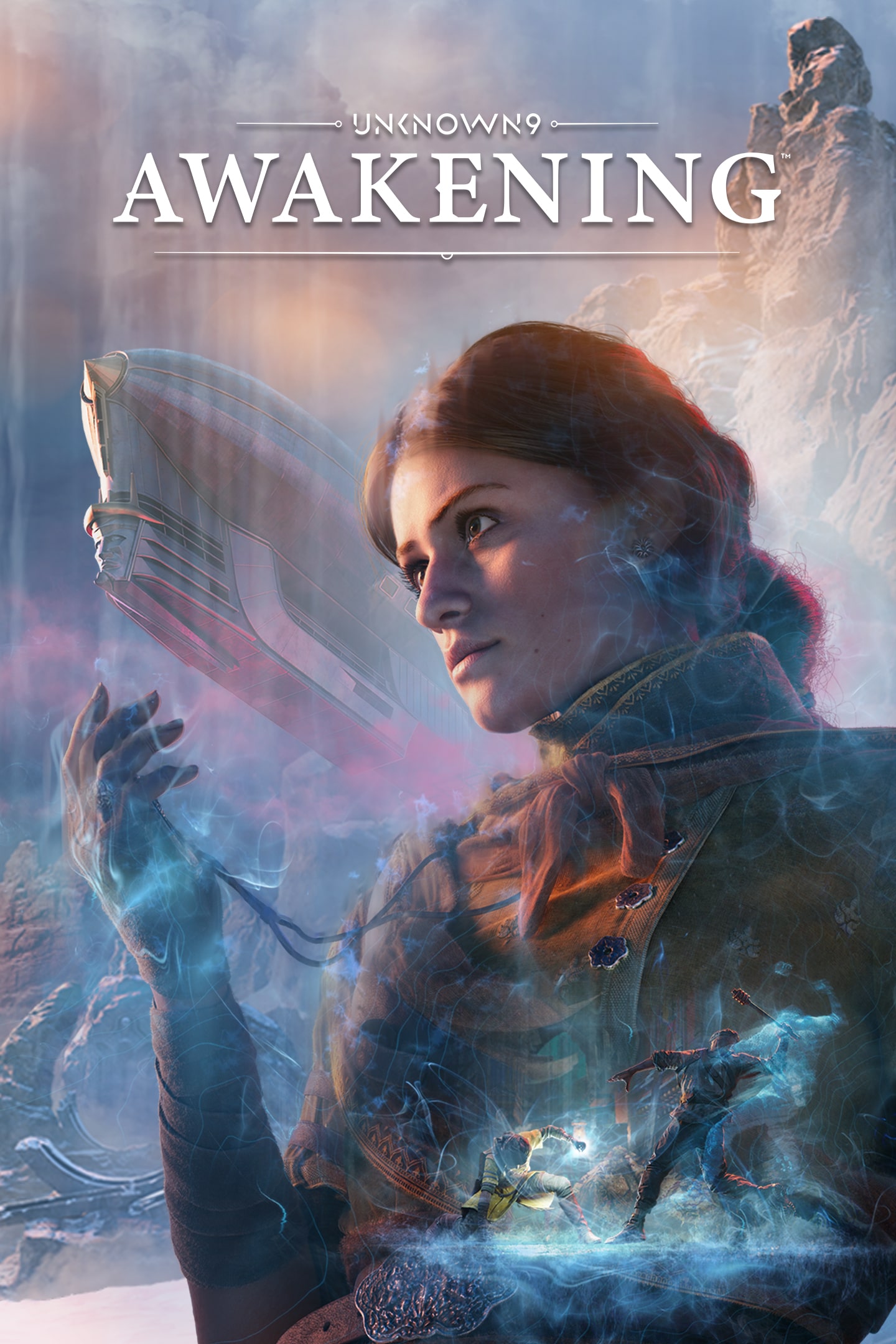
It had big names like Orson Scott Card attached, sweeping orchestral music from uhhh Tommy Tallarico, telekinetic powers and a script that genuinely thought it was ushering in a new era for the medium. In fairness, it was swinging for the stars, or, well rings, but it is basically the Unknown 9: Awakening of its day.
Yeah, exactly.
It’s a cocktail of interesting ideas held together by performance hitches and general jank. It feels a bit like proto–Force Unleashed meets Halo meets Max Payne, but with a framerate that’s choppier than Henry VIII on a motorbike. It’s not great, but it does have a few fans who have a lot of time for dual-wielding bullet time nonsense in space.
But its legacy gets more interesting once you follow the career of Donald Mustard, who co-wrote the very self-serious Advent Rising and would later become the creative director behind Fortnite’s sprawling metanarrative.
So in a roundabout way, this earnest, glitchy space opera helped shape the industry’s biggest memba berry generator and can basically be blamed for Unreal Tournament dying.
Metal Dungeon
Friends, we have not found a “good” OG Xbox game yet, have we? Well, let me tell ya, that is not about to change.
Metal Dungeon might be the strangest attempt at a dungeon crawler any console has ever hosted. How many players in 2002 were crying out for a first-person, turn-based, procedurally generated sci-fi roguelike set in a word of “magitechnology”? Exactly. Yet here it is: a bleak maze of steel corridors, looping floors, and enemies that look like they escaped from an early Event Horizon CGI editing session.
You command a squad of engineered soldiers through an underground lab, battling bio-hazards while hoarding loot with names that vanish from your memory the second you pick them up. You tell your little guys what to do, they do all the fighting themselves, and you try not to wander off and eat a few slices of toast.
Combat is so slow, and the environments blur together after a bit. But if you enjoy poking around in forgotten corners of the Xbox catalogue, Metal Dungeon isn’t…too bad? I think probably it’s biggest sin is that it ultimately wastes what is a pretty cool idea, but could be an OK thing to zone out with. It’s not an essential game, but it still feels like a little curio worth fiddling around with.
Land of the Dead: Road to Fiddler’s Green
Here’s a fun fact for you: this is the only proper video game ever adapted from George Romero’s groundbreaking zombie movie series. Ever. It was also exclusive to America and is just a reskin of another game. It’s also very bad.
Land of the Dead: Road to Fiddler’s Green didn’t start life as a licensed tie-in at all. It began as Day of the Zombie, a budget FPS from the same developer, Brainbox. When the Land of the Dead film needed a quick promotional game, someone simply stapled Romero branding onto it and called it a day. Think of it as a zombie-themed coat of paint slapped over a project that was already wobbling on its quickly decomposing knees.
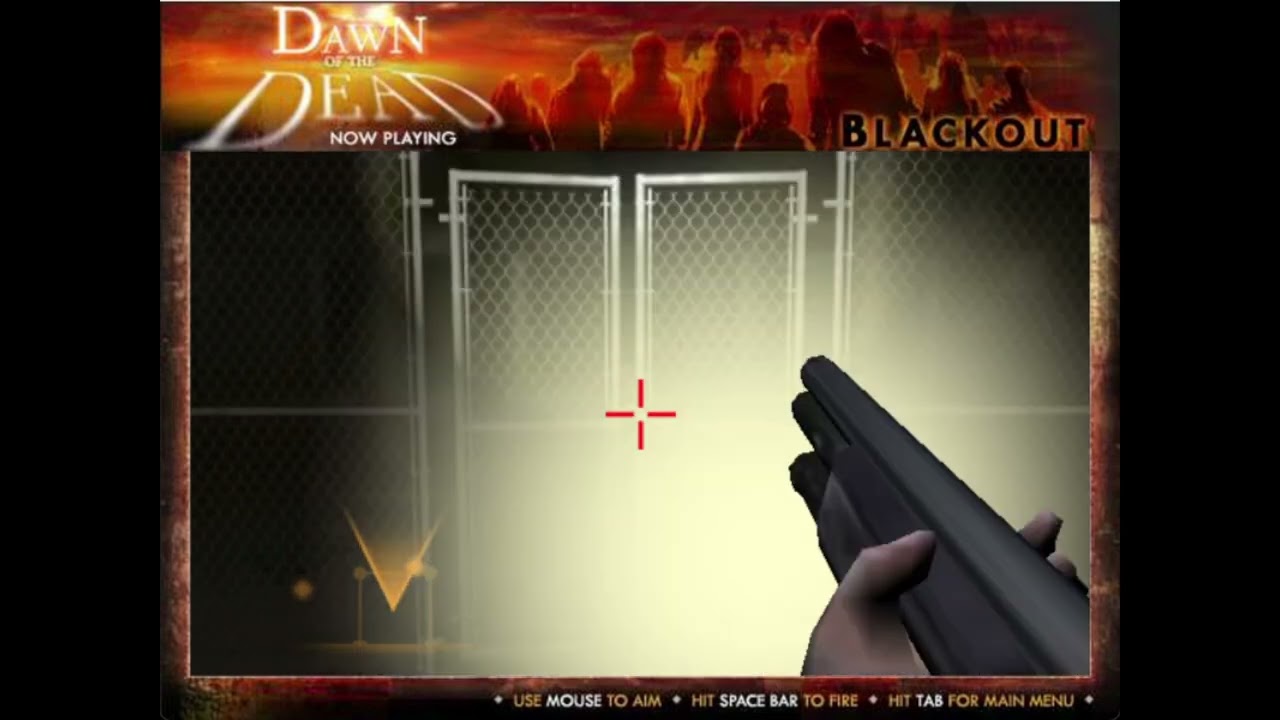
What you get is a clunky, boilerplate shooter where every barn, field, and corridor looks copied from a starter asset pack you’d get on Humble Bundle. The zombies hobble along like they’re trying to pass whatever body part they’ve just eaten, the AI is basically non-existent, and the gunplay feels like half a step above the Flash game for Dawn of the Dead that only I remember.
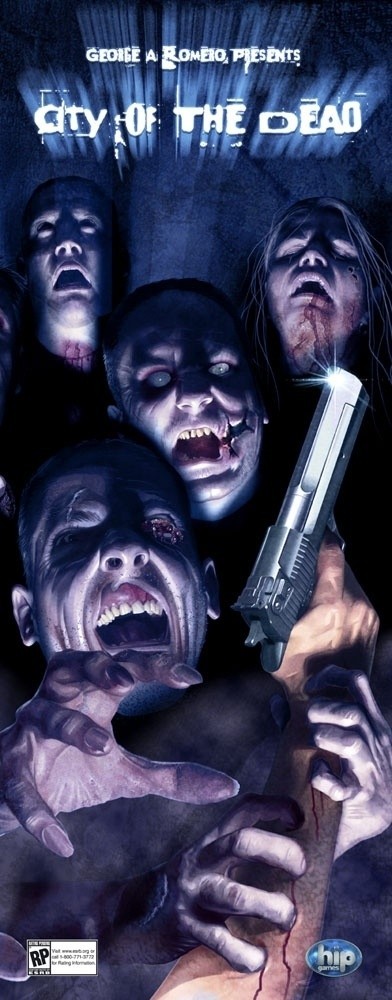
You might have fond memories of it as a kid, but for me it’s simply a bad game and a bit of a waste. A Romero tie-in deserved far better than this. We did come somewhat close to another Romero game by the name of City of the Dead, which was described as Burnout with zombies and also had help from American McGee and Tom Savini. Gotta hand it to them, that could’ve been cool.
Dead Man’s Hand
We finally did it! An OK video game! Not as good as the game that came out the same day, but still somewhat rooting and tooting.
Dead Man’s Hand is an Old West FPS that feels like something right in the middle between Darkwatch and Red Dead Revolver without ever being quite as good as either. It’s also not quite as good as Human Head’s next game, Prey, which itself wasn’t quite as good as the hype. Prey 2 definitely would have been, though?
The plot follows El Tejón, an outlaw betrayed by his own gang and left for dead after a robbery goes sideways, so he has to demand apologies and flowers from them, one-by-one. Sorry, I meant “shoot them one-by-one”.
Dead Man Hand’s hook is its playing-card system. Stylish kills earn cards that grant temporary perks as numbers fly out of dudes. Does it truly elevate the combat? Not really, but it’s a nice idea in a game that’s full of them.
Dead Man’s Hand never got a sequel, but it did eventually come to PC, so it’s very easy to do some light Googling for this one. It’s a bit by the numbers, but sometimes that’s all you really need to have a nice time.
Star Wars: Obi-Wan
You shouldn’t judge a book by its cover or a game by its box art. Because look how cool this is.
The actual game itself is eh, it’s alright. About as well as you can expect a PC game shunted over to the Xbox by George Lucas at the last minute could be, I guess?
You play as a younger, uniquely fridge-like Obi-Wan during the Episode I era, swinging a lightsaber with the right stick like you’re trying to fan away a wasp. Honestly, I kind of miss right stick swinging with melee weapons in games. Sometimes it was really fun.
Story-wise, it loosely retells Obi-Wan’s pre–Episode I escapades before tying back into the movie itself and that climactic final battle. It’s a shame, then, that Darth Maul has basically the same move as every other enemy in the game.
Level design is often just a long corridor and the enemy AI tends to be a bit all over the shop. It’s a game that feels kinda stuck between generations, with fun bullet time stuff but also tank controls.
Star Wars: Obi-Wan is another game that you probably still love if you played it when you were young. Just make sure you keep those memories in the past, where they can’t hurt you.
Sudeki
Sudeki had a bit of a nomadic childhood. It actually began life as a Dreamcast project before the poor console flatlined and Microsoft scooped it up as a would-be Xbox showpiece, like a lot of games actually. You can still feel that late-90s DNA in the character designs, where outfits didn’t need to make sense, they just either needed to look cool or lead to some kind of awakening.
It follows a four-hero party pulled together to stop twin worlds from collapsing into each other thanks to a conveniently ancient evil. The story mixes prophecy, light-and-dark duality, and the usual “chosen warrior” business, but it stays breezy enough that you don’t need a flowchart to keep track of it.
Gameplay hops between action combat and light RPG trimmings, though the balance is never quite as slick as the marketing suggested. The game does flit between first and third-person at will and doesn’t have a lot of loading screens compared to the usual. It’s the kind of technical prowess you’d expect from the guys behind…Lizzie McGuire 3: Homecoming Havoc and Silent Hill Origins?
Sudeki is a Western studio trying to craft something with JRPG flair before anyone knew what the secret sauce was. You can get it on a tonne of modern storefronts, if you’re interested.
Kabuki Warriors
A lot of the Xbox games we’ve looked at today have been bad, which is not good. But what is good is just seeing the weird games Microsoft commissioned that took mental swings and would never get made today. Sometimes you gotta break 150 eggs to make a decent omelette, you know?
Kabuki Warriors is what you get when all those eggs fall on the floor though. And someone stirs the yokes with a shoe.
This early Xbox fighter drops you into travelling kabuki troupes who settle artistic disputes by thwacking each other with wooden swords on tiny stages. The mechanics boil down to mashing attack until someone falls over, and the “strategy” mostly involves hoping your character doesn’t randomly decide to stop blocking for the day.
The presentation is equally baffling and bad, with stilted animations and character models that look like they’re still rendering. Kabuki Warriors has a reputation for being one of the console’s worst, and it’s the first game that Edge magazine ever gave a 1/10.
What’s craziest of all? This is developed by Lightweight, the minds behind the pretty brilliant Bushido Blade games.
READ NEXT: PS1 Hidden Gems We’ll Always Defend
Some of the coverage you find on Cultured Vultures contains affiliate links, which provide us with small commissions based on purchases made from visiting our site.