


Headlander is probably one of the most unique games I will play all year, or perhaps ever. Can you name any other games where you can control a flying head, attach yourself to robotic bodies, and have to put up with sarcastic doors at every turn?
The work of Double Fine and Adult Swim, Headlander is a “Metroidvania” game that reminds me a lot of CounterSpy, the criminally undervalued Dynamighty game that had its charms. Headlander also has lots to fall in love with, from the small details of the messed-up retro-futuristic world you bumble around to its tight and (thankfully) lightweight RPG mechanics.
The story revolves around you waking up as a choice of one of three disembodied heads aboard a space station. If that doesn’t grab your attention, I don’t know what will. You’re then tasked with bringing down Methuselah, an omnipotent AI that has taken over robots housing the conscious minds of the last remaining shreds of humankind, apart from you. Earl, your (probably AI) Texan oil baron of a companion, guides you over the radio every step of the way.
Primarily all about puzzles, no matter how else it has been dressed up, Headlander’s true selling point comes from taking over robot bodies and utilising their traits to help you progress. For instance, electrified floors can only be navigated by the “tank” robots, so you may have to do some backtracking to make any ground. This isn’t as bad as it sounds – there’s a lot to find within Headlander that you might miss when you’re blindly rushing to the next objective. A surprising amount of lore-building tapes, power-ups, and energy pick-ups can be found if you simply take the time to look.
Although the world which you inhabit shows little sign of organic life, the conversations and mannerisms of the robotic citizens feels completely organic. Spending a few seconds to listen in on a robot’s inner struggles will often bring on a soft chuckle, but the real stars of the show have to be the AI doors. They are constantly riffing off sarcastic jokes and belittling you for not having the right security clearance to advance past them, sounding like the even more jaded offspring of GLaDOS.
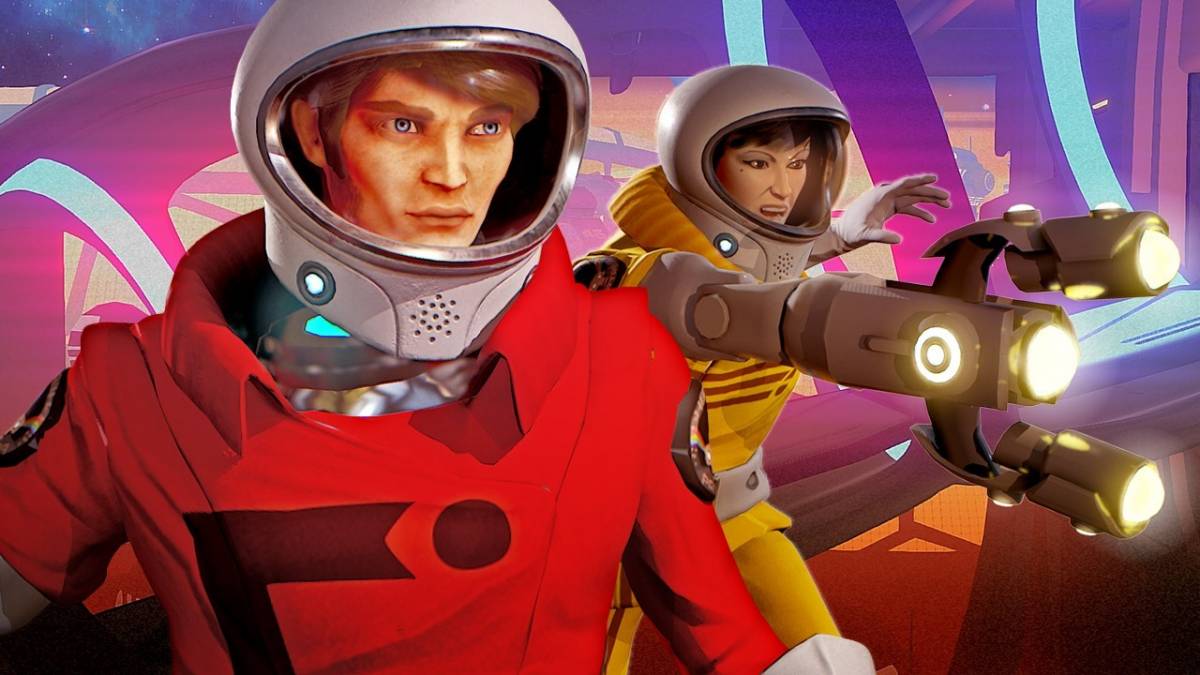
Graphically and sonically, Headlander nails it. It has a certain campiness that harkens back to No One Lives Forever spliced with the aforementioned Counter-Spy and a dash of Blade Runner’s dystopian vivacity. Headlander has created its own identity to compliment what could have very easily been a gimmicky premise. Piloting your head is actually rather smooth, as smooth as you could imagine flying around as a head in a space helmet could be.
It isn’t without its faults, though. The gunplay is very finicky, often leaving you feeling like you have a better chance of shooting a gnat from a mile away. A lot of time in Headlander will be spent trying to line up your shots, which is why when it comes combat, it’s better to just go with the head – you can easily fly above enemy robots and decapitate them before taking over their bodies. It’s much more satisfying than standing in one spot and hoping that any one of the ten laserbeams you just fired lands.
If you’re also not a massive fan of puzzles, just like me, you might struggle to connect with Headlander. Nothing is particularly difficult, it’s just that puzzles can become particularly obtuse the more your progress in the story. I’m only a few hours in and I am dreading the standard difficulty spike that comes with games like this. I’m still recovering from the last hour of Limbo.
Although I still have a lot more time to spend with Headlander, what I’ve played so far has mostly been a blast. Based on my initial experience, it’s an easy recommendation for those that love the weird and wonderful. For anyone who isn’t too keen on a mental challenge, approach with caution, like you’re a floating head in a toiler.
Some of the coverage you find on Cultured Vultures contains affiliate links, which provide us with small commissions based on purchases made from visiting our site.