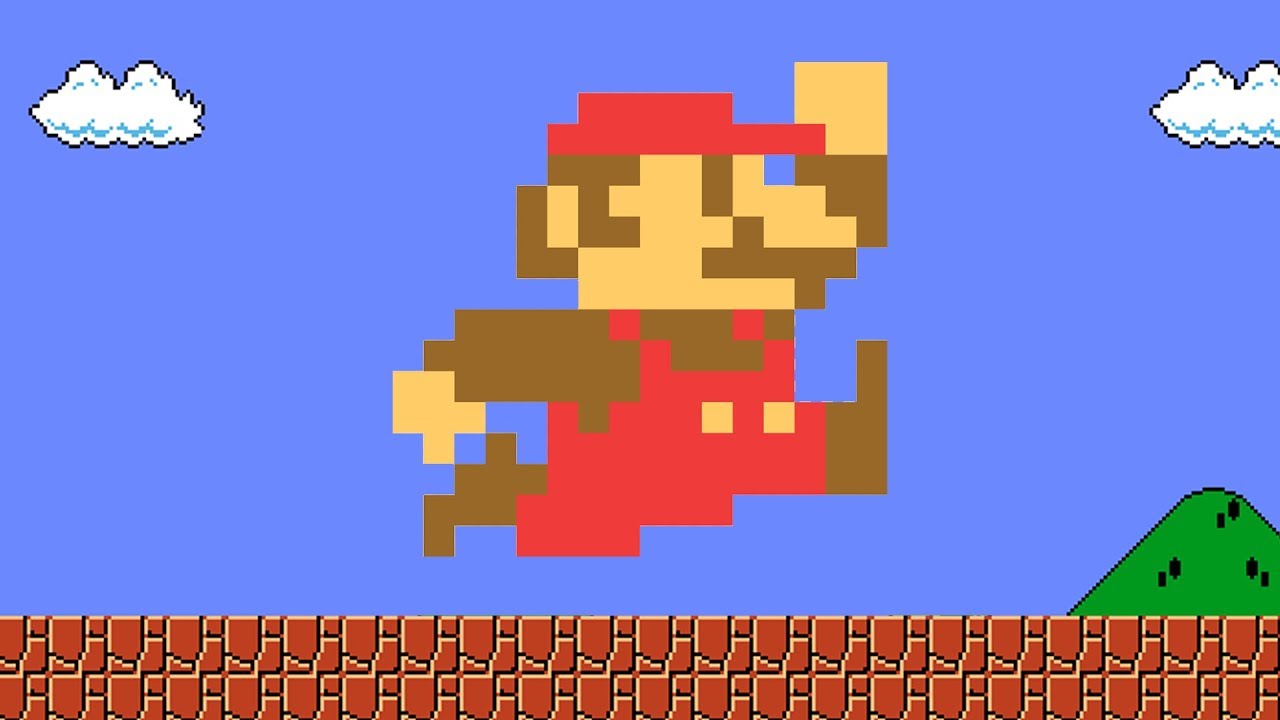


Jumping on heads, collecting rings, and dating dishwashers. Video games are full of brilliant ideas that often lead to them becoming gigantic successes. Sadly, there are also a lot of games with brilliant ideas, but the finished products themselves are about as fun as making out with an actual dishwasher. Here’s some examples of what I’m Tolkien about.
The Lord of the Rings: Conquest
There’s no shortage of Lord of the Rings games, but The Lord of the Rings: Conquest remains one of the biggest missed opportunities in gaming history.
Developed by Pandemic Studios, the team behind Star Wars: Battlefront…oh man, this should have been so easy! Right: take the large-scale class-based battles that made Battlefront such a success, drop them into Middle-earth, and let players relive some of the most iconic moments from the films. Better still, Conquest added a twist that fans had always wanted to see. What if the forces of Sauron actually won?
After fighting through familiar battles, the story branches into an alternate timeline where Frodo fails to destroy the One Ring. From there, you hunt down the remaining members of the Fellowship, crush the last pockets of resistance and help Sauron conquer Middle-earth. It’s a fantastic “what if?” scenario that might help you somehow empathise with Wormtongue.
Sadly, the gameplay is, as Tolkien himself one said, doo doo boogers. The four character classes lacked depth, melee combat was extremely one-note, and many of the large battles felt more sloppy than strategic. Also, it ran like arse on console. Despite featuring famous locations from the films, the campaign rarely captured the scale or atmosphere that made those moments so memorable.
Reviews reflected that disappointment, with critics praising the licence and multiplayer concept but criticising the weak single player, shallow mechanics and lack of lasting variety. A lot of you probably forgot about it entirely.
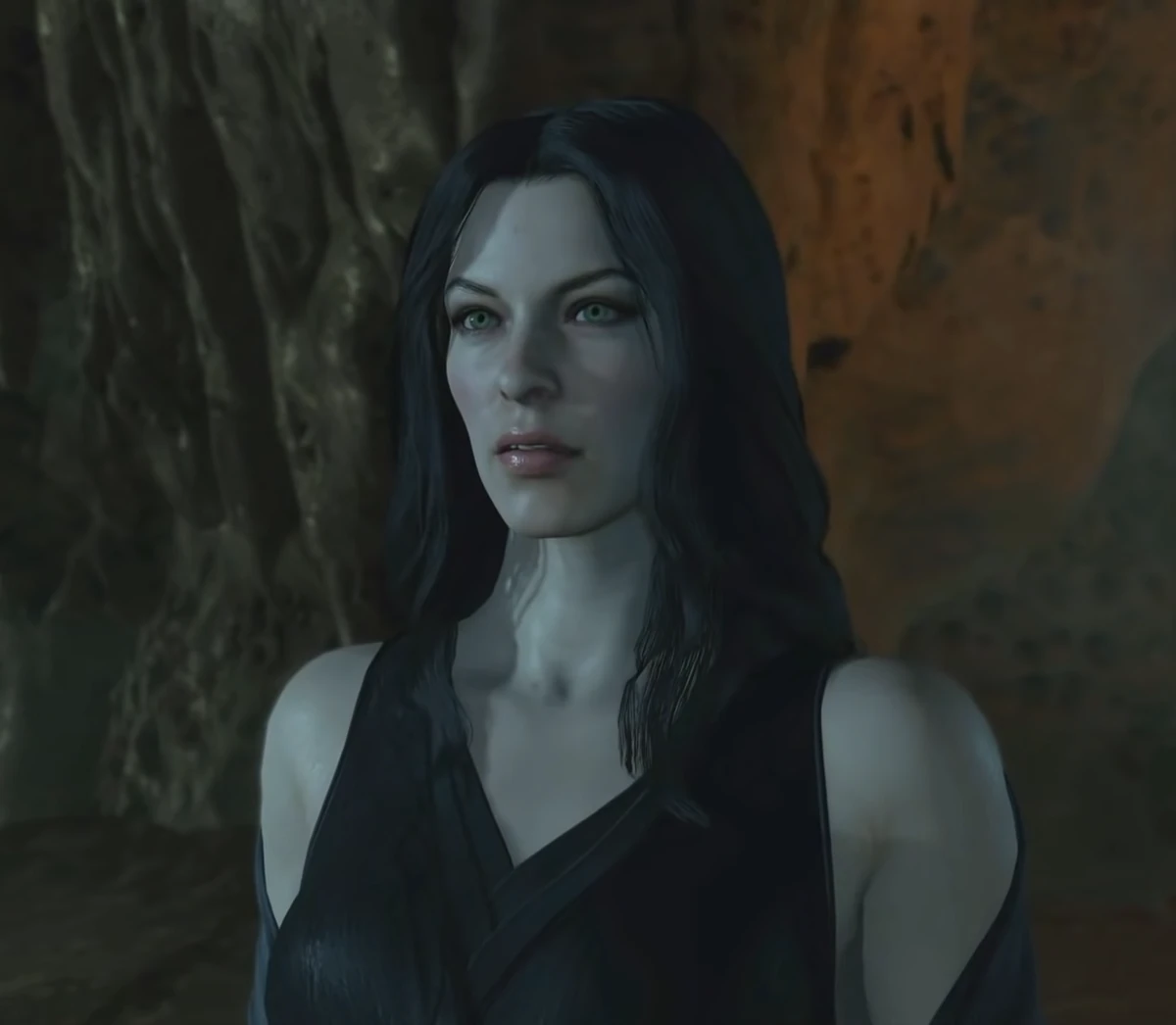
With deeper class progression, more objective-based battles and a greater emphasis on teamwork, Conquest could easily have become Middle-earth’s answer to Battlefront. While we never really got another game that revisited its alternate-history campaign, later titles like Middle-earth: Shadow of Mordor and Middle-earth: Shadow of War did an alternate take pretty well. Well, apart from the spider hottie. Return of the King could never.
Evil Dead: Hail to the King
Following the success of Resident Evil on the original PlayStation, it didn’t take long for other developers to chase the survival horror formula. On paper, though, Evil Dead: Hail to the King had an advantage almost none of them did. Instead of creating another generic zombie game, it had one of horror’s most beloved franchises to build on. Ash Williams, Deadites, chainsaws, shotguns and a lonely cabin in the woods already sounded like the perfect ingredients for a survival horror classic.
Rather than simply adapting one of the films, Hail to the King acts as a sequel to Army of Darkness, bringing Bruce Campbell back to voice Ash as he returns to the infamous cabin where everything began. The premise is simple but effective. Explore creepy locations, solve puzzles, manage limited ammunition and fight off waves of Deadites while uncovering another supernatural disaster. Not another one. It’s essentially Resident Evil through the lens of Evil Dead. Should’ve been groovy right?
Unfortunately, it was not groovy baby. The fixed camera angles were as experimental as Italian giallo, the controls felt stiff even by late-1990s survival horror standards, and combat quickly became frustrating thanks to awkward hit detection and relentless enemy encounters.
Perhaps most surprisingly, the game struggled to capture what makes Evil Dead so memorable in the first place. The films balance horror with over-the-top action and Bruce Campbell’s charismatic performance, but much of that personality gets lost here.
Reviews reflected that disappointment, with critics praising Bruce Campbell’s return but criticising almost every other aspect of the game. Many felt it borrowed heavily from Resident Evil without understanding what made Capcom’s series so tense or rewarding to play.
An Evil Dead survival horror game still sounds fantastic today, but we did recently get an asymmetrical horror game instead, why not! Oh, that’s why. Hey, speaking of everyone’s favourite genre.
Evolve
There was a time when Evolve looked like it was going to be the next big thing. I remember it well, somehow over a decade ago. Developed by career overpromisers Turtle Rock Studios, it arrived with plenty of hype and an idea that sounded pretty cool. Four hunters versus one player-controlled monster. Instead of simply surviving against an AI, the monster was another player, growing stronger as the match progressed while the hunters desperately tried to stop it before it became unstoppable.
It was an inspired twist on multiplayer shooters. Every match felt like a hunt, with the monster sneaking around the map, feeding on wildlife and evolving through different stages before deciding when to fight back. Meanwhile, the hunters had to work together, using each class’s unique abilities to track, trap and weaken their target before it was too late. It created a constant game of cat and mouse where both sides had completely different objectives, making every encounter feel unpredictable.
The problem was everything surrounding that brilliant idea. If even one player failed to do their job, the entire match could quickly fall apart. As the player base declined, matchmaking only became more difficult, creating a vicious cycle that was hard to escape.
Reviews were….alright. Critics praised the asymmetrical multiplayer, but they also questioned its long-term variety. Running around the map in what often felt like an extended game of kiss chase without the sexual tension could grow pretty damn boring. On top of that, the DLC situation was absurd, with hundreds of dollars’ worth of additional content available at or near launch, which was and still remains a joke. Commercially, it struggled to maintain momentum, eventually becoming one of the generation’s biggest multiplayer disappointments.
The funny thing is, Evolve wasn’t ahead of its time because nobody wanted asymmetrical multiplayer. It was ahead of its time because almost every major publisher wanted asymmetrical multiplayer just a few years later. Whether it was Dead by Daylight, Friday the 13th: The Game or Evil Dead: The Game, the formula lived on. Evolve just happened to arrive first, and asked you to pay out the arse to get front row seats.
Amy
What if The Last of Us was bad? Amy actually released over a year before Naughty Dog’s classic, but the similarities are impossible to ignore. You’re escorting a young girl through a world ravaged by a deadly infection, and your survival depends almost entirely on the relationship between the two of you. The difference is that Amy had one genuinely fascinating idea that even The Last of Us didn’t.
Set in a city overrun by a mysterious infection, you play as Lana, who discovers that staying close to the young Amy suppresses the virus spreading through her own body. I am choosing to ignore that Amy’s autism gives her supernatural powers.
Stray too far away and the infection gradually takes hold, distorting your vision and leaving you increasingly vulnerable. Stay close, however, and your condition begins to stabilise. Better still, being partially infected isn’t always a disadvantage, as certain monsters become less aggressive towards you. This creates an unusual risk-and-reward mechanic where the very thing that’s killing you can sometimes become your greatest ally.
It’s a brilliant idea.
Unfortunately, so was the segway before they realised people had to drive them. Sluggish controls, inconsistent AI, frustrating checkpoints and technical issues buried what was otherwise a genuinely inventive survival horror concept. Critics were about as brutal as the British media was with Amy Winehouse. With a Metacritic as low as 25, Amy quickly became known as one of the worst games of the era.
That’s a shame, because the central idea deserved far better. Plenty of games have asked you to protect another character. Very few have made that character an IV drip. Let’s try this one again.
Geist
It’s not every day Nintendo publishes a non-space first-person shooter, let alone one from n-Space where you spend most of your time possessing people, terrifying scientists and controlling rats. That’s exactly what Geist brought to the GameCube in 2005, unfortunately long after the console itself was in the zeitgeist.
You play as John Raimi, a counter-terrorism operative whose spirit is separated from his body during a mission. Unable to interact with the world directly, you’re forced to haunt the facility in search of a way back. That means possessing security guards to gain access to restricted areas, taking control of scientists to solve puzzles, and even jumping into animals like dogs, seagulls and rats to squeeze through vents or reach otherwise inaccessible locations.
The cleverest part, though, is that you can’t simply possess anyone whenever you like. Most humans have to be frightened first. Flickering lights, exploding machinery and supernatural events gradually increase their fear until they’re vulnerable enough for you to take control. Imagine if Monsters Inc was made by the guys who developed Lynx Africa and you have the right idea.
Unfortunately, the rest of the experience is just not that…great. Once you were inside a body, the shooting itself felt fairly ordinary, enemy AI was all over the bloody shop and the campaign struggled to maintain momentum. Reviews landed around the mid-60s, and in a strange way it’s come to feel emblematic of the GameCube’s broader struggles thanks to 1000 YouTube videos on it. Filthy YouTubers.
It’s perhaps more interesting to look at Geist now as an early glimpse of ideas that would later be refined by studios like Arkane. The emphasis on player-driven solutions, environmental manipulation and inhabiting different bodies to approach problems from new angles feels strikingly similar to what we’d eventually see in games like Dishonored and Prey. While Geist didn’t fully realise its potential, you could never say it wasn’t trying new things.
NeverDead
Most games punish you for getting hit. NeverDead asks a different question entirely: what if turning into a head from Futurama was actually the point?
You play as Bryce Boltzmann, an immortal demon hunter cursed to live forever after making a deal centuries earlier. That means losing limbs becomes part of the gameplay. You might throw your own severed arm to hit a distant switch, roll around as nothing but a head to reach hidden areas, or deliberately sacrifice a limb because it’s the quickest way to solve a puzzle. Even your detached body parts can still attack enemies.
It’s a fantastic concept because it completely rewrites one of gaming’s oldest rules. Imagine if in Cuphead you could just keep playing instead as a head instead of putting your head through the drywall?
Unfortunately, NeverDead never figured out how to build a great game around its brilliant central mechanic. Combat was janky as heck, the camera regularly struggled to keep up with the action, and controlling Bryce after he’d been dismembered often felt just kinda clunky. Critics also pointed at it having an identity crisis between action game and comedy, leaving it with review scores mostly in the 50s and 60s.
The real shame is that nobody has really revisited the idea since. There are a lot of weird ideas from the seventh generation that nobody has really dabbled with actually. With today’s physics systems and far more sophisticated animation technology, a game built around weaponised dismemberment could be something genuinely brilliant. Instead, NeverDead remains one of gaming’s strangest examples of a brilliant idea trapped inside a game that wasn’t NeverThatGoodButIt’sWorthALook.
Michigan: Report From Hell
Alright, so this one is definitely a good idea just straight up yoinked from The Blair Witch Project. But anything could happen in a post-Antz vs Bug’s Life world. Let me know which movie you will defend to the death below.
Developed by Bug’s Lifer stans Grasshopper Manufacture before the studio became famous for games like No More Heroes, Michigan: Report From Hell follows a television news crew investigating a series of bizarre incidents in Chicago.
Rather than shooting monsters with a gun, your job is to shoot monsters with a camera. Focus on a terrified survivor instead of the creature attacking them and you’ll capture different footage. Linger too long on gruesome scenes or invade someone’s privacy and your producer may encourage it for better ratings. Even the people around you begin reacting differently depending on how you behave behind the lens, as you can actually be a gigantic pervert as well.
It’s a brilliantly cynical idea, one that even George Romero would have for the not underrated but overhated Diary of the Dead a couple of years later. Funnily enough, Dead Rising, also with a mall like in Romero’s Dawn of the Dead, measured you on how saucy you were too. Instead of asking whether you’ll save someone, the game constantly asks whether you’ll get the shot. Long before livestreams, bodycams and viral videos blurred the line between helping and documenting, Michigan was already turning journalism into a gameplay mechanic.
Sadly, the rest of the game is a bit wet and floppy. The controls were chunkier than chips, the camera was frustrating in all the wrong ways, and the AI could be erratic and it felt like it was generally held together by tape. It does have some fun voice acting though.
Otherwise, it’s about as fun as being in Michigan.
Michigan:Report From Hell feels like a good idea tried a bit too soon. The idea of experiencing a horror story through the viewfinder of a camera was the basis for the Outlast games almost a decade on. And um…I forgot my line.
Lifeline
Long before voice assistants became a normal part of everyday life that you keep accidentally selecting on your mobile phone, Lifeline was already asking players to control an entire survival horror game using nothing but their voice. In 2003, it turned about as well as you’d expect.
Set aboard a space station overrun by hostile creatures, you don’t actually play as the protagonist. Instead, you take the role of an unseen operator guiding a waitress named Rio through the nightmare. Every movement, every shot fired and every interaction is controlled by spoken commands through a PS2 USB headset. Tell Rio to run, reload, duck or investigate an object and, if the game understands you, she’ll do exactly that.
That’s what makes Lifeline such a fascinating experiment. The tension doesn’t just come from the monsters, but from trying to give clear instructions under pressure. When everything worked, it could feel remarkably immersive, almost like directing your own horror film in real time. Imagine SOCOM but with ghouls.
Unfortunately, everything depended on speech recognition technology that simply wasn’t ready, or implemented well at all by Sony’s Japan Studio. Commands were frequently misunderstood, conversations broke down for no obvious reason, and players often found themselves shouting the same instruction over and over while Rio stood completely still, no doubt questioning if she needs to try Duolingo.
Most critics praised the ambition but agreed that the unreliable voice recognition turned an exciting concept into an exhausting one. It just gets boring telling Rio to shoot over and over again, like she’s not allowed to do anything without your approval. She is not allowed!
With the advances in voice recognition we’ve seen since, Lifeline is one of the few games on this video that genuinely deserves another attempt. Games like Phasmophobia have used the mic very well, so why not?
Vampyr
The now largely forgotten Vampyr built one of the most interesting RPG systems of the last decade around asking how much another person’s life is worth.
Set in a Spanish Flu-ravaged London, you play as Jonathan Reid, a respected doctor who happens to have a very nice coat and a not very nice need to drink blood to stay alive. Every named citizen in the city has their own routines, relationships and personal stories, and by feeding on them you receive an enormous boost in power. The catch is that every death has consequences. Entire districts can fall into chaos, quests disappear forever and other characters react to the loss. The easiest way to become stronger is also the quickest way to make the world around you worse.
It’s one of those mechanics that immediately forces you to think differently. Rather than asking whether you can kill an NPC, Vampyr constantly asks whether you should. It turns progression itself into a moral dilemma, making restraint just as rewarding as aggression. It’s a little like BioShock, but with blood. Bloodshock is a good name for something. Do something with that.
Unfortunately, the rest of the game just kinda…sucks a bit? It is probably the best game in this video though. There’s a certain stiffness to the combat, as if every swing and dodge is just a fraction out of sync, and the low-budget nature of it meant it was all constantly creaking. You’re also just fighting the same fights over and over again due to respawning enemies. The moral framework was fascinating, even bold, but the moment-to-moment action didn’t quite carry that same spark.
Despite those shortcomings, Vampyr remains one of the most memorable examples of player choice having genuine mechanical consequences. Someone really should make another one with a budget. Next: a game with all the budget, but only one good idea.
Anthem
Few games have ever made a stronger first impression than Anthem. The moment you climbed into a Javelin, blasted into the sky and effortlessly transitioned between flying, hovering and diving through waterfalls, it genuinely felt cool as hell, even if it was nowhere near as cool as that original E3 2017 trailer. For a brief moment, BioWare had nailed something that almost no other developer had: making players feel like Iron Man.
Flight shaped almost every aspect of the game. Combat took place across multiple levels, encouraging players to hover above the battlefield, chain together aerial abilities and constantly reposition rather than hide behind cover. Different Javelins even handled differently, giving each class its own identity beyond simply carrying different weapons. Traversal became so enjoyable that simply flying around the world was often more entertaining than the missions themselves.
Unfortunately, that’s where the compliments usually stopped. Beyond its excellent movement system sat quite dull combat, forgettable loot and a story that never quite reached the standards people expected from BioWare. It also had a shallow endgame for something that was aiming to ape Destiny. Almost everyone loved the flying, but very little else left a lasting impression. The game launched to huge expectations before rapidly losing players, and despite years of promised improvements, BioWare eventually cancelled its planned overhaul, Anthem NEXT.
Unlike many games in this video, Anthem actually solved the hardest problem first. It made movement genuinely, objectively neat. Everything built around it just was boring by comparison. Now, someone please make an Iron Man game where you have to run Stark Industries on the side.
READ NEXT: 100 Best PS1 Games of All Time
Some of the coverage you find on Cultured Vultures contains affiliate links, which provide us with small commissions based on purchases made from visiting our site.