

Video games don’t exist in a bubble. Gaming has taken from and given to other forms of media since its inception. But there are some video games that are designed to exist as part of a shared media universe, with the story being told from multiple angles across gaming, TV, films, books and other forms of content. The example we’re focusing on today isn’t the first example of this, but it’s definitely the first big flop, and yet its influence and key players have left an indelible mark on gaming as a whole. With that, let’s dive into the world of Advent Rising.
Transmedia: What Does It Mean For You?
Now, in order to understand Advent Rising and its ilk, we first need to do a brief history of transmedia, which essentially translates to a story told via multiple mediums. The earliest example of this would be Ong’s Hat, which isn’t a game but a piece of collaborative fiction that circulated across the early internet in the 1980s across various forms.
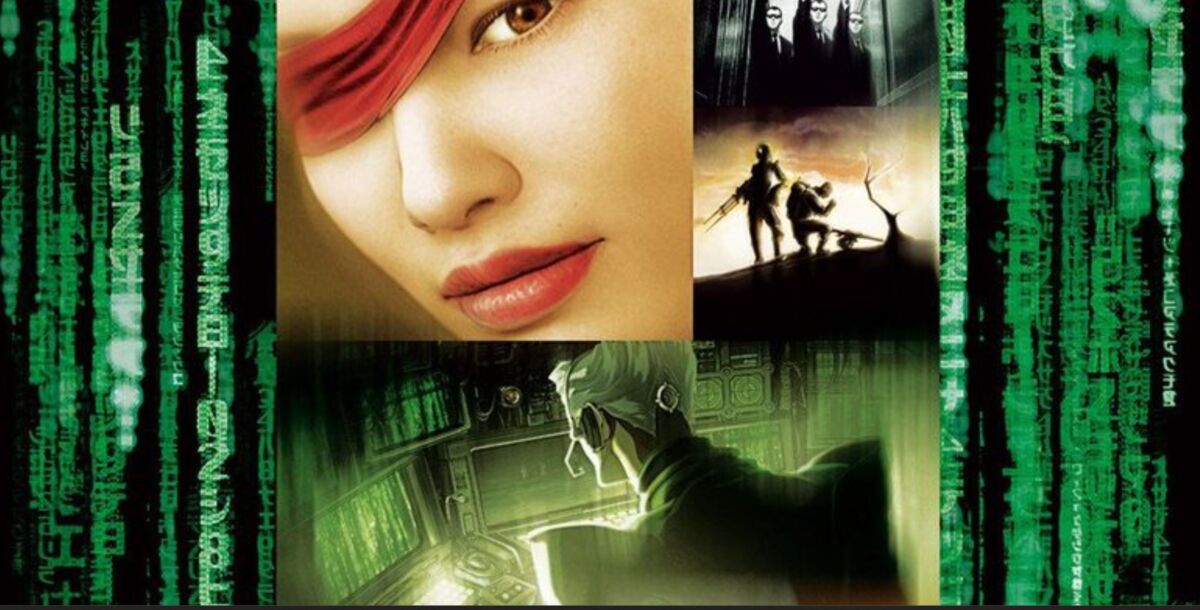
Moving into the new millennium, The Matrix immediately set itself apart as a transmedia franchise (in more ways than one), offering up The Animatrix and, more relevantly for our purposes, Enter The Matrix, as part of the official story. The fact that an extra hour of live action scenes were filmed specifically for Enter The Matrix, during the creation of the second and third film, was the kind of cross media effort that we hadn’t seen back then.
Still, it’s not the only example. We’d be remiss to talk about game universes across multiple mediums during the sixth generation of console without a passing mention of the .hack franchise, which told multiple stories within the same world across multiple games, novels, anime and manga. If that’s not enough for you, .hack Conglomerate was a sequel franchise with yet more games, anime, novels and manga. Very ambitious stuff, and it was clearly successful for CyberConnect2 and Bandai Namco as it’s gone on to become not mainstream, but known and well loved. But what happens when your gaming universe is set for big things and then fumbles out of the starting gate?
Advent’s Arrival

Advent Rising was set to be the debut game from GlyphX, who were responsible for illustrations, cinematics and promotional material for around 18 games between 1999 and 2003. Think box art for the likes of the PS1 Spider-Man games, among other things. Not content with just being a back-up player for other studios to bask in the spotlight, GlyphX were ready for their own game. In Donald Mustard’s own words in an interview with GameSpy a year before Advent Rising’s release:
“A few years ago we started getting more and more into game development. We got to the point where we said, ‘We’re done doing this for other people, we should start developing our own games.’”
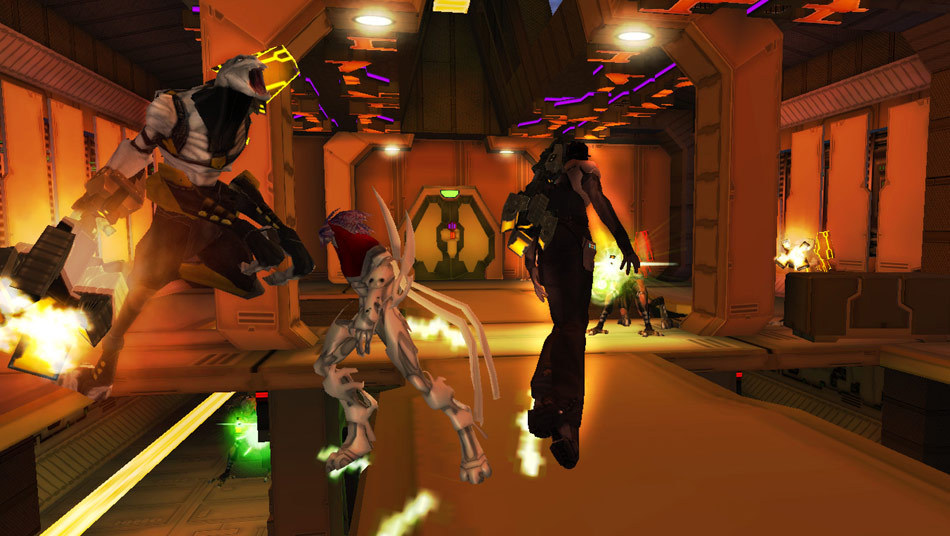
The game itself was a third person action adventure game/shooter with a heavy sci-fi angle. Advent Rising followed Gideon, a human accompanying a bunch of ambassadors on an intergalactic peace trip with a group called the Aurelians, only for the meeting to be rudely interrupted by some human genociders known as the Seekers. Fast forward a few chapters, Gideon may or may not be a chosen one with latent mystical powers and it’s up to him to stop the Seekers and bring peace back to the universe. A pretty basic sci-fi premise, in all honesty, but there was a lot of hope behind it.
The decision to actually turn Advent Rising into a video game would take a bit of time, as the game was originally conceived to be a comic book. Donald Mustard explained in an interview with CBR:
“With Advent, from day one, we conceived it initially as a comic book itself. Back when I was getting out of High School we were laying the foundation for Advent. I drew the first several hours of what would ultimately become the game as a comic book. That’s how we were going through the visual process of creating this stuff. With Advent you get something that has always been designed as a big, epic story with a very defined beginning, middle and end that stretches through a whole lot of different mediums of storytelling.”
The development team would consist of Donald Mustard, his brother Geremy with a G, which is wrong, along with a smallish range of programmers and artists. Hardly a solo dev team but not a AAA-level squad either. While the Mustard Brothers were responsible for writing the game’s story, the two managed to rope in Ender’s Game author Orson Scott Card to help write the specific dialogue for the characters in-game.
According to Orson Scott Card in an interview with IGN, Orson originally wanted to be part of the game during the early stages of development, but plans changed:
“The storyline had existed already. Donald Mustard and I had talked about it, they wanted to bring me in early on. I said ‘make sure I come in when the story isn’t set yet’, but his idea of ‘set’ and mine were different. […] By the time I came in, they already had some levels designed, and by then, it’s too late to change the story. But that was great, because it was a great story, so they didn’t need me.”
Even though Orson didn’t get to shape the overall story, the dialogue had his touch all over it. The terms “vids”, “buggers” and “ansible” were even added as a reference to Ender’s Game, though “ansible” alone has its own history that Orson was quick to point out on his own website forum. This was an original game, but there’s no denying that it was also a love letter to some previous work, something that would become Mustard’s M.O. years later. Something else that would seem like foreshadowing to Mustard’s later career is how much he worked alongside Epic in order to make Advent Rising succeed, with GlyphX using Unreal Engine to develop the game.
Again, when speaking to GameSpy, Mustard had the following to say about their relationship with Epic Games: “We’ve known Epic for a long time. They were one of our clients before we started on game development. I really like the Unreal engine. It’s very artist-friendly and it’s got one of the best renderers out there and can push a lot of polys. We didn’t want to spend two years of our development time writing an engine when we could be really focusing on content.”
Despite only being a small dev team, the talent was fairly stacked, as we haven’t even mentioned that legendary composer Tommy Tallarico was providing the game’s soundtrack. Ah yes. Nothing to go into further there. With that kind of manpower to hand, and because Advent Rising happened to be a sci-fi game that launched on the original Xbox, some people were wondering if this would be the game to finally kill Halo.
The Gang Does Not Kill Halo
Majesco were betting the farm on the success of Advent Rising, which is the kind of all-or-nothing approach to business decisions that you only see from a company that’s financially secure and viable. We’ll circle back to that. Mustard and the gang at GlyphX were hoping they could get a trilogy, a comic book series and a separate tie-in PSP release, Advent Shadow. All of this was on the docket before Advent Rising even hit store shelves. Clearly, they wanted big things from this potential franchise, and Majesco was hoping so too, but only the comic book series would actually see the light of day.
Alongside advertising the game in cinemas, and partnering with DC to create a one shot comic book to be bundled with the Collector’s Edition version of the game, Majesco advertised the game with a million dollar treasure hunt, partnering with Xbox Live to do so. The competition tasked players with finding hidden logos within the game’s maps, with the first player to find the logo each week winning a cash prize. In what would become indicative of Advent Rising’s fate, the contest was ultimately cancelled and all participants were able to claim two of a possible five free games. Majesco would cite technical issues that would affect the legitimacy and security of the contest, but there were other factors at play too.
You see, Majesco were on the up just two months before the launch of Advent Rising, with excitement high for their games, including AR and the banger Psychonauts, but come July 2005, both Psychonauts and AR cratered commercially. While exact sales figures are hard to come by for Advent Rising, Majesco’s earnings call for the May to July quarter of 2005 saw huge losses for the company. Majesco reported a net loss of $37.5 million for that period, compared to a net income of around $20 million the year before.
The company themselves cited game underperformance as the problem, pinning at least some of the blame on Advent Rising:
“The lower than expected sales of some of our key products combined with the effects of the upcoming console transition and overall industry softness have made this a very challenging year.”
Advent Rising’s reviews weren’t too great either. Not terrible, with a Metacritic of about 68, but not exactly glowing either. Multiple reviewers cited a range of bugs and other technical difficulties as reasons why they demerited the game, especially in some of the more scathing reviews. Even GameSpy, who we mentioned earlier were interviewing the devs and seemed excited for the release, accused the game of “shoddy craftsmanship” in their review. UK magazine Games(TM) were probably the most ruthless in their review, stating that “Advent Rising is about as enjoyable as getting home from a hard day’s work to discover you’ve been burgled”.
As for why the game actually flopped, tepid reviews might’ve had something to do with it, . You can also never rule out poor word of mouth during the mid-00s, especially if it concerns a cancelled competition, but it’s not like Advent Rising had a lack of hype or buzz about it pre-launch. Or, at least, Majesco were willing to throw the balance book at making this game a success. Also, Advent Rising’s May 31st, 2005 release date wasn’t particularly jammed for OG Xbox players either, sandwiched between Madagascar and Digimon World 4. If Halo 2 had dropped a week earlier, it’d make sense, but for whatever reason, Advent Rising flopped on arrival. Sometimes, there’s just no accounting for taste or player habits. Okami was one of the greatest games of all time, and it flopped at launch. A mediocre sci-fi adventure isn’t immune to the same fate.
Regardless of the reason, if there is a true discernible one, Majesco’s stock prices plummeted following Advent Rising. CEO Carl Yankowski would suddenly leave the company, with four class action lawsuits coming in about a week later naming Yankowski as a co-defendant. These troubles would then, in turn, cancel projects like Majesco’s planned adaptation/sequel to Taxi Driver, with the company from then on choosing to focus on budget games and handheld. Majesco would subsequently die, revive and seemingly die all over again between 2006 and today.
Before anyone could even report on how Advent Rising was performing though, the Mustards and other key design staff at GlyphX left to form a new company, Chair Entertainment. Rights for the Advent series remained with GlyphX too, and even though Donald Mustard would go on Chair’s official website and state that the team loves Advent and is committed to the future of the franchise, it seems odd to conceive of a trilogy then dip after game one.
In an interview with IGN, Donald Mustard said the decision came from the desire for something new:
“After finishing Advent we really felt like we wanted to do things a little differently than we’d done in the past and we felt the best way to do that was to form a new company and to set things up from the ground level.”
Post-Advent Clarity
After forming Chair Entertainment, the team would release the decent enough Undertow on XBLA, before the company was bought entirely by Epic, working together to release the pretty excellent Metroidvania Shadow Complex. That alone was meant to be part of a wider series known as Empire, which included two novels from Orson Scott Card called Empire and Hidden Empire. That interview with IGN mentioned that Empire was meant to also include a first person shooter, a tie-in comic book and even a feature film. Hardly any of that actually came to pass.
From here, they experienced both hardship and success. Throughout Chair’s early life, they’d signed the rights to create a video game based on Card’s Ender’s Game, but ultimately gave up development in 2010 to focus on their own original property.
That decision would pay dividends, as they released the mobile action RPG series Infinity Blade, which would receive two sequels and two other tie-in novellas. It’s this that caught the attention of J.J. Abrahms to create a game called Spyjinx, which never fully launched. There was a beta release in 2020, five years after the partnership was announced, but that was about the end of it. But clearly Donald Mustard wasn’t done rubbing shoulders with Hollywood.
If you didn’t know already, Donald Mustard became the creative vision behind Fortnite, specifically the nonsense lore and story which would see The Rock beefing with a sentient banana or whatever. He had the role of “loremaster”, and would oversee collabs like tie-in Fortnite comics books with DC and Marvel. It was the transmedia game universe dream fully realised, and all it needed to be successful was a bit of luck, and the hard work of the Unreal Tournament team to create a functional Battle Royale experience out of the bones of a zombie horde shooter in just two months. Fortnite beat PUBG to the punch by months, and the rest, as they say, is history, with Fortnite becoming among the biggest games of all time, all under DM’s stewardship until his departure in 2023. From there, he’d use the contacts made with the Russo brothers when bringing Marvel to Fortnite to take a role in the Russo’s company AGBO. Not a bad career, all things considered.
Just because Advent Rising cratered doesn’t mean that the idea of a shared media universe in gaming died, with the most prominent original example arguably being Defiance.
A SyFy TV show with accompanying MMO video game, the core conceit for Defiance was that events in the TV show would actually affect the world in game, but most players didn’t watch the show and most viewers didn’t play the game. Also, both were just a bit naff. Fortnite might be the biggest, but only because it’s propped up by every other property under the sun. At least Defiance lived and died as its own, mediocre but ambitious thing.
Advent Rising itself, like a lot of games that aren’t completely irredeemable but flopped when they launched, has managed to attain a bit of a cult following since release. It’s one of the more readily available games of the mid-2000s still today, with the PC version available to play on Steam, while the Xbox version is still purchasable on the Xbox Store as part of its backwards compatibility program.
After researching Advent Rising and its influence throughout the industry since its release, if you’re setting out to make something that transcends multiple pieces of media to tell one story, it’s probably doomed from the start. Does anyone else here remember Unknown9? Exactly.
READ NEXT: Switch Hidden Gem RPGs You Should Play
Some of the coverage you find on Cultured Vultures contains affiliate links, which provide us with small commissions based on purchases made from visiting our site.