


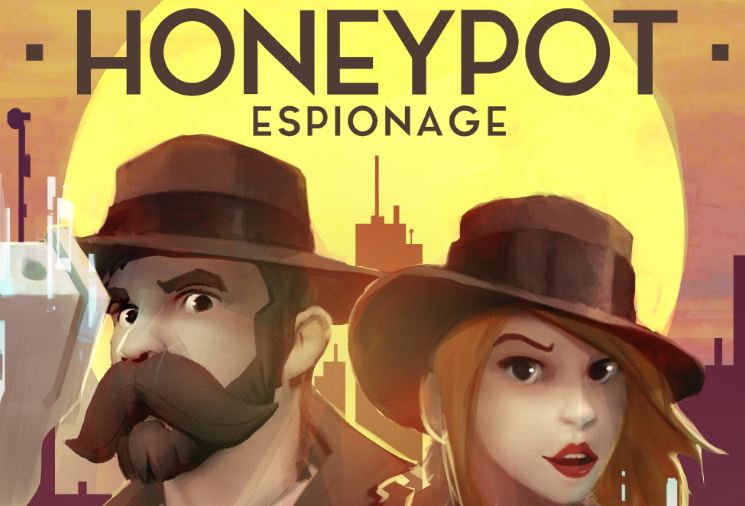
VR games really have to do a lot right to stand out from the oversaturated crowd. For every Superhot VR, there are ninety shooting galleries churned out weekly on Steam. So when I got the chance to check out Honeypot Espionage at EGX 2017, I took it.
Its elevator pitch is simple: you’re invisible when you don’t move. If it immediately starts sounding similar to Superhot, that’s a good thing – my session with Honeypot Espionage was brief, but I left it wanting more, eager to find the next opportunity to duck out of the way of bowler-hatted foes before blowing them away with gunfire.
I reached out to the guys at Pocket Sized Hands for a quick talk about all things Honeypot Espionage, including the difficulties of developing in VR and potatoes. Here’s what project lead Gary McCartan had to say.
How are you, and what was the last thing you ate? Arbitrary score out of ten?
I’m great doing great, thanks. Does tea count as something edible? I always have a cup of tea in my hand. And I only drink 10/10 tea.
And if tea doesn’t count, then the last thing I ate was Champ (Potatoes and Spring Onions). I’m Irish so it’s always 10/10 when it comes to potatoes.
Tell us about Honeypot Espionage: how did it get started and where did the idea come from?
It was the very first time I had the chance to play the Vive, in London at one of the show rooms before it was launched. I put it on and the first 10 seconds were horrible, mainly because of the drinks I had the night before but I fell in love with it soon after. I couldn’t stop laughing the rest of the day and I sat and brainstormed with a friend for ages about what we could do with it.
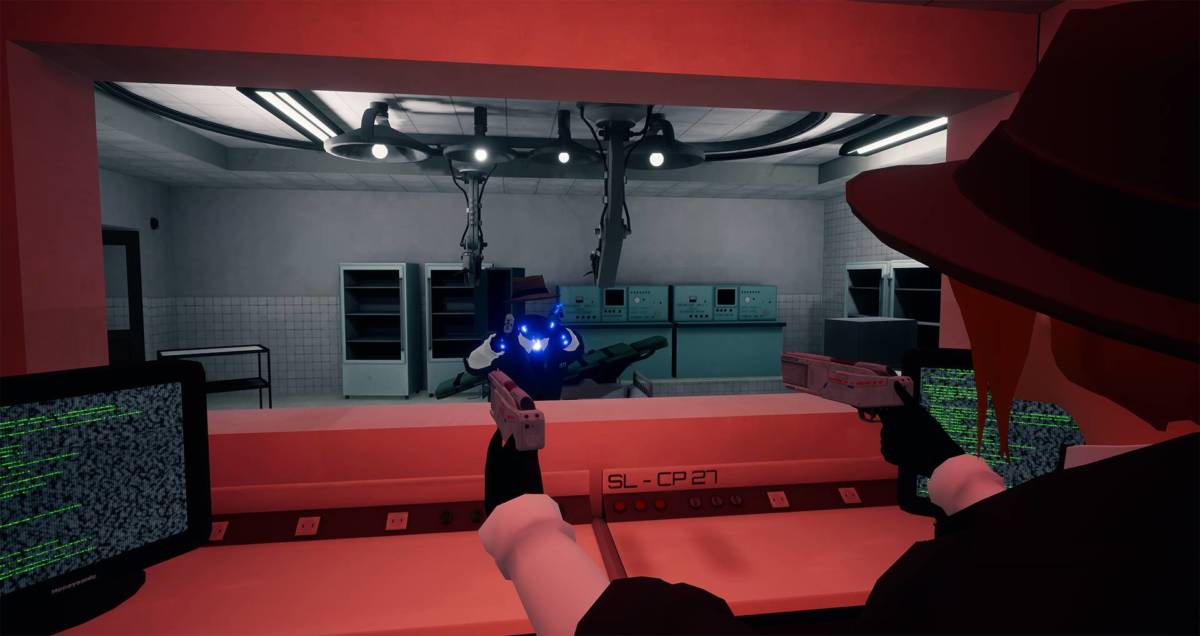
To me, it plays a lot like if Superhot had a baby with the Bond movie Goldfinger. Were those some of your inspirations and what are some of your others?
Surprisingly no. Not originally. The main inspiration for the game was Johann Sebastian Joust for the PS4, which is basically digital musical statues. We wanted a game where real-life movement was a core gameplay feature and Johann Sebastian Joust was the only game that really did what we wanted to do (before Superhot VR). The idea stemmed off of that to a hide and seek game where you were invisible, but when you started to move, others could see you. We originally wanted the game to be played with two people and with only one Vive. One player would wear the headset and have to find the other invisible player who held the controllers. This idea went on to become multiplayer and what it is now.
How different is it to create a game in VR than a “traditional” game? There must be a lot more that could go wrong.
Programming and creating the game itself is much the same. The biggest difference and challenge we face is creating the user interface or heads up display. Let’s take stealth as an example. On a traditional game, you can plaster information that the player needs to know anywhere on the screen. Most games have different icons, whether you can be seen by other players or not. For us, like how do you tell someone they are invisible? Putting all the information on a VR HUD can be jarring and hampers immersion. We have prototyped so much and only now we are starting to get it right. It’s difficult because we know we have to be subtle. Designing a subtle way to hand over information that a player needs to know has been fun and often has caused some hair loss.
This is something I’ve always been curious about: how do you develop and fine-tune a game in VR without getting constant nausea? Because I recently played about six minutes of Here They Lie through PS VR and wanted to crawl up in a vomiting ball, so I can’t imagine what it’s like to always have to be in VR.
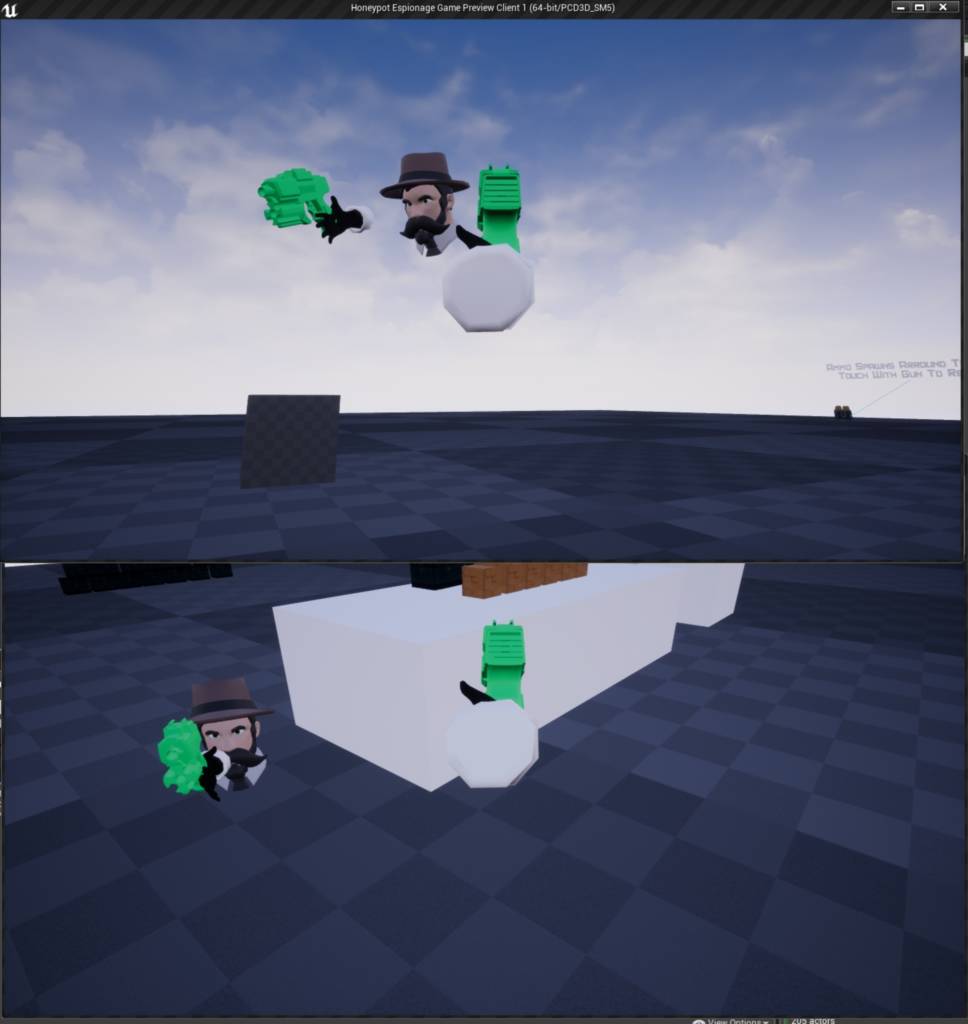
I think it comes down to the HMD you are using and how used to it you are. Some headsets have better latency than others, which means less nausea. But we also cheated and I built an emulated VR character, so we could test everything without even needing to pick up the Headset. This was perfect especially when it came to testing multiplayer features. Imagine we need two people to be playing the game in VR to test it, instead I can test it by myself on my pc with a mouse and keyboard. So no matter what anyone tells you, cheating always works.
There’s definitely a market for VR games, but it’s still something of a niche. Do you see VR becoming as big as it potentially could be? I personally think there needs to be more games like Honeypot Espionage which try to do things differently. There’s just so much VR shovelware out there.
Right now it is very niche. But if you look at all the new headsets coming out and the push for AR/VR tech, it’s only a matter of time until it becomes a mass market consumer product. There needs to be AAA content in VR. Even us as small indie devs need this to happen if we want to see VR games being a success. Fallout VR could be that breakout game we need. I also think Nintendo will be the driving force when it comes to getting everyone excited about VR – I think the Wii VR will be fun for all the family.
Could we see Honeypot Espionage on PS VR, or are you sticking to PC?
We haven’t excluded the PSVR but we would have to make some changes to it before we are ready. 360 turning is the issue, but there are some cool ways we can get around it.
How is production coming along, any news on a release date?
Things are going well among some of the other stuff we are doing, which we haven’t talked much about yet. Our aim is sometime 2018.
Finally, why should we be keeping an eye out for Honeypot Espionage?
What we have created is something fun that brings back memories of playing hide and seek with friends as a kid. You’re just frozen at times hoping the other players haven’t spotted you and once we get all the weapons, traps and different games modes into the game, it will be the second most fun thing you can do while invisible.
Some of the coverage you find on Cultured Vultures contains affiliate links, which provide us with small commissions based on purchases made from visiting our site.